Symbolism
What the cardinal means (and who decided)
The phrase is not in the Bible.
This is the part of cardinal symbolism that people who write about cardinal symbolism do not usually open with, because it sounds like the start of a debunking and most people did not come here to be debunked. But the phrase “cardinals appear when angels are near” is not in any English-language Christian source before about 1990. It is not in any older Native American teaching that has been put to paper. It is not in any Celtic or Norse or Mediterranean tradition. The bird is North American, the symbolism is North American, and the phrase is more recent than most living people’s parents.
This is the more interesting story.
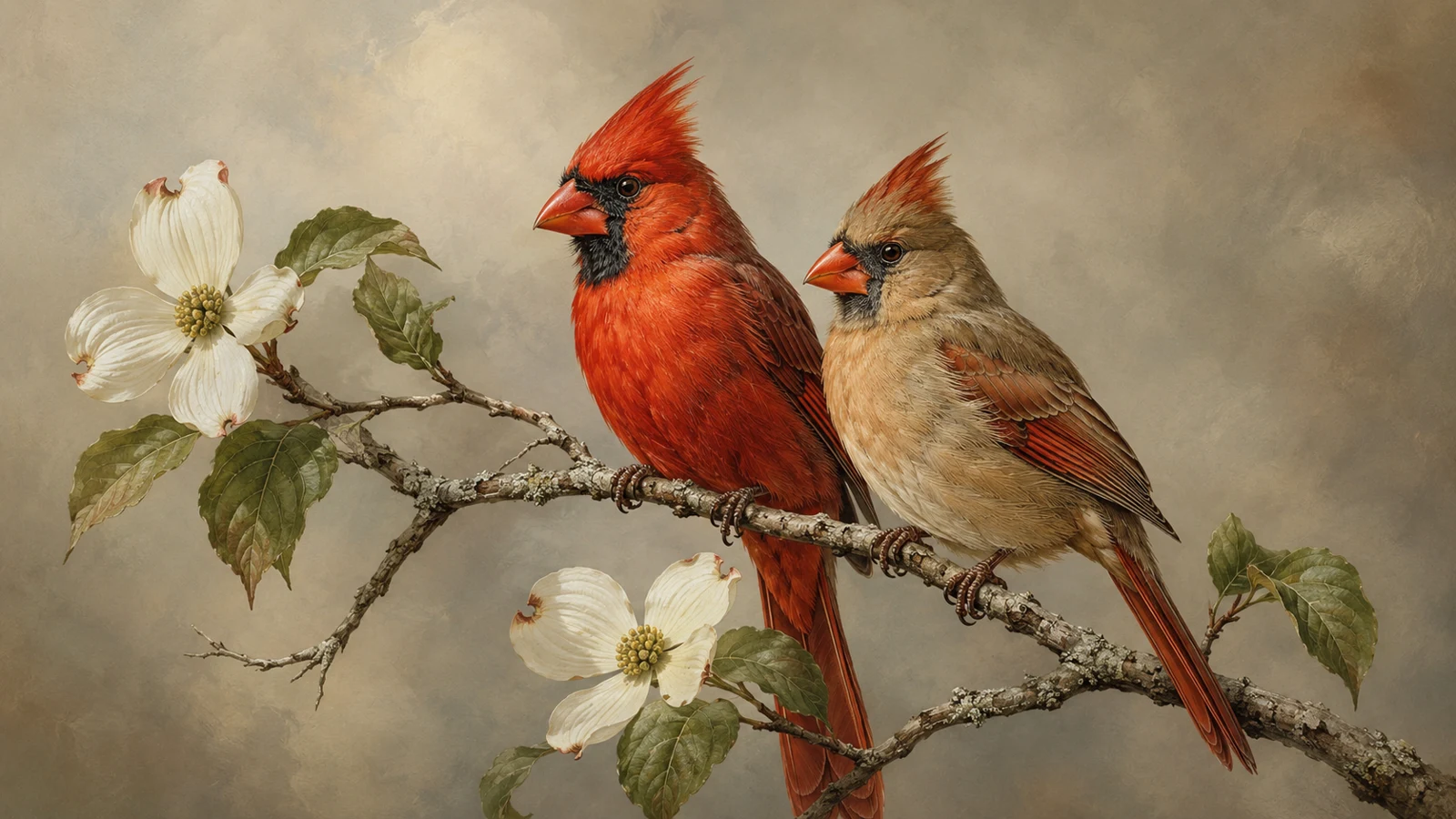
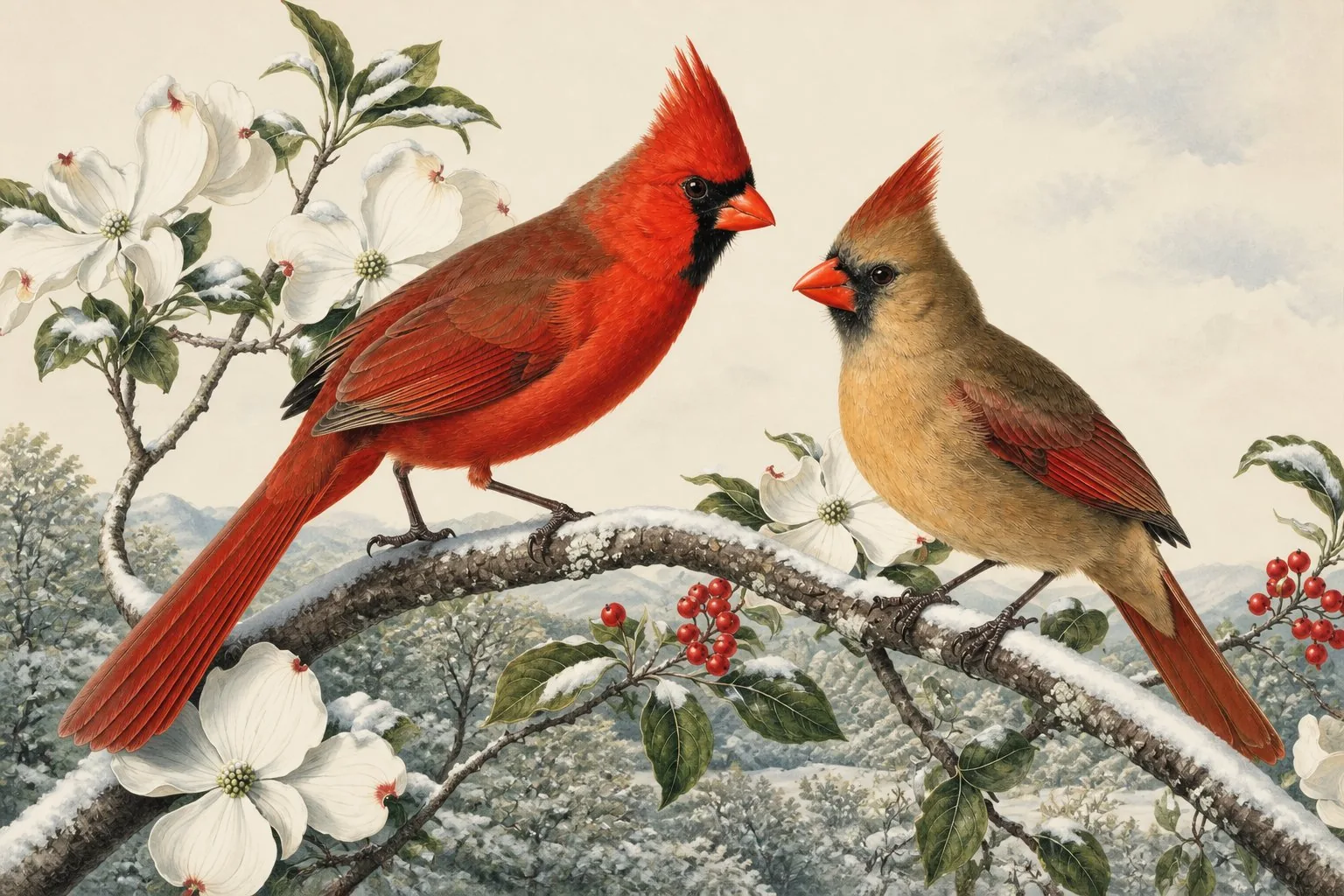
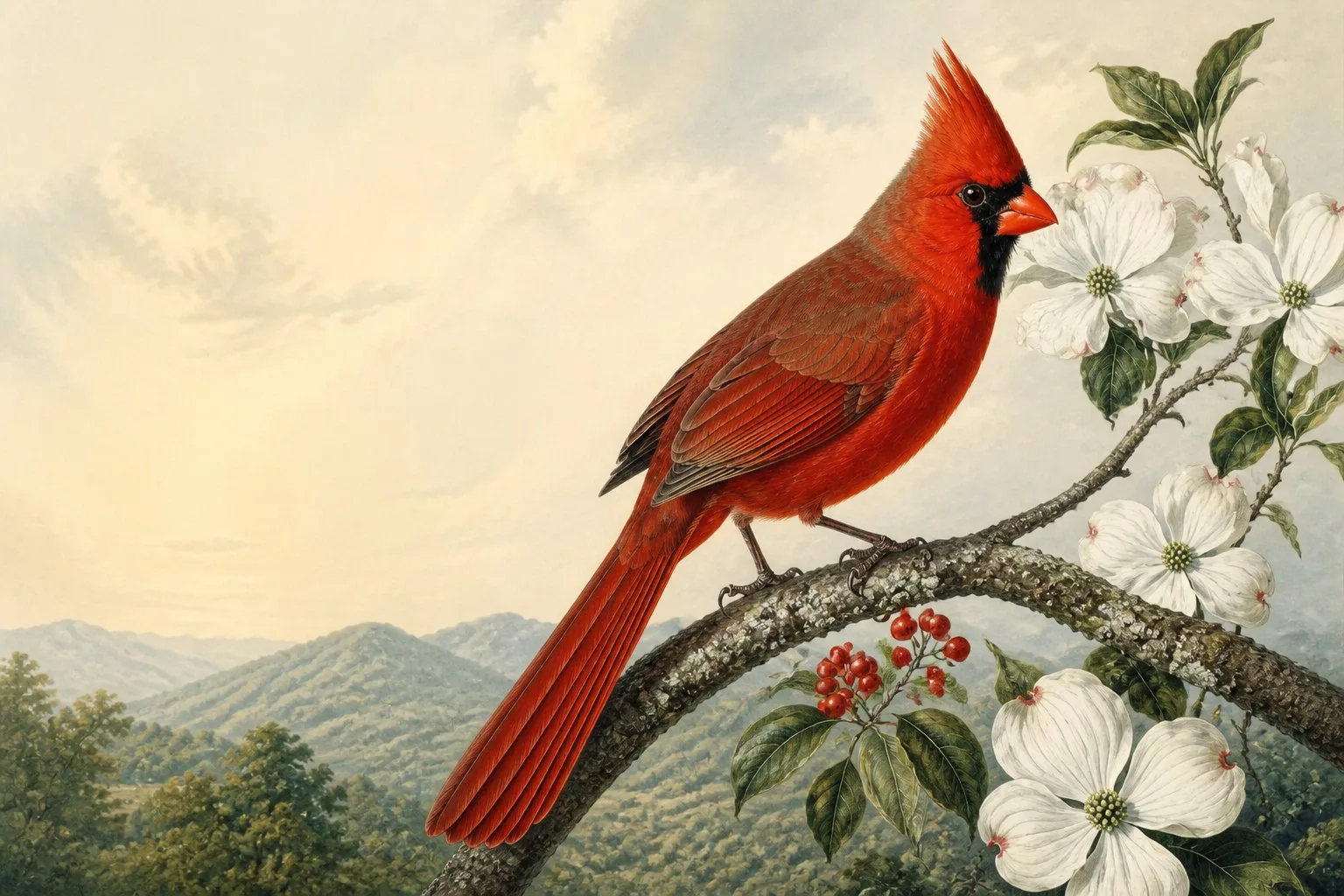
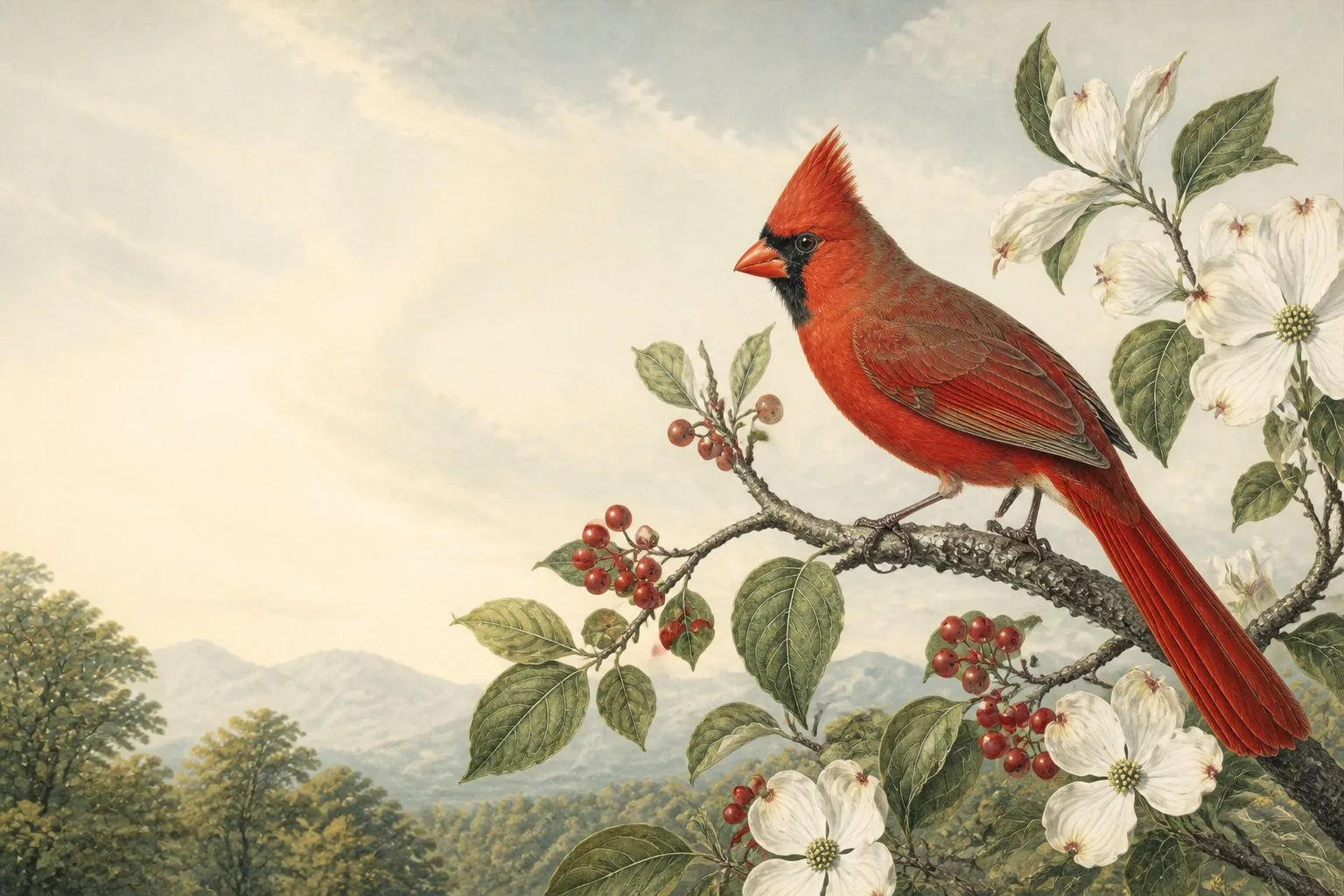
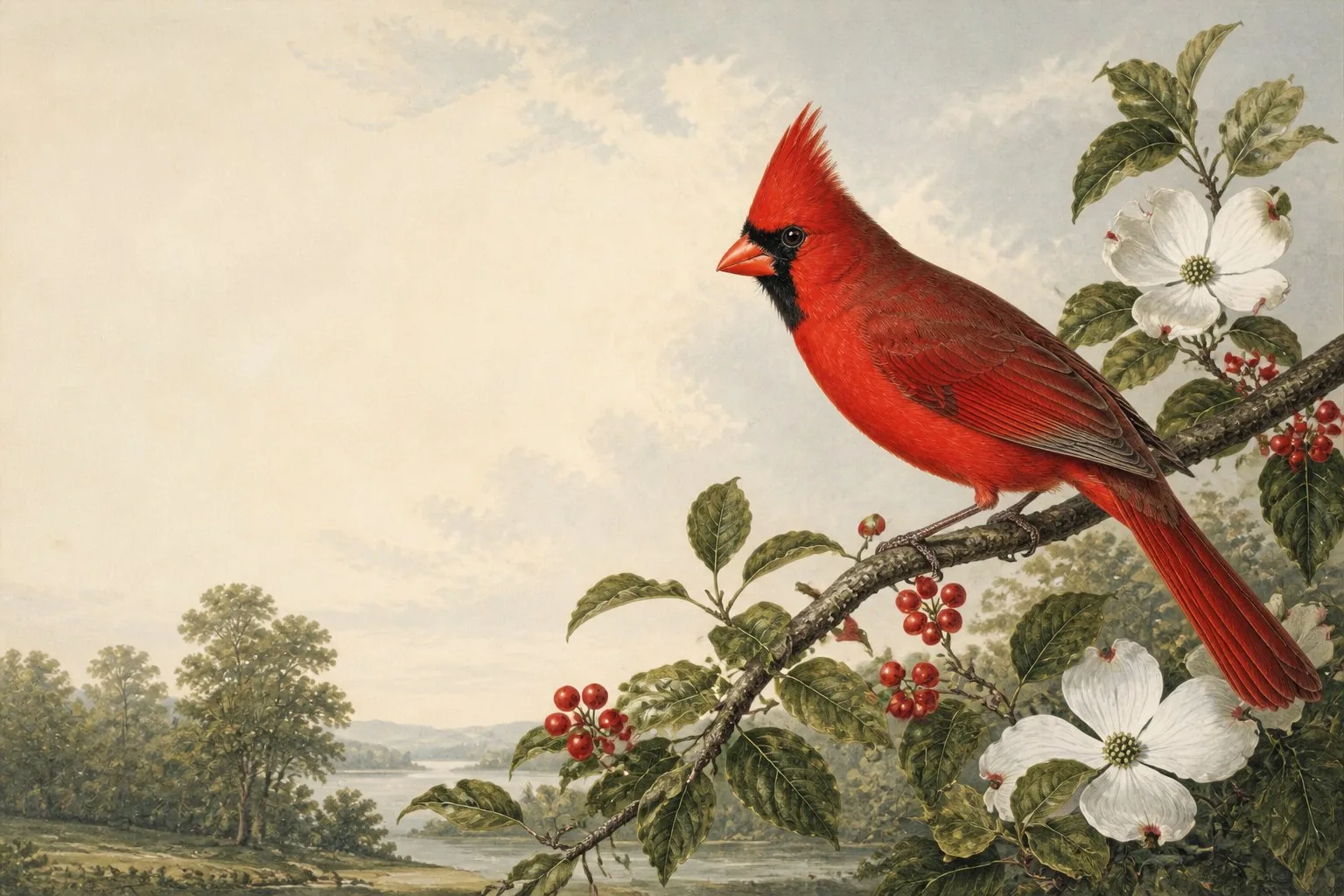
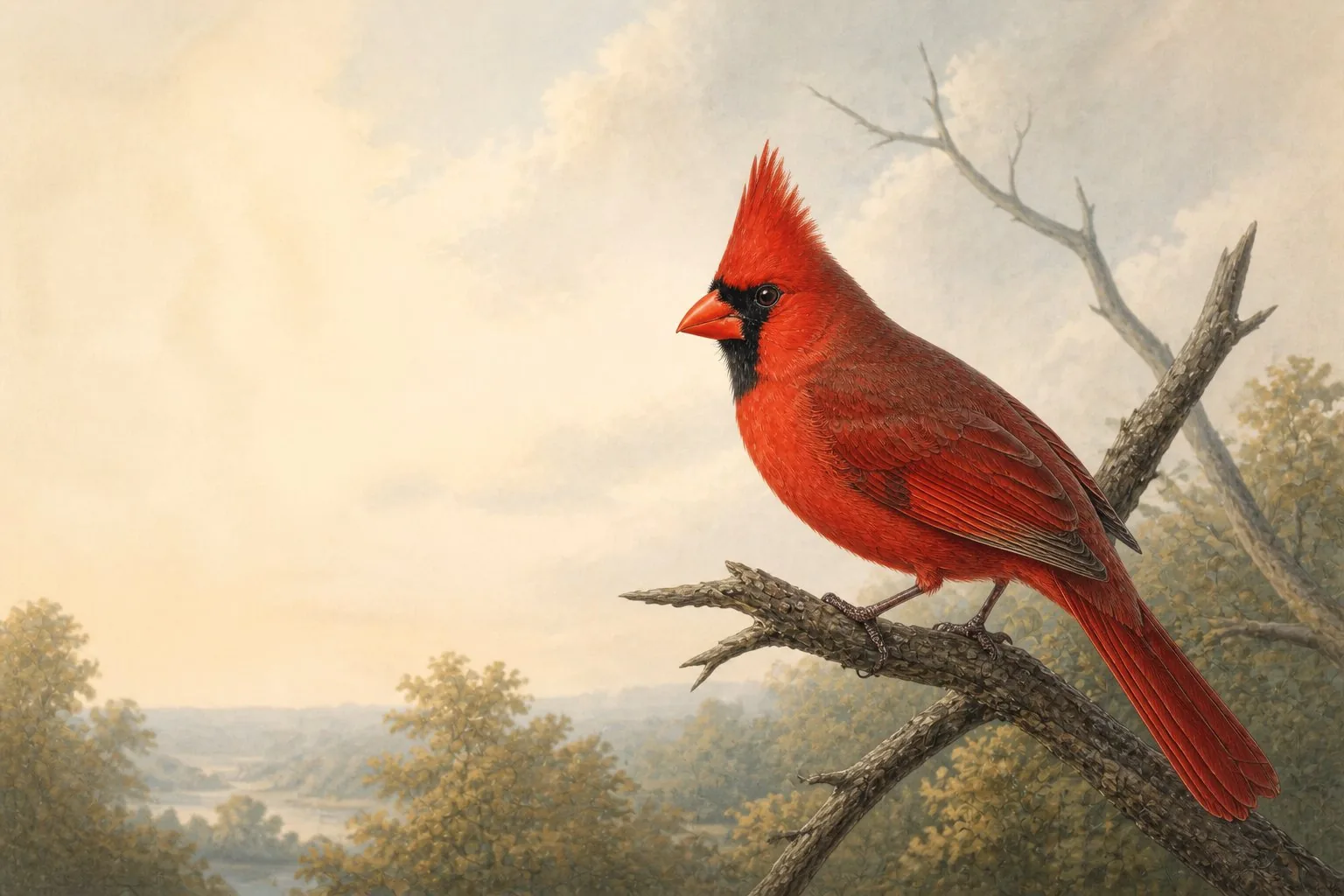
The cardinal you see in February at your feeder is doing something specific. He is not migrating; he is the only red bird that stays. He is feeding heavily; the carotenoids in his autumn fruit have already determined how bright he will be in March. He is paired; the female on the next branch is, statistically, his mate from last year. He has been at this address longer than you have. He will be at this address after you move out.
The bird is biologically uninterested in you. The symbolism around him is a human production, and the question worth asking is not “what does the cardinal mean” but “who decided, and when.”
There are two old layers of meaning before the modern North American one. The Christian one is the older. Roman Catholic cardinals wear scarlet robes, and the Latin word cardinalis (from cardo, hinge) applies to both the office and, eventually, the bird. The semantic transfer runs from the church to the bird in most sources but the etymology is contested and the timing varies. What is consistent is that by the eighteenth century in the eastern American colonies the bird was being called by some version of his current name and the red was being read in the same iconographic register as the cleric’s red - blood, sacrifice, the Holy Spirit at Pentecost. This is not a teaching that any church taught. It is a structural association that the bird’s colour did most of the work for.
The Native American layer is older still and is more various. Cherokee and Choctaw oral traditions associate the cardinal with renewal, with the return of the sun after winter, with faithful partnership. The cardinal does not feature in the oral traditions of tribes outside his historical range, which is most of the Pacific Northwest, the Great Basin, the high mountains of the southwest until the bird’s recent expansion. Most of what circulates online as “Native American cardinal symbolism” is twentieth-century internet aggregation, not transmitted teaching. Some of it draws on real traditions and some of it does not, and the difference matters less for the reader at the feeder than for the tribal community whose teachings get used without permission.
The modern North American layer is the one that does almost all of the felt work, and the one that came out of nowhere.
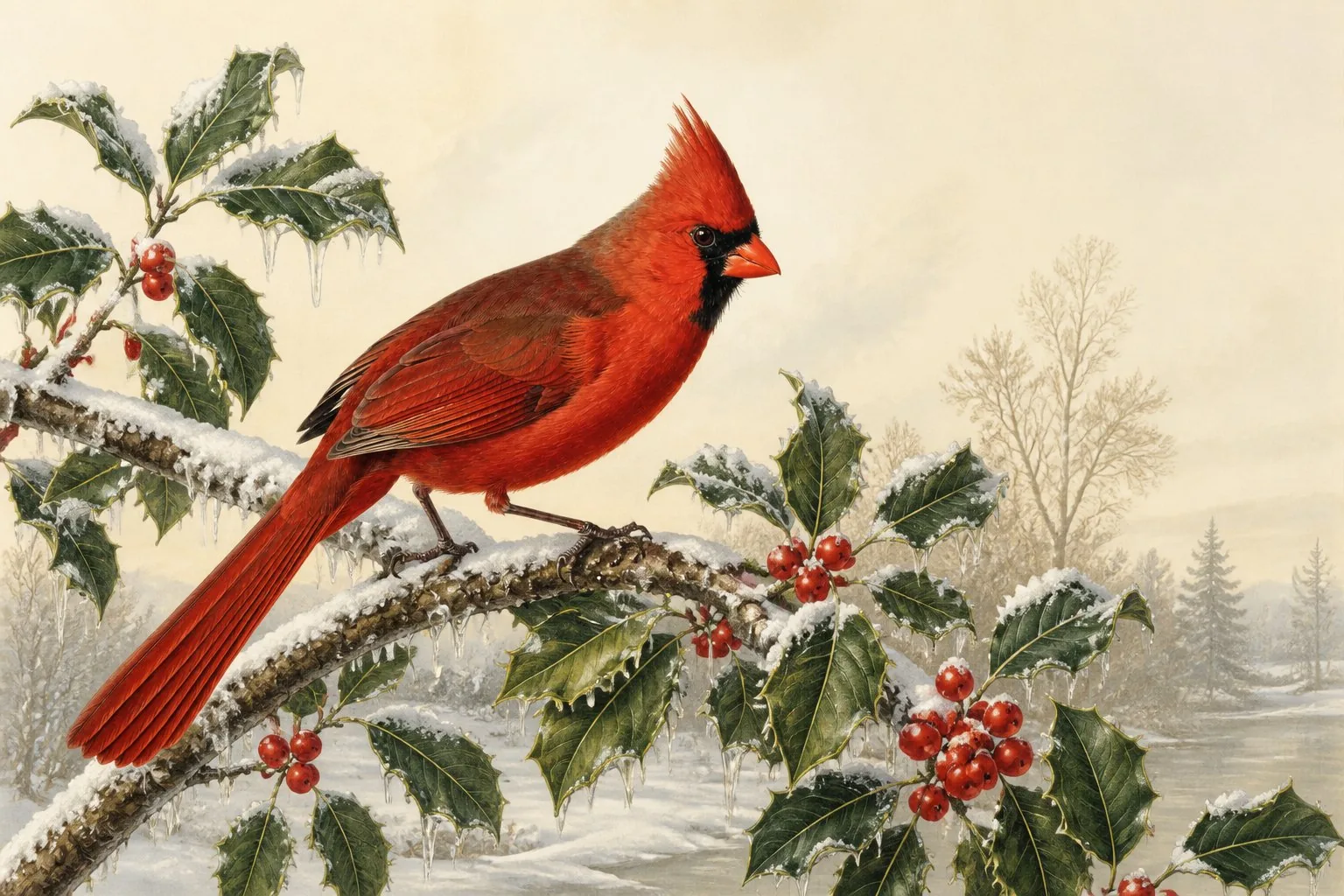
If you go looking for the phrase “cardinals appear when angels are near” in printed English before 1990, you will not find it. You will find a handful of devotional booklets in the late 1990s and early 2000s. You will find an explosion in the mid-2000s in greeting cards from companies that specialise in memorial gifts. You will find a torrent in the 2010s on Pinterest and Facebook, particularly in posts shared by grieving families around Christmas, when the cardinal is at his most visible against snow.
The phrase appears to have crystallised through three vectors during roughly the same fifteen-year window. The memorial gift industry produced cardinal-themed ornaments and graveside decorations from around the mid-1980s. The growth of suburban bird feeding from the 1970s onward put millions of new bird feeders in front of millions of new bird-watchers in exactly the season when the cardinal is most visible. And a small number of devotional poems and emails circulated in the late 1990s packaged the symbolism into the form we have now. By 2010 the phrase was a settled cultural object. By 2020 it was the most-shared bird quote on social media.
This is what I want to say carefully, because it is the part most likely to be misheard. The phrase is recent. The comfort it delivers is real. The two are not in conflict. Folk wisdom does not require an ancient pedigree to function, and arguing that it does is a kind of pedantry that misses what the wisdom is for.
A widow in Cleveland sees a male cardinal on the feeder on the first December morning after her husband’s death. She is the second-most-attentive person at the window because her husband used to be the first. She thinks of him. The cardinal is doing his cardinal business and does not register the widow. The widow registers the cardinal as a visit. The thought of her husband, which was already there, has been amplified by a real and beautiful bird who has chosen this feeder this morning. The widow has had a small good thing happen on a day that was otherwise difficult.
This is the actual mechanism. It is not transcendent. It is not heretical either. It is what humans do with beautiful birds and with the colour red and with the memory of people who are gone. The cardinal cooperates by being where he was going to be anyway.
The Christian iconography lends the encounter a vocabulary. The Native American renewal symbolism lends it warmth. The modern memorial gift industry lent it a phrase. None of these is the cardinal. All of them are us, working out how to read him.
I think it is worth saying this clearly because it changes what you do at the window. If the phrase is two thousand years old it places weight on the encounter that the encounter cannot support. If the phrase is a few decades old, the encounter rests where it should rest, on the bird and on the moment. The widow is not under any obligation to interpret. She is allowed to look, to notice, to think of her husband, to return to her tea, to let the cardinal fly. The bird will be back tomorrow. The memory will be back when she needs it. Neither one is communicating with the other. Both are doing what they do.
What strikes me about cardinal symbolism, the more I read into it, is how willing the bird is to do this kind of work. He shows up. He stays through winter. He brings the female with him. He sits where you can see him. He sings before he is required to, in a clear loud whistle that any child can identify. Almost everything we have asked of him as a symbol he has been good enough to provide. The Christian framing, the Native American framing, the twentieth-century memorial framing - all three work because the bird is a generous canvas. He is the right bird for the job because he is at the window and he is red and he is faithful to his mate and he stays through the worst of the year.
The phrase is recent. The bird is older. The cardinal does not know any of this. He is at the feeder cracking a sunflower seed. His female is on the holly. He has been here for the last six winters and he will be here next winter unless something goes wrong. The widow looks up. The cardinal does not.
Almost everything that needs to happen for the encounter to mean what it means happens on the widow’s side of the glass. The bird has already done his part by being there.