Backyard
How to Attract Birds to a Birdhouse
A bluebird will inspect a nest box in under 20 seconds and fly off. The hole was 3.2 centimetres across. She needed 3.8. The box sat empty all spring.
That is the whole story of most backyard birdhouses. The birds are there. The interest is there. The box fails on a single dimension - hole diameter, compass direction, height above ground, or timing - and the season is gone. Get those four things right and birds will find the box themselves. You do not need to guide them in. You need to stop driving them away.
The hole is the decision
Entry hole diameter is not a preference. It is the specification the bird is evaluating, and it is binary: correct or wrong. A 3.8 centimetre hole admits a bluebird and excludes a European starling. A 4 centimetre hole admits the starling. One millimetre is the difference between a successful bluebird season and a starling colony.
| Species | Entry hole diameter | Mounting height |
|---|---|---|
| Eastern or Western Bluebird | 3.8 cm (1.5 in) | 1.5 - 2 m on post |
| Black-capped or Carolina Chickadee | 2.9 cm (1-1/8 in) | 1.5 - 3 m on trunk or post |
| House Wren | 3 cm (1-1/4 in) | 1.5 - 3 m on small tree |
| Tree Swallow | 3.8 cm (1.5 in) | 1.5 - 3 m near open water |
| Downy or Hairy Woodpecker | 3.8 - 6.4 cm (1.5 - 2.5 in) | 3 - 6 m on tree trunk |
| Eastern Screech-Owl | 7.6 cm (3 in) | 3 - 6 m on trunk, shaded |
| Wood Duck | 10 x 7.6 cm (4 x 3 in) oval | 1.5 - 3 m over or near water |
Drill to spec, not to “close enough.” Pre-made commercial boxes often list the target species but use a hole that serves the manufacturer’s tooling. Measure before you mount.
Four placement rules that matter
Most placement advice runs to ten bullet points. Four of them actually move the needle.
Face the hole east or northeast. Morning sun warms the box without the afternoon heat that can kill chicks on a hot July day. Audubon recommends this orientation specifically to reduce heat exposure, and research on cavity-nesting birds consistently links south-facing boxes to higher nestling temperatures and reduced growth.
Mount on a pole with a baffle, not on a tree. A tree offers a climbing route for raccoons, cats, and rat snakes. A smooth metal pole with a cone or cylinder baffle below the box stops all three. Cornell’s NestWatch program, which tracks nesting outcomes from volunteer monitors across North America, has found that nest boxes with predator guards have success rates around 6.7 percent higher than unguarded boxes - and pole mounting is the foundation that makes any baffle effective.
Keep it away from your feeders. Nesting birds want territory they can defend. A box within 10 metres of a busy feeder exposes the nest to constant traffic from species the parent birds must chase. Place the box at the far edge of the yard, or in a separate area entirely.
Space multiple boxes at least 15 metres apart. Most cavity-nesting species are territorial about nest sites. Two bluebird boxes on the same fence post will produce one empty box. Two boxes 20 metres apart can produce two active nests.
The right entry hole, facing east, on a baffled pole, away from the feeder. Those four decisions cover most of why birdhouses go empty.
Timing is the part people miss
The best place for a bird feeder question has a seasonal answer. So does the birdhouse question. Birds scout cavities early. In most of the continental United States, Eastern Bluebirds begin investigating potential nest sites in late February. House Wrens arrive in April and fill any available cavity within days.
A box that goes up in May is a box that goes up after the territory decisions were made. Clean and mount boxes in late January or early February in the South, early March in the North. Leave them up year-round - cavity roosters use nest boxes through winter, and a box that stays up becomes part of the local birds’ mental map of available shelter.
Clean the box after each brood fledges. Old nesting material carries parasites and can discourage a second brood. Hot water, no soap, dry thoroughly before the birds return.
What not to add
Do not add a perch below the entry hole. Perches appear on cheap commercial boxes because they look friendly. They function as a foothold for predators reaching inside and a platform for house sparrows blocking the entrance. Native cavity nesters do not need them.
Do not paint the interior. Fumes linger and harm chicks. Leave raw wood inside.
Do not stuff the box with nesting material. Some guides suggest adding wood shavings to attract woodpeckers. For most species, a pre-filled box reads as already occupied. Leave it empty and let the birds build. They will bring dried grass, bark strips, and animal fur. The sunflower seeds at your feeder keep the parents fed while they construct; the nest itself is their project.
How feeders and nest boxes work together
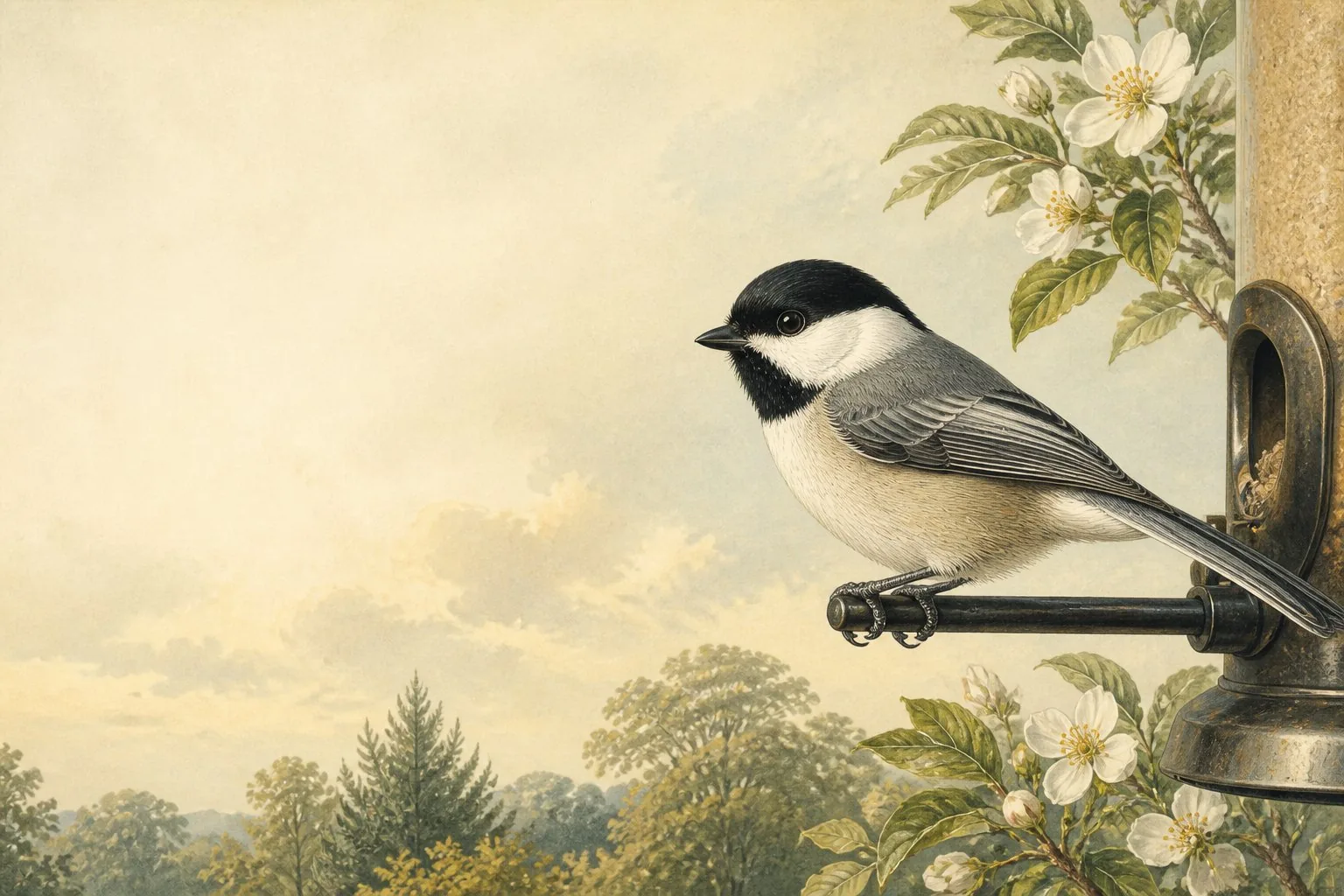
A nest box is not a feeder, and the two work best when they serve different parts of the yard. A yard set up well for feeding - native plantings, clean water, feeders hung at the right height and distance from cover - reads as safe to a bird scouting cavities. A chickadee that has been coming to your feeder through January is already familiar with the yard when she starts looking for a nest site in March. She is more likely to accept your box than a box installed in a yard she has never visited.
Bluebirds and tree swallows are edge-habitat birds. They want the open field and the nearby tree line, not a manicured suburban lot. Reducing what drives them away - house sparrows competing at feeders, open lawns without cover, and crows moving through the yard in numbers - matters as much as putting up the right box.
The calendar view
| Season | What to do |
|---|---|
| Late winter (Jan - Feb) | Mount or clean boxes, check baffles, replace cracked wood |
| Spring | Monitor from a distance - do not open active nests |
| Summer | Clean out boxes after each brood fledges |
| Autumn | Leave boxes up for winter roosting, do autumn inspection |
The birds that use your box in May are often the birds that roosted in it the previous November. The box that stays up through winter earns more trust than the one that appears in April. Studies of Eastern Bluebirds find that around 26 to 44 percent of adults return to breed at the same site where they nested the previous year - a pattern that rewards keepers who maintain the same box in the same location season after season. The box you put up this winter may be occupied for a decade.