Free shipping to the US, Canada & Europe
Biology
Cardinal eggs are pale greenish-blue with brown speckles and hatch in about 12 days. Here is what the clutch looks like and what happens next.
August 30, 2023 4 min read
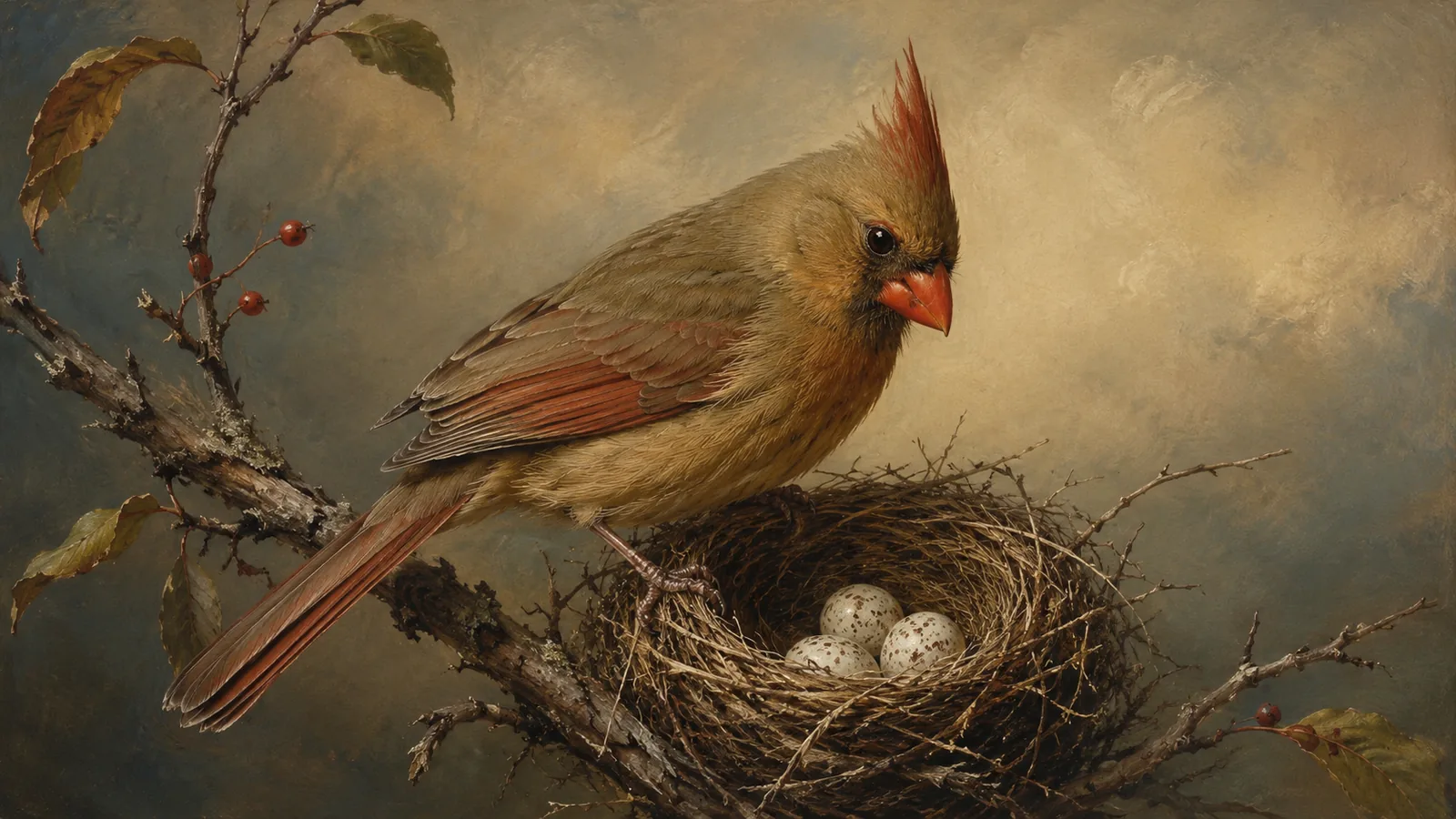
Sometime between mid-April and late May, a female Cardinalis cardinalis settles into a nest woven low in a thicket of honeysuckle or hawthorn and lays her first egg before sunrise. She will lay one more each morning until the clutch is complete. The nest is hers. She built it without the male, and she will incubate it almost entirely alone. The eggs are, to most eyes, a surprise.
They are not red. They are not anywhere near red. Cardinal eggs are pale greenish-white or grey-white, marked with irregular spots and blotches of brown, grey, and lilac concentrated toward the blunt end. The ground colour fades quickly in strong light and can look almost white in photographs, which is why so many field accounts describe them differently. Up close, in shade, the speckling is distinct and heavy.
Size sits at roughly 2.5 cm (about 1 inch) long by 1.8 cm wide. The shape is oval, slightly pointed at one end. Laid in a palm, they are just larger than a grape.

| Feature | Detail |
|---|---|
| Clutch size | Two to five eggs (three is typical) |
| Egg colour | Pale greenish-white with brown, grey, and lilac spots |
| Egg size | approx. 2.5 cm x 1.8 cm |
| Laying rate | One egg per day until clutch is complete |
| Incubation period | 11 to 13 days |
| Who incubates | Female; male feeds her at the nest |
| Broods per year | Two to three (up to four in the South) |
| Season | February (Florida) to September |
Cornell Lab’s NestWatch database, which has tracked cardinal nests across North America for decades, puts the median clutch at three eggs and the most common incubation window at 12 days. NestWatch observers have recorded active nests as early as mid-February in southern Florida and as late as early September in the upper Midwest. These breeding numbers sit alongside the broader facts about cardinals that shape a year in their lives.
She builds the nest in three to nine days, working alone. The structure is a compact open cup of twigs, bark strips, grasses, and leaves, set 1 to 3 metres above ground in dense cover. She picks the site. She carries every piece of material. The male accompanies her on foraging trips but does not weave.
Once laying begins, she incubates through most of the day and through every night. The male’s contribution during incubation is food delivery - he brings seeds and insects to her at the nest, sometimes calling from a nearby branch first. She leaves briefly to forage on her own once or twice each morning, typically the longest recesses of the day.
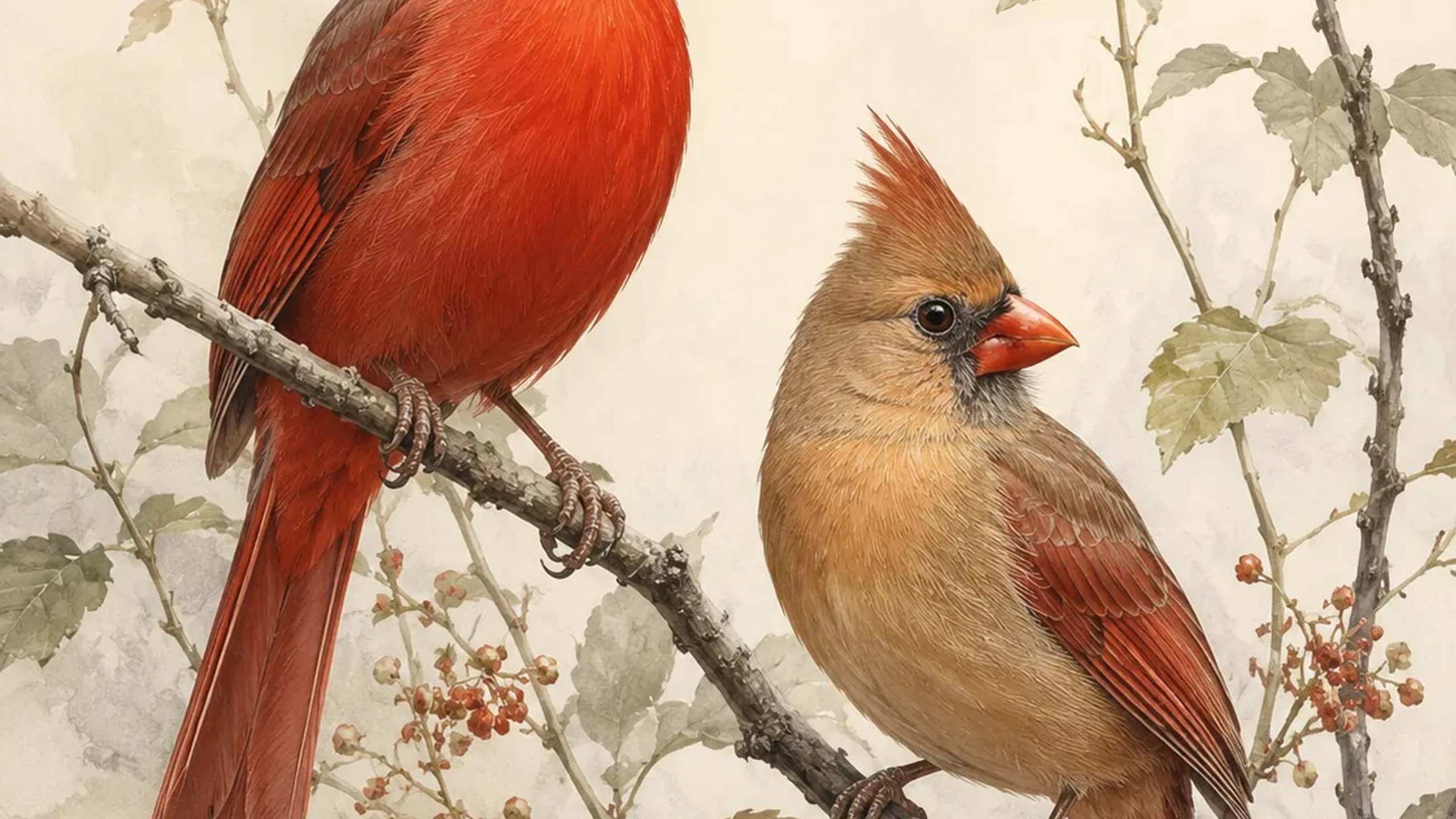
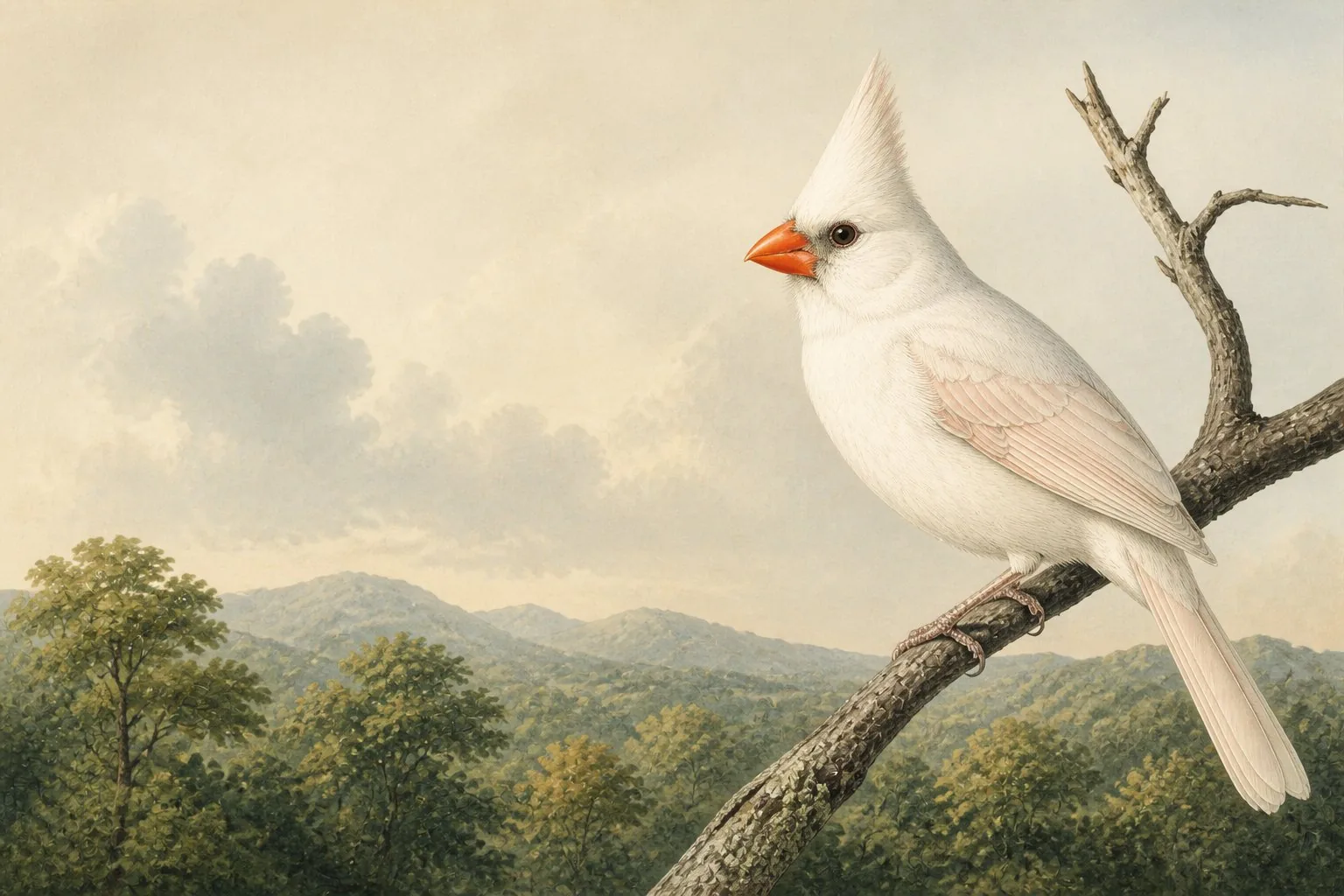
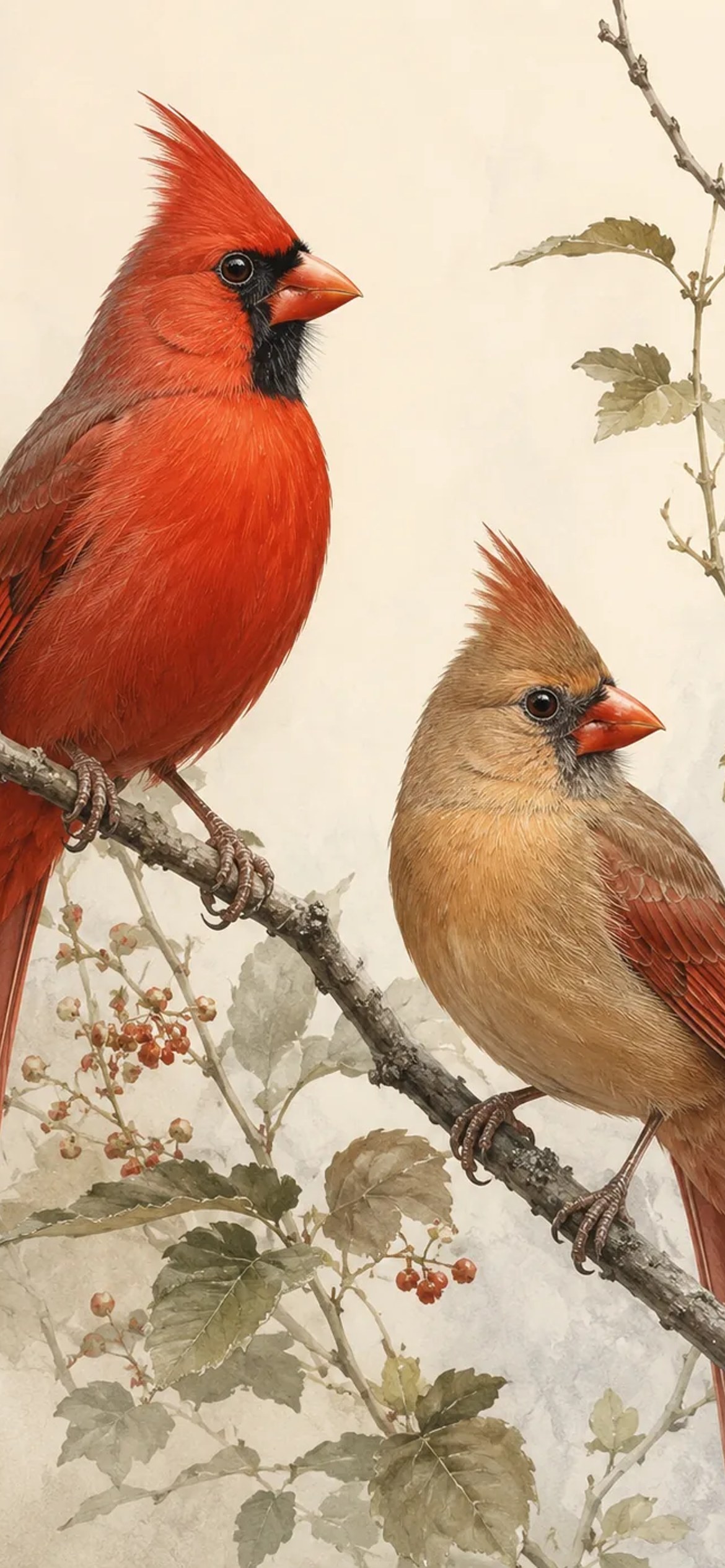
!Female Northern Cardinal, who builds the nest and incubates the clutch The female builds the nest alone and incubates the clutch for 11 to 13 days. See the Northern Cardinal art print.
The territory the male defends - aggressively, often all year, as documented by are cardinals territorial - is centred on the nest site. She is the reason he is fighting.
After 11 to 13 days the chicks pip through the shell with an egg tooth, a small calcified point that falls off within days of hatching. They emerge blind and nearly naked, with thin grey down along the head and spine. Both parents feed them - insects and soft caterpillars at first, transitioning to seeds as the chicks develop.
By day 20 to 26 the nestlings fledge. They leave the nest before they can fly properly, which is by design: a nest that holds a clutch for too long becomes a predator magnet. The parents continue to feed them on the ground and in low cover for another three to eight weeks. For a detailed account of that period, see cardinal fledglings.
A pair whose nest fails does not reuse the structure. She builds a new one at a different site, sometimes within days. A single breeding season may see two or three complete nest attempts before a brood survives to fledge.
Cardinals are loosely monogamous within a season, and the same pair often returns to the same territory in subsequent years. While the female incubates a second clutch, the male may still be feeding the first brood’s fledglings. The overlap is managed: each parent takes primary responsibility for one set of offspring for a week or two until the fledglings from the first clutch are self-sufficient.
If the nesting habitat is dense enough and the food supply reliable, a pair in Virginia or Tennessee may raise three broods between late March and late August. In parts of Florida, breeding can begin in February and the season extends longer still.
The pale, speckled egg in that first nest is the start of five months of sustained work. By the time the last fledgling from the third brood disperses in September, the pair has already shifted into the pre-basic moult that erases and rebuilds the plumage they will use next spring. The egg and the moult are the same story, told at opposite ends of the year.
Free download
A free set of Audubon-style cardinal wallpapers for your phone and desktop. Enter your email and they are yours to keep.
As an Amazon Associate we earn from qualifying purchases. Linked products are ones we genuinely recommend.

 August 30, 2023
 4 min read