Biology
Where to Hang a Hummingbird Feeder
The feeder went up on a sunny fence post in April and not a single hummingbird visited it all summer.
That is the most common hummingbird-feeder story in North America. The nectar ferments in two days, the owner assumes hummingbirds are not in the area, and the feeder comes down in June. The birds were probably there. The placement was wrong.
Where you hang the feeder decides almost everything: whether the nectar spoils before a bird finds it, whether a dominant male can lock down the whole supply, and whether the birds feel safe enough to return day after day. Get the placement right and a hummingbird that discovers the feeder in May will be back in the same week next April. Get it wrong and you are refilling spoiled sugar water on a hot post until you give up.
The placement rules that actually matter
Shade is the single most important factor. Nectar is a one-to-four mix of white sugar and water. In full sun that solution ferments quickly - it can turn cloudy or alcoholic within a day or two in high summer heat. Partial shade, or a spot that gets morning sun and afternoon shade, keeps nectar usable for several days rather than one. A dappled spot under a deciduous tree is ideal. A north-facing porch overhang works. Full shade all day is a last resort - the birds will find it eventually but it slows discovery considerably, since hummingbirds hunt by sight and red against green reads differently than red in shadow.
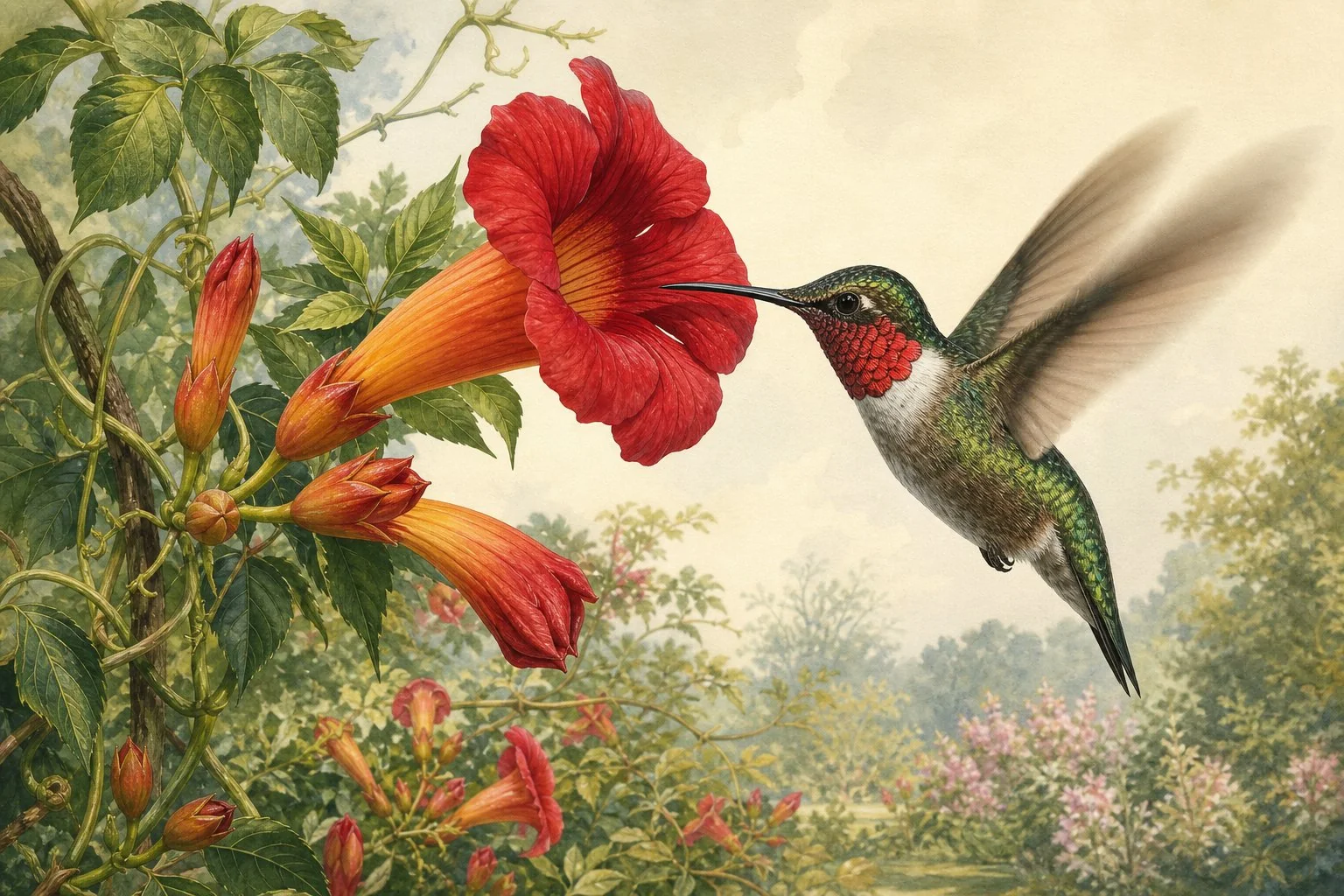
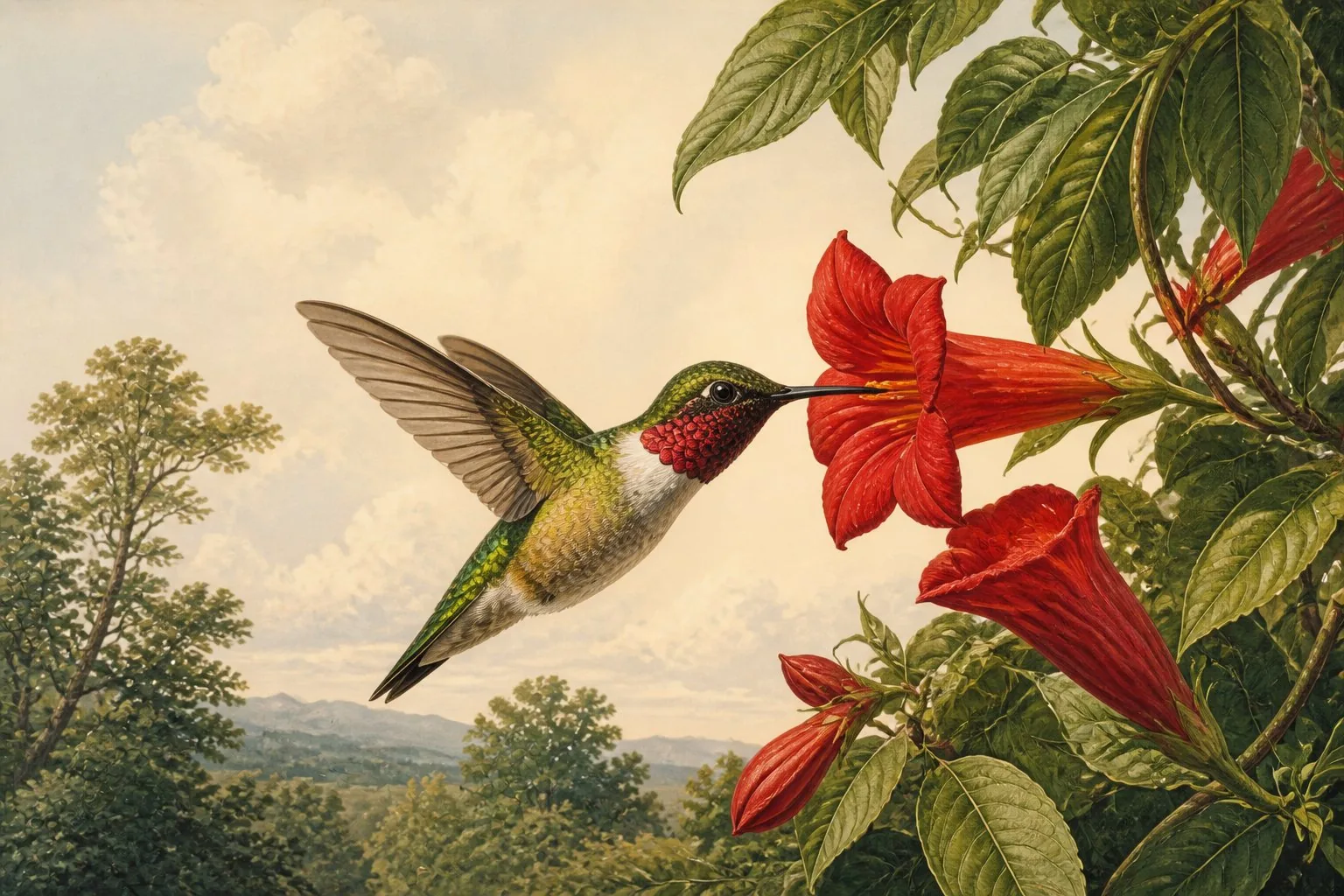
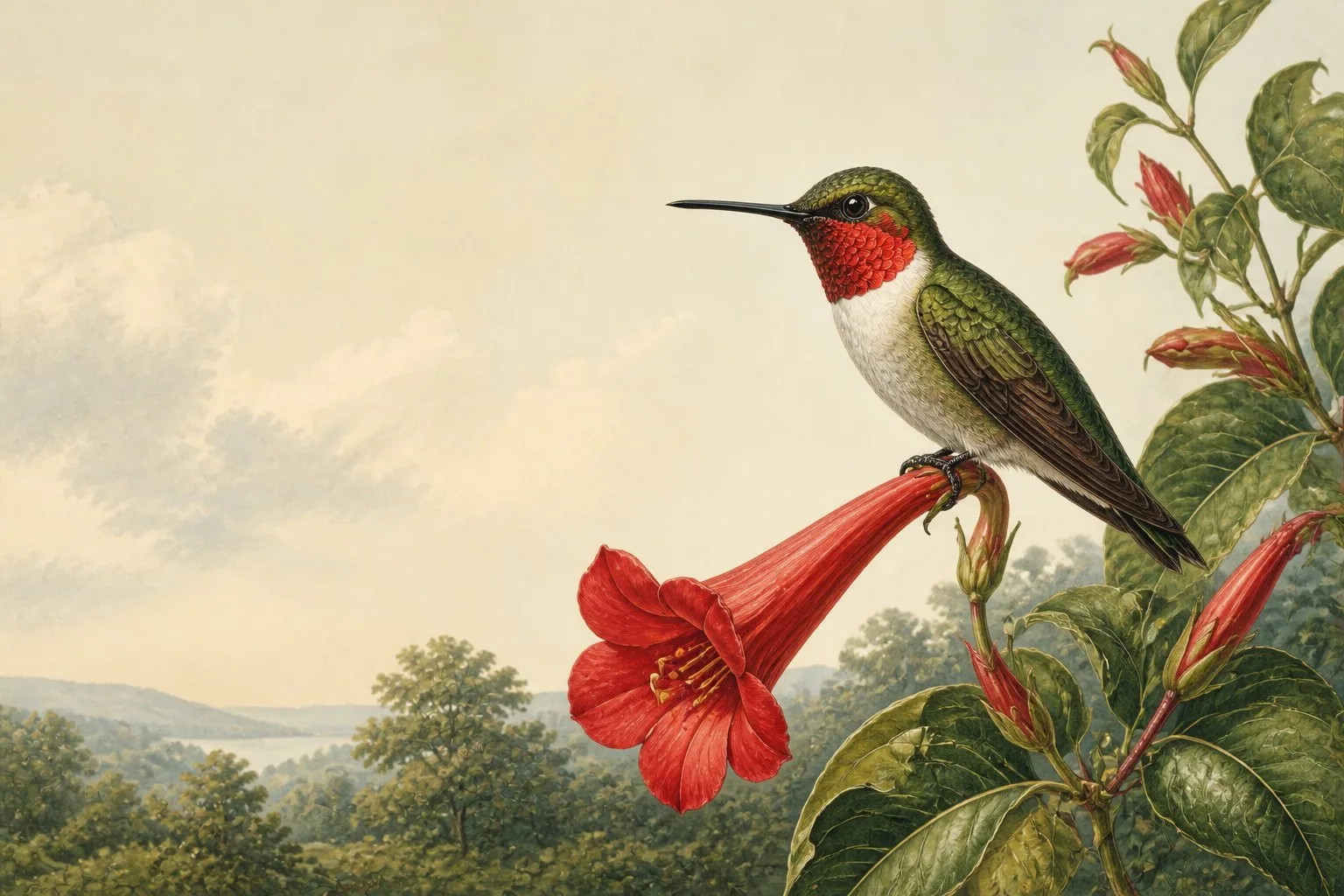
Within 10 to 12 feet of cover. Ruby-throated hummingbirds (Archilochus colubris) do not hover in the open any longer than they have to. They eat, then retreat to a perching branch to digest and watch. A feeder hung in the centre of an open lawn asks the bird to be exposed for the entire transaction. A feeder hung within a few feet of a shrub, a porch column, or a tree gives it somewhere to land between visits. Discovery also improves - a hummingbird investigating a new garden will follow a shrub line outward, not cross open ground.
Height is secondary, but practical. High enough that cats cannot reach it from below, and low enough that you can take it down one-handed for cleaning without a stepladder. Most sources land on roughly five to six feet. What matters far more is horizontal position than vertical.
Near a window is fine - and reduces collision risk. A feeder placed very close to a window - within three feet - is safer than one placed in the four-to-eight foot zone where birds accelerate to full speed before they can react to glass. The Cornell Lab of Ornithology recommends this as a general bird-feeder placement principle, and it applies to hummingbirds too. The close placement also provides the kind of view most people hang a feeder for in the first place.
The problem with one feeder
A single feeder almost always produces one dominant bird and several birds who cannot eat.
Male ruby-throats are territorial about nectar sources. One bird will perch nearby, chase every rival, and spend more calories defending than feeding. A second feeder placed 10 or more feet away - ideally out of the dominant bird’s direct sight line, around a corner or behind a shrub - breaks that grip. He cannot guard two feeders at once. More birds eat. More birds return. The yard effectively doubles its carrying capacity without any change in the amount of nectar you are putting out.
Three feeders arranged in a triangle around a garden bed, each hidden from the others by foliage, is the setup that ornithologists who study feeder-bird behaviour consistently recommend for maximising the number of individuals, rather than the number of visits by one individual.
The feeder that produces the most hummingbirds is rarely the one in the most prominent spot. It is the one the dominant male cannot see from his perch.
When to put it out
The timing rule is to have the feeder up two weeks before hummingbirds are expected in your area. They do not wait for feeders to appear - they are moving through on a migration schedule that was set before you were born. Being early means you catch the first scouts.
| Region | Hang by |
|---|---|
| Southern states (Texas, Florida, Gulf Coast) | Early to mid-February |
| Mid-Atlantic and Central US | Late March to early April |
| Northern US (Great Lakes, New England) | Late April |
| Canada | Mid to late May |
In the southernmost states, some hummingbirds are present year-round, and feeders can stay out permanently if you are willing to clean them through the winter. Elsewhere they leave, because most hummingbirds migrate and will not be at your feeder in January.
Cleaning is placement’s partner
A well-placed feeder in shade still needs cleaning every three to five days in summer, every week in cooler weather. Nectar that has gone cloudy should be replaced immediately regardless of schedule. Cleaning hummingbird feeders with vinegar is effective and leaves no residue that would deter the birds - plain soap can leave a film that hummingbirds detect and avoid.
A saucer-style feeder drips less than a bottle-style and attracts fewer ants, which is worth considering before placement rather than after. An ant moat - a small water-filled cup that mounts above the feeder - solves the ant problem entirely and costs less than two dollars.
What to plant nearby
Feeders work best alongside rather than instead of native nectar plants. Bee balm, cardinal flower, salvia, and trumpet vine bloom on a schedule that roughly tracks the ruby-throat migration, and a garden that has both feeders and native flowers holds hummingbirds longer per visit and into later season. The birds use the flowers and the feeder interchangeably. Removing one does not cancel the other.
The species most likely to visit a backyard feeder east of the Rockies is the ruby-throated hummingbird. West of the Rockies the picture is richer - Anna’s, Costa’s, black-chinned, and rufous hummingbirds all have ranges that overlap suburban gardens in the western states.