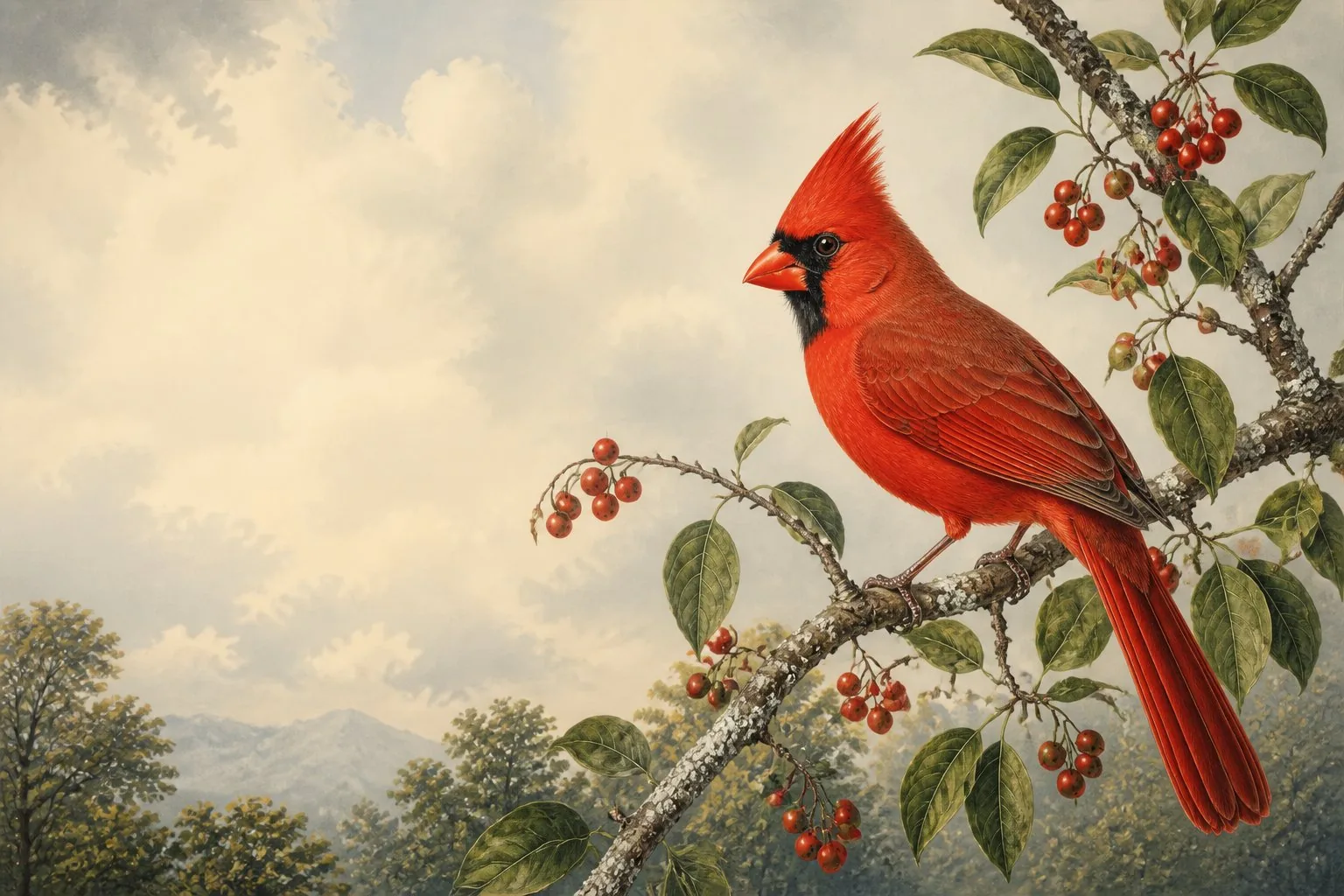
Biology
Where Are Cardinals Found
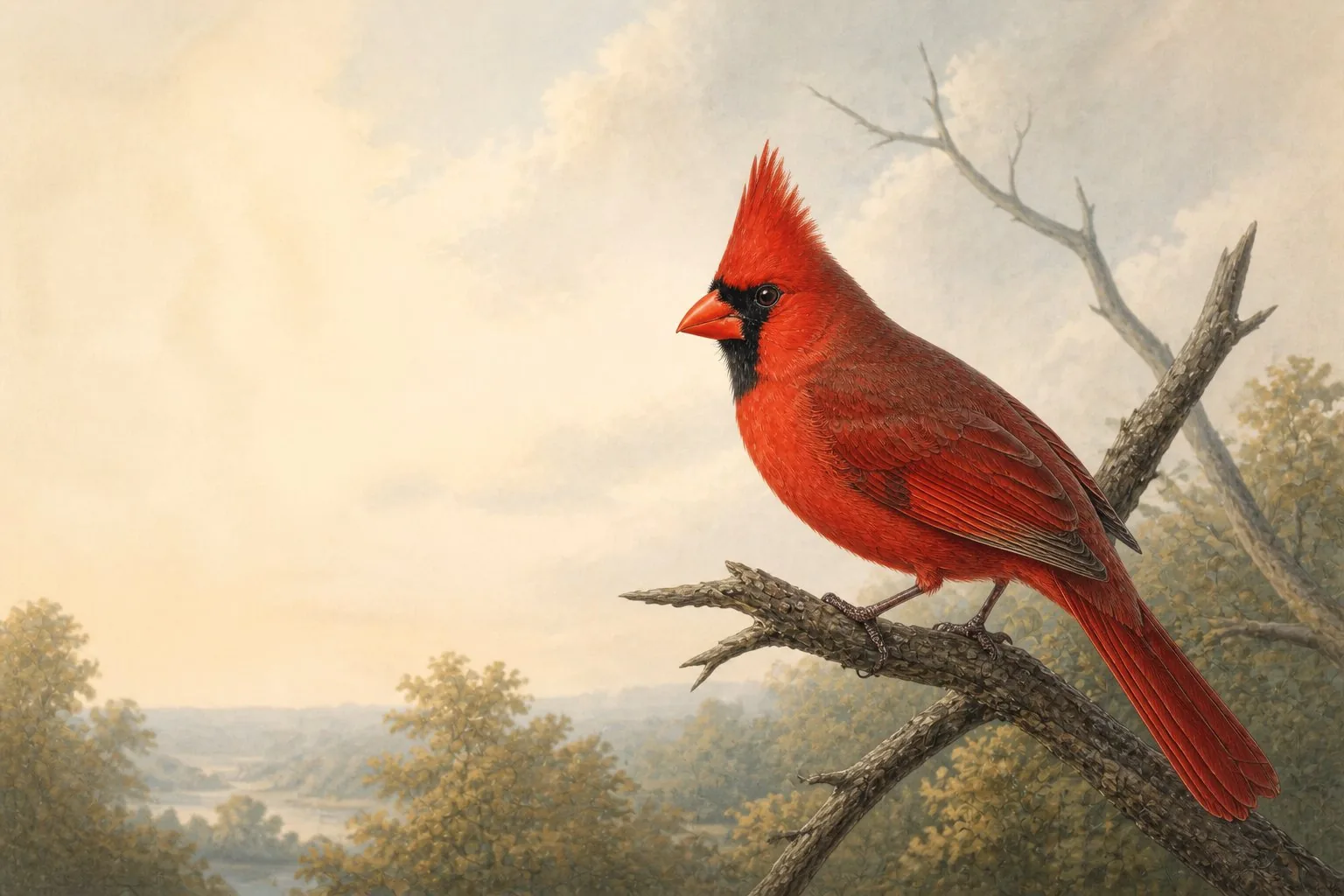
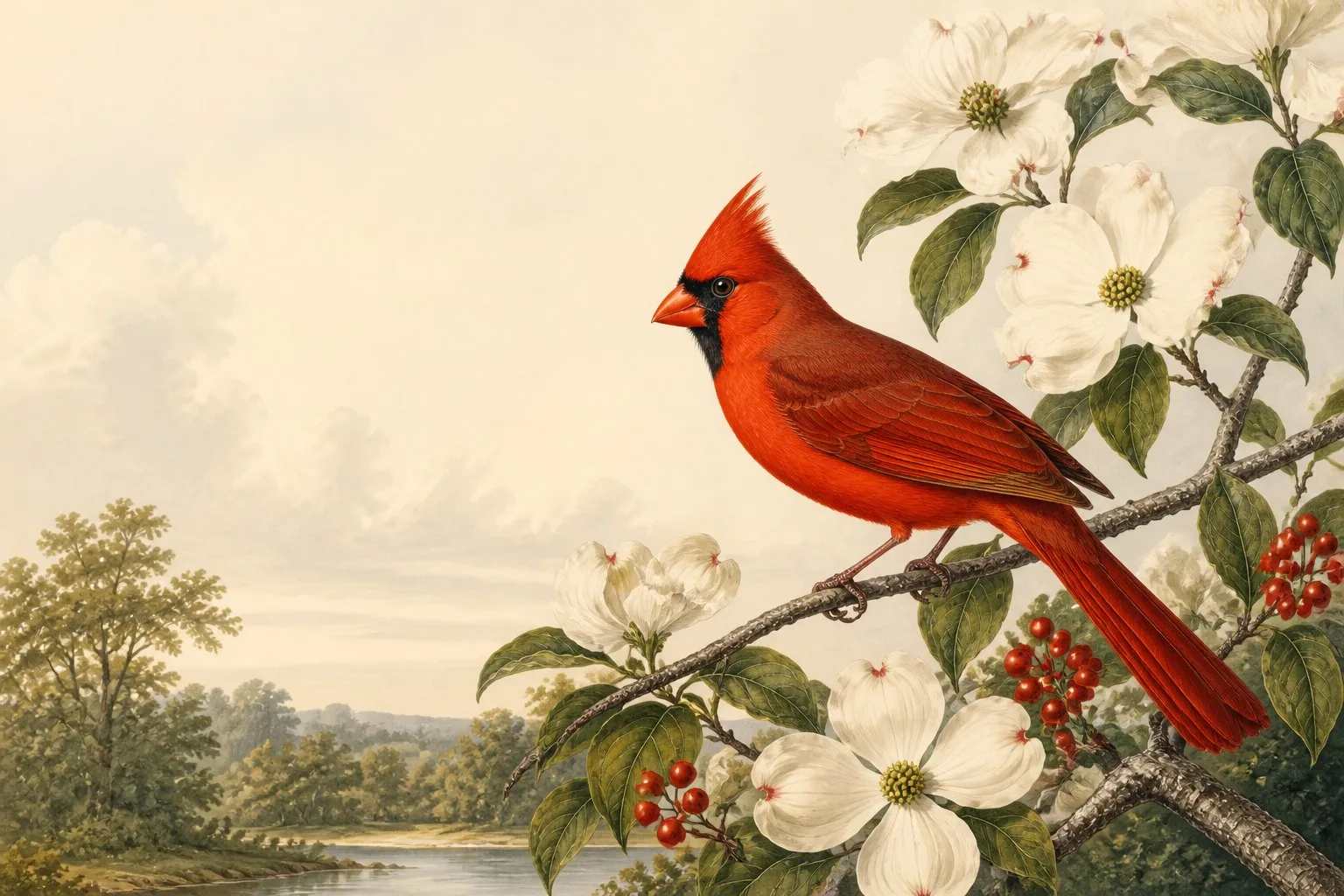
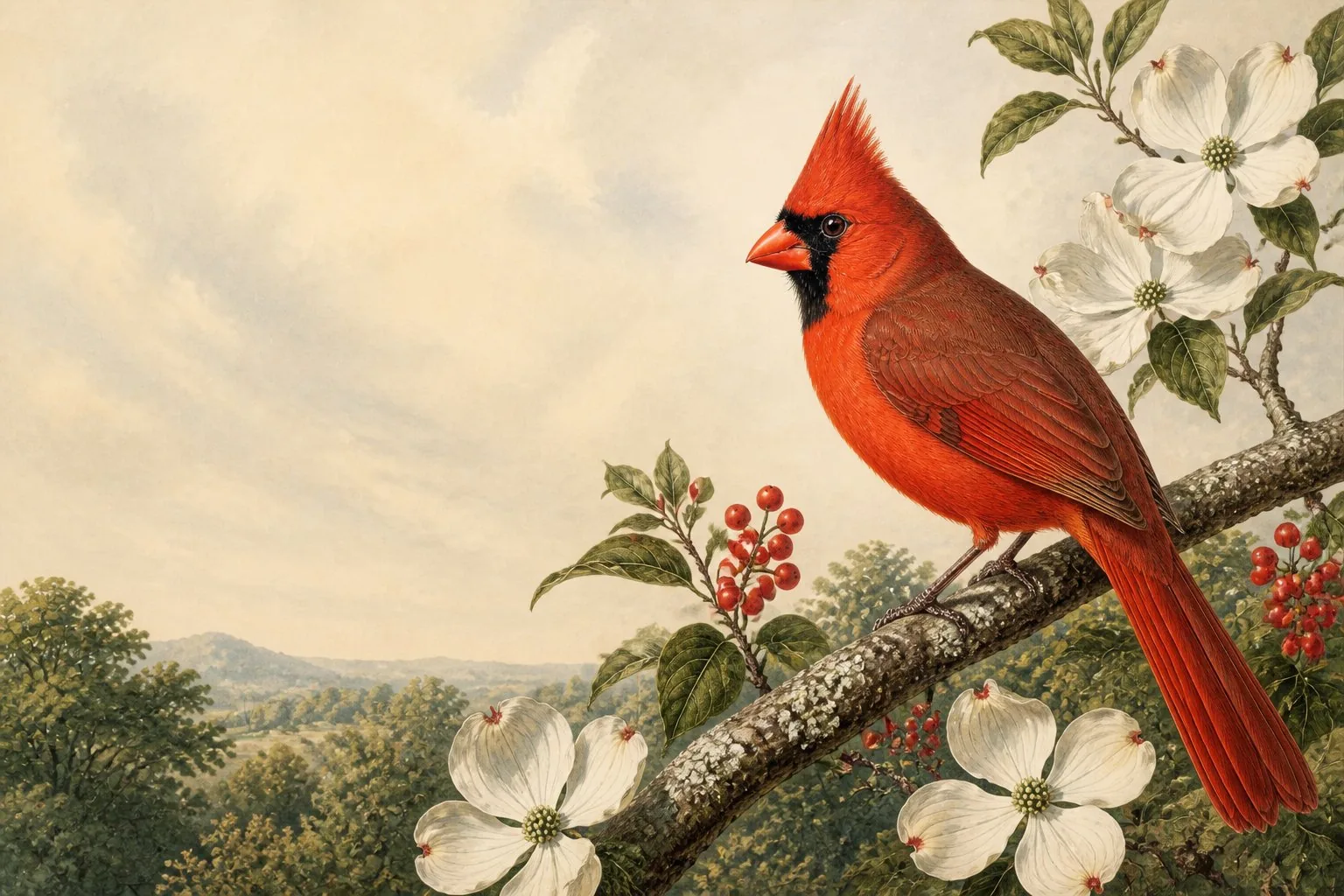
Stand at a window in Ontario in January and watch a male cardinal land on a bare dogwood branch. He should not be there. A century ago, he was not.
Cardinalis cardinalis is native to the eastern and southeastern United States, the Mexican highlands, and a corridor of Central America running down to Belize. He is not a bird of cold climates. His bill is built for cracking hard seeds, not for surviving prolonged snow. His plumage offers nothing in the way of insulation beyond what any medium-sized songbird carries. By every ecological measure, he is a bird of thickets and woodland edges in the warm south, and the populations of Maine, Ohio, Ontario, and southern Quebec are, in the long view, newcomers.
The reason he is there is backyard feeders. This is not a metaphor. It is the actual mechanism. Cardinals do not migrate. Once a pair establishes a territory, they hold it through winter or they die. Before the twentieth century, that equation failed north of roughly the Ohio River. Now there are an estimated 100 million cardinals in North America, and the northern fringe of that range keeps moving. Long-term monitoring by Cornell’s Project FeederWatch has tracked the northward push across decades. The correlation with feeder density is direct.
The cardinal’s range is, in part, a map of where Americans have decided to feed birds. The bird followed the people north.
This matters for understanding where cardinals are found - and where they are not. The gaps in the range are not random. There are no cardinals in the Pacific Northwest, in the Mountain West above the desert floor, or in the interior Great Plains west of the Missouri River. These are not places that lack suitable temperature. They are places that lack the dense shrub layer cardinals require for nesting, the hedgerow structure they use as travel corridors, and - critically in the north and west - the continuous feeder networks that now substitute for natural winter food. Washington State and Oregon have mild climates compared to Michigan. Cardinals are not there because the habitat structure is wrong, not because the thermometer is.
Where they are most common
The densest populations are in the Southeast: Virginia, the Carolinas, Georgia, Tennessee, Mississippi, and the Gulf states. Here the bird is genuinely native in the deepest sense - resident in old-growth river bottomland, city parks, scrubby pine edges, and suburban cul-de-sacs alike. In this band, a morning walk in any month of the year will produce a male cardinal, usually singing from a high exposed perch.
| Region | Status |
|---|---|
| Southeast US | Core native range, highest density |
| Eastern seaboard (Maine to Virginia) | Common, increasingly year-round |
| Midwest (Ohio, Indiana, Illinois, Iowa) | Common, expanding further north |
| Texas | Common throughout |
| Southern New Mexico and eastern Arizona | Present, desert-adapted populations |
| Southern Ontario and Quebec | Established, feeder-dependent in winter |
| Mexico and northern Central America | Native range, less studied |
| Pacific Northwest, Mountain West | Absent |
| Europe | Not present - a New World species entirely |
The Southwest populations are worth pausing on. Cardinals in the Sonoran desert edge of Arizona are not some isolated oddity - they are part of a continuous range that runs down through the Mexican highlands. These birds use desert scrub and dry washes the way eastern birds use hedgerows. The bill is the same. The song is the same. The plumage is the same. The habitat looks nothing like an Ohio garden, but the ecological function is identical: dense, thorny vegetation close to open foraging ground.
What the habitat tells us
Cardinals are birds of edges. Not forest. Not open field. The junction - where the trees thin out, where the shrubs thicken, where the tangle of berry-bearing plants meets a clearing or a lawn. Woodland edges, suburban gardens, hedgerows, city parks with mature shrubs, marshland margins, and the dense scrub of the desert southwest all qualify. Pure interior forest does not. Pure open grassland does not.
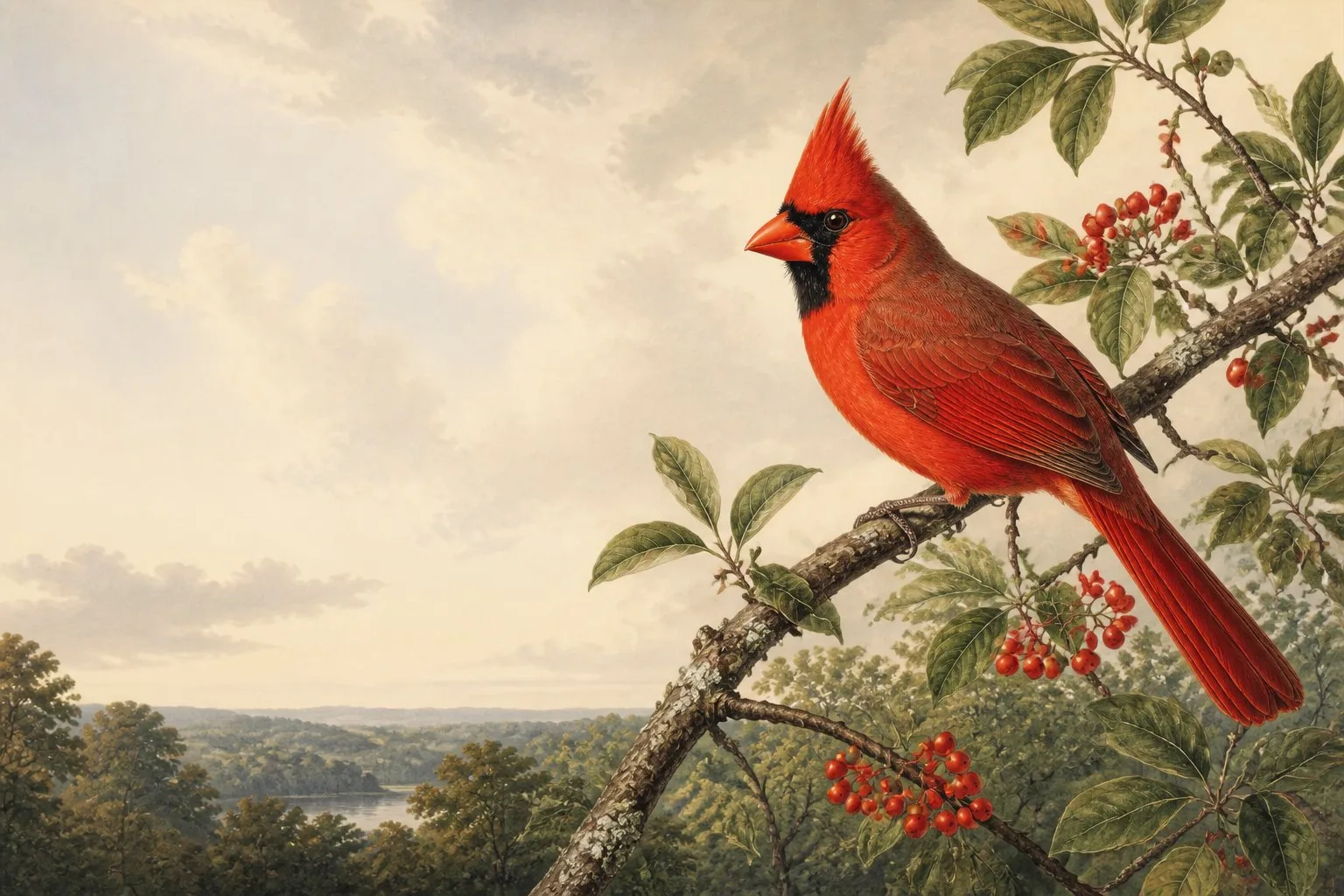
This edge preference is why suburban development, for all its ecological costs, has been genuinely good for cardinals. Suburbs are edge habitat at industrial scale. Every garden is a clearing; every fence line is a hedgerow; every ornamental holly is a nesting site. The cardinal, unusually among native birds, fits the shape of the American suburb almost perfectly.
It is also why understanding the northern cardinal species requires thinking past its famous colour. The red is what people notice. The range tells a different story: this is a bird that has exploited a specific habitat niche so successfully that it has become the state bird of seven US states - more than any other species - and colonised a continent in the process.
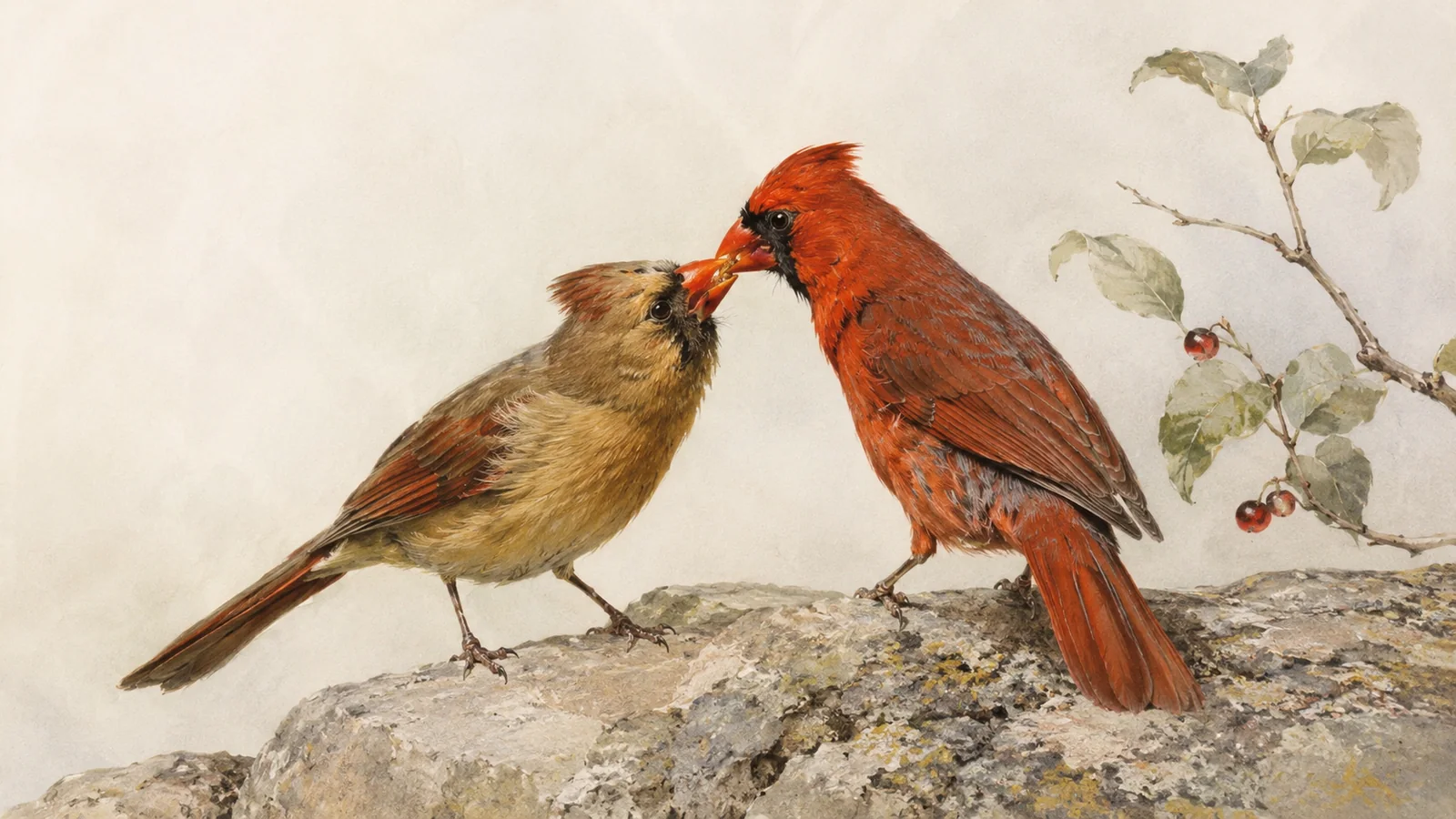
For more on what cardinals look like at different times of year, including why they occasionally appear nearly white or dramatically dull, the annual moult is worth reading. For a sense of how they move through their habitat socially, the question of what a group of cardinals is called opens onto behaviour the range maps do not show.
The short answer to where cardinals are found is: anywhere in North America east of the Great Plains with enough shrub cover to nest in and enough seed - natural or supplemental - to get through January. The longer answer is that the bird you see at your feeder in February is there, partly, because of choices made by every feeder-keeper between you and the Ohio Valley. The territory has been prepared.