Field Guide
Semipalmated Sandpiper
The tide goes out in the upper Bay of Fundy and the mudflats appear - vast, grey-brown, gleaming - and before the last ripple has settled there are birds on them. Not dozens. Not hundreds. Hundreds of thousands. They arrive from offshore in waves, each wave a roar of wings, and they settle to feed in such density that the flat itself appears to move. You stand at Mary’s Point, New Brunswick, in late July, and the number defeats your ability to count. Biologists estimate two million Semipalmated Sandpipers stage on these flats over the course of August. On peak days, up to a million birds may be present simultaneously. It is the largest concentration of shorebirds in the Western Hemisphere.
Each bird weighs about as much as a twenty-dollar bill. Each one has flown from the Arctic.
What it looks like
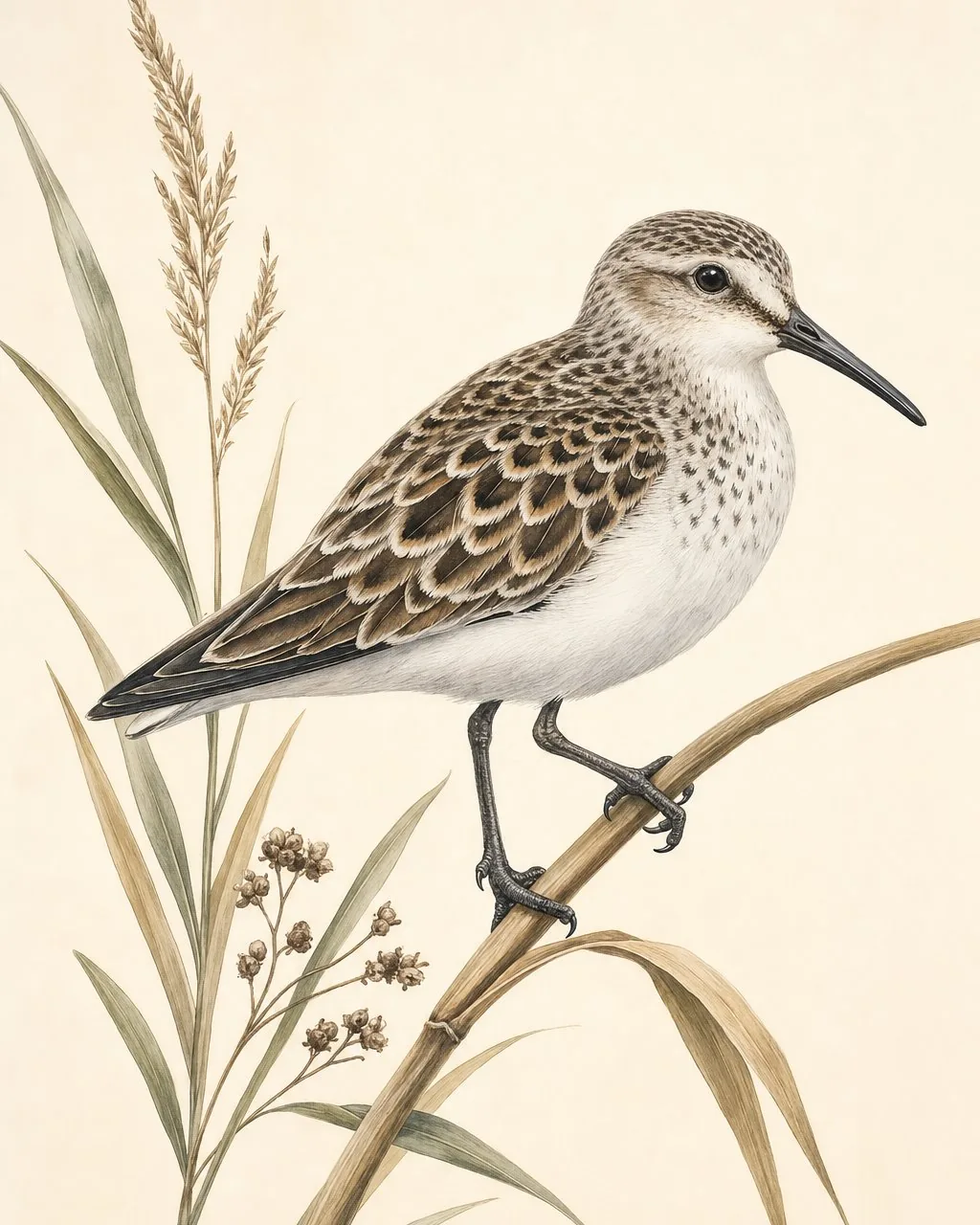
The Semipalmated Sandpiper is a small, compact shorebird with a round head, a short bill, and a distinctly blocky build for its family. In breeding plumage, worn during the brief Arctic summer and through the southbound migration, the upperparts are rich brown and rufous with black feather centres, giving a warm, scaled appearance across the back. The breast is washed buff-brown with clean dark streaking that fades quickly on the lower breast and disappears on the white belly. The supercilium is pale and obvious. The dark eyeline cuts through a face that is otherwise fairly plain.
By autumn, birds begin moulting toward winter plumage: a flatter grey-brown above, clean white below, less defined. A bird in full winter dress looks considerably less appealing on a mudflat - just another grey peep among grey peeps. Learning this species means learning it in both conditions.
The bill is short and blunt-tipped, not appreciably longer than the head, with a slightly drooped tip. It is shorter and thicker than the Western Sandpiper’s bill, which provides the most useful separation character where the two overlap.
The feet are the name. “Semipalmated” means half-webbed: there is a small but visible web between the three front toes - between the outer and middle toe, and between the middle and inner toe. This partial webbing is unique among North American small sandpipers and can be seen in the hand or in sharp photos. In the field it is sometimes visible when a bird walks on smooth wet sand, but not reliable for identification at distance.
| Feature | Measurement |
|---|---|
| Length | 13 - 15 cm |
| Weight | 20 - 45 g |
| Wingspan | 27 - 32 cm |
| Lifespan (wild) | 4 - 12 years |
| Clutch size | 4 eggs |
| Incubation period | 18 - 22 days |
Voice
The call is a short, grating churp or chert, delivered frequently in flight and less often on the ground. It is rougher and less musical than the Western Sandpiper’s thinner, higher cheet. The difference is subtle enough that mixed flocks require patience and good audio conditions to sort out by ear alone.
On the breeding ground, the male has a more elaborate song - a series of low churring and buzzing phrases delivered during aerial display over the tundra. Most observers outside the Arctic never hear this. What you learn at the Bay of Fundy or on Delaware Bay mudflats is the constant low murmur of thousands of birds calling at once, a soft collective sound that rises into a sharp rushing note as a Merlin or Peregrine sweeps through the flock and the entire mass lifts and turns in a single contracted body overhead.
The spectacle of the flock itself - the way a quarter million birds can pivot and compress and expand in less than a second - is one of the most frequently described experiences in North American birding. It has its own name in the literature: a murmuration for starlings, but for shorebirds the word is a whirl. Scientists studying the timing of individual responses within these flocks have documented response times of under 100 milliseconds, faster than any centrally coordinated system could manage. The flock thinks as one because each bird watches its nearest neighbours and acts.
Range and habitat
Calidris pusilla breeds on the Arctic and subarctic tundra of northern Canada and Alaska, from the Yukon and Northwest Territories east through Nunavut and into Quebec and Labrador. The nesting habitat is wet, low-lying tundra with small pools and sedge cover close to the coast or to river deltas.
In late summer and autumn the entire population - estimated at 2 to 3.5 million birds - migrates south through the interior and Atlantic coasts of North America, concentrating at key stopover sites before making transoceanic flights to the wintering grounds in South America. The wintering range extends from Venezuela and the Guianas south through Brazil to Argentina, primarily on coastal mudflats and mangrove margins.
Spring migration is faster and more northerly, peaking in May through the Gulf of Mexico coast and the Atlantic states. Fall migration is more extended, with adults preceding juveniles by three to four weeks. The birds staging at Maine beaches in August are a mix of failed breeders and adults that finished nesting successfully - lean birds with a long flight ahead of them.
The habitat at stopovers is specific: productive intertidal mudflats and sandy beaches with abundant surface-layer invertebrates. Not all coastlines qualify. The bird’s migration is efficient in part because it is selective - the same sites are used year after year, generation after generation, because they deliver the fuel needed for the next leg.
Diet
During southbound migration, the Semipalmated Sandpiper at the Bay of Fundy feeds almost exclusively on Corophium volutator, a small tube-dwelling amphipod crustacean that lives in the surface centimetres of the Bay’s rich mudflats.
This is a diet narrowed to a single species in a single location, and the birds know it. They arrive at Fundy not simply to rest but to exploit a superabundance: Corophium densities in upper Bay mudflats can reach 20,000 to 60,000 individuals per square metre. A sandpiper that can probe and peck at that density for twelve to fourteen hours per tidal cycle can double its body weight in ten to fourteen days. The birds arrive weighing 20 to 25 grams. They depart at 45 to 55 grams, nearly double, carrying fat reserves sufficient to power a non-stop overwater flight of 3,000 to 4,000 kilometres to wintering grounds in Suriname or Brazil.
It is one of the most demanding fuel calculations in animal migration. Too few days at Fundy and the bird will not have enough to reach South America. Too many days and the tides shift and the window closes.
At Delaware Bay in spring, the corresponding feast is horseshoe crab eggs. Millions of horseshoe crabs (Limulus polyphemus) crawl onto Bay beaches to spawn each May, and the buried masses of eggs are exposed and re-exposed by wave action and tidal surge. Not just Semipalmated Sandpipers but Red Knots, Ruddy Turnstones, Dunlin, and piping plovers all concentrate here to consume them. The bay functions as a refuelling terminal for the northbound Atlantic shorebird migration in the same way Fundy does for the southbound.
Breeding
A Semipalmated Sandpiper pair on the breeding grounds operates under time pressure from the moment they arrive. The Arctic summer is compressed - perhaps ten weeks between snowmelt and the beginning of freeze. The male arrives first and establishes a territory, displaying with low, churring flights over the tundra. The female selects a mate and the two begin nesting within days.
Four eggs are laid in a simple grass-lined scrape, often within a few metres of a low shrub or pool edge that provides concealment. The clutch is fixed at four in almost every nest found - the shorebird four-egg clutch is a consistent feature of the family, believed to reflect the maximum number of precocial chicks two adults can brood simultaneously. Incubation runs eighteen to twenty-two days, shared between both parents. At hatch, the chicks are fully downy and active, and within hours they are following their parents across the tundra.
Both adults brood the young but only one parent remains through fledging. In most pairs, the female departs shortly after the eggs hatch, leaving the male to accompany the chicks for their remaining three weeks to flight. The females that abandon early reach the southbound staging sites at Fundy and Delaware Bay ahead of the males, which explains why the first wave of adult shorebirds through the mid-Atlantic in July is dominated by females.
The stopover crisis
The Semipalmated Sandpiper’s population counts as Near Threatened on the IUCN Red List. The global population has declined by an estimated 80 percent since the 1970s by some survey methodologies, though the counts themselves are uncertain because census techniques have changed.
What is not uncertain is the mechanism of risk.
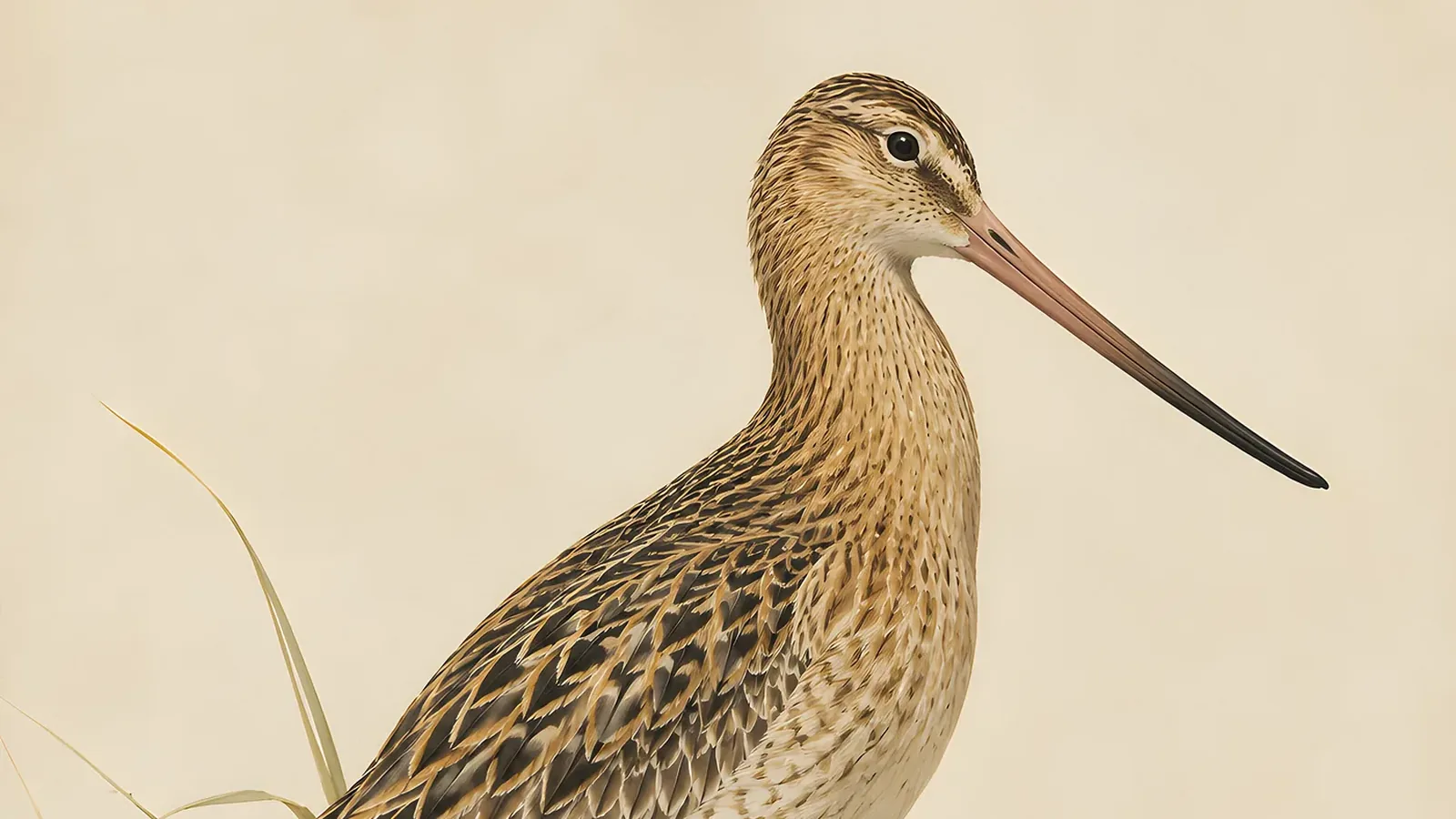
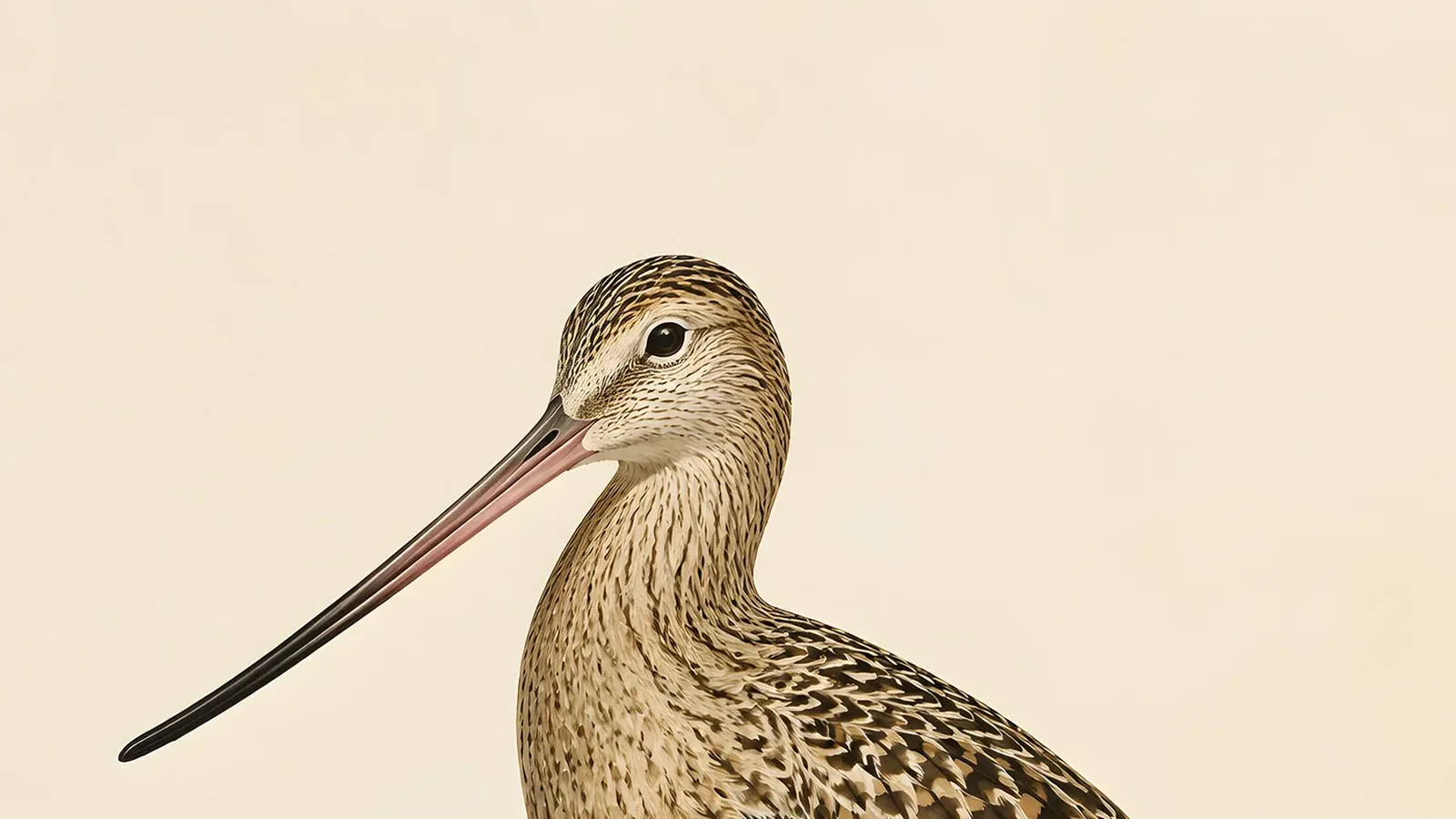
A species that has concentrated its migration through two or three critical refuelling sites has placed its entire survival on the continued productivity of those sites. The bar-tailed godwit makes the longest non-stop migratory flight of any bird, 11,000 kilometres from Alaska to New Zealand, and it depends similarly on a small number of intertidal refuelling zones in Asia that are vanishing under land reclamation. The Semipalmated Sandpiper’s situation in the western Atlantic is structurally identical.
At the Bay of Fundy, Corophium volutator populations declined sharply through the 1990s and 2000s. The reasons remain under investigation but include sediment changes in the upper Bay - the amphipod is sensitive to the physical structure of the mud - and possibly broader changes in water temperature and productivity. In years when Corophium is scarce, sandpipers cannot achieve the weight gains needed for the transoceanic flight. Weight data collected on departing birds in poor Corophium years show systematically lighter birds. The mortality consequences of insufficient fat reserves over open ocean are total.
Delaware Bay, the spring refuelling station, faces a different pressure. Horseshoe crab harvesting for bait - primarily for the eel and conch fisheries - reduced the crab population along the Delaware coast through the 1990s to the point where egg abundance on spawning beaches fell dramatically. The shorebird response was immediate and measurable: Red Knots, the focal species of Delaware Bay conservation campaigns, failed to achieve adequate departure weights. Semipalmated Sandpipers showed the same pattern at the same time.
“Stopover sites are not rest stops. They are precision-calibrated fuelling stations that birds have evolved to use over thousands of generations. Remove the fuel and you have not inconvenienced a migration. You have broken it.” - Pete Marra, Georgetown University, Bird of the Year lecture, 2019
Crab harvest restrictions have been implemented in New Jersey and Delaware since the late 2000s, and the horseshoe crab population has shown some recovery. Whether the recovery is sufficient and whether it continues under commercial pressure is reviewed annually by the Atlantic States Marine Fisheries Commission. The shorebirds themselves cannot attend those meetings.
The Bay of Fundy staging area is formally recognised as a Western Hemisphere Shorebird Reserve Network site of hemispheric importance. The recognition does not protect it from sedimentation, from climate shifts in Corophium abundance, or from changes in Bay hydrology. It names the problem without solving it.
What the numbers mean
Two million birds on a single set of mudflats is a number that overwhelms intuition. It sounds like abundance. It is not abundance. It is concentration - which is the opposite of ecological safety. A species distributed across two million square kilometres of suitable habitat is resilient to local disturbance. A species that compresses its entire population through two or three sites over two critical weeks is catastrophically exposed to anything that goes wrong at those sites.
Stand at Mary’s Point at high tide and watch the flock compress over the water in response to a falcon. The birds are a single organism for thirty seconds, spinning and folding and opening, then settling to the receding flat as the tide drops. What you are watching is three million years of selection for speed, precision, and synchrony. It is one of the most astonishing displays in North American wildlife.
It also means that the entire species - every bird of this kind in the Western Hemisphere - passes through a handful of mudflats in a few weeks each year. That is the bet evolution made. The question is whether we can hold the table steady long enough for the birds to keep making it.