Free shipping to the US, Canada & Europe
State Guide
Minnesota hosts red birds from three ecological worlds: boreal forest, mature hardwood, and suburb. Which ones you see depends entirely on where you stand.
May 3, 2024 4 min read
On a January morning at Sax-Zim Bog - about an hour north of Duluth in St. Louis County - a Pine Grosbeak drops out of a spruce and lands in a mountain ash loaded with frozen berries. Pink-red and ash-gray, plump as a rubber ball, he works through the fruit without hurry. Two hundred miles south in the Twin Cities, a male Northern Cardinal cracks sunflower seeds at a backyard feeder, brilliant red against a white yard. Same state, completely different world.
Minnesota’s red birds cannot be treated as a single list. The state runs from black-spruce boreal in the north to mature hardwood forest in the southeast, and each zone produces its own suite. The species do not share territory - they partition it.
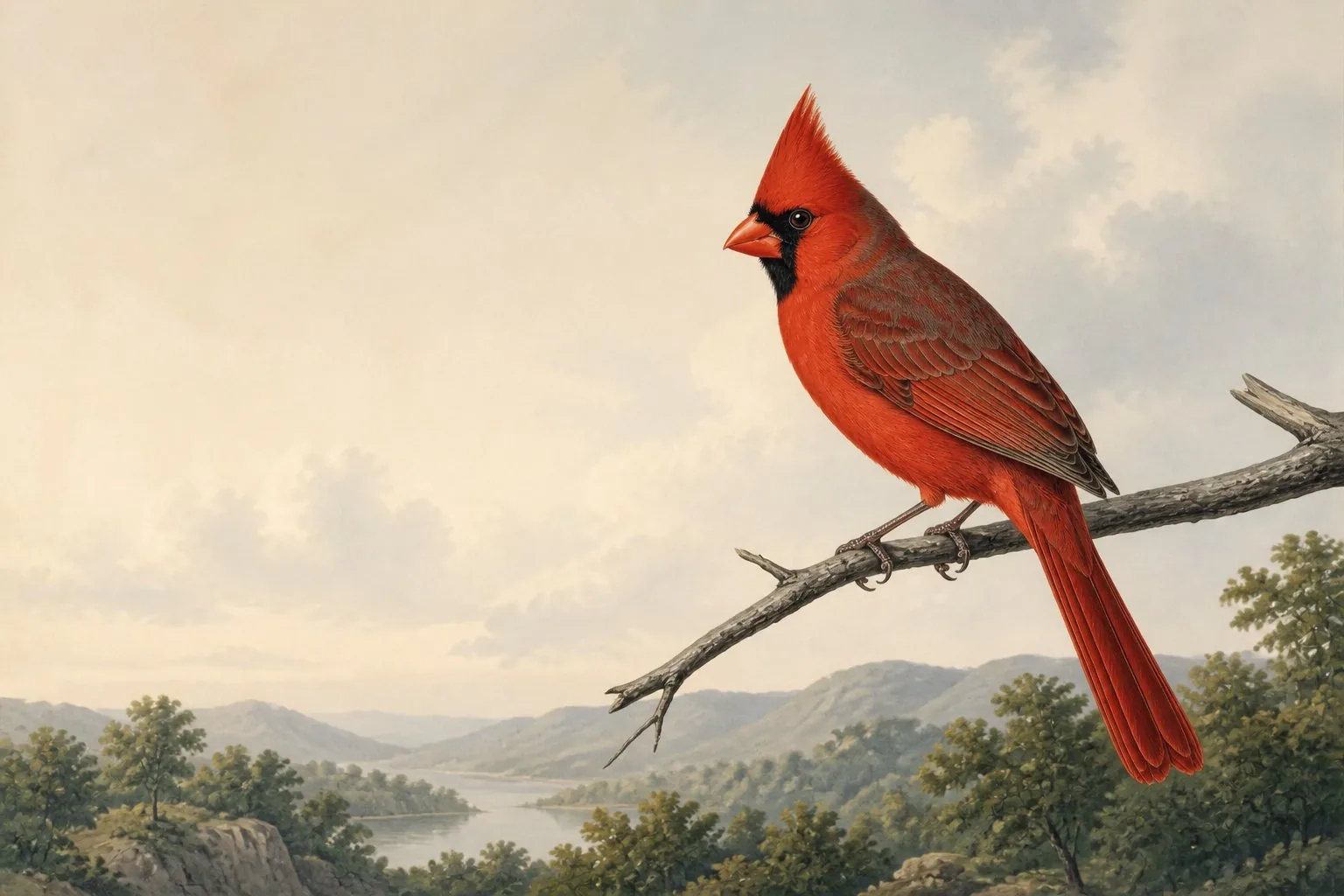
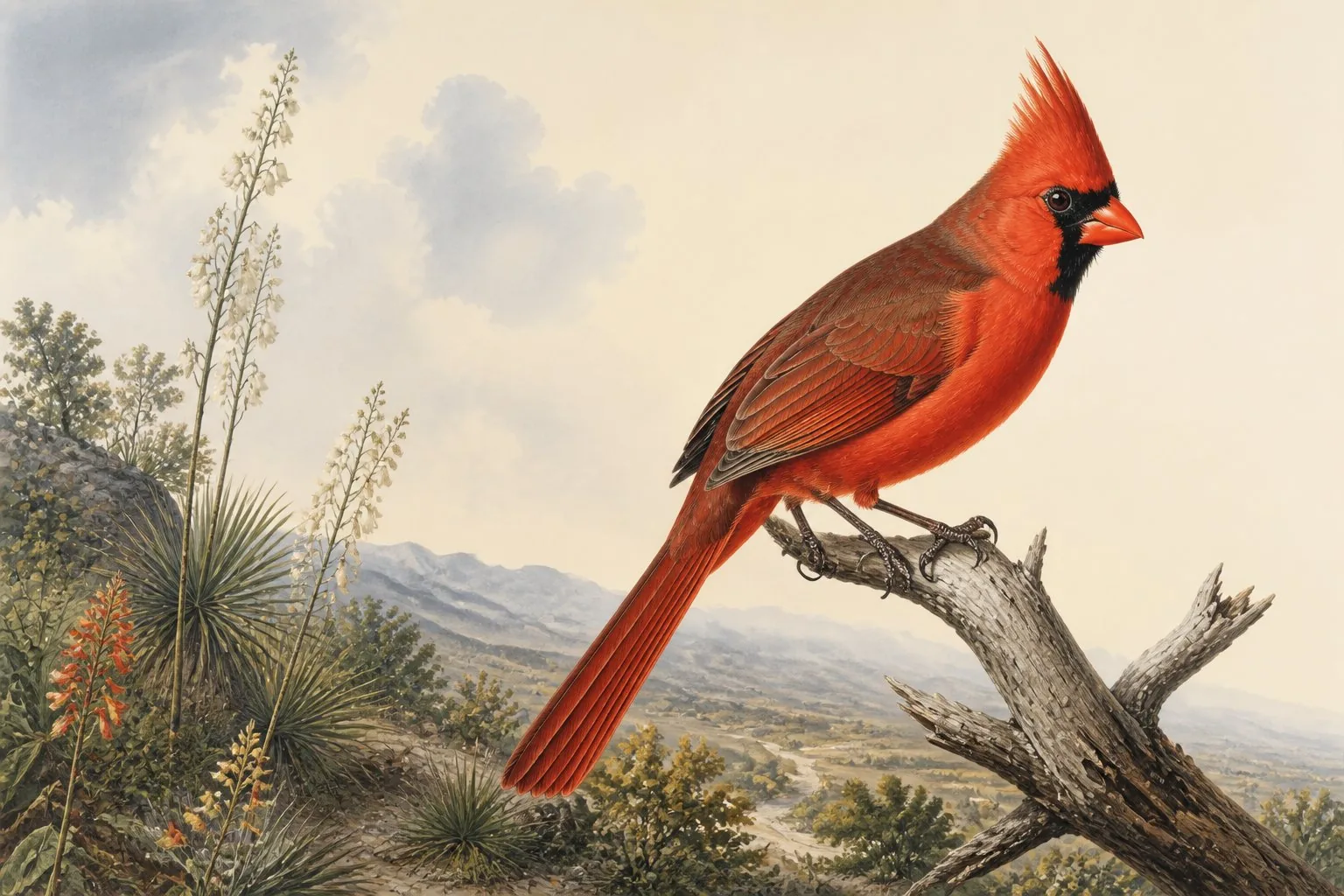
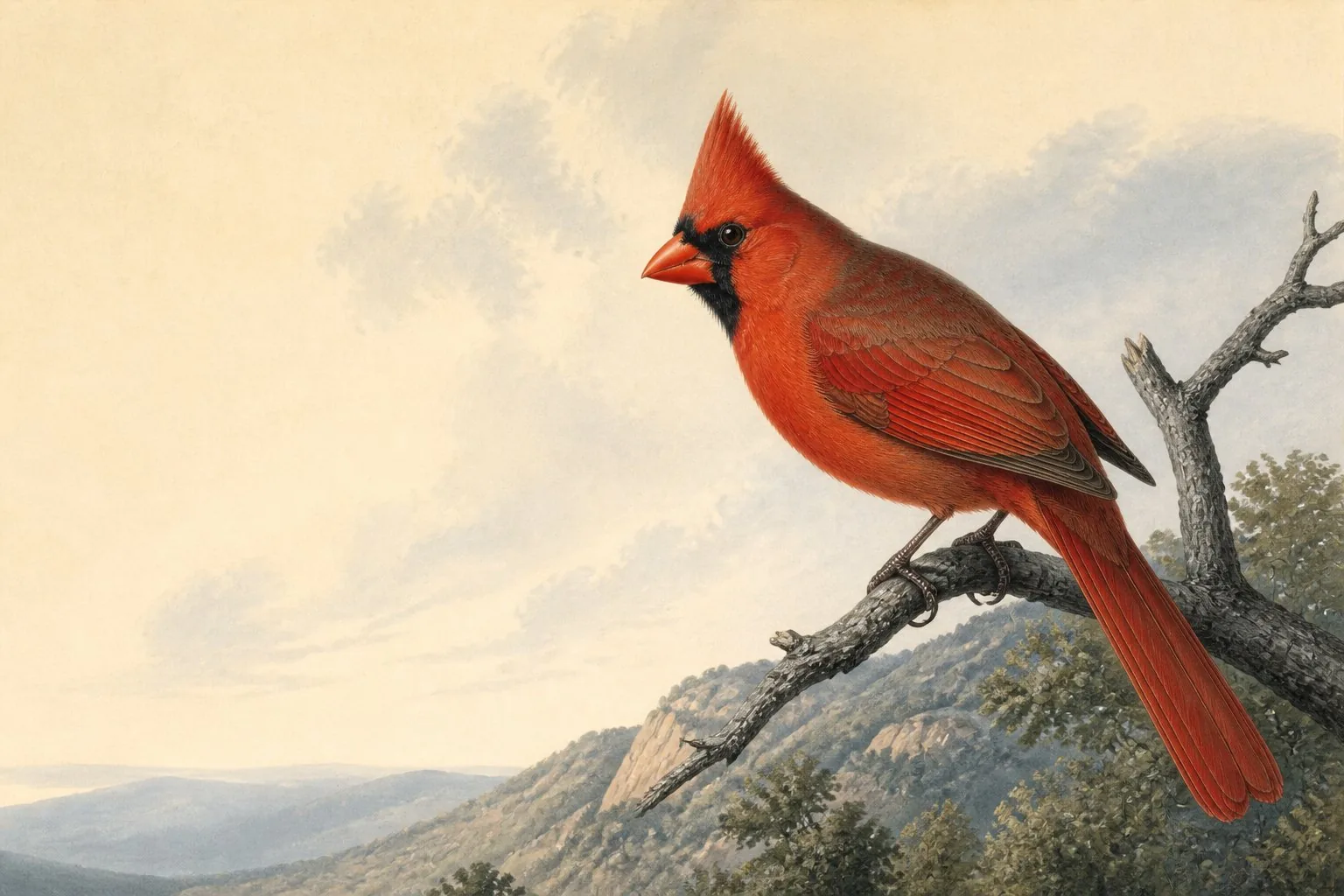
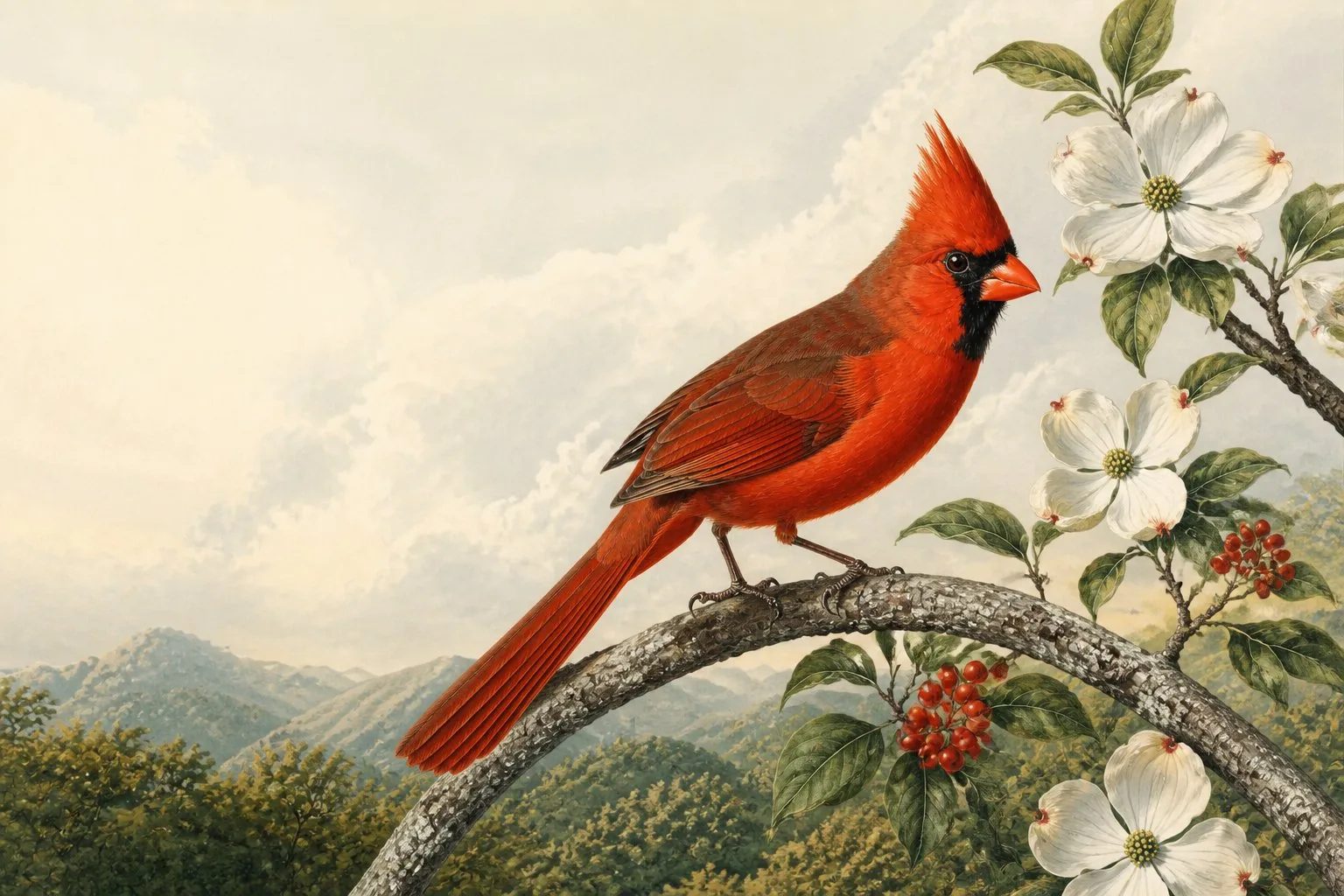
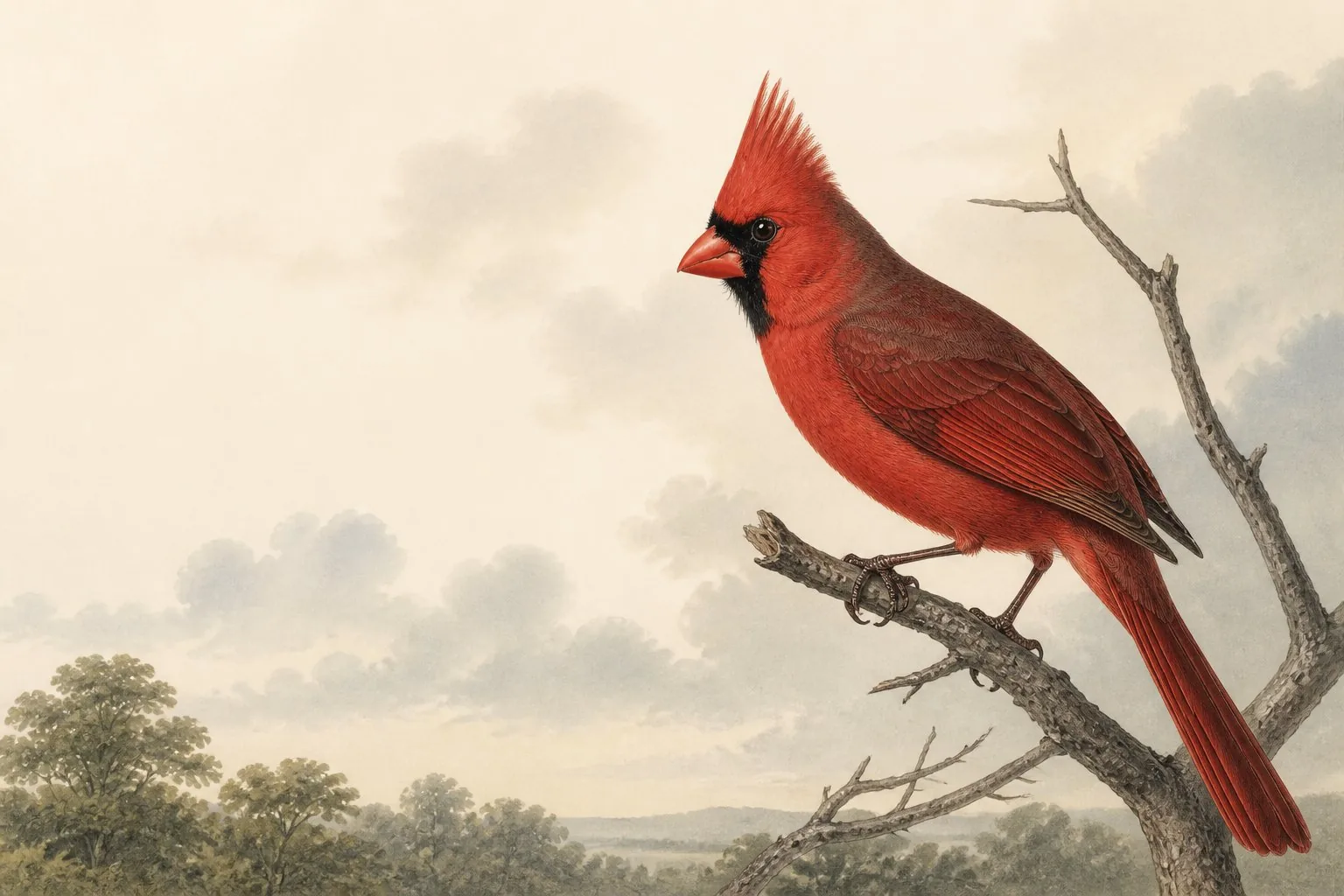
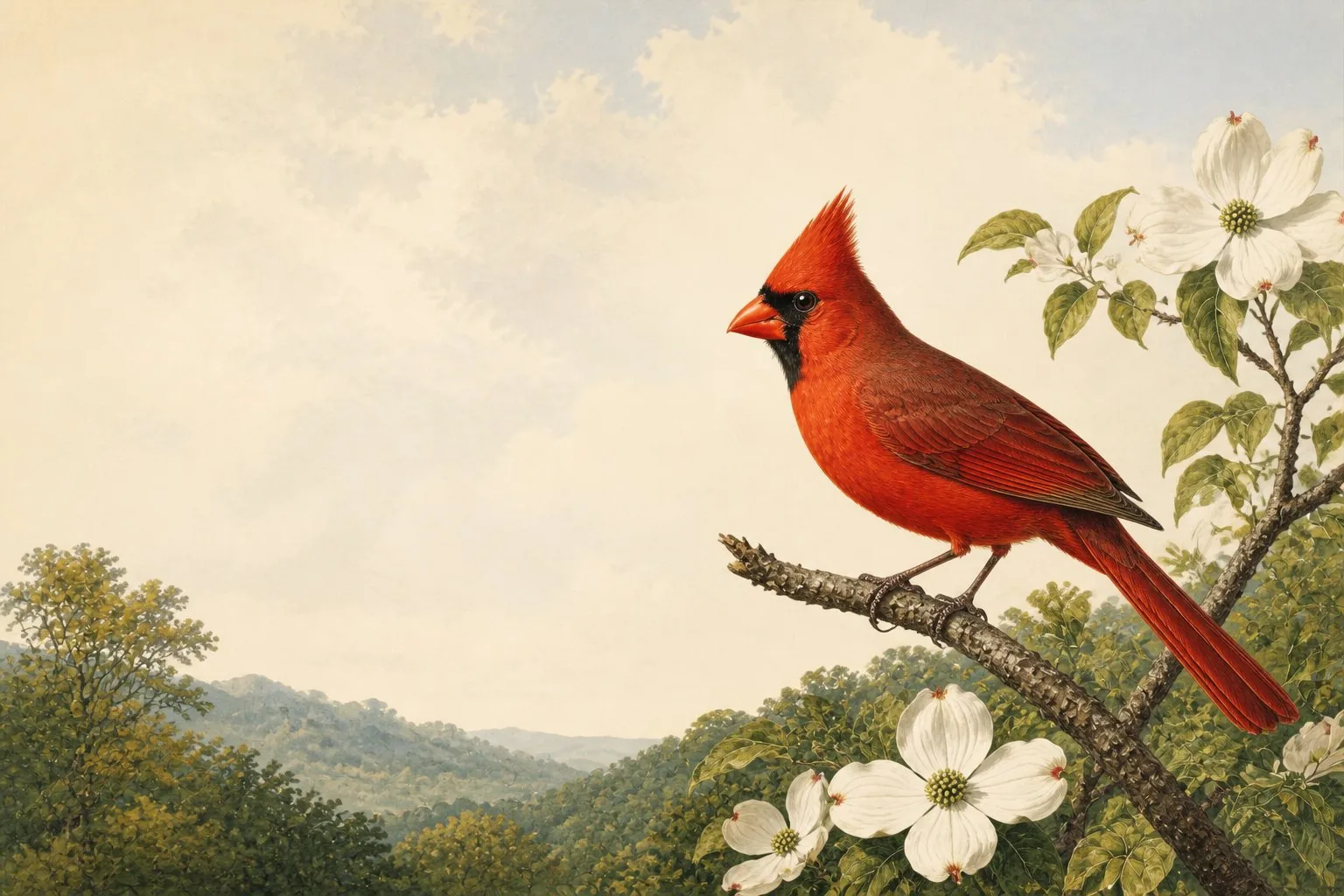
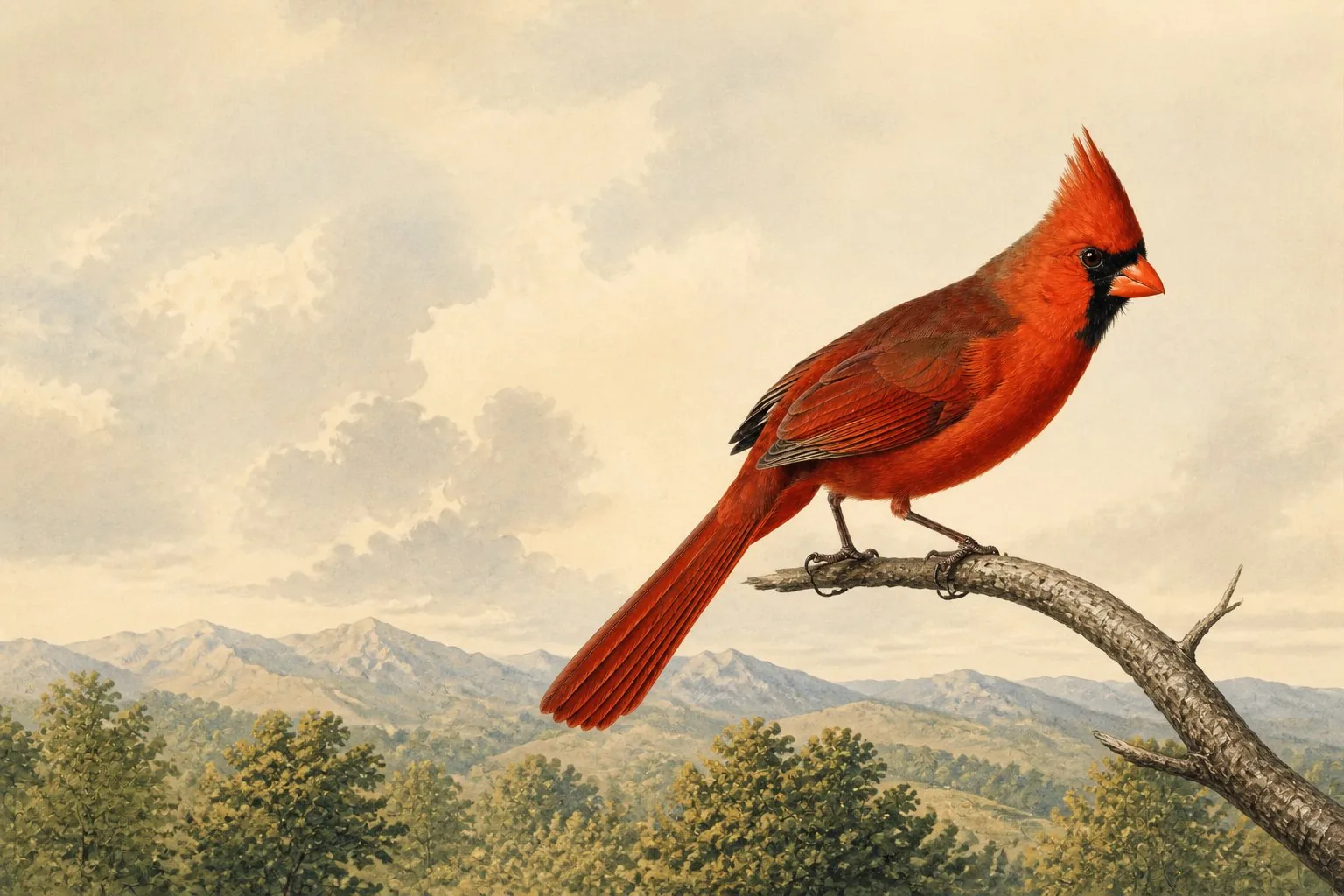
The Northern Cardinal (Cardinalis cardinalis) was not always a Minnesota bird. The Minnesota Breeding Bird Atlas records the first confirmed state sighting in Minneapolis in the fall of 1875, with nesting not confirmed until 1925 in Steele County. The expansion northward through the twentieth century was driven by warmer winters, forest fragmentation, and the spread of winter feeders. By the Atlas survey of 2009-2013, cardinals appeared in 79 of Minnesota’s 87 counties, with a statewide population estimated at 624,000 adults. Cornell’s All About Birds notes he does not molt into a duller winter coat. He is as red in January as he is in June, which is why the species dominates feeder counts all winter while everything else has gone grey.
See cardinal molting for detail on how that plumage holds.
Male Scarlet Tanagers (Piranga olivacea) arrive in mid-May after crossing the Gulf of Mexico overnight. The male is traffic-signal red with jet-black wings - the Audubon Field Guide notes the female remains dull yellow-green year-round, which is why most people never notice her. He stays up in the high canopy of mature oak and maple, and most birders hear him before they see him.
The Minnesota Breeding Bird Atlas documented tanagers in 75 of the state’s 87 counties, most abundant in the north-central region. Breeding density reached 12.5 pairs per 40 hectares in mature oak stands. The Audubon Field Guide flags the species as vulnerable to habitat loss on both its Minnesota breeding grounds and its Andean wintering range. Fragment the forest and tanager numbers fall.
By September he has swapped his red body feathers for yellow-green and left the state. The bird that arrives looking like an emergency flare departs looking like a leaf.
Audubon describes Sax-Zim Bog as “the Arctic Riviera” - 300 square miles of spruce bog, tamarack, and meadow in northern Minnesota that serves as a southern extension of the boreal zone. Pine Grosbeaks (Pinicola enucleator) winter there in most years, working fruiting mountain ash and crabapple. The Audubon Field Guide puts their global population at approximately 11 million (IUCN: Least Concern) but notes they irrupt southward only when food supplies fail farther north. In lean years they may not reach Minnesota at all.
Males are pink-red with gray flanks and two white wingbars - a cooler tone than the cardinal, more rose than scarlet.
Red Crossbills (Loxia curvirostra) and White-winged Crossbills (Loxia leucoptera) follow the same logic. Cornell’s All About Birds notes White-winged Crossbills push south when spruce cone crops fail. Neither is guaranteed in any given winter.
The Northern Cardinal is the only red bird in Minnesota that chose to stay. Every other red species on this list arrives on a fixed schedule or appears only when its own ecosystem misfires. That distinction matters more than color when you are trying to find them.
The Red-headed Woodpecker (Melanerpes erythrocephalus) is the only North American woodpecker with a completely red head. It depends on open oak savanna with large dead snags - habitat Partners in Flight says declined by 54% from 1966 to 2019, earning the species a place on the Yellow Watch List. Fire suppression has closed the open understory. The Audubon conservation plan for Minnesota identifies fire-maintained oak savanna as the fix. It is a year-round resident where the right habitat survives.
Minnesota’s red birds are distributed by cold tolerance and forest type. The cardinal spread north with the suburbs and stays year-round. The Scarlet Tanager uses the state for roughly three months. The Pine Grosbeak and crossbills appear only when the boreal system misfires. The Red-headed Woodpecker holds on in oak patches that grow smaller each decade.
At a Twin Cities feeder in January you can see cardinals and House Finches (Haemorhous mexicanus). In a mature oak stand near Brainerd in May you can hear a Scarlet Tanager. At Sax-Zim Bog in February you might see a Pine Grosbeak working a mountain ash sixty metres off the road. All three are red. None of them is in the same world.
Birders coming from orange birds in Michigan or orange birds in Illinois will notice that Minnesota’s winter palette skews toward crimson and rose. That is the boreal system expressing itself. The grosbeak on the mountain ash is evidence that a different latitude begins about an hour north of wherever you are standing.
As an Amazon Associate we earn from qualifying purchases. Linked products are ones we genuinely recommend.
 May 3, 2024
 4 min read