Biology
How Do Birds Get Their Colors
Hold a blue jay feather up to the light and turn it until the face points away from you. The blue disappears. What you see underneath is brown.
That is not a photographic trick or a failure of vision. It is the central fact of bird color: most of what you see at the feeder is not dye. The blue on a blue jay is produced by air pockets in the feather barbs scattering short-wavelength light back toward your eye - the same physics that makes the sky blue. Crush the feather, saturate it, destroy its structure, and the blue goes with it. There is no blue pigment involved.
This is worth knowing before looking at the birds that do carry pigment, because it changes what you are actually watching when you watch birds.
Pigment: what the bird borrows and what it makes
Bird feathers hold four families of pigment. Each has a different origin story.
Melanins are the pigments birds manufacture themselves. Produced in cells called melanoblasts from an amino acid called tyrosine, eumelanins create dark browns, grays, and black, while phaeomelanins make tans and reddish-browns. The black wing-tip feathers on a herring gull, the brown streaking on a sparrow, the dark cap on a chickadee - all melanin. Cornell’s All About Birds notes that melanin-bearing feathers are also structurally tougher and more resistant to wear than unpigmented ones, which is why many white-winged seabirds carry black wingtips: the color is incidental, the reinforcement is the point.
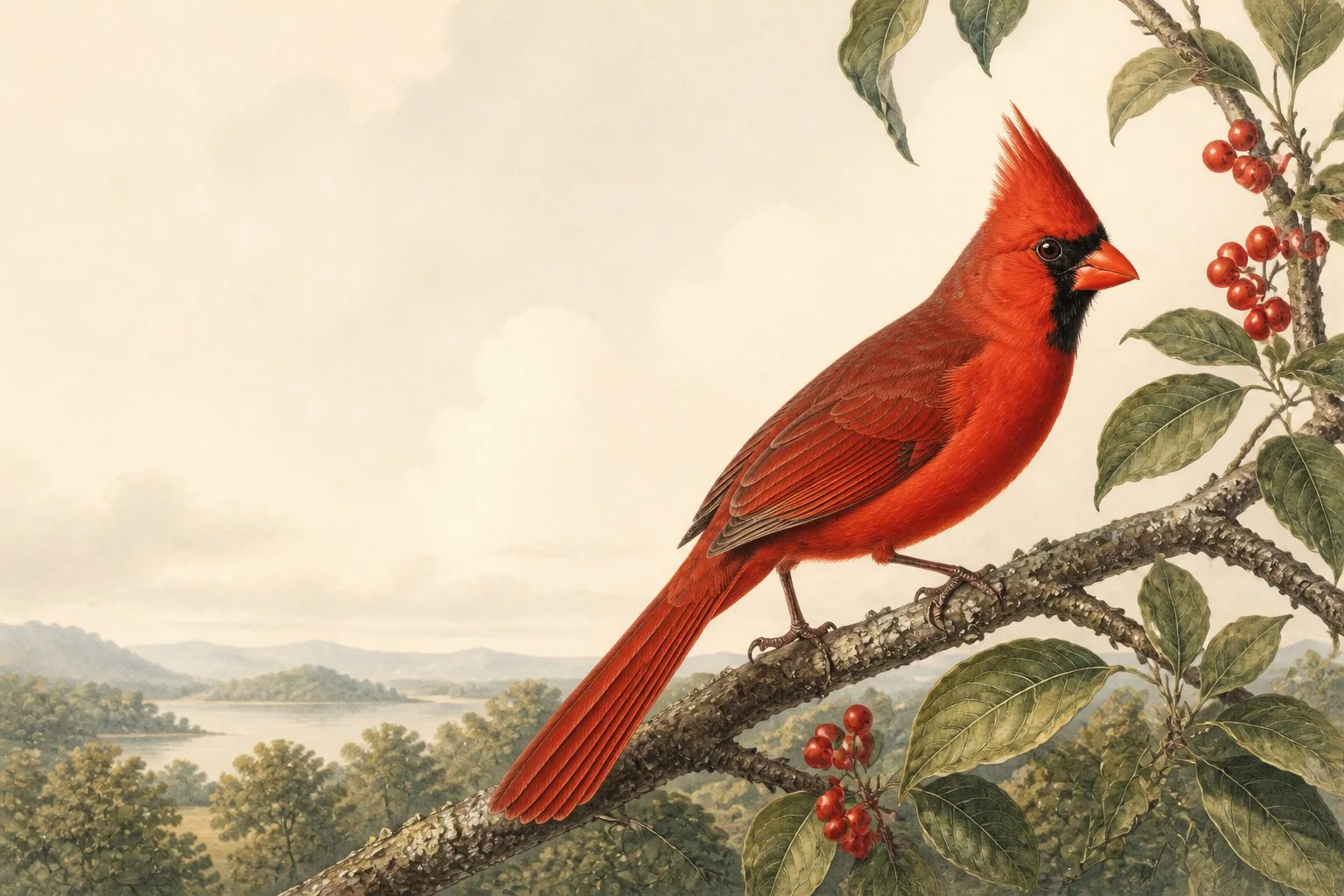
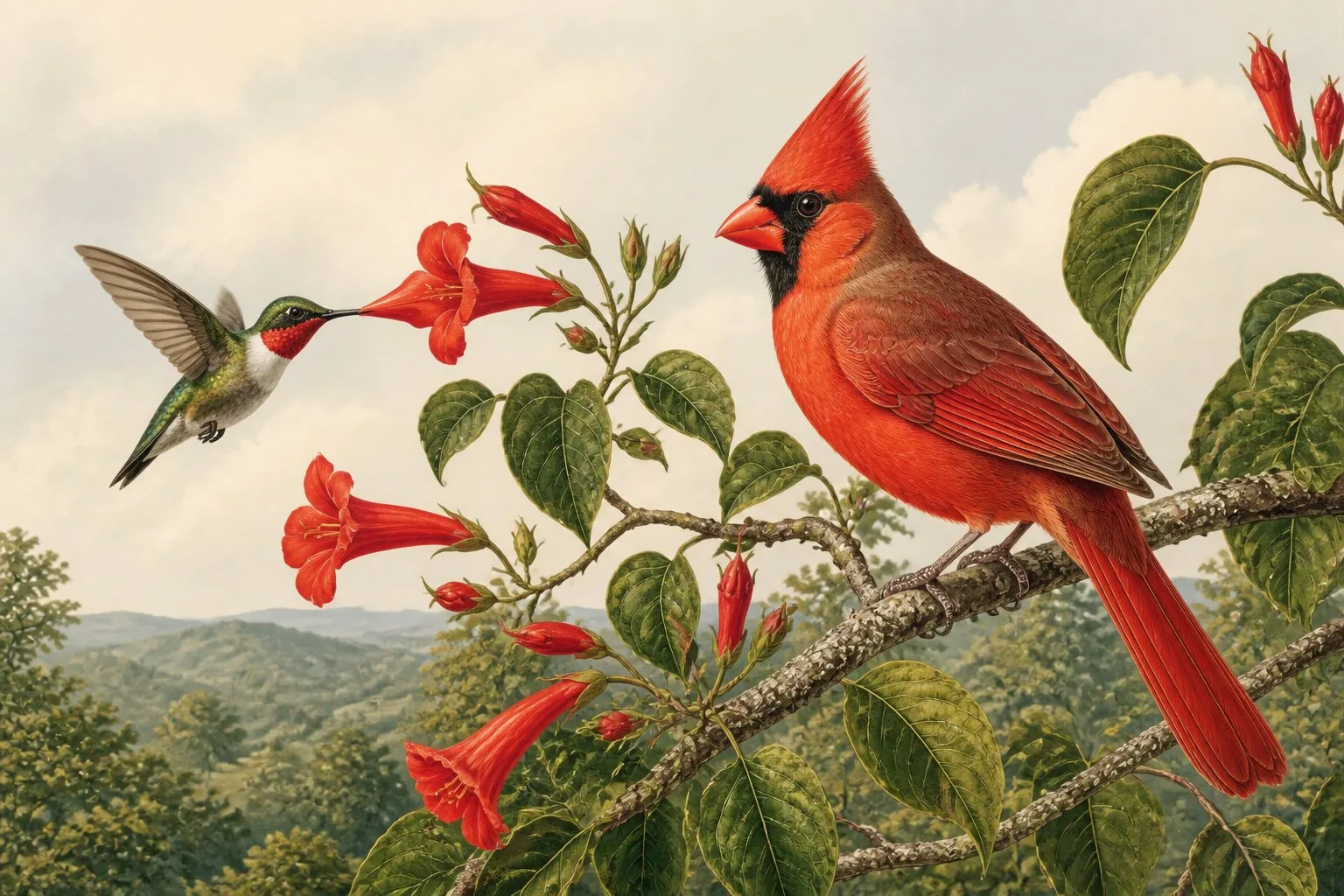
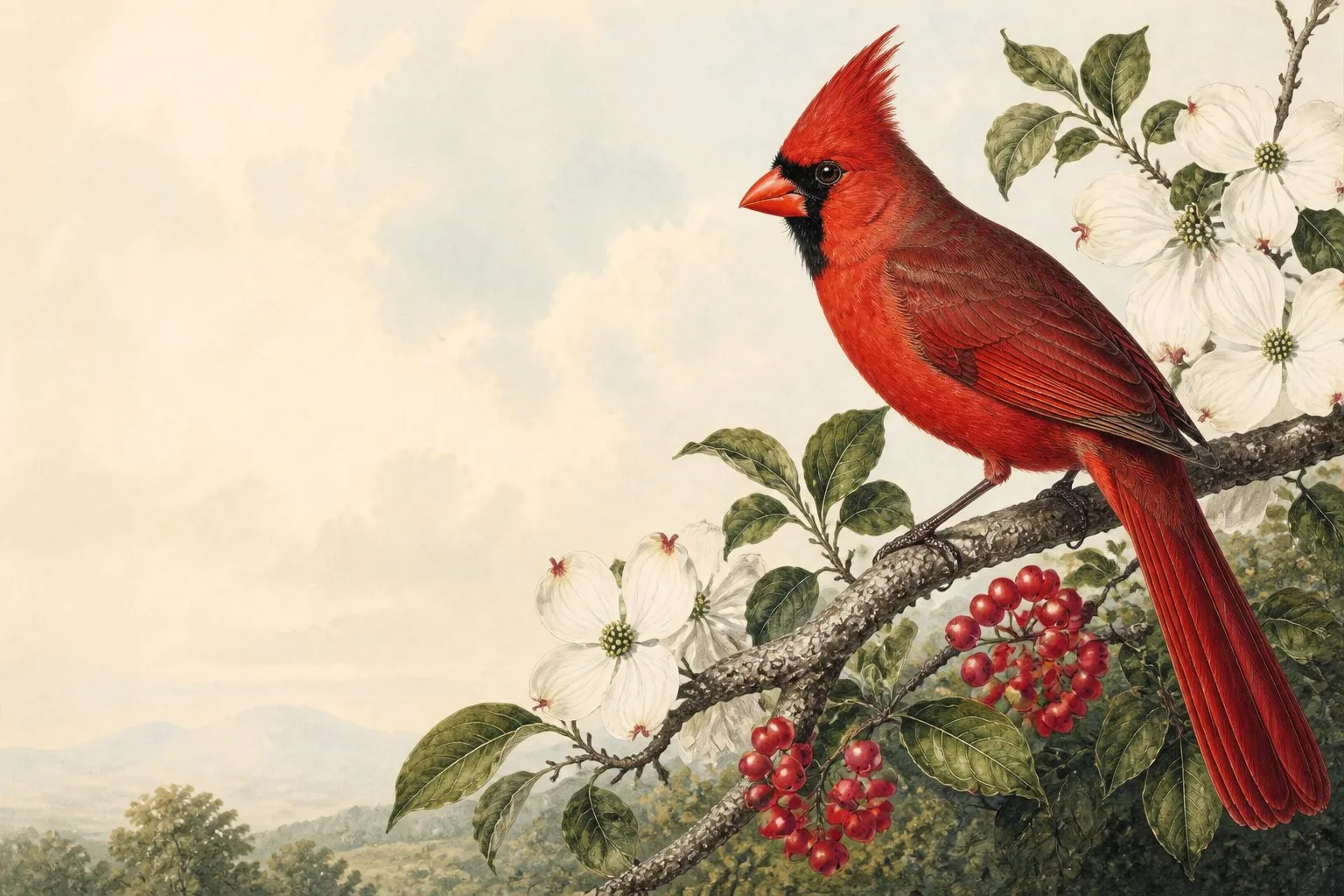
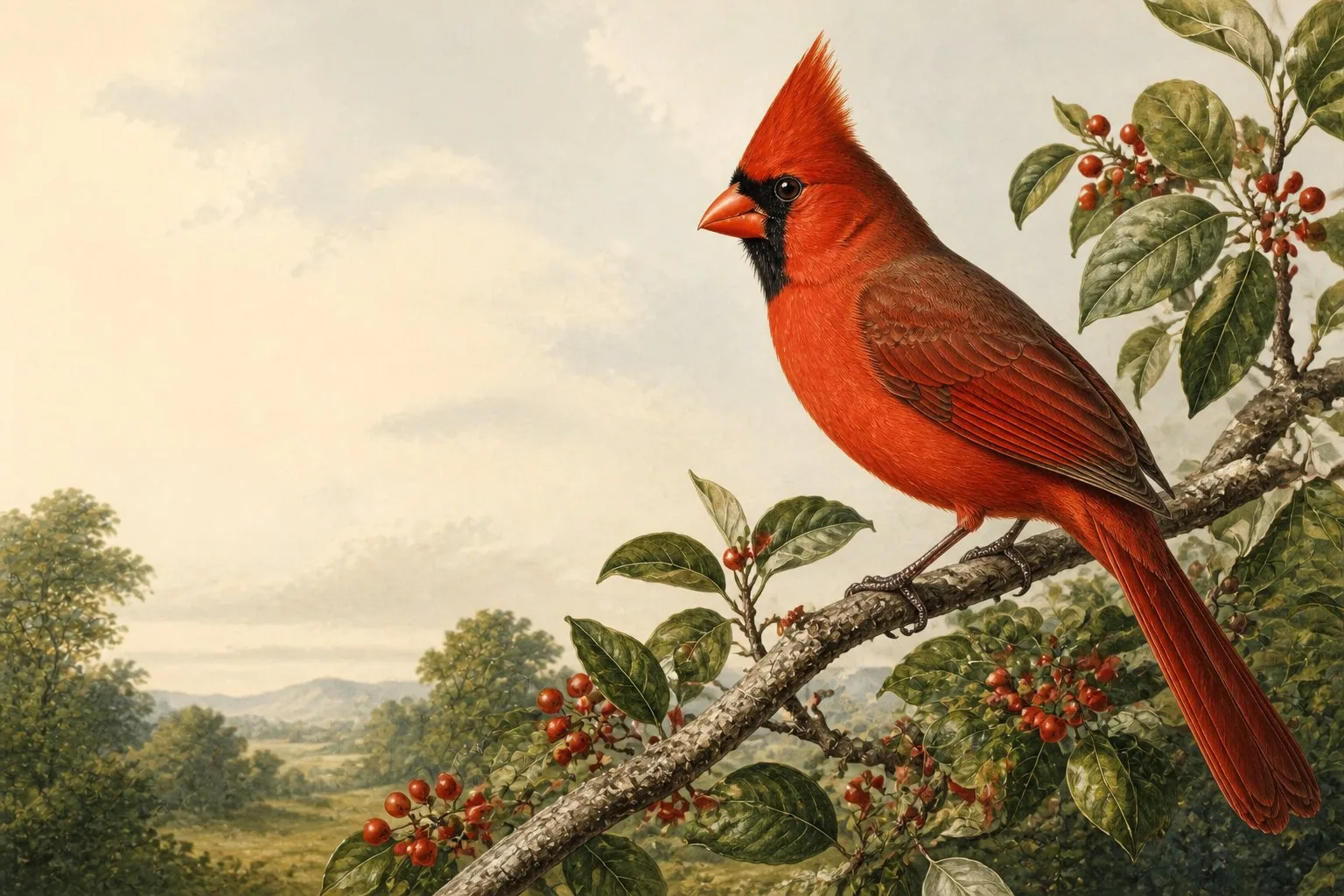
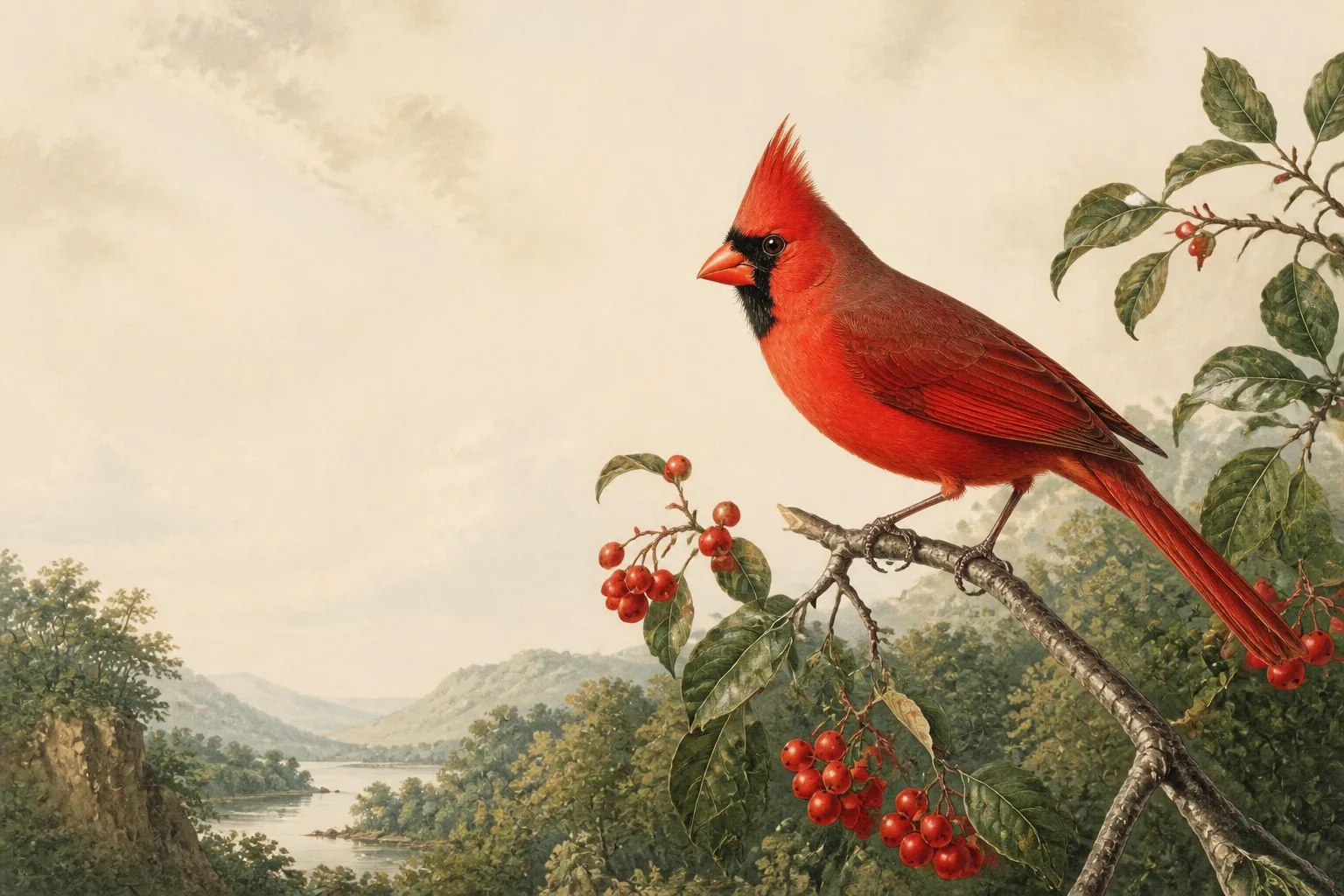
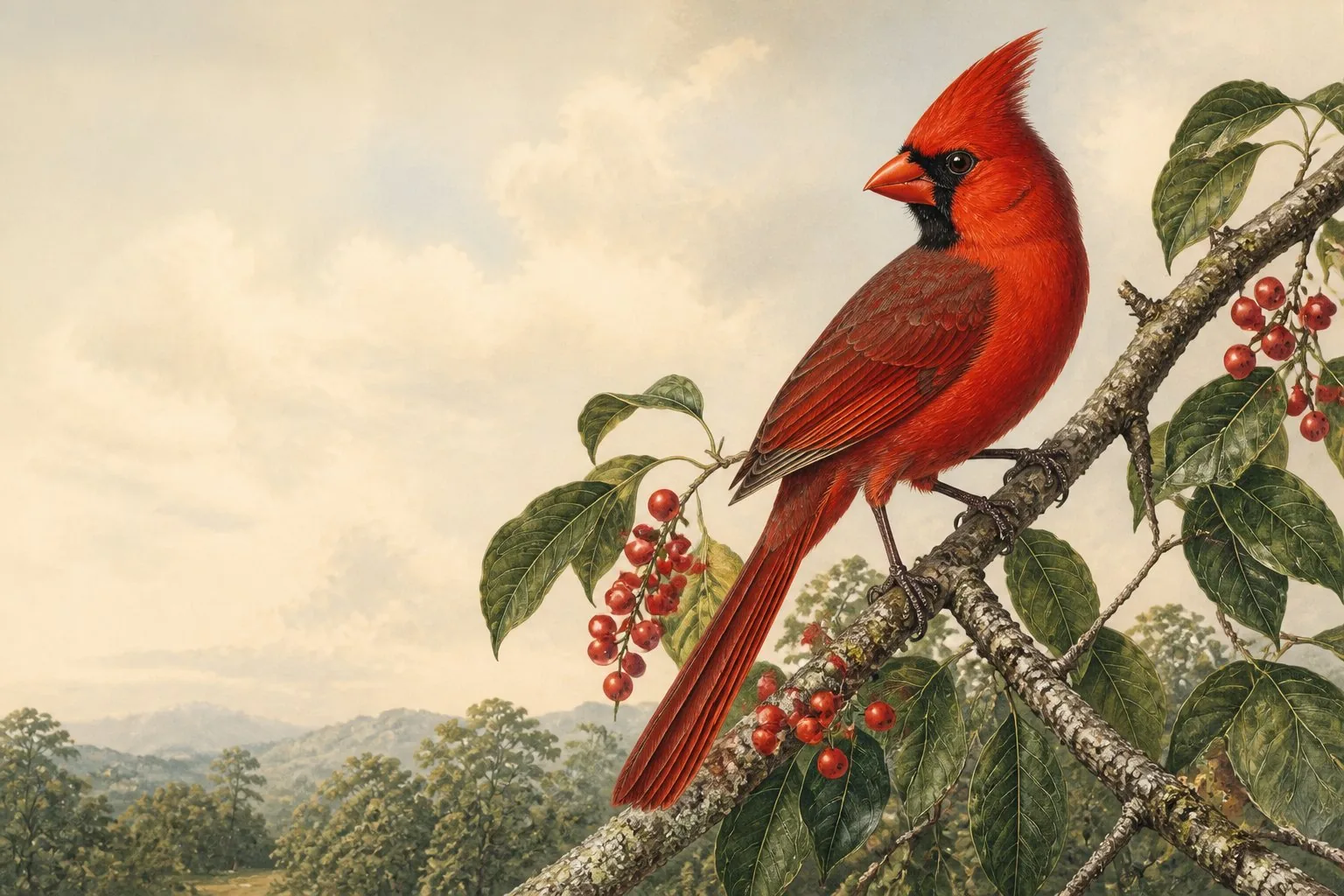
Carotenoids are the pigments birds cannot make. They must eat them. More than 600 types of carotenoid all require photosynthesis to produce, so every Northern Cardinal’s red, every American Goldfinch’s yellow, every flamingo’s pink is borrowed - from plants, crustaceans, or the insects that fed on them. The Audubon Society notes that flamingos feeding on algae grow darker than those deriving carotenoids from crustaceans alone, because the pigment source matters as much as the fact of eating.
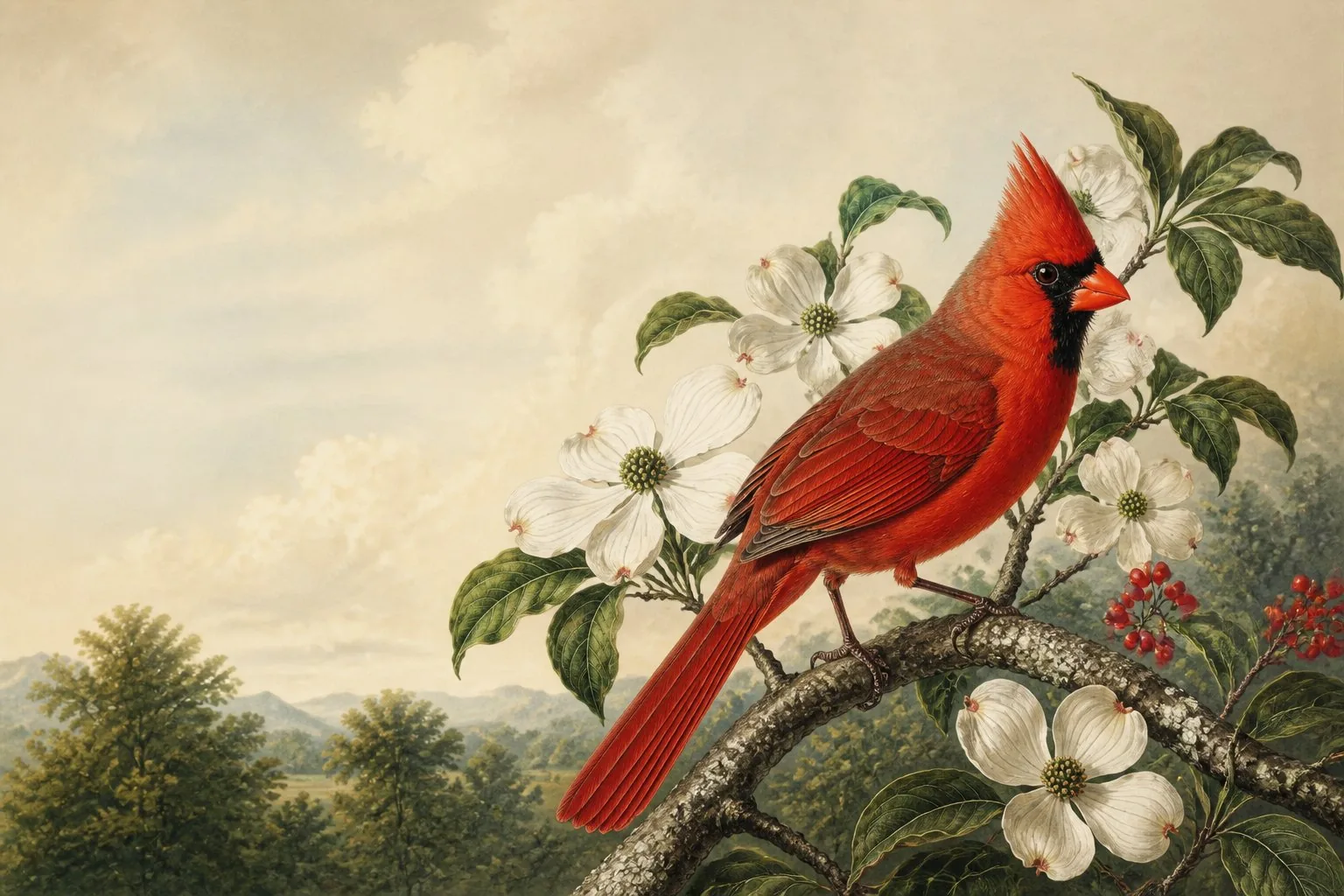
A male cardinal in a yard with dogwood, sumac, and wild grape will carry brighter red into spring than one who foraged on poorer ground. The female evaluates this. She is not admiring a color. She is reading a foraging record written in feathers.
A bird’s carotenoid color is a diet diary, not a decoration.
The gene connecting diet to color has been identified. A gene called CYP2J19 converts yellow dietary carotenoids into the red ketocarotenoids responsible for red plumage. Research in Avian Coloration Genetics (2021, Journal of Heredity) found CYP2J19 operating across multiple unrelated bird lineages - cardinals, house finches, red-backed fairywrens, northern flickers. What different red birds share is not common ancestry so much as a common chemical solution, one evolution reached multiple times independently.
Porphyrins are synthesized internally but produce colors melanin cannot. They appear as reds, browns, and greens, and they fluoresce red under ultraviolet light. Found in at least 13 bird orders, they include some striking examples: the Audubon Society reports that turacin, a copper-containing porphyrin in turaco wings, is roughly 7% copper by weight. A related compound in turacos, turacoverdin, is the only true green pigment found anywhere in birds. Most “green” birds - parrots, budgerigars, common green magpies - carry no green pigment. They produce yellow carotenoids on top of a feather structure that scatters blue light and the eye reads it as green. A green magpie fed a carotenoid-free diet in captivity turns blue, because without the yellow filter the blue structure shows through uncorrected.
Psittacofulvins are the last group and belong exclusively to true parrots. These pigments produce red, orange, and yellow in parrots from a completely unrelated chemical pathway to carotenoids. The 2021 Journal of Heredity review identified a polyketide synthase gene (MuKPS) as responsible for yellow psittacofulvin production in budgerigars, suggesting the gene was co-opted for pigment duty through regulatory changes rather than the evolution of a new gene entirely.
Structure: color without pigment
Structural colors are produced by physical interaction of light with nanostructures in the feather, not by pigment. Three mechanisms dominate in birds.
Coherent scattering is what the blue jay uses. Barbs contain an amorphous arrangement of air pockets in a matrix of keratin and melanin. The arrangement scatters short wavelengths selectively. The color is consistent from every viewing angle - unlike iridescence - and blue is almost always produced this way in birds. The melanin underneath is not contributing color; it is absorbing the wavelengths that would otherwise muddy the blue reflection.
Thin-film interference creates iridescence. In Anna’s Hummingbird (Calypte anna), research published in Proceedings of the Royal Society B confirmed that barbule feathers contain stacked hollow platelet-shaped melanosomes arranged in multilayer arrays with sharp air-to-melanin interfaces. The color those layers produce depends on which wavelengths they reinforce at the current viewing angle. The throat of a male Anna’s can shift from blazing pink to near-black as the bird turns its head. The melanin in these structures is not functioning as a pigment. It is being used as an optical component for its refractive index.
Photonic crystal structures appear in starlings and some other iridescent species, where melanosomes arrange into repeating ordered arrays. The result is angle-dependent color with a different spectral signature from thin-film interference. Research reviewing melanin-based structural coloration (PMC, 2021) identified four primary melanosome morphologies across birds: spherical, rod-shaped, hollow-rod, and hollow-platelet - with each producing different optical results depending on arrangement.
What the combination produces
Where pigment and structure work together, the range multiplies. The green of a budgerigar is yellow psittacofulvin pigment plus blue-scattering barb structure. A white cardinal - a bird with a leucism mutation that suppresses melanin - loses not just the black mask but the underlying melanin layer that underpins structural blue in any parts of its plumage that relied on scatter against a dark background.
The cardinal molting in August at your feeder is already routing carotenoids into replacement feathers as they grow. By March those feathers will carry the brightest red they will ever carry - because the autumn fruit was available and the feather structure was new. Read about whether cardinals are endangered or learn what a group of cardinals is called to build out the picture.
The genetics frontier now is understanding why distantly related birds arrived at the same chemical solutions. CYP2J19 for red. BCO2 for damping yellow. The parrot’s polyketide synthase for psittacofulvins. The 2021 Journal of Heredity review notes that structural color genetics remain almost entirely unstudied compared to pigmentary color, despite structural color accounting for a substantial portion of the range visible in the field.
A field guide tells you what color a bird is. What that color actually cost to produce - and what information it carries for the bird beside it - is a different kind of reading, one the bird writes in every feather it grows.