Biology
Do Cardinals Eat Meat?
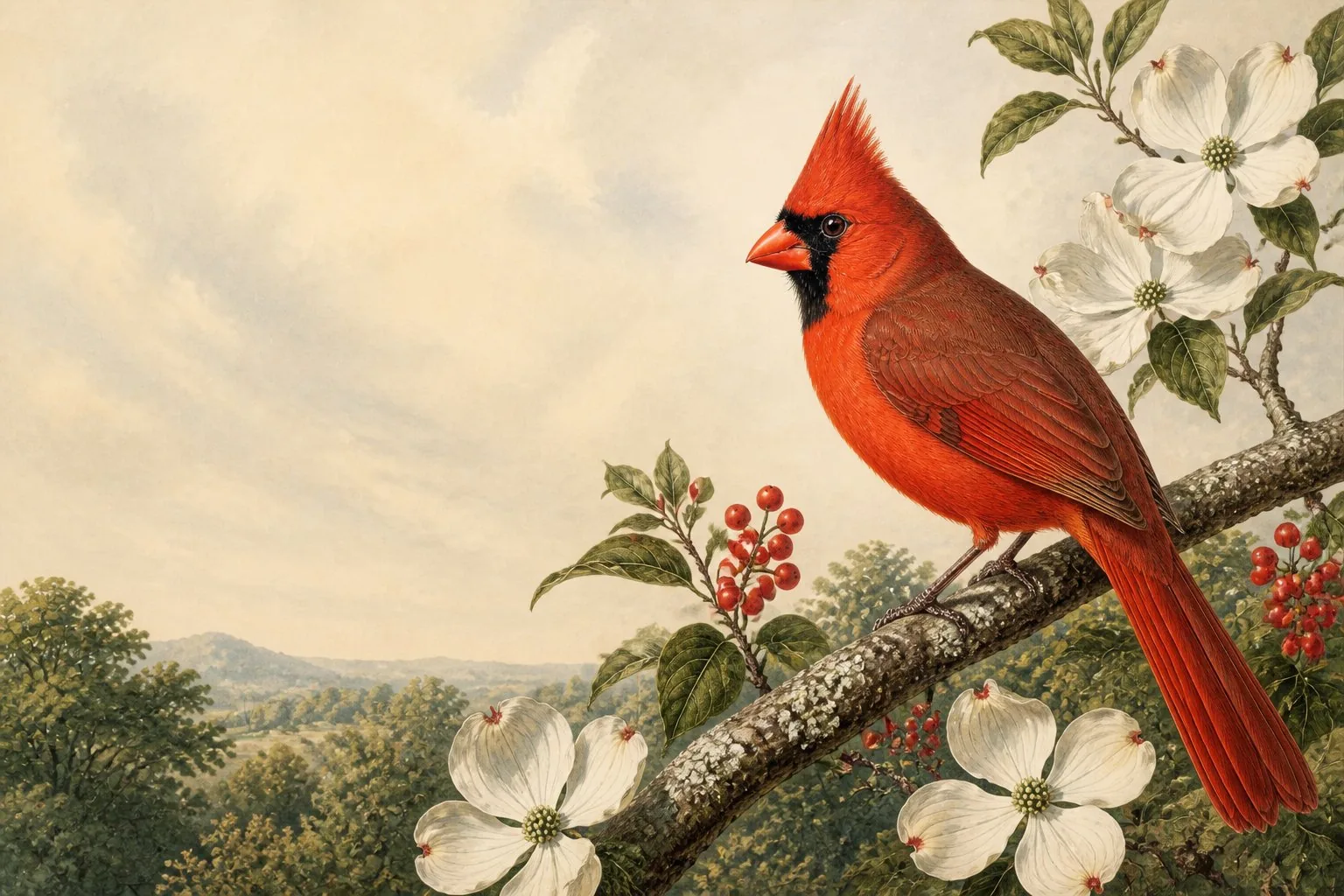
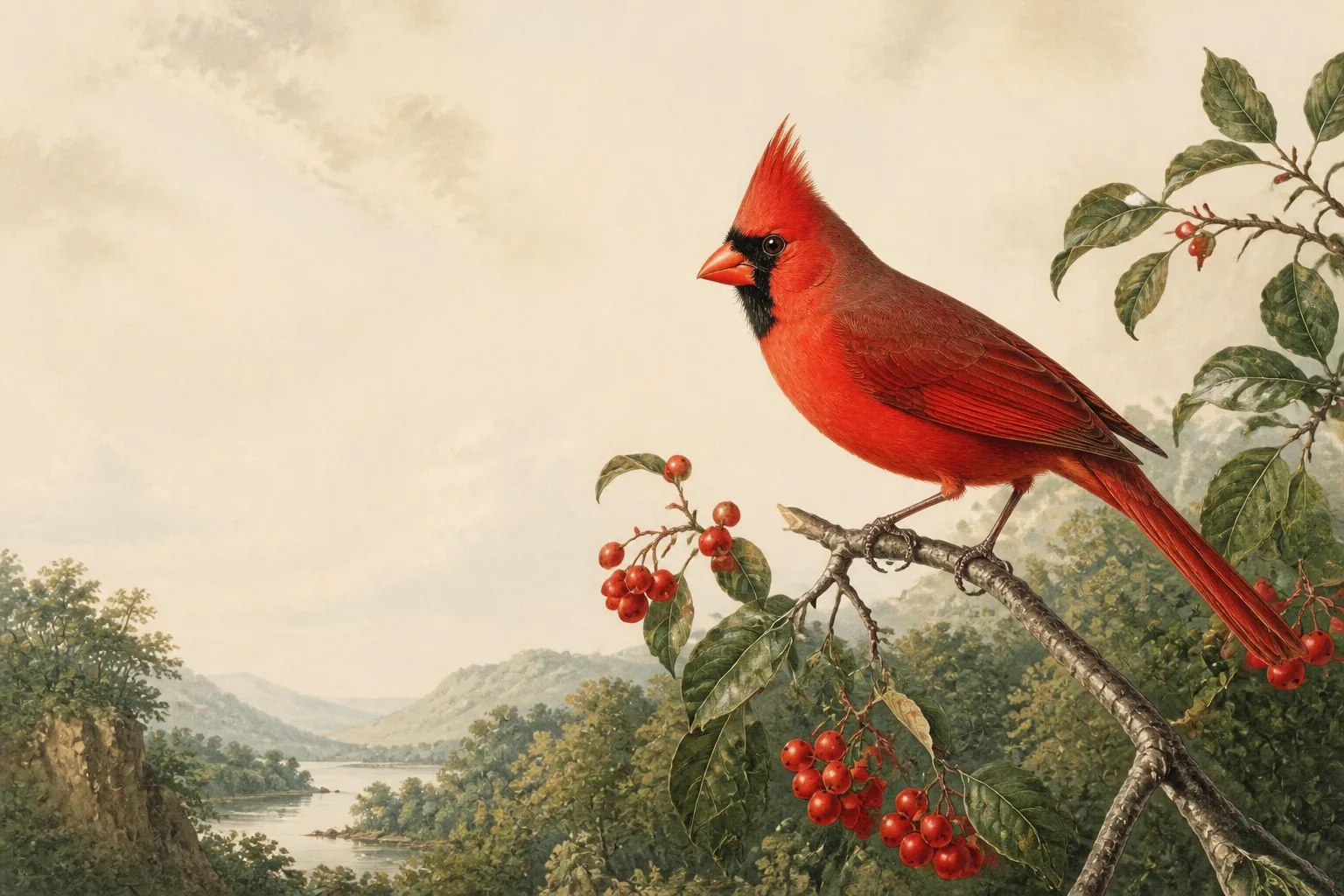
Watch a male cardinal at your feeder in May and you will see a seed-cracker. Watch him in June at the edge of a thicket where his mate is sitting a nest, and you will see something else entirely: he is working a leaf litter for caterpillars, bill tilting and stabbing, carrying soft-bodied prey back to the nest in short efficient flights.
The question of whether cardinals eat meat is mostly a question about categories. The answer depends on what you call meat.
What cardinals actually eat
Cardinalis cardinalis is an omnivore. Seeds dominate outside of breeding season - black oil sunflower and safflower cracked with a bill built for exactly that work. Fruits and berries fill gaps in autumn, especially dogwood, mulberry, and wild grape. Insects account for roughly a third of the diet in aggregate, but that figure flattens what is actually a seasonal spike.
| Food type | Approximate share | Common examples |
|---|---|---|
| Seeds | ~50% | Black oil sunflower, safflower, cracked corn |
| Fruit and berries | ~20% | Dogwood, mulberry, wild grape |
| Insects and invertebrates | ~30% | Beetles, caterpillars, crickets, spiders |
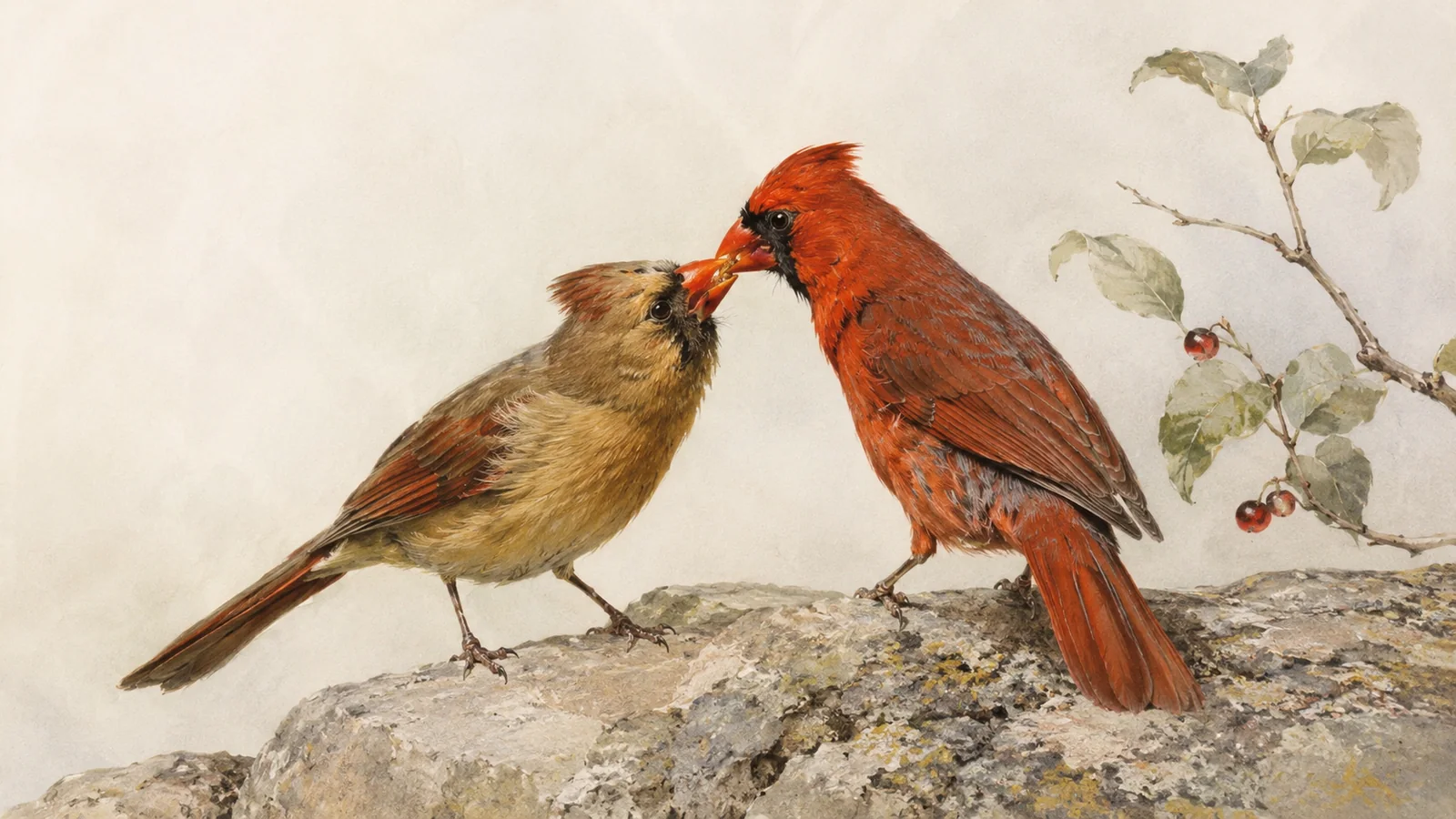
In the weeks around hatching, insect intake rises sharply. Nestlings in their first days cannot digest seeds. Parents feed them almost exclusively on soft-bodied insects - caterpillars in particular - regurgitated or carried whole. The shift back toward seeds happens as chicks grow and their digestive systems mature.
The bill tells the story
A cardinal’s bill is a seed-cracker: thick at the base, curved at the tip, designed to hull a tough seed in one motion. Compare it to the hooked upper mandible of a Northern Cardinal relative like a grosbeak, or to the tearing bill of a hawk, and you can see immediately what the bird was built to eat. Cardinals do not tear prey. They cannot swallow a piece of raw meat any larger than an insect. Trying to feed them raw meat or table scraps is not a supplement - it is a hazard.
Cardinals are seed-eaters that supplement with insects. The best thing you can offer them is black oil sunflower, safflower, and a pesticide-free yard that supports the insects they will find themselves.
The fatty, bacterial risks of raw meat aside, there is a simpler reason to skip it: the bird is not equipped to process it. A cardinal has none of the digestive acid concentration that a carnivore relies on to handle raw flesh safely.
What you can offer instead
If you want to support cardinals through nesting season, when protein demand peaks, mealworms are the right move. Dried or live, they are close enough to the beetles and caterpillars cardinals would find in cover. Suet cakes without artificial additives work too, especially in early spring before insect populations recover.
The bigger lever is your yard itself. Cardinals eat the insects that live in native plantings. A yard with dogwood, oak, and native shrubs supports a larger and more diverse insect population than one with turf and ornamentals. The cardinal-molting piece on this site makes the same point about autumn fruit: what grows in your yard shapes what the bird becomes.
For a comparison with actual predatory birds, see how Northern Cardinals are classified as songbirds - a grouping built around bill shape, vocal anatomy, and feeding behavior that puts them firmly outside the raptor and wading-bird categories where true meat-eating begins.
A note on nestlings
The nestling feeding behavior matters for anyone who has found a grounded young cardinal. If you are trying to support a fledgling, insects are the correct food - not bread, not sunflower seeds, not raw meat. Mealworms are the practical substitute for what the parents would bring. Seeds are not appropriate for the first weeks of life.
Cardinals you see foraging in leaf litter are often picking up small beetles, ants, and other invertebrates alongside the seeds and grit they need for digestion. The species/northern-cardinal page covers foraging behavior in more detail.