Biology
Do Bluebirds and Cardinals Get Along?
A birder in Virginia once photographed a male Sialia sialis and a male Cardinalis cardinalis sharing the same platform feeder without incident - the image, reproduced by On the Feeder, is unremarkable in the best sense: two birds eating, neither paying the other much attention.
That quiet tolerance is not diplomacy. It is the product of two species built for almost entirely different resources, whose ranges happen to overlap across most of eastern North America.
The nesting divide
The most important thing these two birds do not share is a nesting strategy.
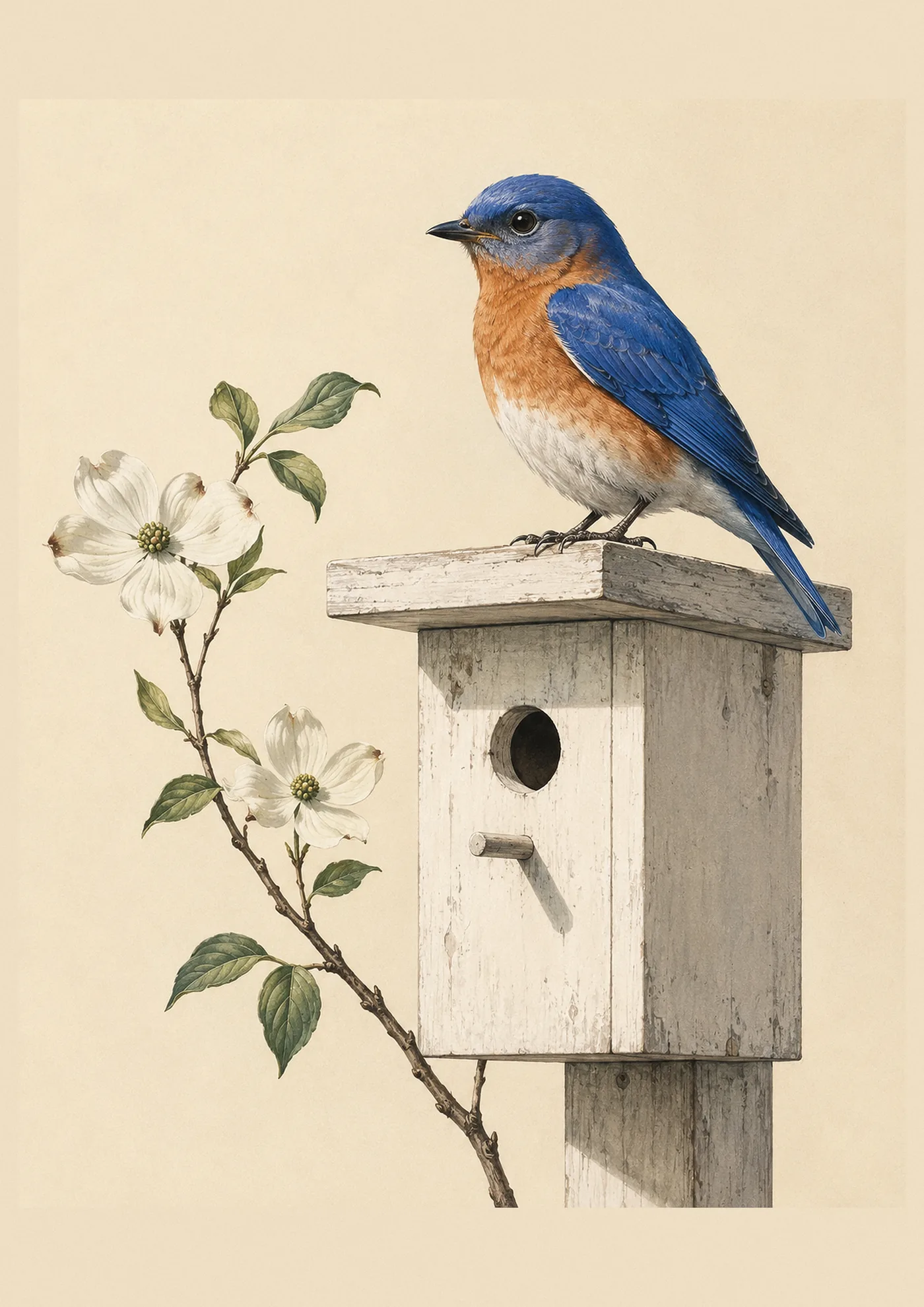
Eastern Bluebirds are cavity nesters. They depend on holes in dead trees or, in recent decades, the wooden nest boxes that volunteers have installed along bluebird trails across the country. A male bluebird spends the breeding season watching his cavity the way a homeowner watches his front door. When another cavity-seeker approaches - a House Sparrow, a European Starling, a Tree Swallow - the response is swift. Cornell’s All About Birds lists robins, blue jays, mockingbirds, and cowbirds among the species a territorial male will chase. The fights are physical: males grapple with their feet, pull feathers, and hit with their wings.
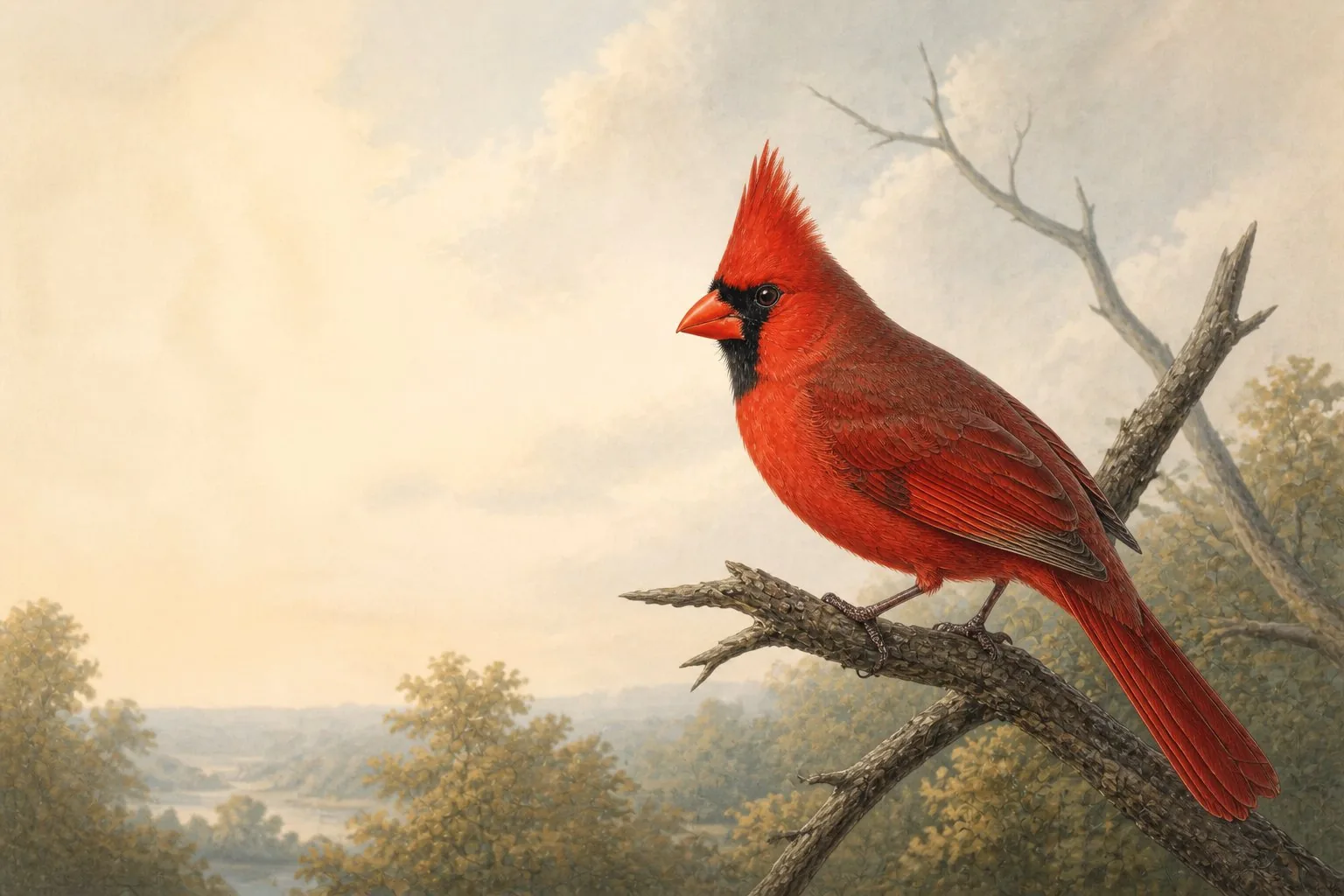
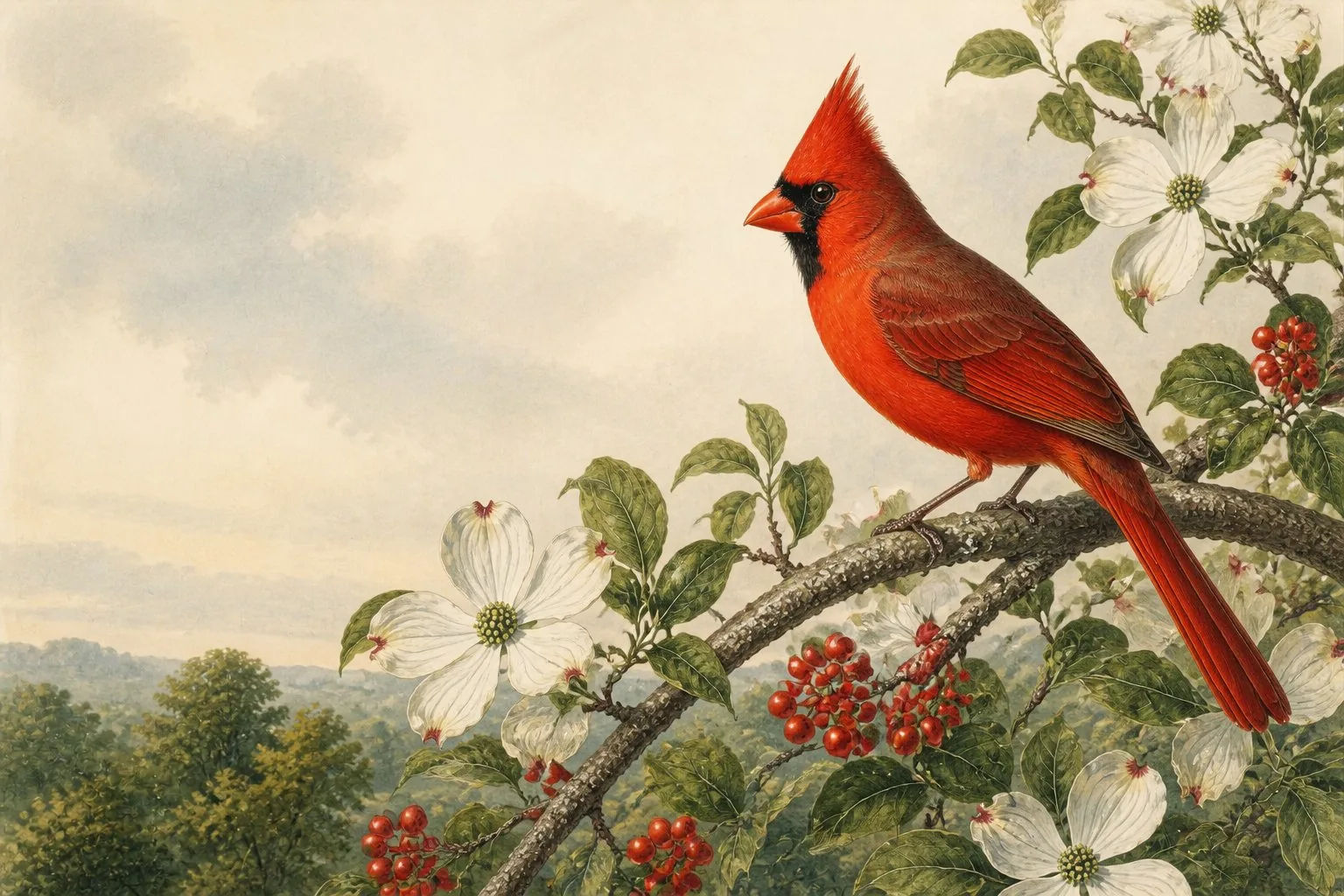
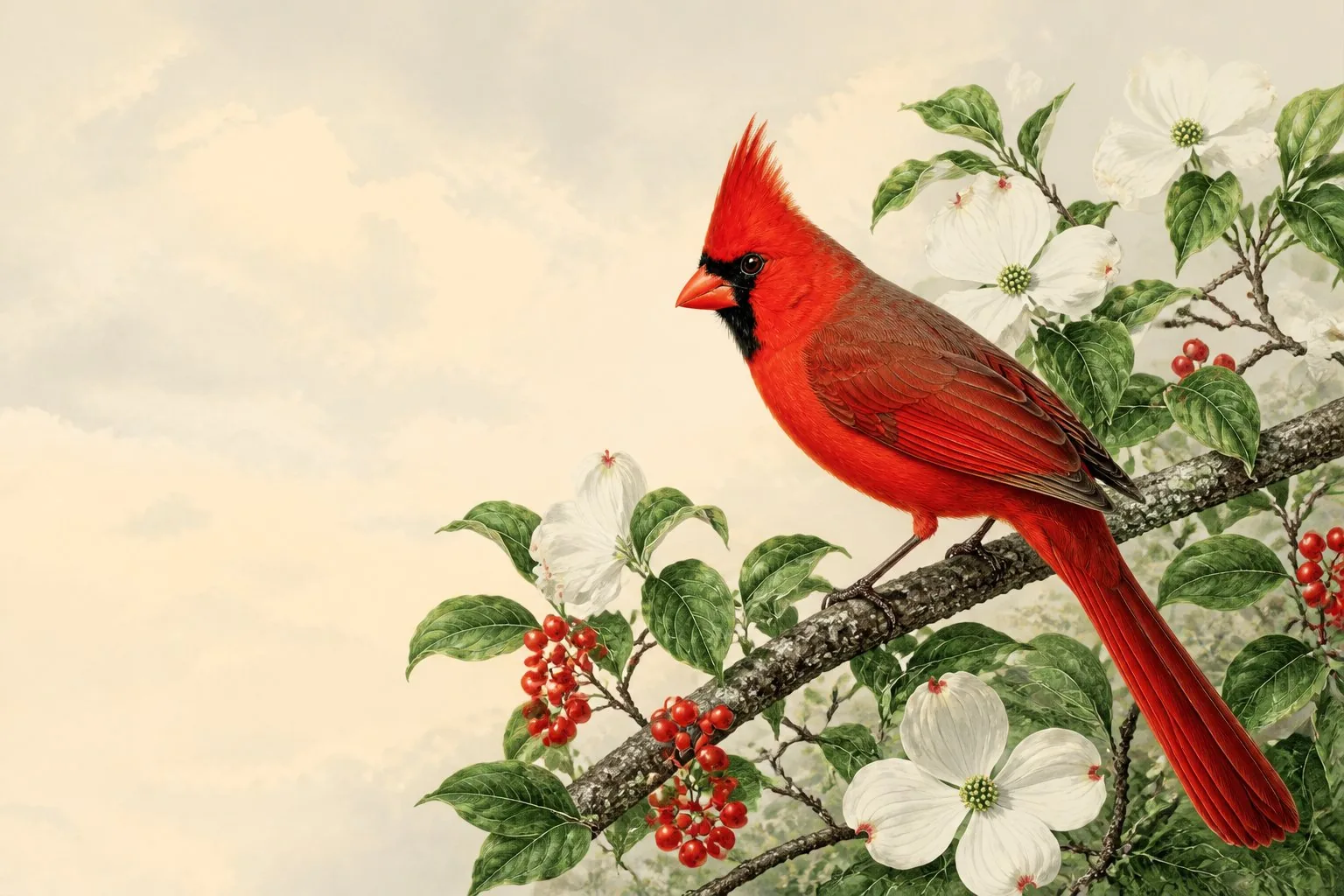
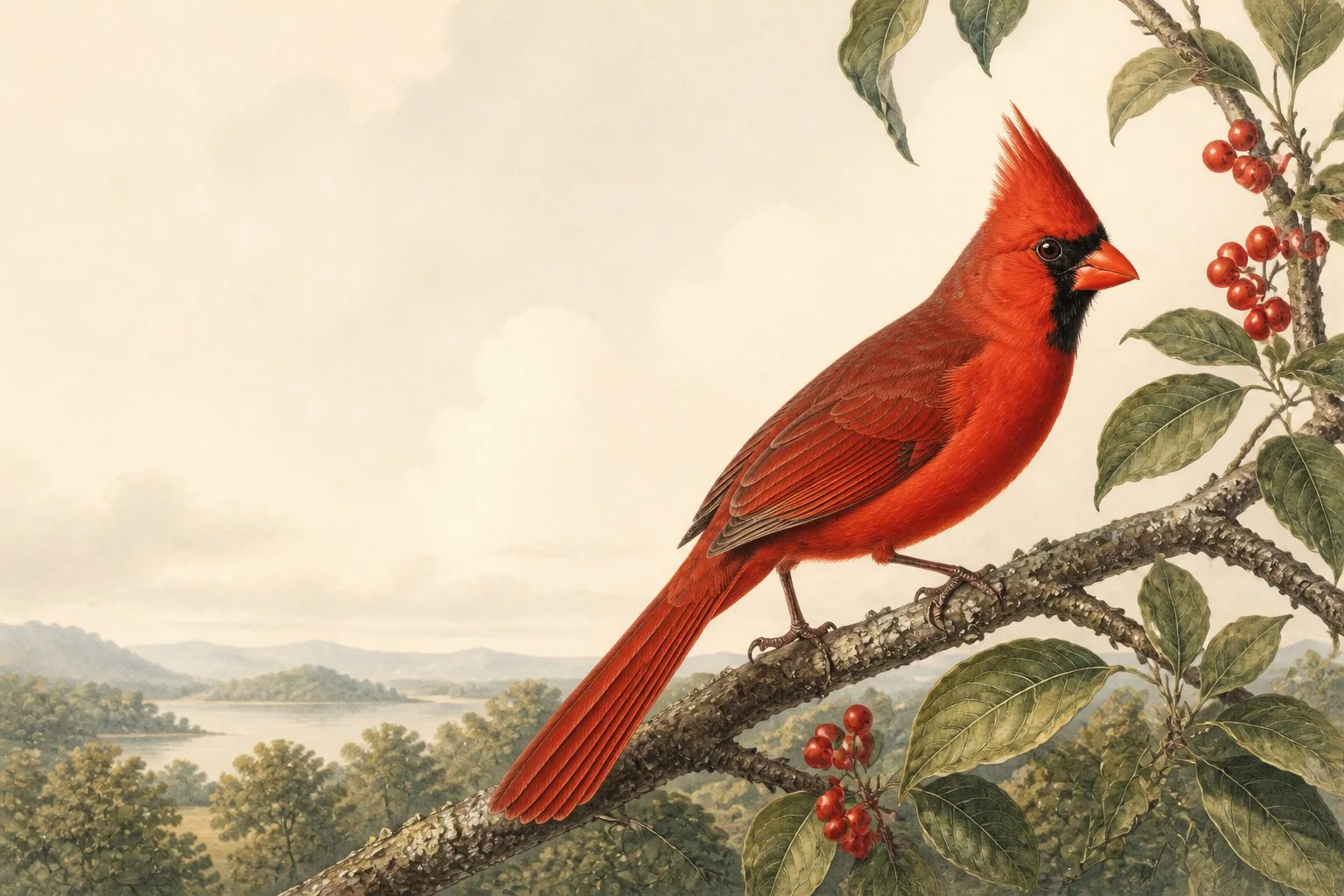
Cardinals are not on that list. They cannot be. Northern Cardinals build open-cup nests - the female constructs a four-layer structure of twigs, bark strips, and grass, typically placed three to ten feet up in dense shrubs or vines, according to Audubon’s field guide. A cardinal has no interest in a nest box and no competitive use for a cavity. Sialis.org, the leading reference for cavity-nesting bird management, does not mention cardinals at all in its competition guide. The resource the bluebird guards so fiercely is one the cardinal never wanted.
The food divide
Their diets pull in opposite directions.
The Audubon Society’s field guide describes the cardinal as an overwhelmingly seed-based forager - the Wikipedia species account puts seeds and grains at up to 90% of the adult diet. At the feeder, he cracks black oil sunflower seeds with a bill built for exactly that work. He forages mostly on the ground or in low shrubs.
The bluebird barely touches seeds. Two thirds of its diet consists of insects and invertebrates - grasshoppers, crickets, beetles, caterpillars - hunted by perching on a fence post or low branch and dropping onto prey in the grass. Audubon records the Eastern Bluebird population at around 23 million birds, sustained almost entirely on live prey. At feeders, bluebirds appear for mealworms, not sunflower.
These two species share a range and a habitat edge, but not a niche. The cardinal owns the shrub layer and the seed feeder; the bluebird owns the open ground and the nest box on the post nearby. Most of what looks like coexistence is really non-overlap.
When tension appears
Neither species is uniformly passive. Cardinals reach peak territorial aggression between March and September, when males sing from elevated perches and will drive off intruding males. The Audubon account describes the “head-forward display” - body held low, crest down, bill open - appearing during both breeding-season competition and winter food scarcity.
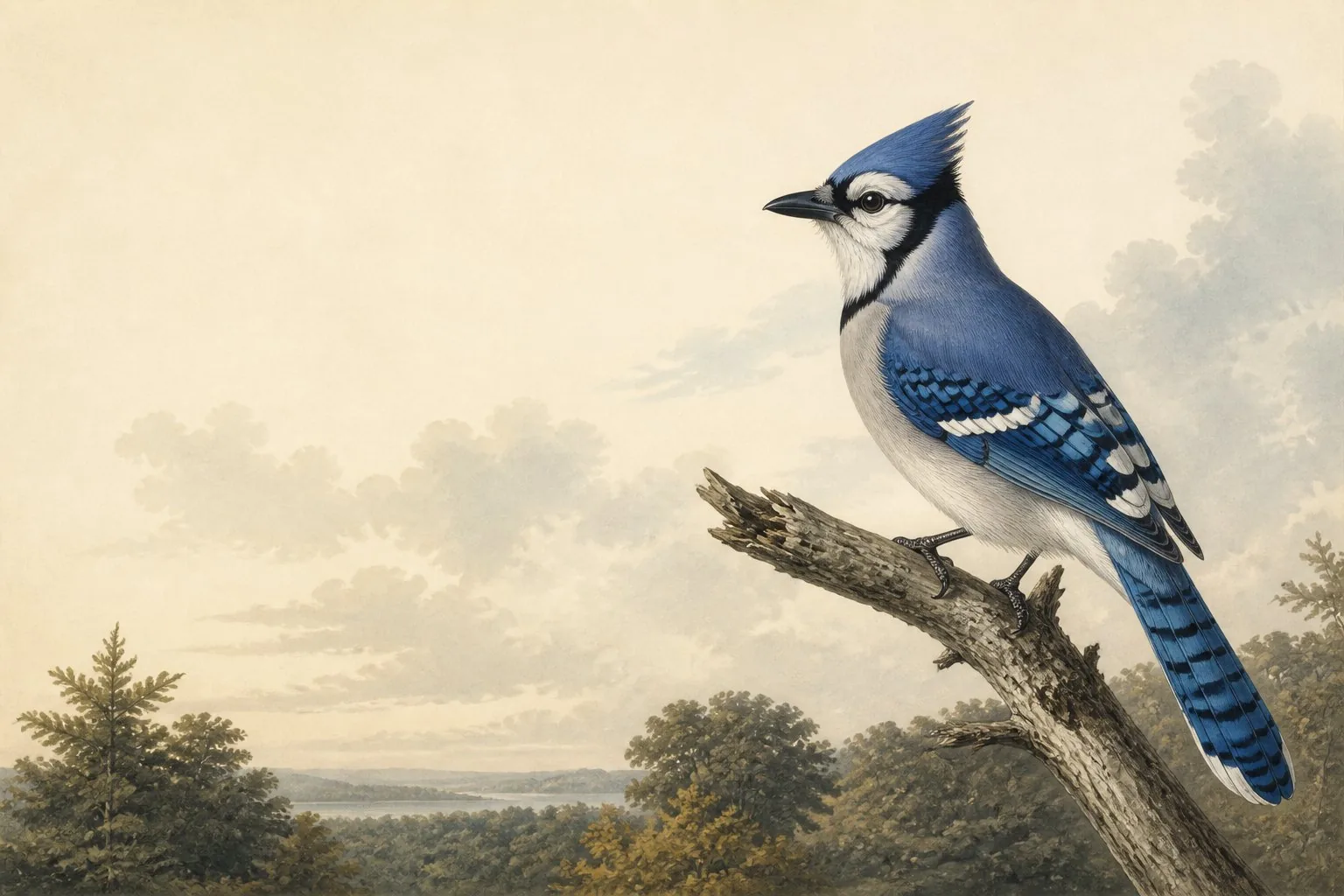
Bluebirds show parallel aggression, but it is species-specific. The target is always a competitor for cavities. A cardinal feeding on sunflower seeds ten feet from a bluebird nest box is not registering as a threat. Project FeederWatch citizen-science data bears this out: the two species routinely share backyards with minimal friction. Cardinals occupy dense shrub borders and hopper feeders. Bluebirds occupy open-lawn areas and mealworm stations. Given enough space, both run without conflict. The same question is worth asking of louder neighbours - whether blue jays and cardinals get along turns on the same logic of overlapping range but separate niche. What few people realise is that cardinals gather in loose winter flocks called “conclave” or “Vatican” - yet even this social grouping does not extend to policing the feeders of other species.
What their biology tells us
The Eastern Bluebird’s population grew at more than 1.5% annually between 1966 and 2015, according to the Wikipedia species account - a recovery driven almost entirely by nest box programs. The recovery happened despite the continued abundance of House Sparrows and European Starlings, which are genuine threats to bluebird nesting. Cardinals were never part of that story, and the distinction matters: a cardinal visiting a yard with a bluebird trail is simply not in the same competitive frame. The Northern Cardinal is listed as Least Concern by IUCN, with a population Audubon estimates at 130 million - a bird whose abundance says nothing about its threat to bluebirds and everything about how well it has fitted itself to the suburban edge.
A backyard that supports both species is not a diplomatic achievement. It is just a backyard with dense shrubs for cardinal nesting cover, open lawn for bluebird foraging, seed feeders for cardinals, and mealworm stations for bluebirds - two different habitats set ten feet apart. The cardinal in late summer may look ragged as he comes through his annual prebasic moult, but that, too, is a solo project he is running in his own corner of the yard.
The birds sorted this out long before anyone set up a camera to watch them. The question worth asking is less “do they get along” and more “why would they ever need to?”