Symbolism
How the cardinal became a Christmas bird
The cardinal is a 20th-century Christmas symbol with a 19th-century print history and a name borrowed from the Catholic Church. None of those facts pull in the same direction, and the story of how they came together is less tidy than the greeting-card version.
The first Christmas card, on most accounts, was Henry Cole’s 1843 commission in London. Cole was a senior civil servant who had helped reform the British postal system, and he had John Callcott Horsley design a three-panel card showing a family at a Christmas feast flanked by scenes of charity. The card was sold for a shilling, was a commercial flop at the time, and shows no birds at all - certainly no cardinal, which is a North American species and was not in the Victorian English visual vocabulary. The second Christmas card did not appear until 1848 (V&A; Smithsonian).
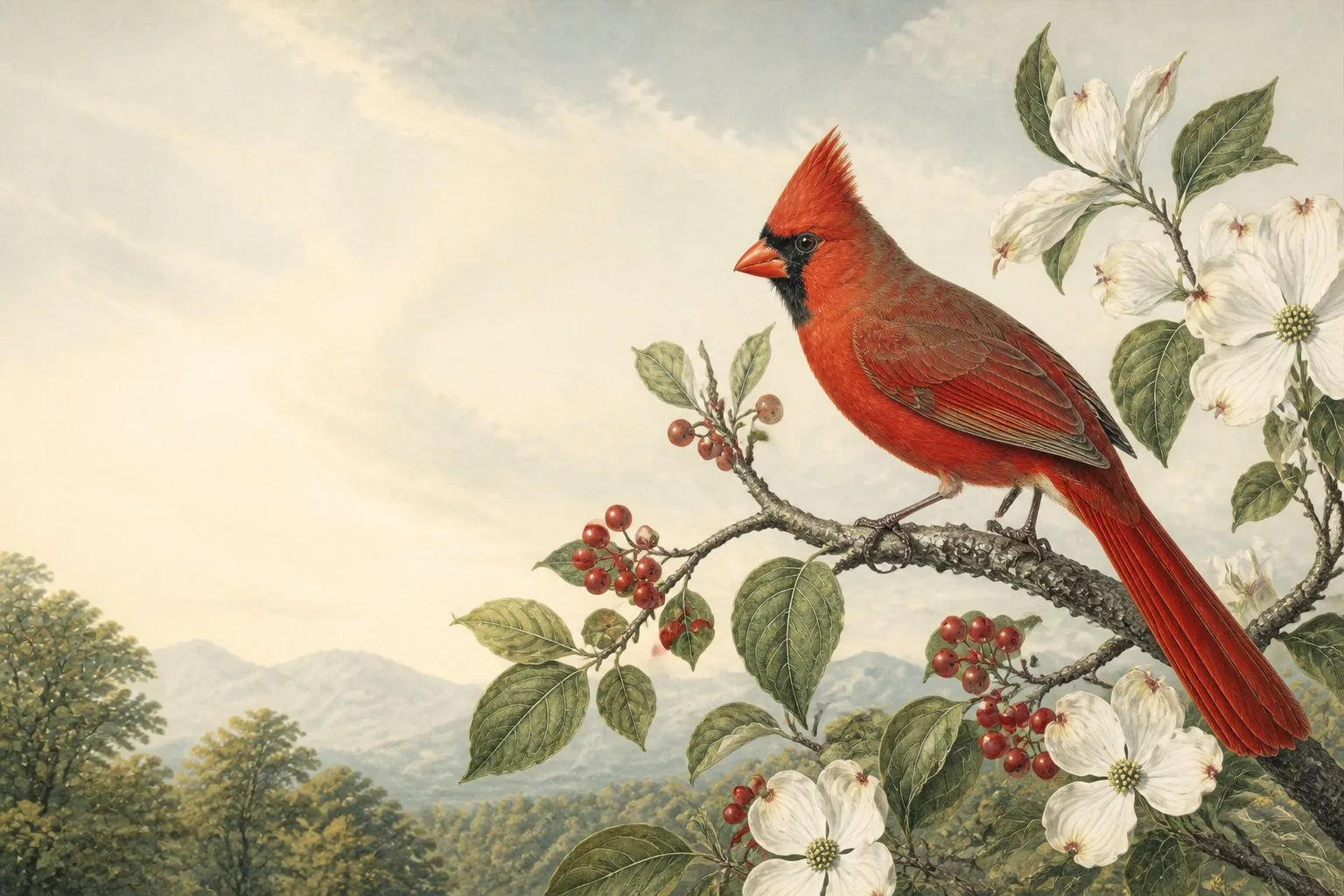
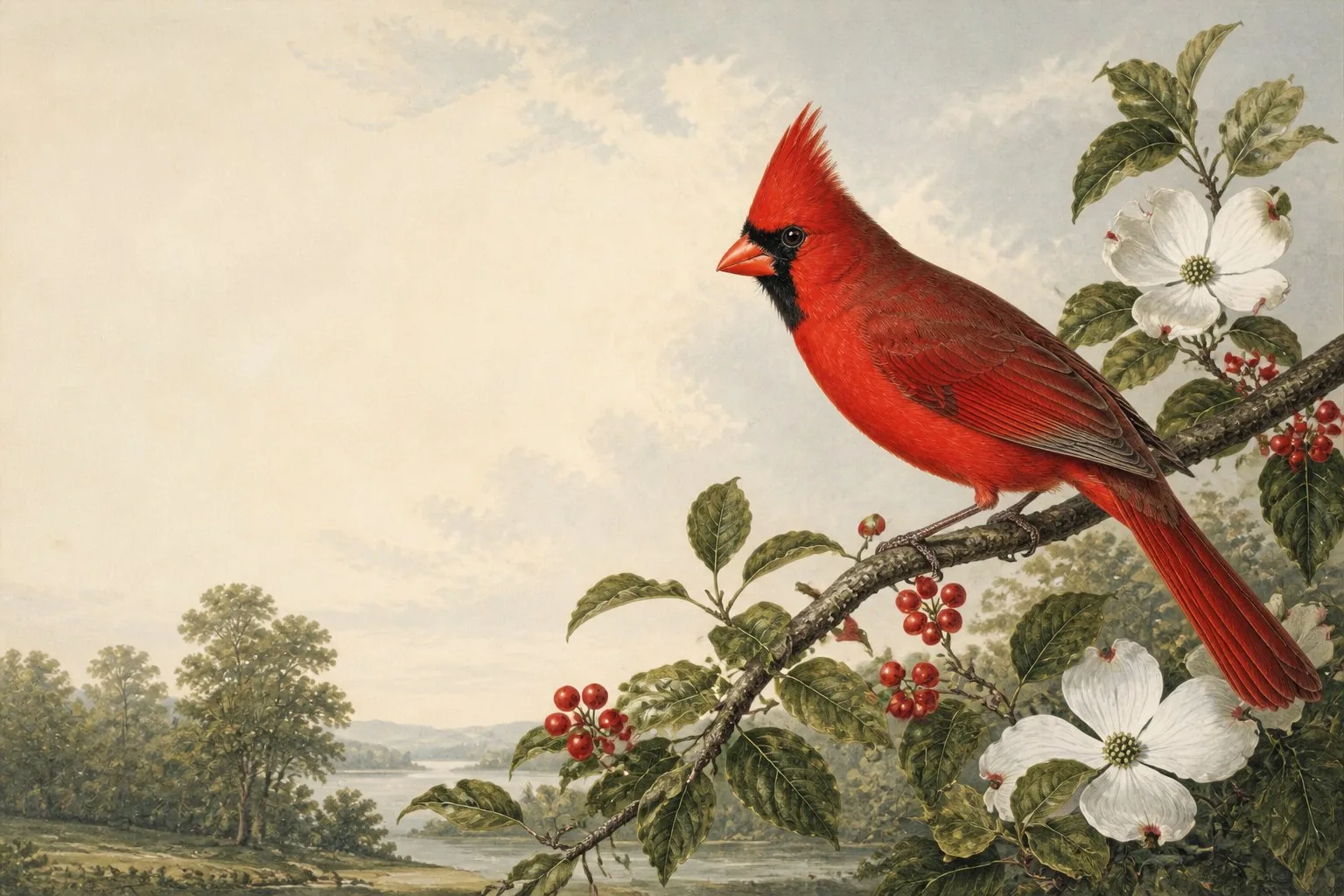
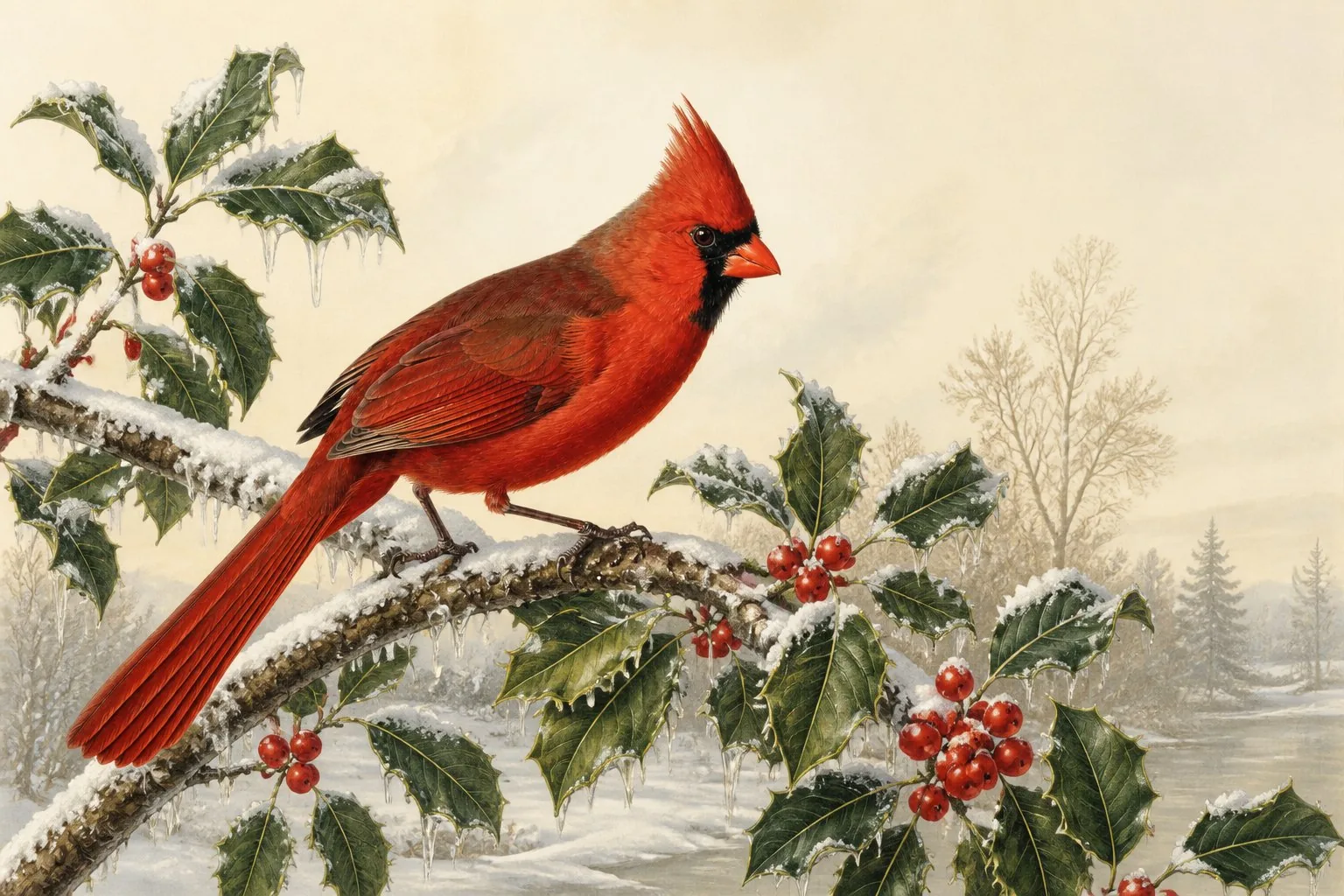
The first American Christmas card came from Louis Prang, a Boston lithographer who had emigrated from what is now Germany in 1850. Wikipedia dates Prang’s American Christmas cards to 1874, several other sources to 1875. He used a chromolithography process he had learned in Europe, requiring up to twenty separate stones to layer colour, and by 1881 his company was reportedly producing several million Christmas cards a year. Prang’s early cards featured “flowers, birds, landscapes, attractive young ladies, and even dancing girls” (Boston historical sources). What they did not feature, on the evidence I have been able to find, was the Northern Cardinal as a specific recurring subject. Prang made bird Christmas cards. He did not make the cardinal into the Christmas bird.
That happened later, and slower, and not because of one printer.
The actual rise of the cardinal as the dominant North American Christmas-card bird tracks the mid-20th century, particularly the 1960s and 1970s, and matches two other curves running through the same decades. The first is the suburban bird-feeding boom that began in the 1920s and 1930s, expanded after the Second World War, and put hopper feeders in millions of American back gardens by 1970. The second is the cardinal’s own northward range expansion. The species was largely a southeastern bird until the early 20th century. According to Cornell’s Birds of the World and Audubon’s field guides, three factors moved it north: warmer winters, suburban edge habitat replacing dense forest, and winter feeding stations. The bird now breeds north into southern Canada. The species’ northern limit appears to be roughly the 5-degree-Fahrenheit January isotherm, which has migrated north with the broader climate.
The result of these overlapping curves is that the period when the cardinal became Christmas-card iconography is also the period when more North Americans than ever had a cardinal at the feeder in December. The bird followed the people; the iconography followed the bird.
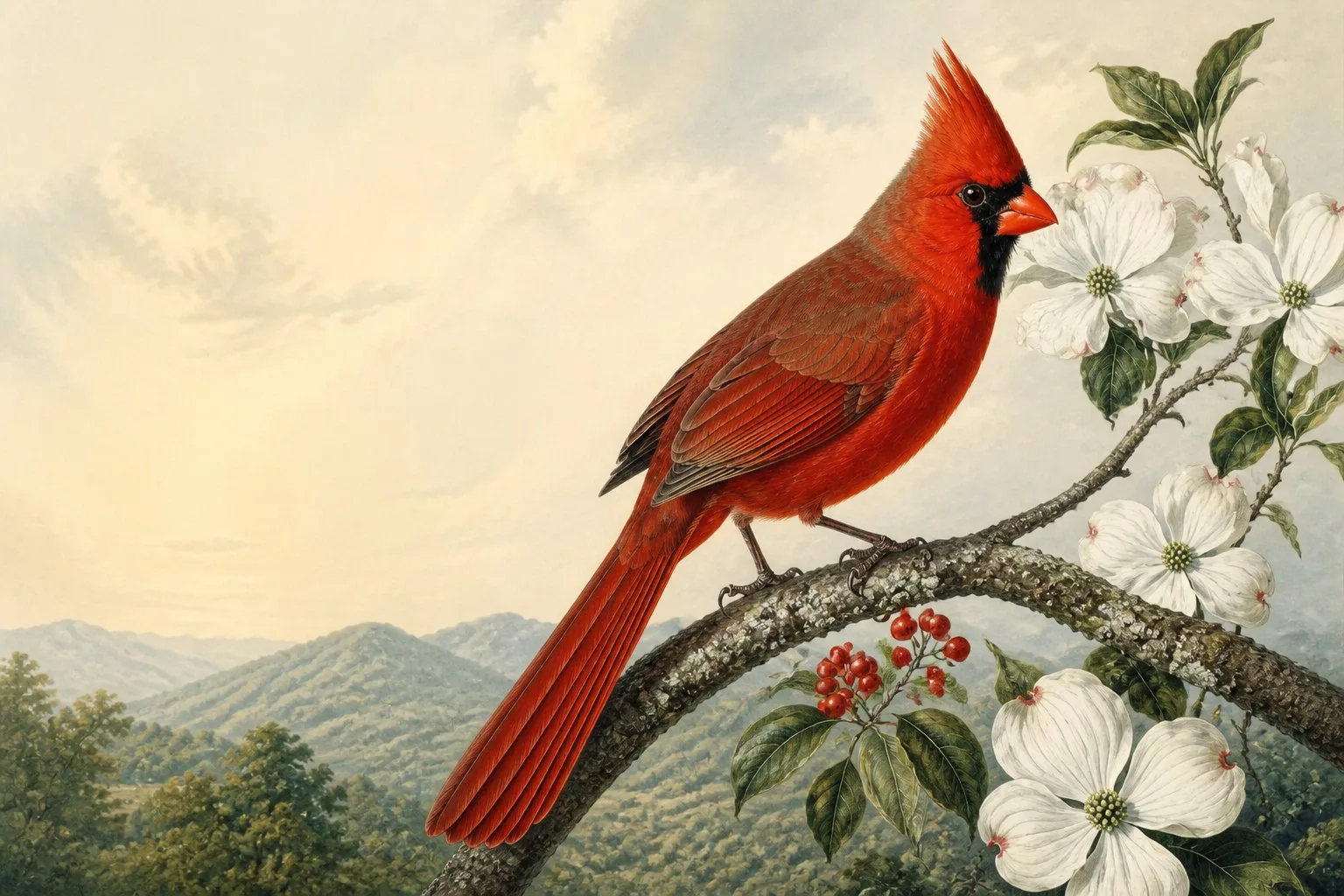
The cardinal’s name comes from the Catholic Church, not the other way around. North American colonists adopted the name because the male’s red plumage and pointed crest reminded them of the red robes and pointed mitres of the Catholic College of Cardinals. The bird had no name in European tradition because the species is endemic to the Americas, and the visual analogy was the obvious one. The church office is medieval; the bird’s English common name is colonial.
This is the only thread that actually links the cardinal to Catholic iconography, and it runs from church to bird, not from bird to church. There is no medieval Christian cardinal-bird symbolism. There is medieval Christian symbolism of red as the colour of the blood of Christ and of martyrdom (Catholic Answers Encyclopedia; Catholic Company), but that symbolism attaches to the colour, not to any specific species, and certainly not to a bird Europeans had not seen.
The phrase “cardinals appear when angels are near” is the modern half of the story. It is attributed across multiple sources, including Our State magazine’s reporting, to Victoria McGovern, an American poet whose untitled four-line poem ends with that line. The original publication date does not appear to be definitively documented. Our State notes that the folk belief - that cardinals are signs from departed loved ones - existed in oral form before McGovern wrote it down; one source quotes a North Carolina reader recalling his grandmother saying so before the poem circulated. McGovern’s contribution was the wording, which became the canonical phrase that now appears on memorial ornaments, sympathy cards, and roughly two-thirds of the cardinal-related merchandise sold in the United States during November and December.
The poem and the merchandise reinforced each other through the 1990s and 2000s. The marketing infrastructure for sympathy gifts had grown into a substantial industry by the 1990s, and the cardinal-with-McGovern-quote ornament fit the inventory profile perfectly: a small, durable, attractive object, sold year-round, with a sharp seasonal spike in November and December and another in May for Mother’s Day. The phrase did not become a settled cultural item because it was theologically correct. It became settled because it was useful to people who had lost someone and to companies who could sell them a way to remember.
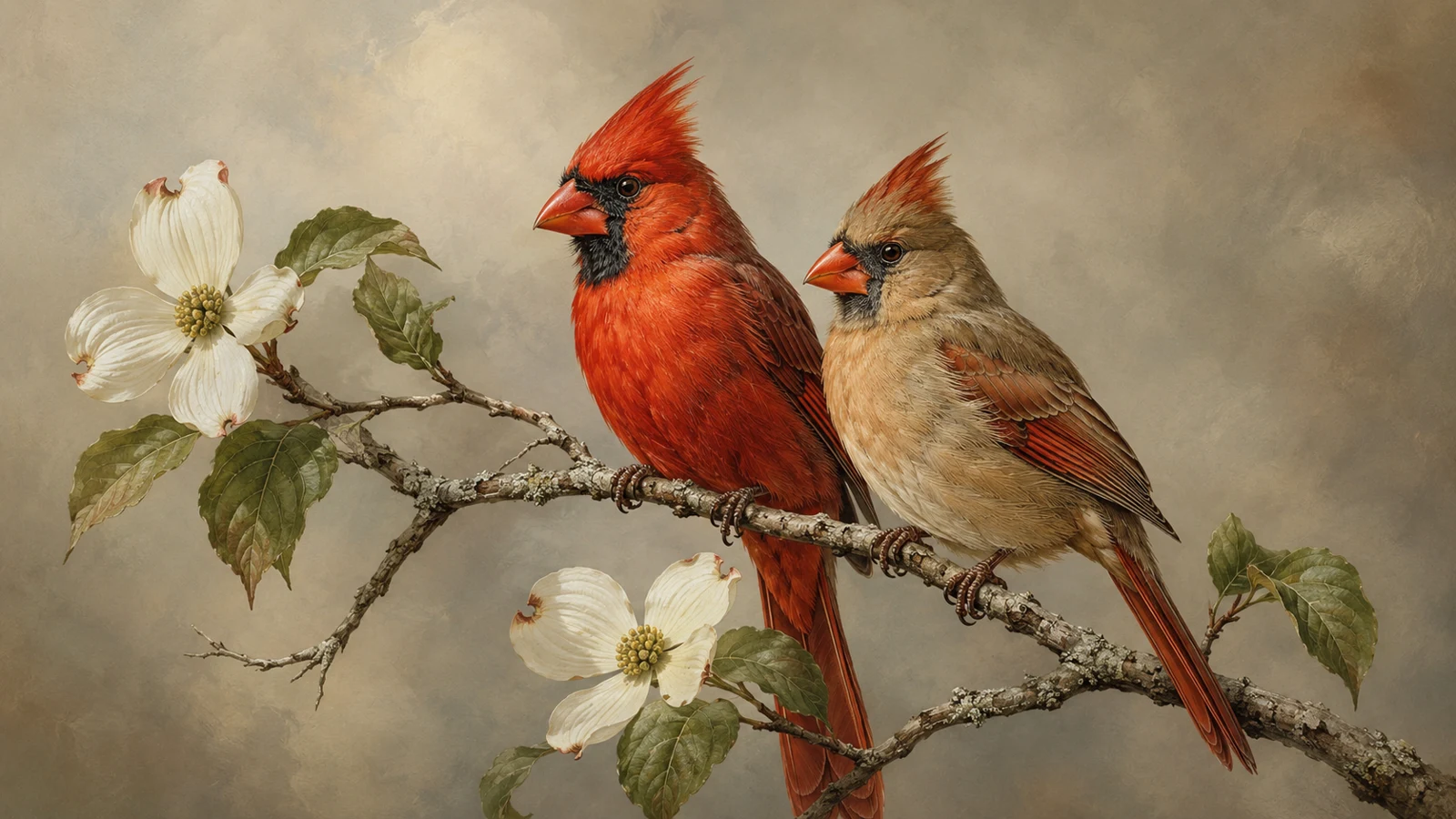
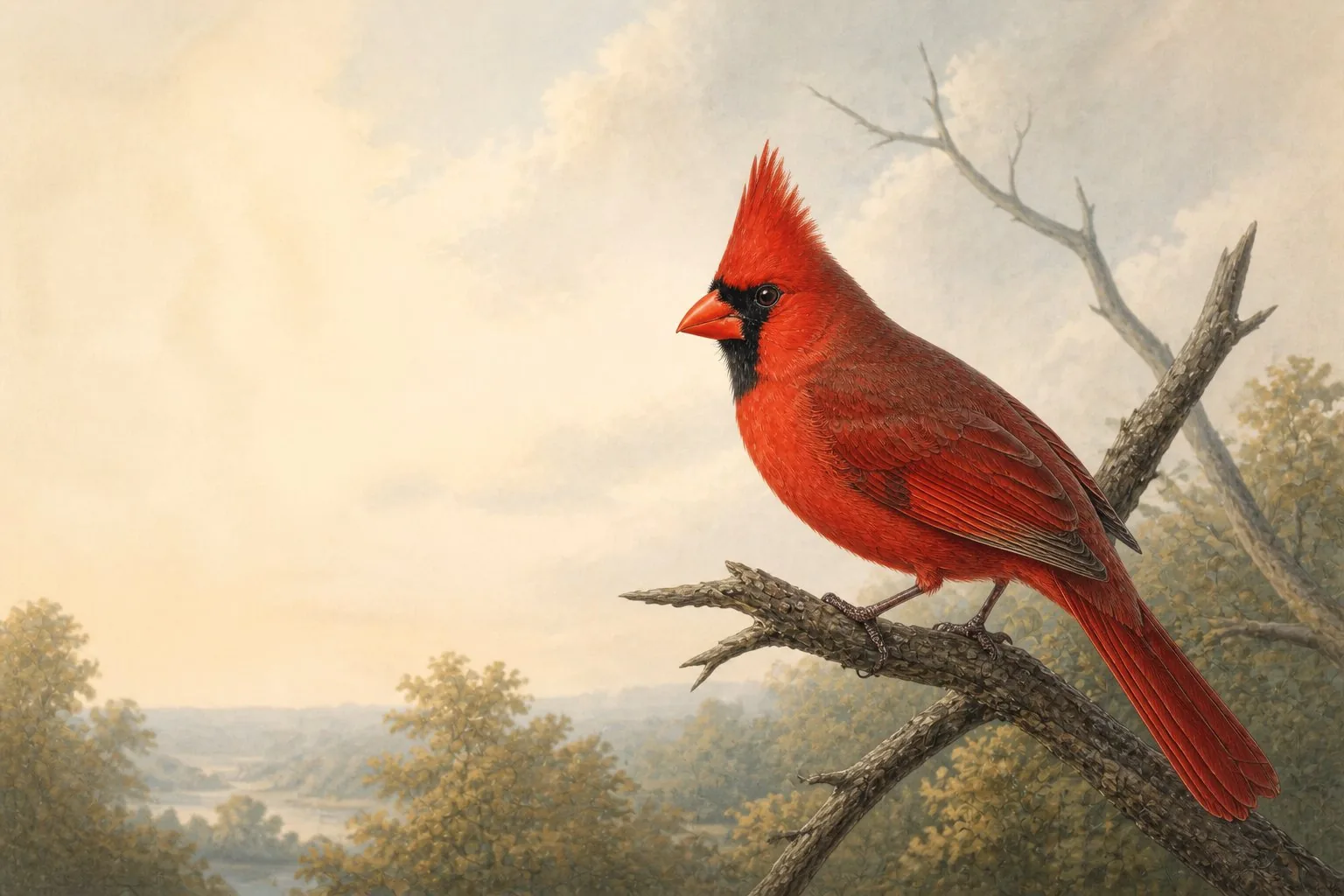
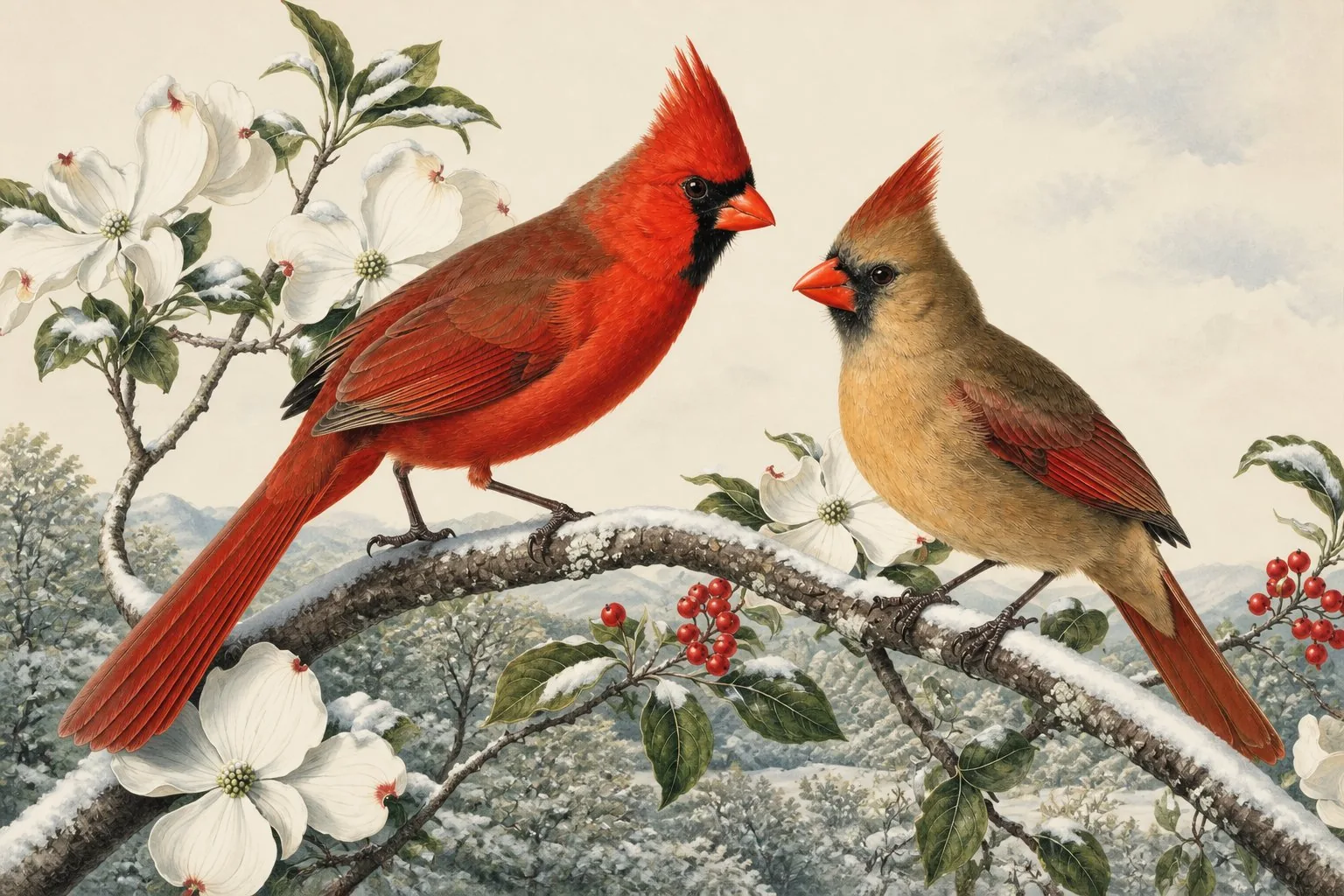
The cardinal at the feeder on a December morning, for a person whose father died in November, is doing none of this work consciously. He has chosen the feeder because of black-oil sunflower seed, dense shrub cover, and reliable water. He is at the window because the female he has been paired with for several years is also at the window. He stays because he does not migrate.
The person at the window assigns the meaning. The bird cooperates by being where he was going to be anyway, in plumage that happens to read as Christmas because the bird’s red and the season’s red are the same colour and because Louis Prang, somewhere in late 19th-century Boston, decided birds belonged on Christmas cards.
It is worth saying this clearly because most pieces about cardinals at Christmas reach for a false-ancient framing - a medieval saint, a Catholic liturgical text, a deep tradition with a long pedigree. None of those is in the record. The cardinal as Christmas symbol is roughly 150 years old in print and roughly 60 years old as a dominant motif. The phrase “cardinals appear when angels are near” is younger still. The story is recent, traceable, and not diminished by being either.
What the cardinal has done, in his unwitting way, is make himself available. He stays through winter when other red birds leave. He visits the feeder when the human is most likely to be at home. He pairs faithfully with his mate when the symbolism of partnership is most useful. He is also, biologically, just doing his job. A widow at her kitchen window in mid-December watching him crack a sunflower seed is the active party in the encounter. The bird supplies the colour and the constancy. The meaning is hers, and it is hers because of a chain of printers and breeders and bereaved gift-buyers and one poet from somewhere in twentieth-century America who gave the encounter a phrase.
Sources used in this piece
- Cornell Lab of Ornithology, All About Birds: Northern Cardinal, life history page.
- Cornell Birds of the World, Northern Cardinal distribution and range-expansion summary.
- Wikipedia, Louis Prang, biographical entry with dates.
- New England Historical Society, Louis Prang, Father of the American Christmas Card.
- Smithsonian Magazine, The History of the Christmas Card.
- Victoria and Albert Museum, The First Christmas Card.
- Our State magazine, On Cardinals & Angels, reporting on the Victoria McGovern attribution.
- Catholic Company / Catholic Answers Encyclopedia, on red and cardinal-bird Christian symbolism.
- Audubon Field Guide and New Hampshire Audubon, on cardinal range expansion drivers.
Specific claims in this piece that should be fact-checked before any commercial use: the date of Prang’s first American Christmas card (sources give both 1874 and 1875), the original publication date of Victoria McGovern’s poem (not located in any of the consulted sources), and the precise decade in which the cardinal became the dominant Christmas-card bird (the cited industry sources place this in the 1960s-1970s but the data is impressionistic rather than from a formal survey).