Biology
What Does It Mean When You See Two Cardinals
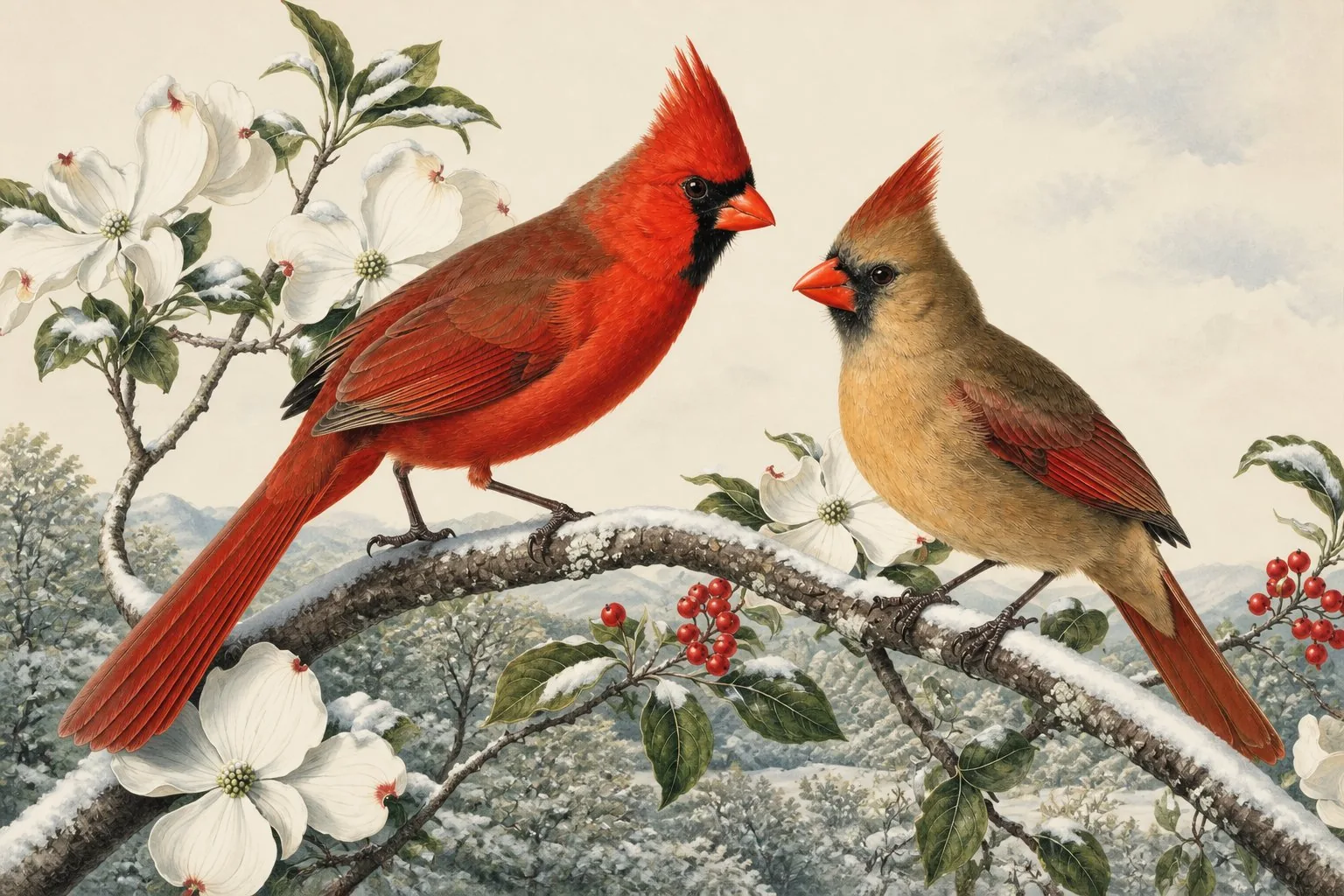
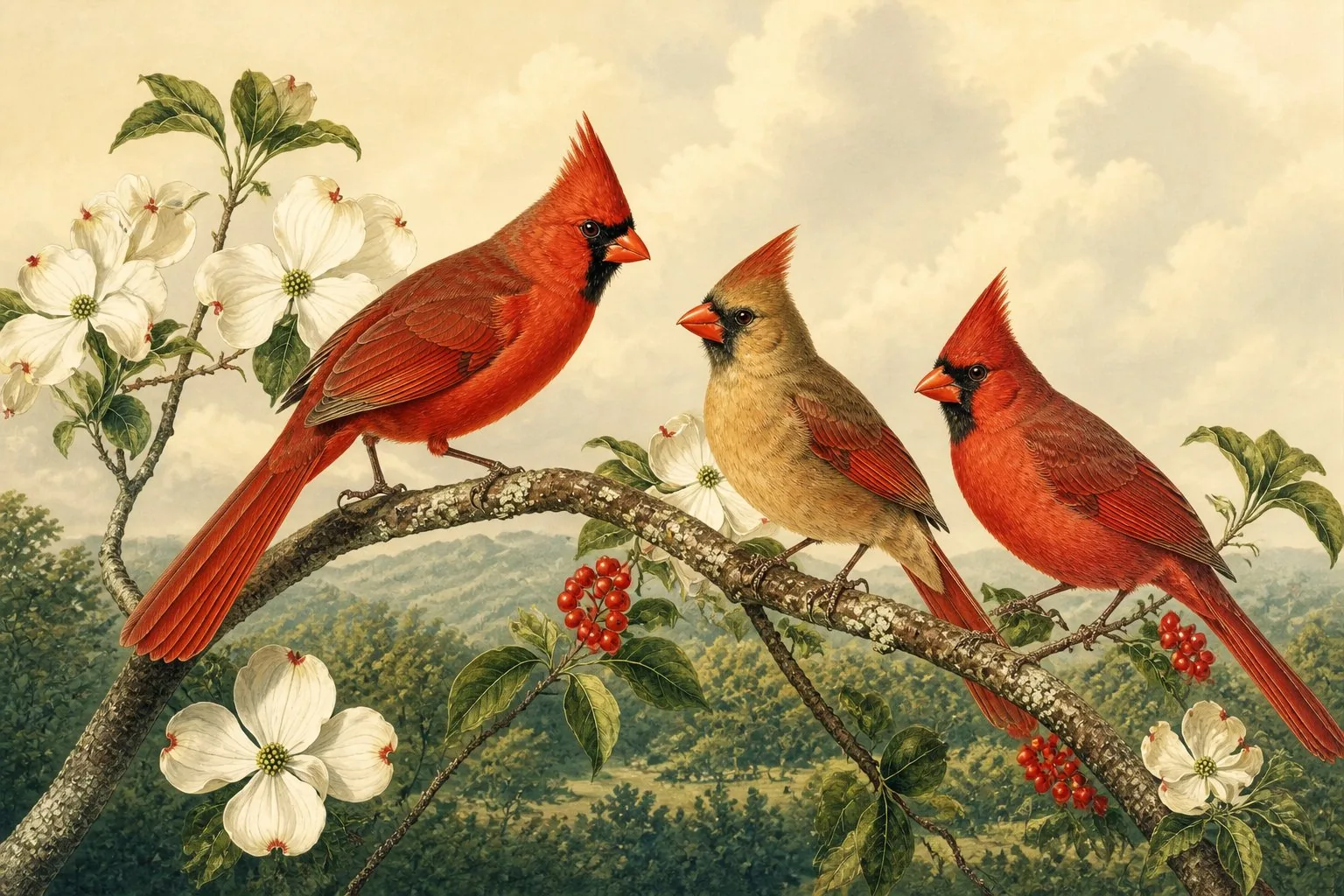
A male Cardinalis cardinalis picks up a sunflower seed, cracks it clean, and steps toward the female on the same branch. She tilts her head. He passes the seed bill to bill. This is early February, and the two of them have held this yard since last spring.
That moment is not symbolic. It is courtship feeding - and it tells you exactly what month it is.
What the pair bond actually is
Northern cardinals form monogamous breeding pairs, typically in February or March. Audubon’s Field Guide describes courtship feeding as a central part of pair bonding in this species: the male collects food and delivers it to the female beak-to-beak, a transfer ornithologists read as an assessment of his ability to provide during incubation.
Both birds stay on territory year-round. Cornell’s All About Birds records that pairs may remain together through winter, and that the same pair often reunites across successive breeding seasons. The bond is durable. It is also not unconditional - Cornell notes that up to 20% of pairs split by the following breeding season, particularly after repeated nest failures.
“Mates for life” is the shorthand people reach for. The more precise version is: persistent pair bond with real loyalty, real duration, and occasional renegotiation.
Why you see two in winter
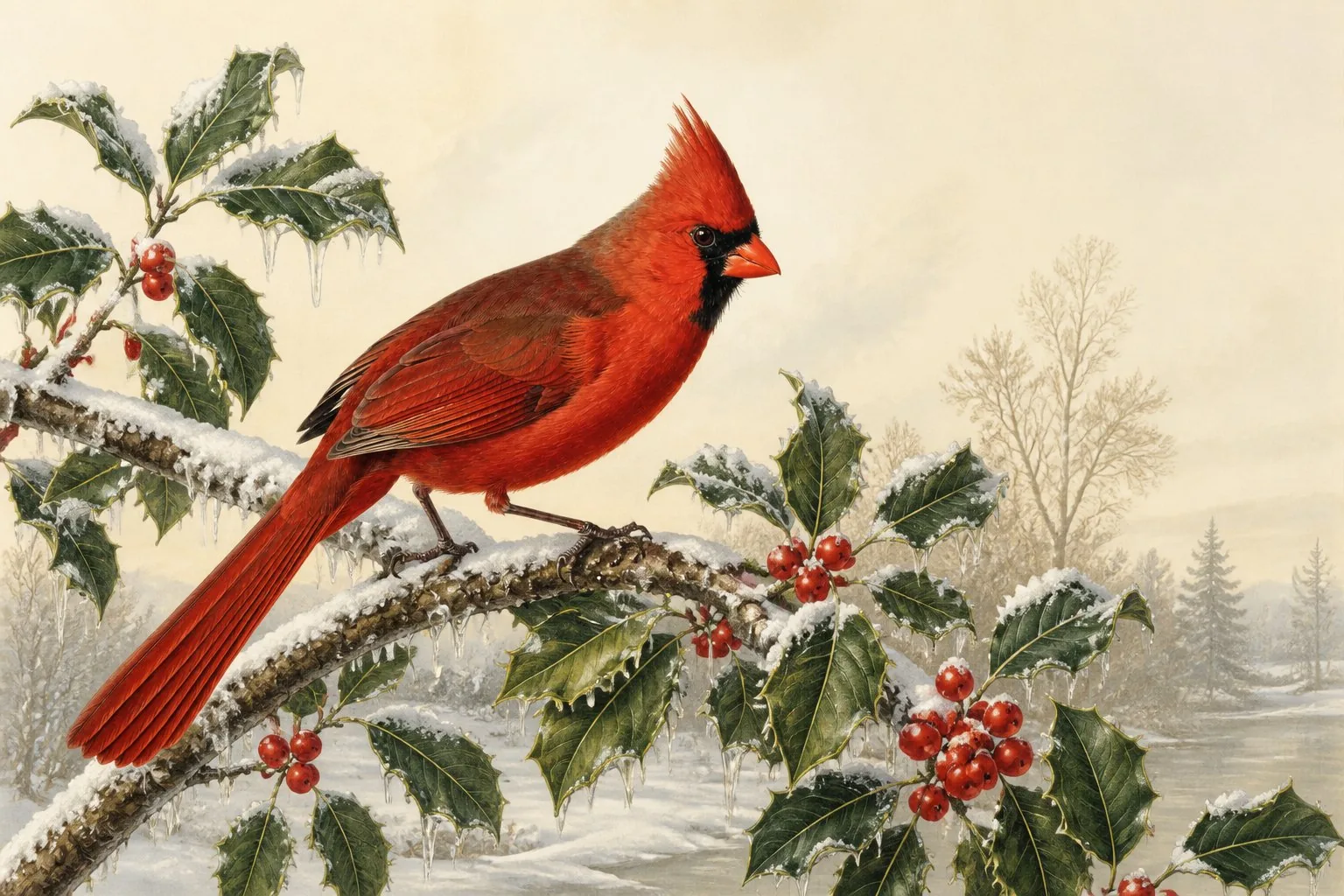
Most migratory songbirds leave pairs behind when they head south. Cardinals do not migrate. A pair holds the same patch of shrubs in December that they defended in May. The male keeps singing his territorial phrases through frost. The female forages close.
Cornell’s All About Birds also records that in fall and winter, cardinals join loose flocks of a dozen to several dozen birds - territories dissolve temporarily and multiple pairs use the same food sources together. This is why a well-stocked feeder in January can draw several cardinals at once. The pair you notice is likely one of several using your yard, but the specific male and female together have probably shared a territory since the previous spring.
Seeing a male and female together at your feeder in February is less rare than it seems - and more specific than it looks.
A pair of Northern Cardinals at a winter feeder is not a symbol of loyalty by accident. It is what sustained partnership looks like in a species that holds territory through frost instead of leaving for easier ground.
The breeding season structure
Pairs breed from March through September. Audubon records two to three broods per year, with incubation running 12 to 13 days per clutch. Both parents feed the nestlings. As the female starts building the next nest, the male takes over feeding the fledglings from the previous brood alone - a clean handoff that keeps the season moving.
The female sings from the nest, according to Audubon, apparently to signal to her mate when to bring food and when to stay clear. Both sexes sing, which is unusual in North American birds where song is typically male territory-holding behaviour. In cardinals, the female’s song is functional - it is nest management conducted at a distance.
If you are maintaining a clean yard for breeding birds, the same seasonal hygiene that matters for hummingbirds matters here: cardinals drink and bathe regularly, and a clean water source keeps both members of a pair returning to your yard through the nesting window.
Male and male: what two red birds mean
Two bright males at the same feeder in January are not demonstrating friendship. Cornell’s All About Birds records that male cardinals defend territories of three to six acres during breeding season, actively chasing rivals and famously attacking their own reflections. Two males feeding together in midwinter are doing so because the breeding season has not yet started. Come March, the same two birds will be driving each other off.
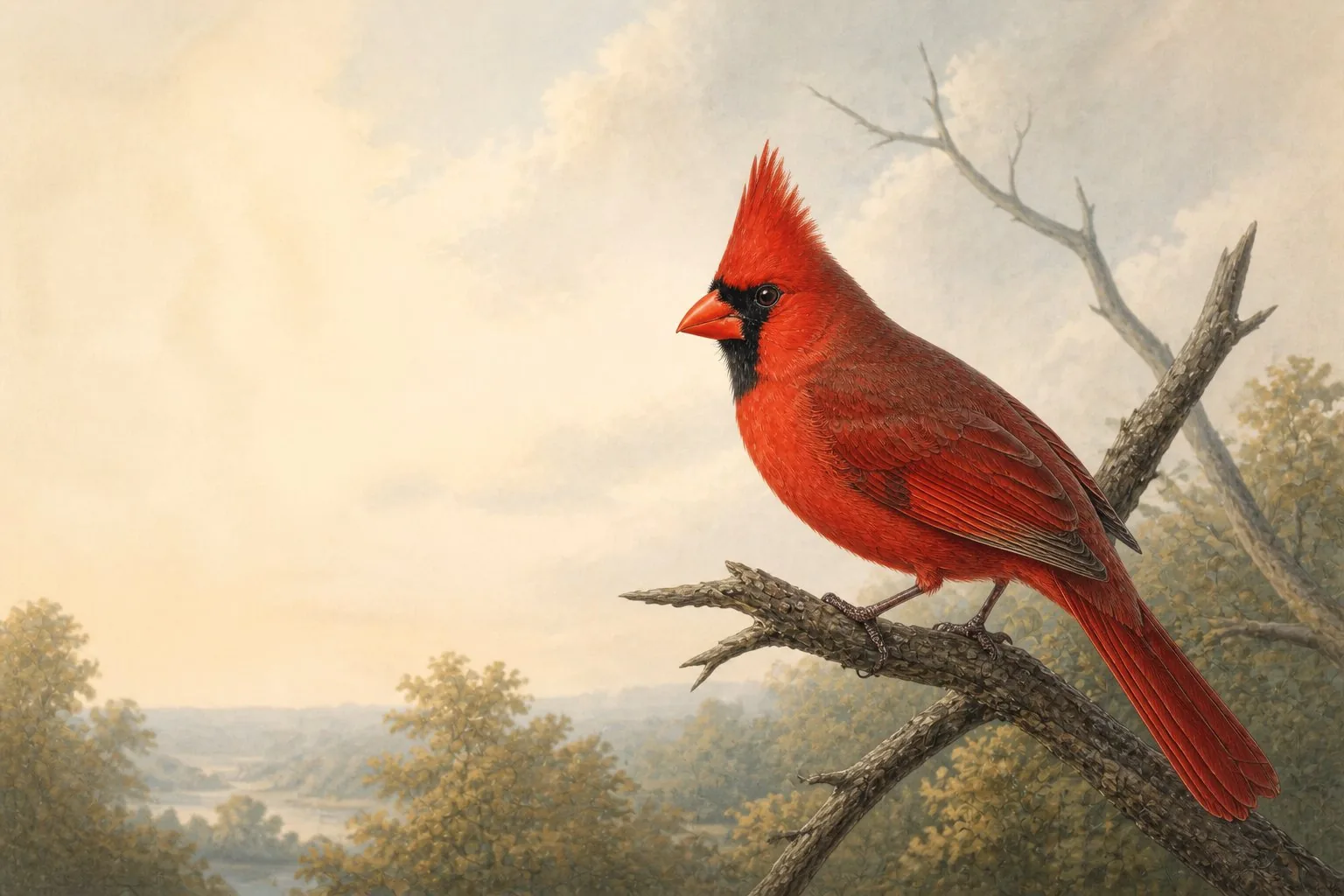
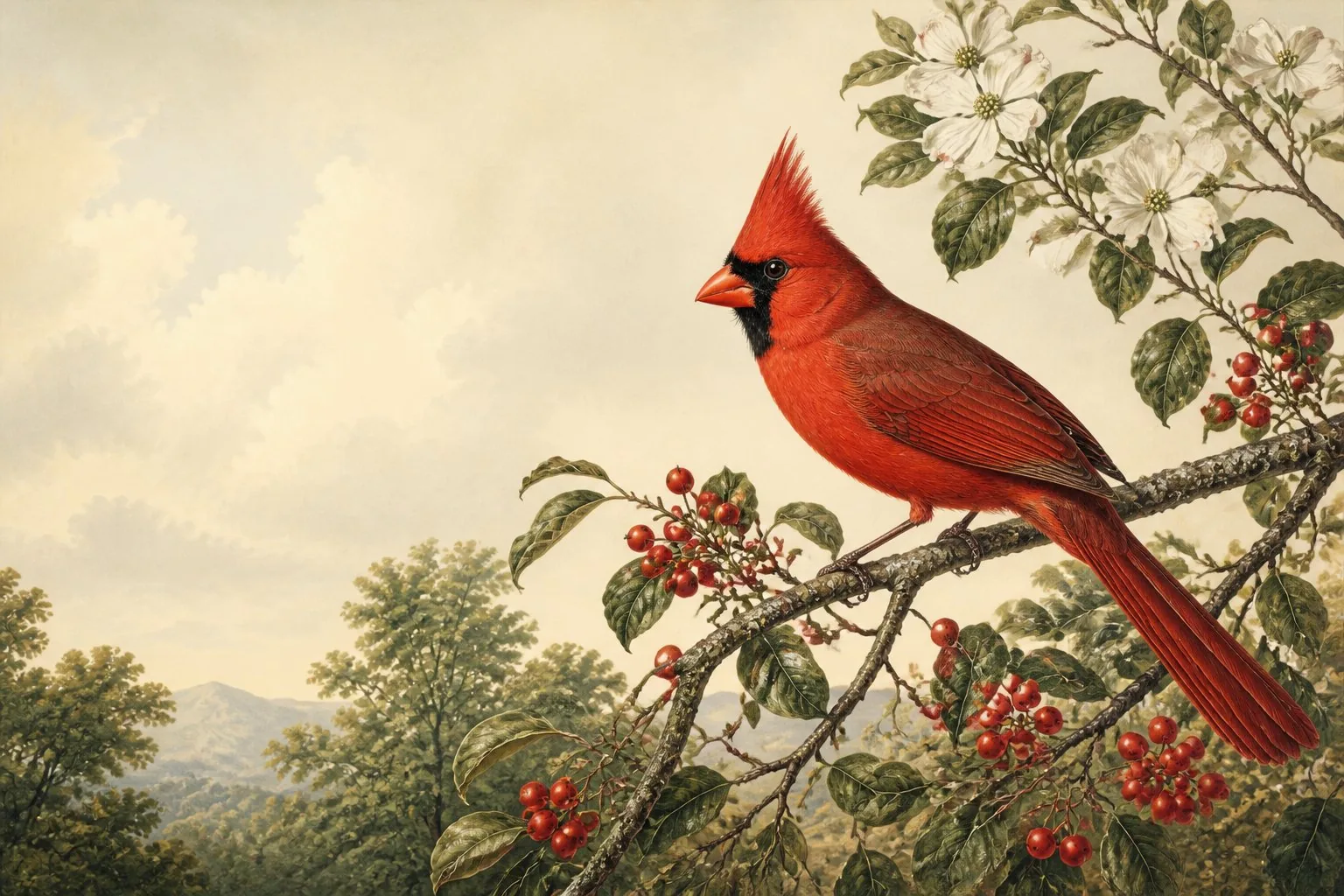
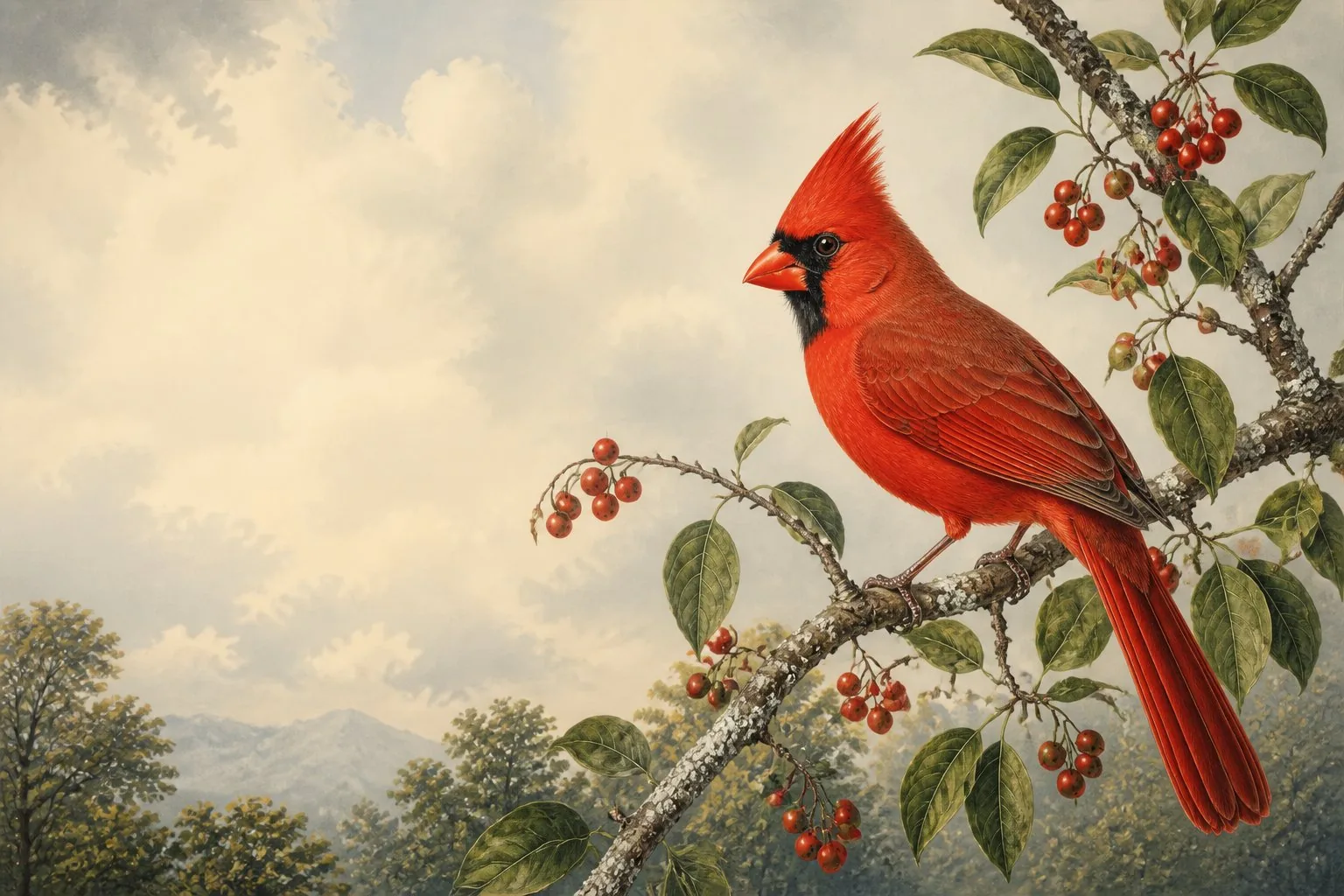
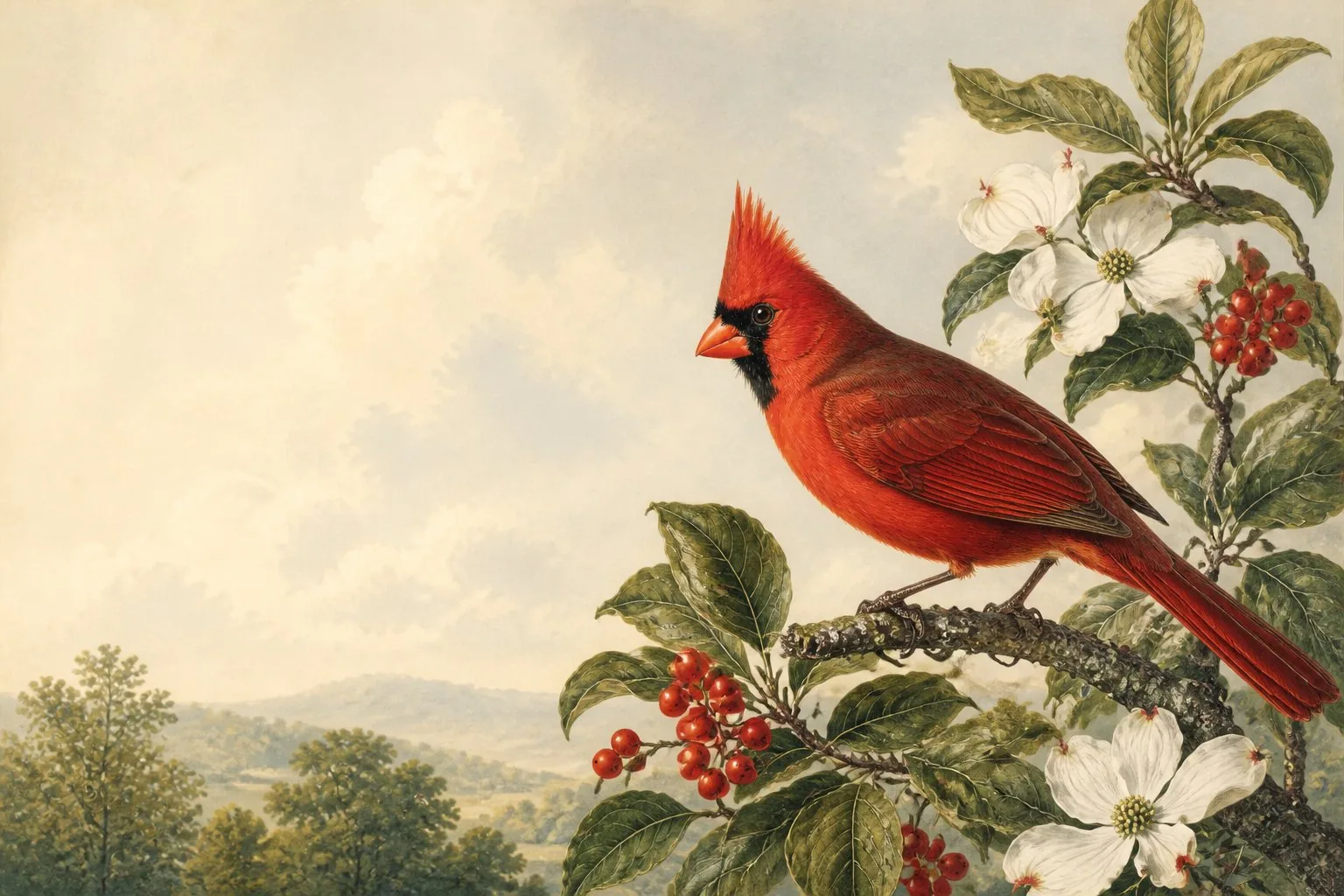
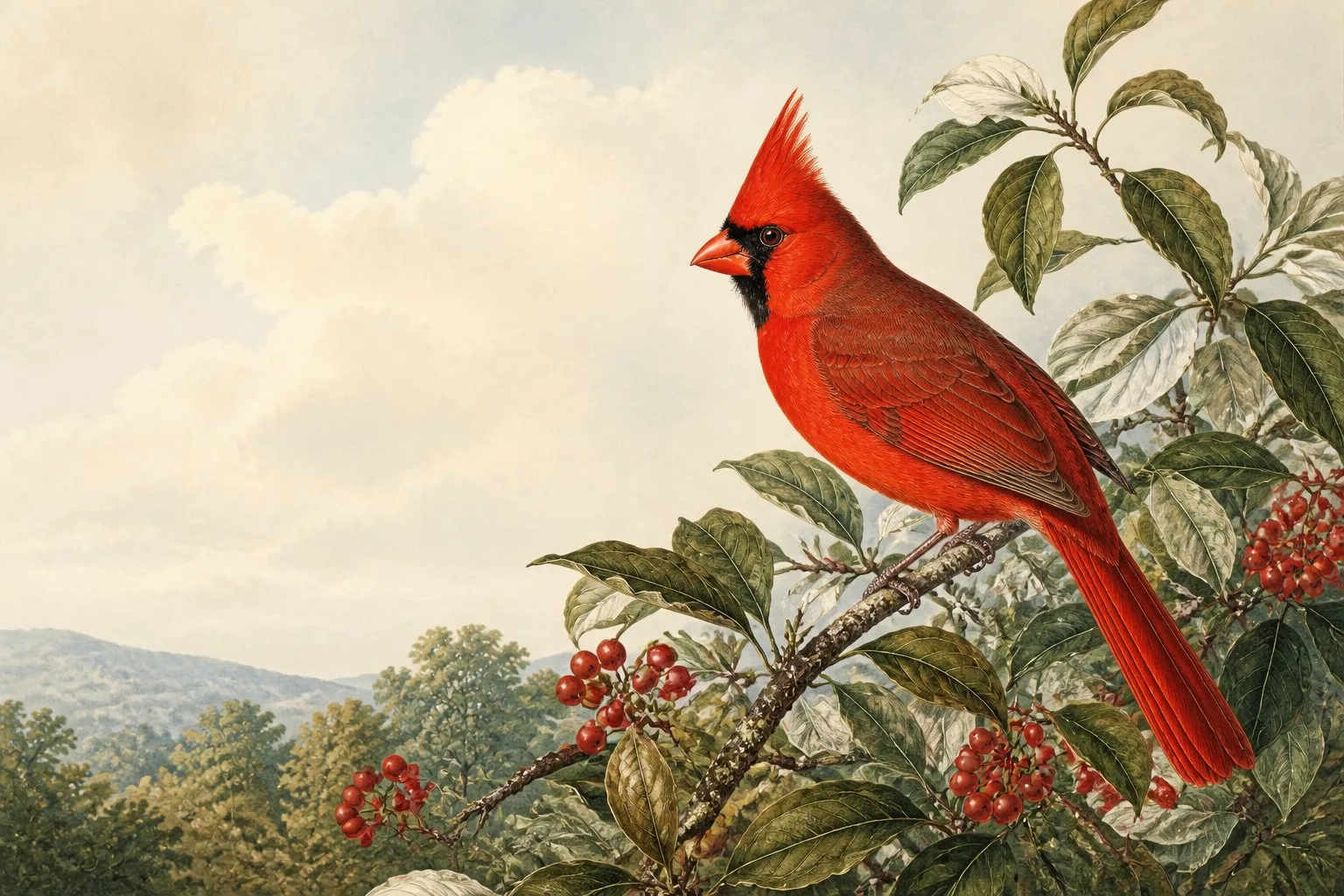
The male is as recognisable as any bird in eastern North America - the full red body, pointed crest, and black mask around the coral bill are unmistakable. For a complete account of the Northern Cardinal’s field marks and range, that species page covers both sexes across seasons.
The genetics underneath the symbolism
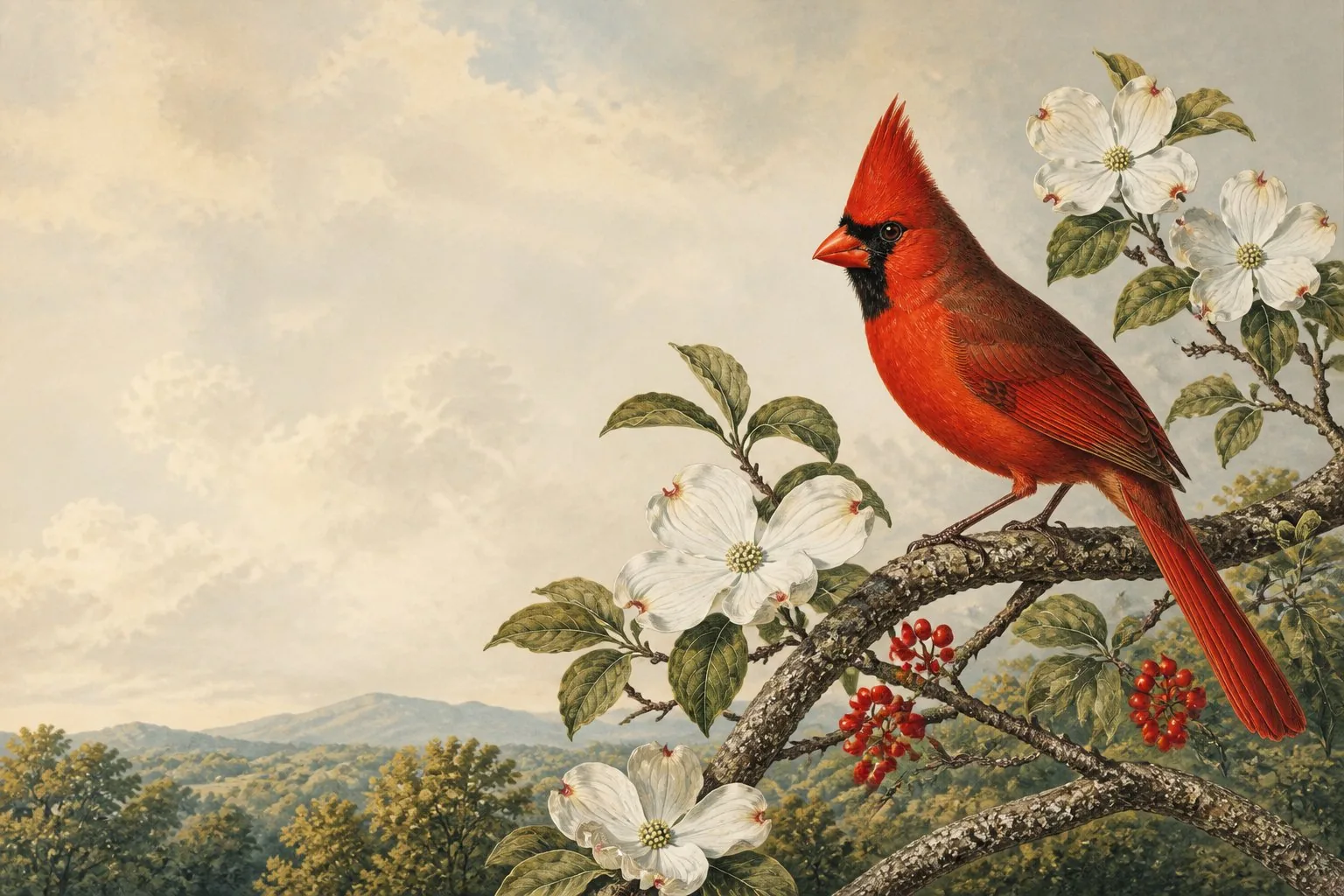
The male’s colour is not decorative in the neutral sense. His red comes from carotenoid pigments absorbed through his diet: dogwood berries, wild grape, hackberry, sumac. Audubon confirms this. The best-fed males are the reddest males. Cornell’s research on cardinal extra-pair copulations found that 9 to 35% of nestlings were sired by outside-pair males, suggesting females are not simply loyal but actively selective - and plumage brightness is part of what they are selecting for.
The brightest male at your feeder in March had the most productive autumn. The female beside him has, in some measurable sense, chosen him for reasons she can read and you cannot. Whether you call that love or fitness signalling depends on what vocabulary you prefer. The behaviour is the same either way.
You can read about how the male loses and rebuilds that red through the annual moult - and what that bald, scruffy bird in August is actually doing - in the piece on cardinal molting.
What the folk reading gets right and wrong
The specific belief that two cardinals represent deceased loved ones visiting is recent. It runs parallel to the meaning people attach to seeing a single cardinal, and both readings share the same modern origin. It spread mainly through twentieth-century popular writing and social media, and it has no deep traditional root in ornithology or Indigenous natural history.
The older claim - that the cardinal pair represents enduring partnership - is different, because it tracks something real. When a male Northern Cardinal brings food to his mate in February, defends their shared territory through a northern winter, and splits a full season’s parenting load with her, he is doing something most passerines do not sustain. The symbolism attached to that behaviour did not invent the behaviour. It noticed it.
Cardinals are not endangered - the American Bird Conservancy estimates the population at around 110 million, and the species is expanding its northern range as winters moderate. That means the pair at your feeder is one of millions. It also means there is nothing rare about what you are seeing. What you are seeing is the most common version of a lasting pair bond in North American birding, playing out in full colour, in your yard, in February.
For how cardinals organise socially beyond the pair - including what a flock is actually called - the cardinal flock guide has the detail. And the occasional pale or washed-out bird in a cardinal pair is not a different species: the white cardinals guide explains what happens when carotenoid absorption fails.
The pair at your feeder is not a message. It is a population in good health, a territorial bond that survived the winter, and a male who has been working to be worth choosing since last August.