Biology
What string is safe for birds
In June 2025, researchers at Baiyangdian Wetland in Hebei Province found a breeding Oriental Reed Warbler dead on a reed stalk, 10 cm from its nest. It had become entangled in a single strand of plastic string - 161 cm long, 0.13 mm in diameter - woven into the nest structure. The nest held one unhatched egg. The surviving parent abandoned the site within a week. Zhang and colleagues published the case in 2026 in Ecology and Evolution. One piece of string ended a breeding attempt and killed one bird.
The question of what string is safe for birds is not really about string. It is about which materials break under tension and which do not.
Why the fiber type is the whole question
Synthetic fibers - nylon, polyester, monofilament fishing line, acrylic yarn - do not break under the tension a small bird can generate. When a nestling works a leg against a loop of acrylic yarn, the fiber stretches slightly, then holds. As the leg swells, the loop tightens. This is the mechanism Jennifer Gordon, executive director of Carolina Waterfowl Rescue, describes to Audubon: hatchlings are “particularly susceptible to such entanglements,” and yarn “can get caught around a baby bird and cut off circulation as it grows.” Gordon’s team treats dozens of adult birds and chicks annually from hazardous nesting materials.
Fishing line compounds the problem with invisibility. Audubon documents a Barn Swallow strangled to death on fishing line centimetres from its nest, a Great Horned Owl in Brooklyn killed after being snared, and at least 2,957 aquatic birds treated for fishing-gear injuries at two California clinics between 2002 and 2015. In Florida, according to Audubon, fishing line kills more pelicans than any other single hazard.
Natural plant fibers behave differently. Coir, jute, and untreated cotton all have relatively low tensile strength. A bird catching a leg in coir rope can pull free because the fiber tears before the circulation does. That is the design principle behind toy-safe cordage: not that it will not tangle, but that it will give way first.
The practical dividing line is not natural versus synthetic. It is which breaks first - the fiber or the bird.
For wild birds and nest boxes
Cornell Lab’s NestWatch project advises against placing yarn or string out for nesting birds. NestWatch project assistant Holly Grant states that “yarn and other stringy items can be dangerous for birds” because they can wrap around nestlings’ feet, wings, or necks, either trapping the bird or restricting blood flow.
A 2014 study by Andrea Townsend and Christopher Barker at UC Davis put a number on that risk. In a survey of 195 American Crow nestlings, 11 (5.6%) were entangled in synthetic nest material - string, twine, fishing line, plastic tape, balloon ribbon. None of those 11 successfully fledged. About 55% of unentangled nestlings fledged. The odds of entanglement increased 7.55 times for each additional metre of anthropogenic material in the nest.
That is the argument against leaving yarn or decorative ribbon out for nesting birds. You will not see the harm. The nest is up in a tree. A nestling Eastern Bluebird has been documented - via NestWatch field reports - with monofilament from its mother’s nest cutting off blood supply to a leg entirely, then dying trapped in the nest. The mother had picked up the line because it resembled suitable material.
What to put out instead: short lengths of dried grass, plant fiber from milkweed or cattail, untreated straw, small twigs. If you offer cotton, cut it to pieces no longer than three inches and leave no loops - pieces short enough that nothing can wrap twice around a leg.
Avoid human hair regardless of length. Gordon describes it as “long, thin, and strong,” capable of severing a limb. Avoid dryer lint, which collapses structurally when wet and contains microplastics. Avoid pet fur that may carry flea and tick treatment residue: a UK study cited by NestWatch found that 100% of fur used by Great Tits and Blue Tits from treated-animal households contained insecticides, with higher levels linked to poorer offspring survival.
For pet birds and cage toys
The same principle holds in a cage. Cotton rope is the standard in commercial parrot toys, and it is generally fine - until it frays. Once the fibers separate, loose strands behave exactly like yarn in a wild nest. Avian vets in Queensland, Australia, have seen birds with crop and intestinal impaction from ingested cotton threads off fraying rope toys. The birds chewed the toy, swallowed threads, and blocked their digestive tracts over weeks.
Safe cage materials: coir (low tensile strength, tears before it binds), hemp, un-oiled sisal, jute, and unbleached cotton with close monitoring. Unsafe: nylon, polyester, acrylic yarn, and monofilament - none break under the tension a bird in distress can generate.
The rule for cotton rope toys: check daily. A toy that looks intact in the morning can have a loose frayed loop by evening. When the rope shows visible unraveling, discard it. Keep exposed cordage short and avoid closed loops - a loop sized to fit over a bird’s head when the toy is new will still fit when the bird is panicking.
What the research agrees on
Audubon’s John Rowden, director of community conservation, summarised it plainly: “Natural materials avoid those sorts of pitfalls and will be better for birds.” They are safer because they fail - under tension, they give way rather than hold. The danger in the Baiyangdian case was that the plastic string was 0.13 mm of material with no intention of breaking.
String does not have to be thick or conspicuous to kill a bird. It only has to hold.
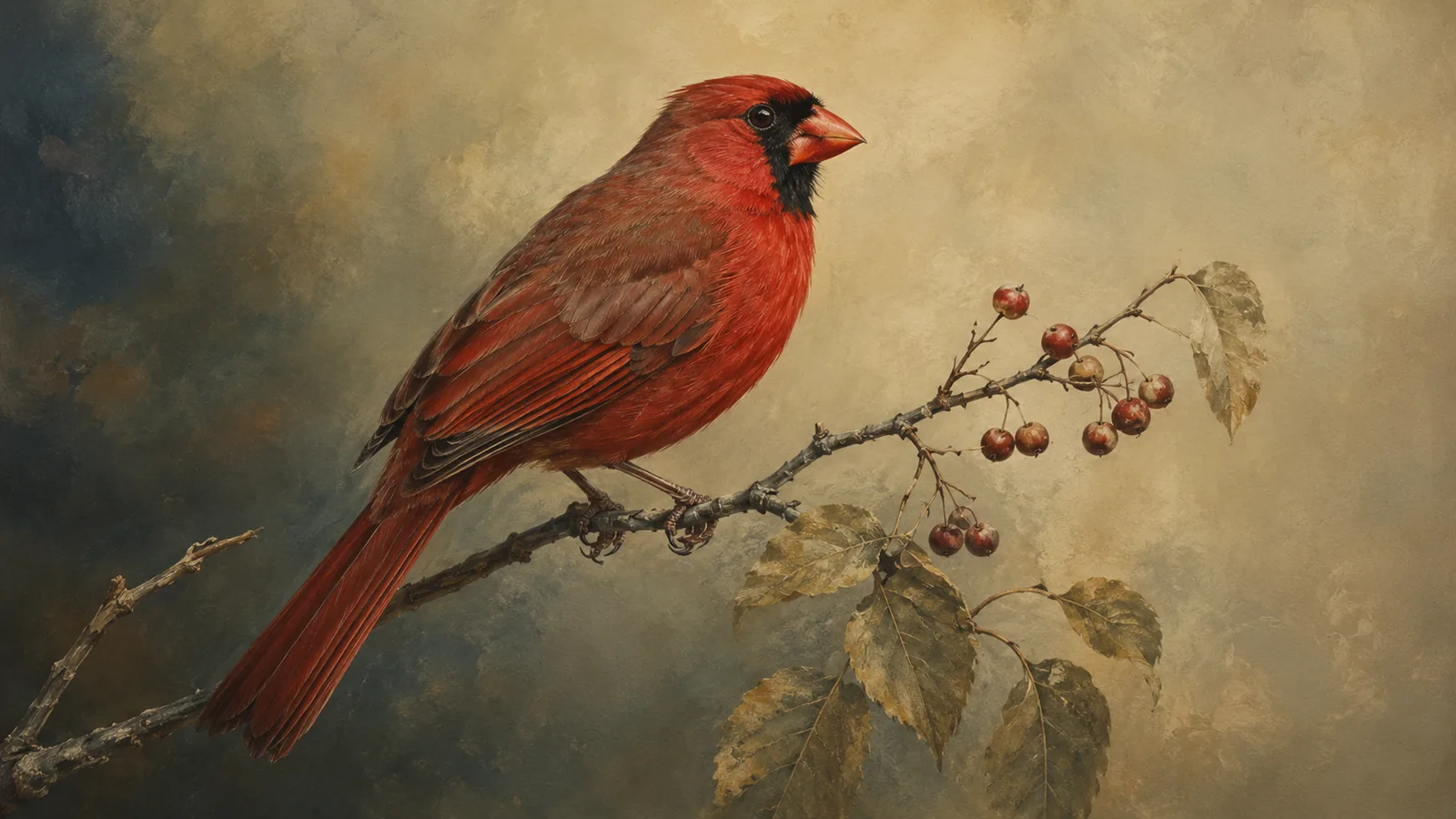
Northern cardinals begin carrying nest material in late March. What you leave on a fence post is a choice you make on their behalf. The white color variant and the standard-red bird face the same risk with the same nest architecture. A piece of natural jute is a gift. A length of synthetic twine is a trap they will not recognise as one.