Biology
What does it mean when you see a cardinal
A woman in rural Ohio lost her mother in January. Three days later a male cardinal landed on the feeder outside the kitchen window and stayed there for twenty minutes while she made coffee. She told this story to her daughter, who told it to her own daughter, who posted it online. It has been shared tens of thousands of times. This is how the cardinal-as-messenger belief spreads now, and it is a useful place to start: not because the story is false, but because it is so consistent.
The belief that a cardinal sighting carries a message from a departed loved one is genuinely widespread across the United States. What almost nobody mentions is that it is largely a modern American folk tradition - rooted in real, observable biology, then layered with grief culture, then amplified by social media into something that feels ancient but is not.
Where the name came from
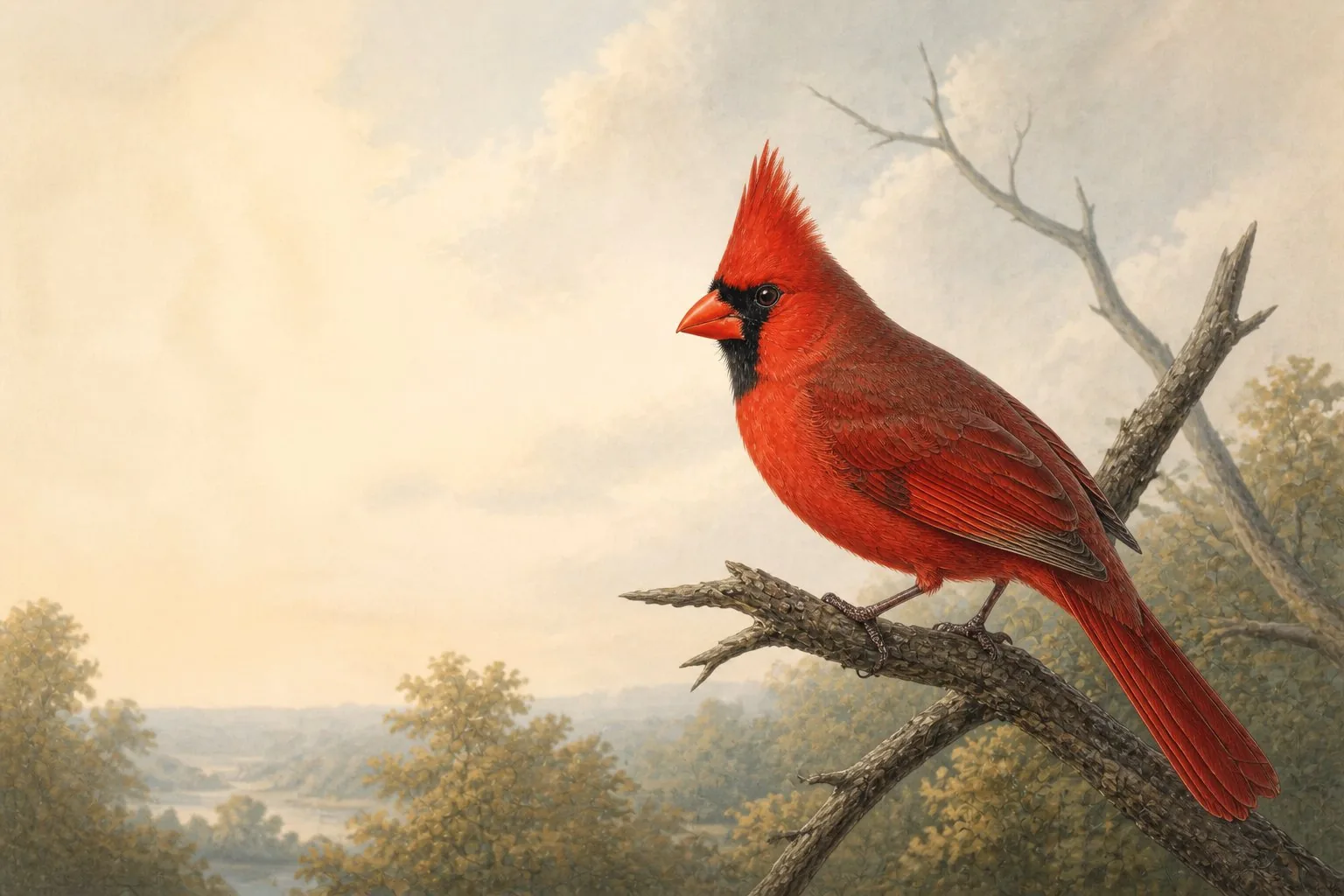
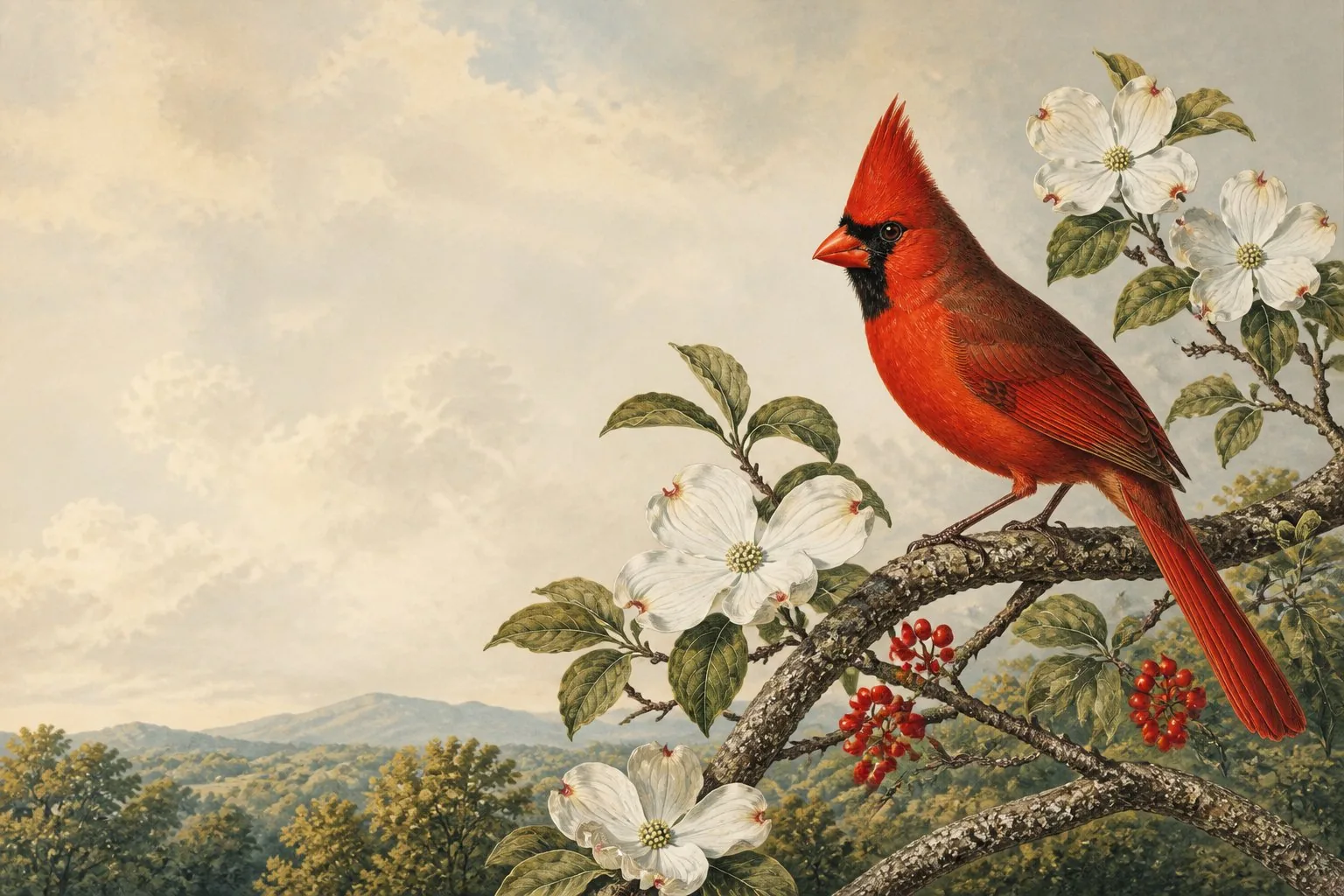
Cardinalis cardinalis was named by European colonists who arrived in North America and found a bird the colour of a Roman Catholic cardinal’s robes. The name stuck. In Catholic tradition, red is the colour of the Holy Spirit and of blood sacrifice, which is why some early Christian symbolism attached to the bird. But that symbolism was specific to particular communities and largely confined to religious iconography. It did not generalise into a broad “messenger from heaven” belief until much later.
The transition gathered momentum somewhere in the 20th century, in the same broad era that produced mass-market sympathy cards, florists at funerals, and the gradual domestication of mourning. The cardinal was the right bird at the right moment: year-round, unmistakable, and reliably present in backyards across the eastern half of the country.
What biology actually explains
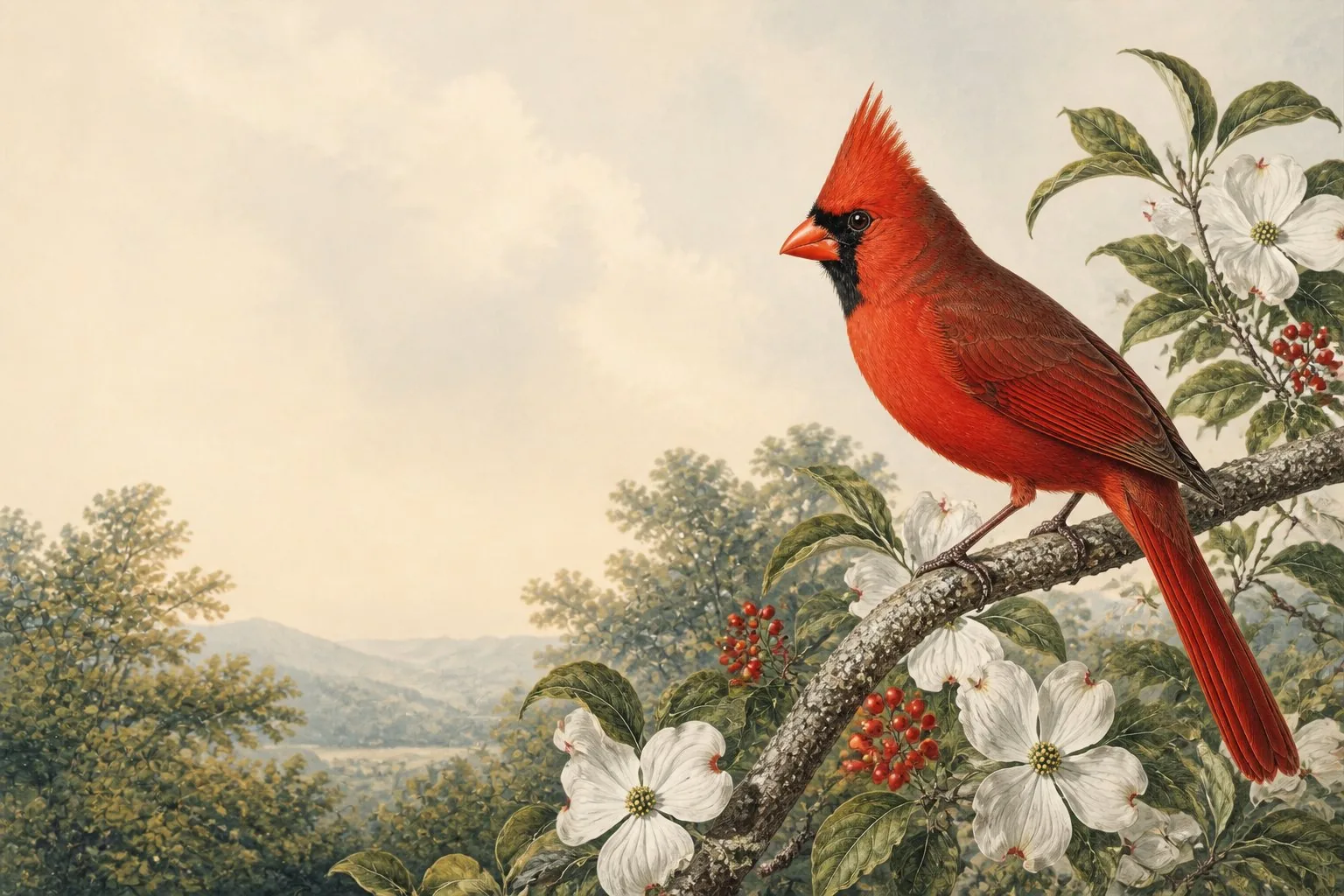
The “messenger” reading relies on a biological fact most people do not consciously register: the cardinal is one of the few spectacularly coloured birds in North America that does not migrate. A bluebird, a tanager, a warbler - these vanish in autumn. The cardinal stays.
A bird that appears in January snow, in the week after a funeral, in the yard where someone you loved used to stand - this is not a coincidence of timing. It is what cardinals do. They are always there. Grief makes us look.
This is not a deflation of the experience. The biology explains why the cardinal, specifically, carries this weight across so many unconnected families. A bird you only see in summer cannot visit you in the dark part of winter. The cardinal can. Its year-round territory - the Cornell Lab puts a typical pair’s range at one to four acres - means he was present at your mother’s last Christmas, and he is present now.
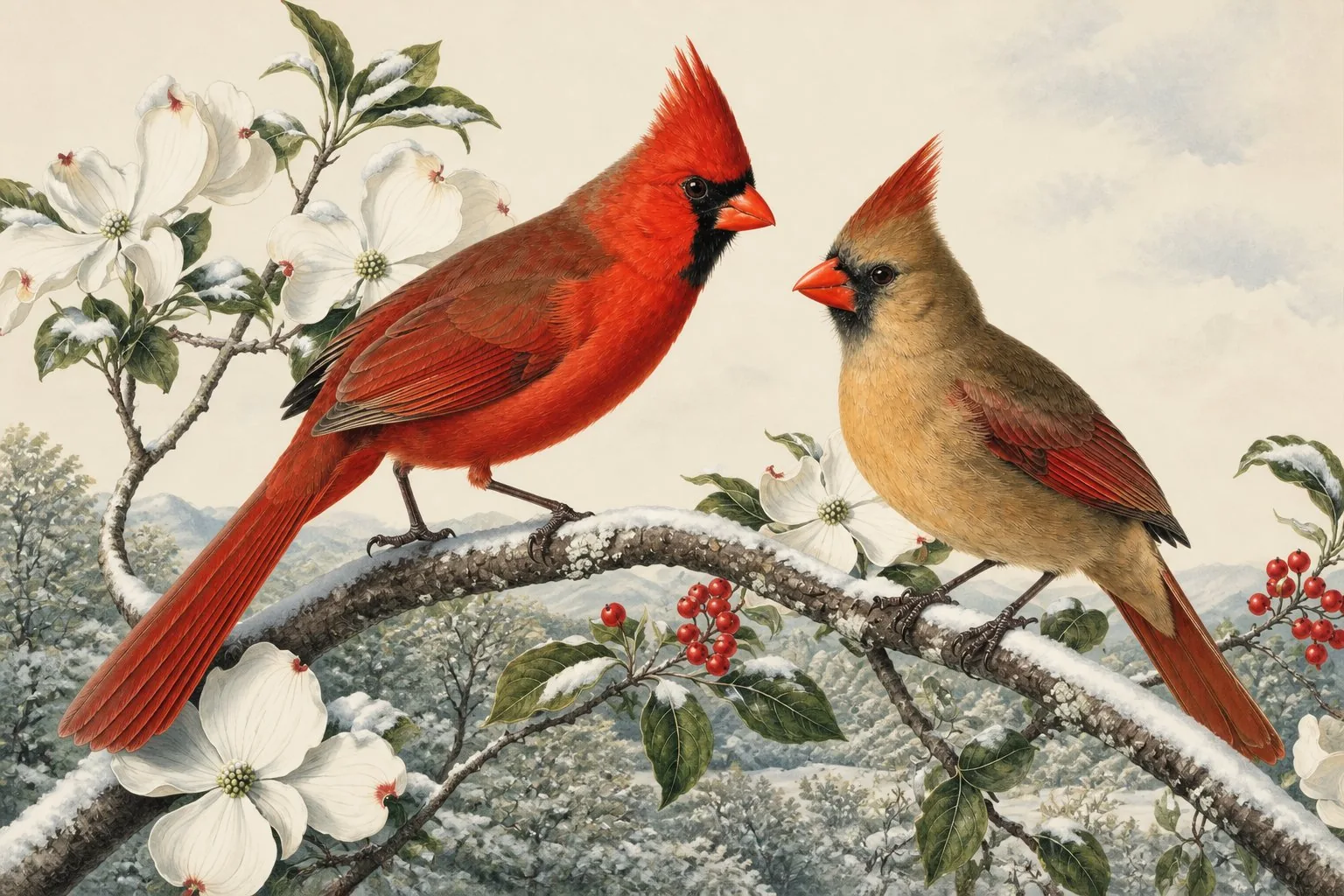
The male’s song is also a factor. He sings through winter when most birds are silent. The Cornell Lab describes the Northern Cardinal as one of the few North American species in which both sexes sing. A clear whistle from a grey February yard will stop most people. Silence broken tends to feel like address.
The folk traditions
Native American traditions that reference the cardinal are real but varied and should not be collapsed into a single reading. Some Ojibwe traditions regard the cardinal as a watchful, alert bird. Cherokee traditions, which are better documented on this point, link the cardinal’s colour to fire and the east - a connection tied to the bird’s role as a daughter of the sun in Cherokee legend. These are not the same as the general American “loved one in heaven” belief, and they predate it by centuries. Treating them as interchangeable flattens distinct cultures into decoration.
Cardinals have long been a fixture on North American Christmas cards - one of the most depicted birds in the holiday card tradition, partly for their red plumage, partly for their year-round visibility in winter landscapes. By mid-century they were a standard winter holiday image, which lodged them in the emotional landscape of family, memory, and the time of year when loss tends to surface.
Whether cardinals mate for life is more complicated than most sources suggest. They form pair bonds that typically last a breeding season and often continue across years - but pairs do split, and widowed birds re-pair. The “loyalty” reading is a reasonable folk impression of a bird you see, year after year, apparently with the same partner.
What to do with the belief
The folk reading is not wrong because it is recent. Meaning is made, not found. The cardinal is bright, local, persistent, and willing to perch three feet from a grieving person making coffee. If that perch feels like something, that feeling is real. The bird did not intend it. The bird is cracking seeds and defending territory. But the gap between what the bird is doing and what the observer receives is precisely where symbolism lives.
Cardinals have genuine colour variation worth knowing - the occasional leucistic individual appears white or pale and generates its own separate layer of meaning in communities that rarely see one.
The ornithologist’s answer is the one to get right first. A non-migratory bird with a loud winter voice, whose territorial range includes your yard, appears at statistically predictable intervals every week of the year. He appeared last Tuesday before the loss. He will appear next Tuesday after it. The loss changes what you are looking for, not what the bird is doing.
The other answer - that this particular bird at this particular window carries something - is yours to keep or discard. Symbolism requires a witness. The cardinal is simply the most willing one in North American backyards, which is partly why he has been pressed into this service, and partly why he keeps showing up on time.