Pets
What toys do birds like - and why the answer is mostly foraging
Put a bell in a parrot’s cage and she may ring it once, ignore it for a week, and eventually use it as a frustration prop. Put in a wooden puzzle that hides a walnut and she will spend the better part of a morning working on it - even when an identical walnut sits in the food bowl two inches away.
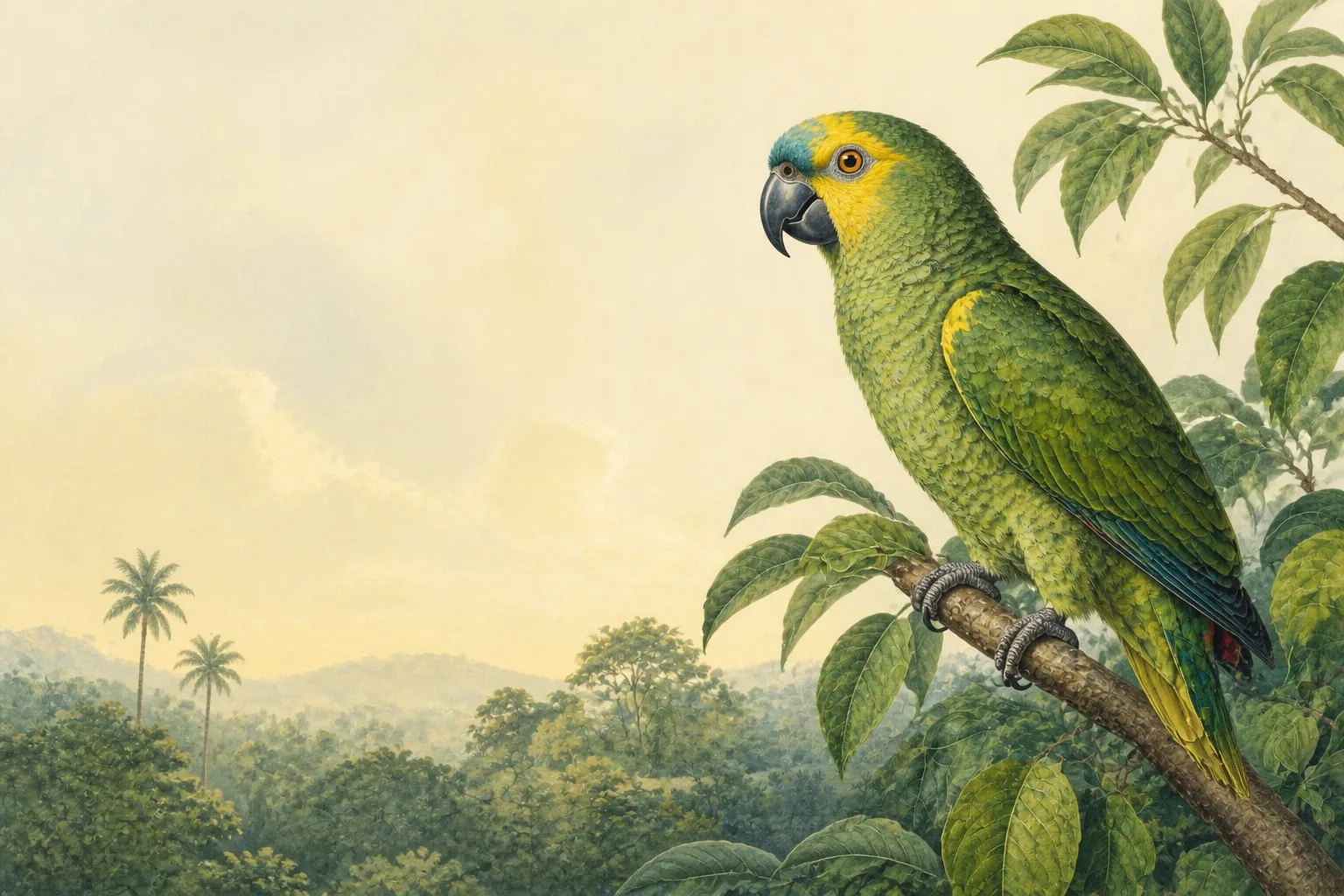
That preference has a name in behavioral science. It is called contrafreeloading: the documented tendency of many animals, including parrots, to work for food even when the same food is freely available for the taking. A 2023 study published in Animals (Hijlkema et al.) tested 21 grey parrots - Psittacus erithacus - and found that healthy birds spent 50% of their foraging time manipulating puzzle devices rather than eating from open bowls. The finding matters because it means the right toy is not a distraction from eating. It is eating, done the way the bird actually wants to do it.
The gap between wild foraging and a food bowl
Wild parrots invest between 40 and 75% of their active daytime in foraging: searching for food, manipulating it, extracting it from husks and crevices. A 2024 systematic review in Animal Welfare - drawing on 98 studies and 1,512 measured outcomes - found that insufficient enrichment was the single strongest risk factor for welfare problems in captive parrots, linked to 18 separate categories of abnormal behavior.
Meanwhile, captive parrots in standard bowl-fed setups forage for roughly 47 minutes per day, according to foraging enrichment research reviewed by LafeberVet. Against a wild baseline of four to eight hours, that is a gap no amount of cage furniture closes on its own.
The behavioral consequences are measurable. Feather-damaging behavior - plucking, chewing, or barbering feathers - affects between 11.7 and 25.4% of the overall captive parrot population. Rates run higher in grey parrots (22.5 to 39.4%) and cockatoos (30.6 to 42.4%). The African Grey parrot is among the species most prone to this, which is exactly why the foraging question matters so much for them. The mechanism is not complicated: a bird whose brain is wired to solve food problems for several hours a day, and is given nothing to solve, redirects that impulse somewhere. This is the core case for why toys matter to pet birds in the first place.
The Animal Welfare review classifies foraging as a behavioral need - something the bird must perform, not something it would enjoy if given the opportunity.
What foraging toys actually do
The Hijlkema contrafreeloading study found something that changes how the toy question should be framed. Feather-damaging parrots showed significantly less motivation to use foraging devices than healthy birds - consuming only 21.1% of their food via devices, against 39.3% for healthy birds. But the birds with feather-damaging behavior who did engage most with the devices showed the greatest improvements in plumage condition over the month-long trial. The toy does not merely occupy a bored bird. It addresses what made the bird pluck in the first place.
Some links in this guide go to Amazon. They point to gear we would actually put in front of a bird, and we earn a small commission if you buy through them.
In practice this means a manipulable foraging toy that hides food behind a barrier the bird has to solve, not a toy that simply hangs there looking interesting.
Puzzle feeders and foraging boxes outperform other enrichment formats on this measure. LafeberVet’s review of enrichment methods tested on 12 grey parrots found puzzle feeders increased daily foraging time to around 123 minutes - roughly a two- to two-and-a-half-fold improvement over open bowls. Larger food particles that require the bird to hold and manipulate them produced comparable results. Simply scattering food across multiple bowl locations produced the smallest gain.
The baseline research here goes back to Coulton, Waran, and Young at the University of Edinburgh (1997, Animal Welfare). Their wooden foraging device - a plank with 50 covered holes, each requiring the bird to pierce starch paper to access food - produced a measurable increase not just in foraging time but in allopreening, the social grooming behavior that indicates a relaxed, socially engaged bird. Providing foraging opportunity did not just occupy the bird. It changed its social state.
Toy types by what they replace
Not all toy categories deliver equally. The ranking follows the behavior being replaced. A large bird such as a scarlet macaw will work a foraging puzzle far harder than it will ever ring a bell.
| Toy type | Behavior it replaces | Best for |
|---|---|---|
| Foraging puzzles, treat balls | Food-searching and food manipulation | African Greys, amazons, cockatoos, conures |
| Shredding toys (balsa, palm leaf, cardboard) | Bark-stripping, nest preparation | Cockatoos, macaws, cockatiels |
| Chew toys (untreated pine, cuttlebone) | Natural beak wear | All species, especially medium and large parrots |
| Swings, climbing nets | Canopy movement and balance | Finches, budgies, smaller parrots |
| Bells and rattles | Auditory stimulation | Budgies, canaries, cockatiels |
Mirrors deserve a specific note. For a solitary budgie, a mirror can substitute for absent social contact - a consolation, not a solution. For African Greys and most large parrots, mirrors tend to produce frustration rather than comfort, which is part of the wider story of birds that like shiny things. If you can house two budgies together, the mirror becomes unnecessary. For advice on how to choose age-appropriate bird toys matched to specific species and cage sizes, the sizing and safety details matter more than toy category alone.
Materials and safety
Most pet-shop toys are safe. The unsafe ones tend to involve zinc or lead hardware - check clasps and bell interiors especially. Galvanised metal carries a zinc coating that causes heavy-metal poisoning over time. Stainless steel hardware is the safe standard.
Rope toys earn a specific warning. Cotton rope is fine until it frays. Inspect rope toys weekly. A fraying rope toy becomes a foot-entanglement risk quickly, and birds often do not register they are caught until they have been hanging for hours.
For wood: untreated pine, balsa, and manzanita are all safe. Nothing painted, stained, or pressure-treated.
How to rotate so the cage stays interesting
Three to five toys at any one time is the practical limit. More and the bird treats the cage as clutter. Fewer and the toy she has already cracked loses its value quickly. Swap one toy out each week.
The rotation does not need to be dramatic. Irene Pepperberg’s decades of research with Alex the grey parrot at Harvard - documented in The Alex Studies - showed that cognitive re-engagement follows novelty. A toy returned after a two-week absence feels genuinely new to most parrots. A separate play stand away from the cage gives you a neutral place to introduce unfamiliar toys, which lowers the threat response in cautious birds. Introduce unfamiliar toys outside the cage first. Some birds, particularly African Greys and older cockatoos, treat a new object inside the cage as a threat before they treat it as a toy. Giving the bird a day to inspect the object from a distance eliminates most of that hesitation. For a nervous bird that backs away from anything new, the step-by-step approach to introducing toys to a fearful bird goes further.
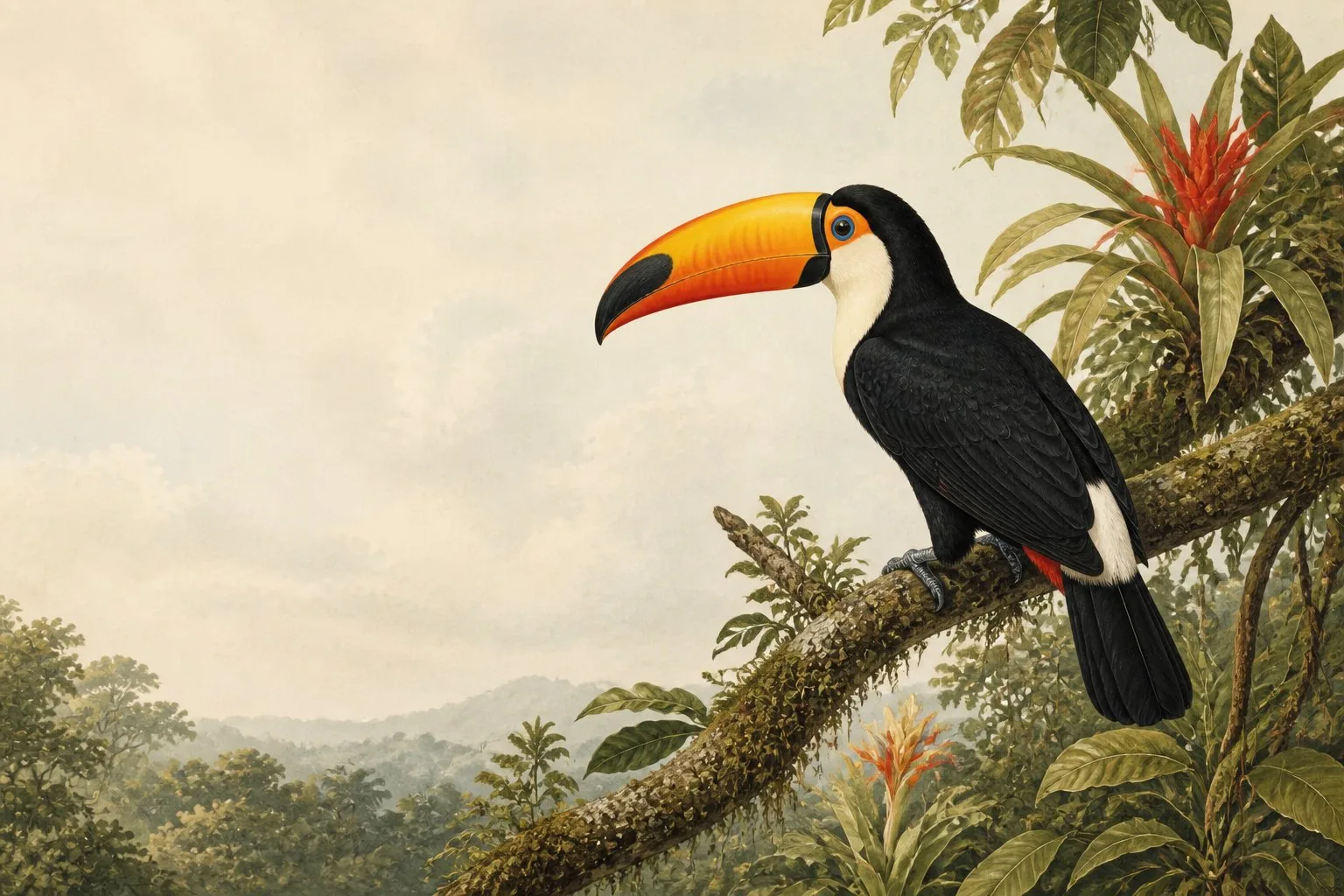
For further reading on what parrots eat and how diet relates to enrichment, see what parrots can eat. For how enrichment fits into the behavior of non-psittacine species in specialist collections, the biology of when and how toucans sleep and whether toucans migrate or hibernate covers the activity windows that shape when enrichment engagement peaks.
The bird who still has something to solve at dusk is a bird who did not spend the afternoon pulling out feathers. Every toy in the cage should be held to that standard.