Pets
What Can Parrots Eat
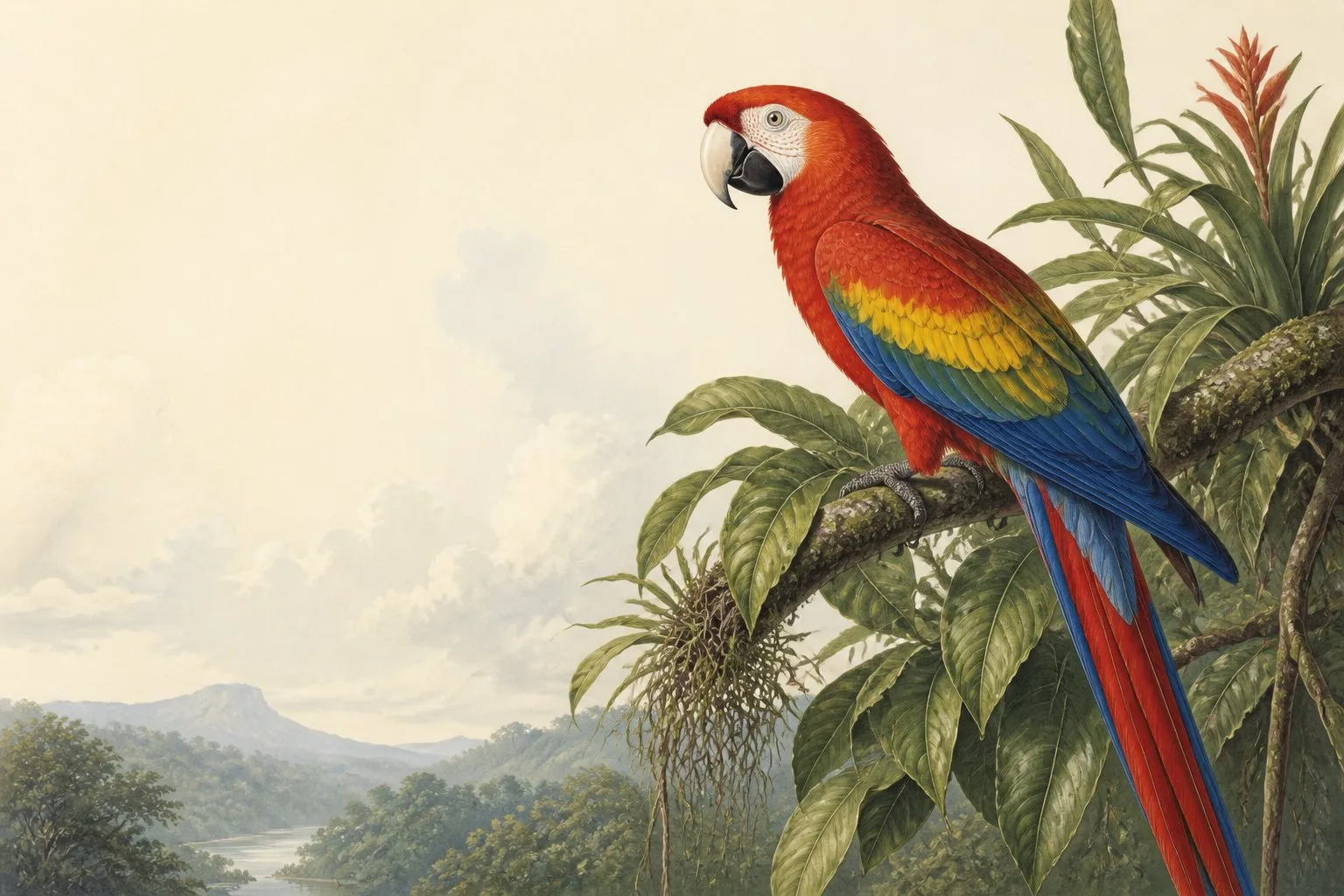
A wild macaw in the Peruvian Amazon does not wait for fruit to ripen. It opens the pod early, when the seed is soft and wet and packed with protein, and it is gone before a mammal could reach the same branch. That habit - cracking seeds before the plant is ready to give them up - is the core of what parrots evolved to eat. It is also almost nothing like the bowl of mixed dry seed most pet parrots receive every morning.
Research tracked 17 parrot species across eight genera in the Peruvian Amazon and found that up to 70% of their diet by volume was seeds in various stages of ripeness - not fruit pulp, not nectar, not fully mature sunflower seeds. Seeds at that early stage average roughly 19% protein and 11% lipid. The dry, shelf-stable seeds sold in most pet shops are nutritionally a different food entirely.
Why the seed bowl fails
This gap matters. The Merck Veterinary Manual states plainly that “strictly seed diets, regardless of supplementation, are suboptimal for psittacine species.” Seeds are deficient in vitamin A, calcium, and the amino acids lysine and methionine. A parrot fed primarily on dry seeds will, over time, develop a predictable cluster of problems: cardiovascular disease, fatty liver syndrome, obesity, and vitamin deficiencies. NC State University’s veterinary nutrition service documents exactly these consequences. The RSPCA adds that pet parrots instinctively select the fattiest seeds from a mix, partly because their ancestors needed that caloric density - but wild birds offset it with hours of flight that a cage bird cannot replicate.
Seeds as occasional treats are not the problem. Seeds as the dietary foundation are.
The single most useful change most parrot owners can make is replacing a seed-primary diet with a quality pelleted base - not because pellets are natural, but because they reliably correct the nutritional gaps that seeds leave open.
Avian veterinarians recommend pellets at 50-70% of the total diet, with fresh foods making up the remaining 30-50%. The Merck Manual specifies that pellets should contain 5,000-8,000 IU/kg of vitamin A and 5-12% fat, depending on species. They should carry no added sugar or artificial dyes, which accumulate and cause disease over time.
What to feed alongside pellets
Fresh vegetables fill in what pellets cannot replicate: variety, hydration, and the foraging activity that keeps a parrot mentally occupied. The RSPCA recommends carrots, broccoli, peas, and de-seeded apples as reliable starting points. Lafeber’s avian nutrition resources list peppers, kale, cooked sweet potato, squash, and sprouted legumes as sound additions. Dark leafy greens provide vitamin A precursors that seed-fed birds consistently lack.
Fruit belongs in the bowl in smaller quantities. Cultivated fruit is considerably sweeter than anything a wild parrot encounters - analysis of wild parrot diets notes that commercially grown varieties are “sugar-laden” by comparison - so limiting fruit to 10-15% of the diet keeps sugar intake sensible. Blueberries, papaya, mango, and de-seeded apples are well-tolerated across most species.
Cooked grains and legumes are often overlooked. Brown rice, quinoa, and oats cooked plain give a parrot complex carbohydrates without the salt and additives of anything prepared for human consumption. Cooked lentils and chickpeas are useful protein sources, particularly during moult or breeding season. Uncooked beans are a different matter: raw kidney beans and similar legumes contain haemagglutinin, a toxin destroyed by cooking, so all legumes must be fully cooked before serving.
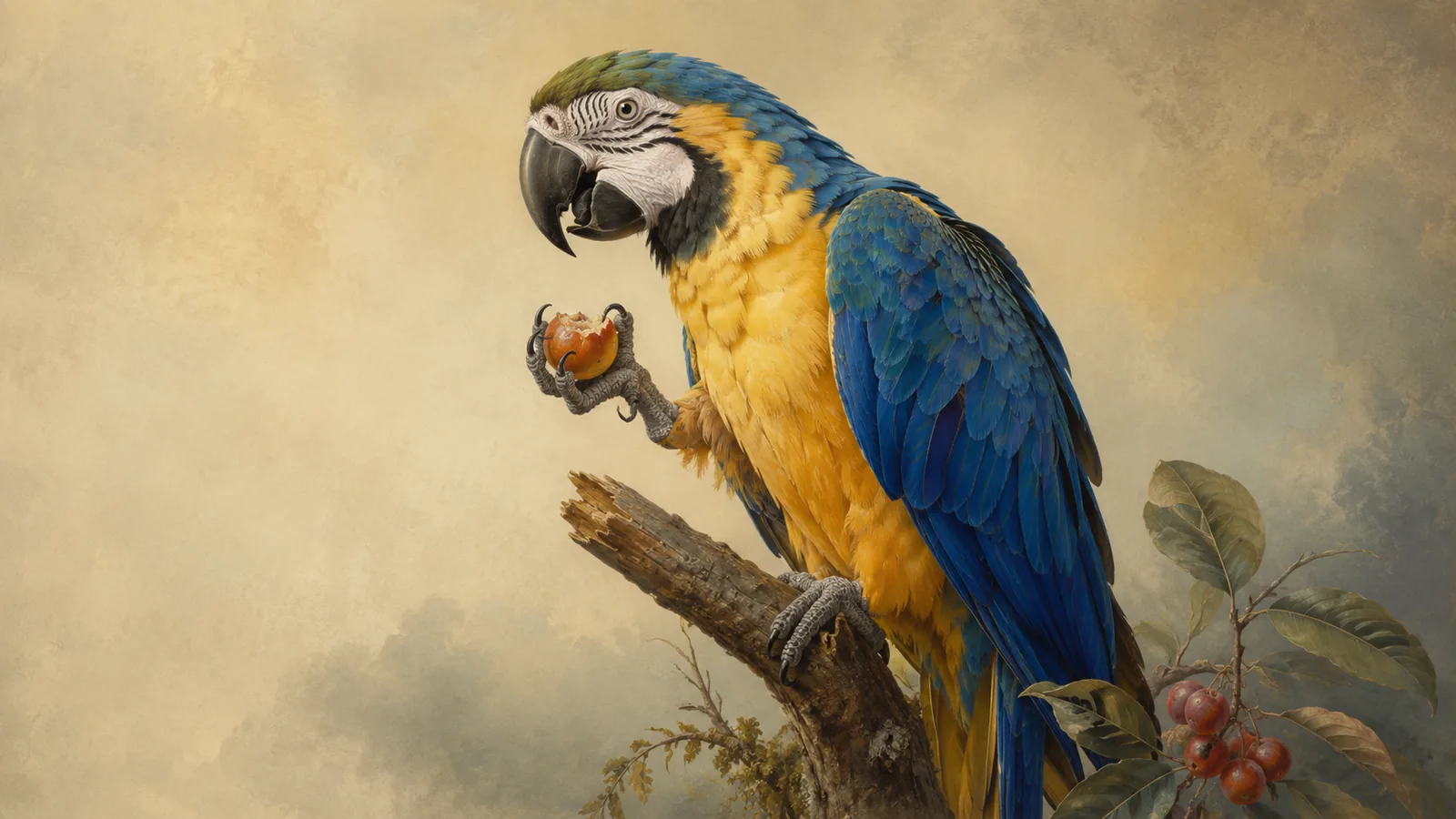
Two groups need different treatment entirely. Lories and lorikeets (Trichoglossus and related genera) are nectar feeders in the wild and require specialized high-moisture, low-fibre formulations rather than standard pellets. Hyacinth macaws (Anodorhynchus hyacinthinus) need substantially more dietary fat - the Merck Manual notes that nuts should comprise around 15% of their daily diet. Both are exceptions to the standard pellet-and-fresh-food model.
The foods that will kill a parrot
| Food | Why it is dangerous |
|---|---|
| Avocado | All parts contain persins - causes edema and death |
| Chocolate | Theobromine causes cardiac failure |
| Caffeine | Arrhythmia, even in small amounts |
| Onion and garlic | Damage red blood cells |
| Alcohol | Toxic at any dose |
| Fruit seeds and stone fruit pits | Cyanogenic compounds |
| Raw beans | Haemagglutinin toxin - destroyed only by full cooking |
| Rhubarb leaves | High oxalic acid |
| Peanuts (mouldy) | Aflatoxin - birds are far more sensitive than humans |
Avocado is the non-negotiable prohibition. The RSPCA describes it as “highly poisonous to parrots.” NC State’s veterinary nutrition page confirms that the skin, flesh, and pit of the avocado all contain persins, which cause edema and can kill. There is no safe dose. There is no safe variety.
Aflatoxin in peanuts is a second serious hazard that gets less attention. Moulds that grow on improperly stored peanuts produce aflatoxin, and birds are far more sensitive to it than humans. NC State flags this specifically. If you offer peanuts at all, buy human-grade product from a sealed, dated package and discard anything that looks or smells off.
Human plate food is a slower hazard but a real one. Anything salted, spiced, or sauced contains sodium and additives at concentrations that damage a small bird’s kidneys over time.
Introducing change
A parrot that has eaten seed mix for years will not immediately accept pellets. The transition takes weeks, not days. NC State recommends introducing dietary changes gradually and monitoring what the bird actually eats, not what you place in the bowl. Mixing a small amount of pellets into the seed bowl, then increasing the ratio over four to six weeks, is the standard approach. Offering fresh food alongside familiar food helps. Behavioral enrichment - foraging toys, puzzle feeders, food presented in different forms - encourages a bird to explore new textures.
This is also where choosing the right toys becomes relevant. A nut hidden inside a foraging toy is a better delivery system than a nut dropped in a dish: the bird earns it, which is closer to what eating is for a parrot in the wild.
The connection between diet and how long a parrot lives is direct. A bird on a corrected diet is more likely to reach the decades its species is capable of. That alone makes the transition worth the patience it requires.
A wild parrot does not eat the same thing twice in a row if it can avoid it. The bowl at home should try to earn the same restlessness. The seed mix is convenient. It is also, on its own, not enough.