Pets
What bird toys are actually for
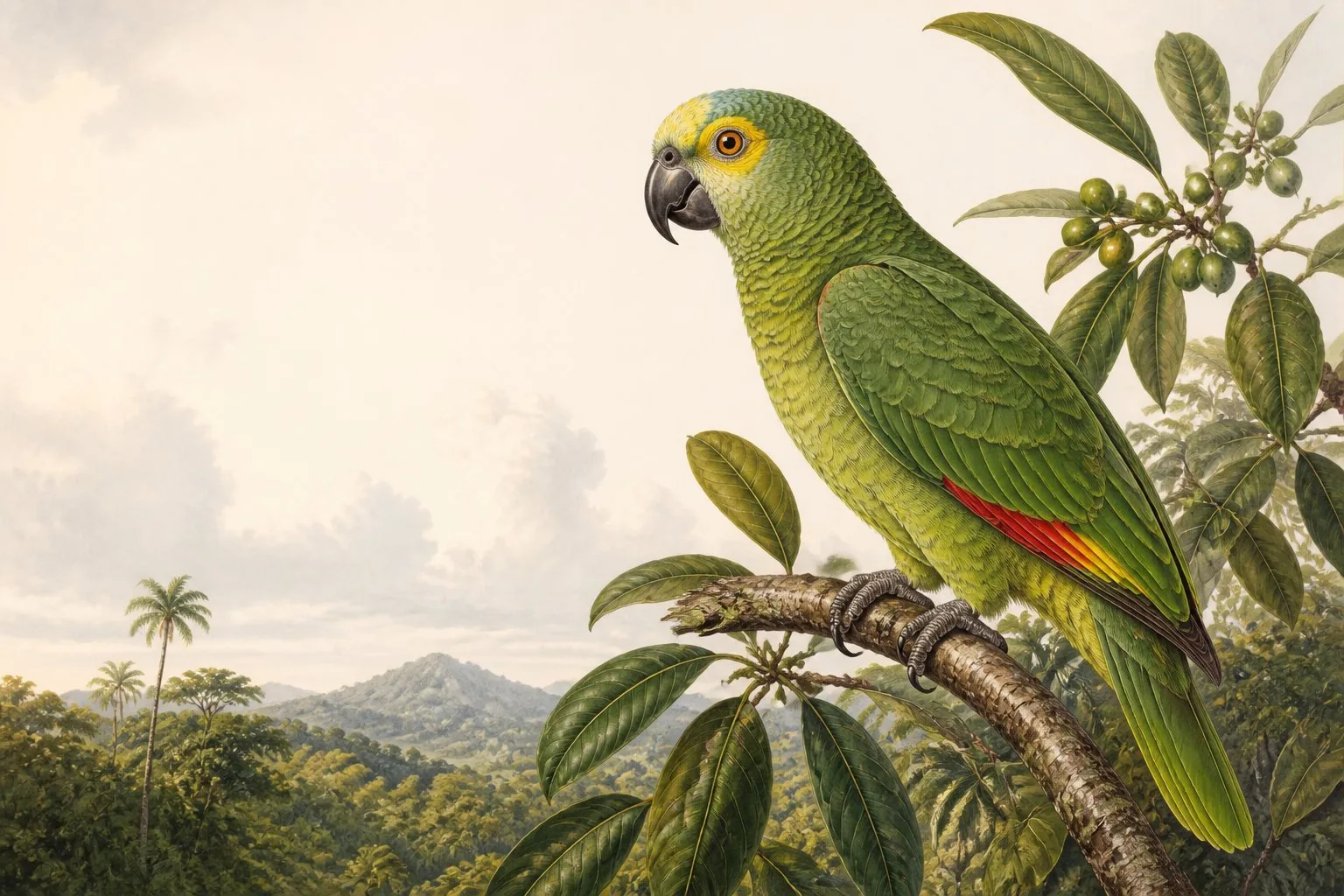
A study from Utrecht University put a food bowl in front of 21 African Grey parrots (Psittacus erithacus) and a foraging device next to it. The bowl required nothing. The device required work. Roughly half the food each bird ate came from the device anyway.
That is contrafreeloading - the documented preference animals show for earned food over free food - and it is the single most important thing to understand before you buy a toy for a pet bird. The bird is not bored. The bird is hungry in a way a full bowl cannot fix.
The problem with a food bowl
In the wild, African Greys and most parrot species spend between 40% and 75% of their waking hours foraging. LafeberVet, drawing on research by Dr. Yvonne van Zeeland and colleagues at Utrecht University’s Faculty of Veterinary Medicine, puts the number precisely: free-ranging parrots travel several miles between feeding sites and engage in sustained searching, selecting, manipulating, and consuming food across four to eight hours daily.
A captive parrot offered a conventional pellet bowl in a cage spends, on average, 47 minutes a day on food acquisition. That is what van Zeeland’s team measured. The gap between 47 minutes and six hours is not filled by rest. It is filled by stereotypies - repetitive pacing, excessive screaming, over-preening, feather plucking.
LafeberVet’s Dr. M. Scott Echols, board-certified in avian practice, reported that in one study 96% of orange-winged Amazon parrots (Amazona amazonica) in captivity performed locomotor or oral stereotypies, with some individuals spending up to 85% of their active time in abnormal behaviours. The same research, by Meehan and colleagues, found that environmental enrichment with foraging substrates prevented or reduced psychogenic feather plucking in young birds. The investigators recommended a varied enrichment protocol for all captive parrots.
A toy is not a treat. It is a prescription.
What the research says works
Van Zeeland’s team measured the effect of different enrichment strategies on daily foraging time in Grey parrots. The baseline was 47 minutes. Puzzle feeders lifted that to 123 minutes. Larger food particles - such as whole Nutri-Berries at roughly 2.5 cm diameter - exceeded 100 minutes. Both approaches more than doubled foraging time against the bowl-only baseline.
A 2025 study published in Applied Animal Behaviour Science (“Environmental enrichment improves behavior and welfare in captive cockatiels”) found that object-based enrichment elicited more interaction from cockatiels (Nymphicus hollandicus) than food-based enrichment alone, and that environmental enrichment reduced both alloplucking and self-plucking. Protocols combining two different device types simultaneously stimulated both the appetitive phase (searching) and the consummatory phase (handling and eating) of foraging behaviour.
Paula Baker, writing for the British Veterinary Nursing Association from the Animal Welfare and Behaviour Group at the University of Bristol, notes that wild parrots allocate approximately 50% of their day to flying and foraging, 30% to social interaction with flock members, and 20% to preening. A well-designed enrichment routine addresses all three, not just feeding.
A systematic welfare review published in PMC in December 2024 - Piseddu, van Zeeland, and Rault, “What We (Don’t) Know about Parrot Welfare” - drawing on 1,512 outcomes across 98 studies, identified lack of physical and foraging enrichment as the most recurrent risk factor associated with negative behavioural and physiological outcomes in captive parrots.
The problem is not that the bird lacks entertainment. The problem is that captive life compresses six hours of species-typical behaviour into less than one, and the bird fills the gap somehow.
The four categories worth understanding
Foraging toys hide food inside or require manipulation to release it. Crumpled paper balls around a treat, muffin tins with cupcake liners over each cup, stainless steel puzzle boxes with sliding compartments. The goal is to make the bird work for its meal. Complexity should scale up gradually - a bird that has never foraged needs to succeed the first time, not fail. Arizona Exotic and Avian Vet Care recommends starting with partially visible food before increasing difficulty over two weeks. See how to choose age-appropriate bird toys for guidance on matching difficulty to species and age.
Chew and shredding toys address a separate need. Parrots in the wild pry open seed pods, strip bark, and tear vegetation. Chewing maintains beak condition and provides a physical outlet. Untreated wood from apple, birch, pine, or balsa works well. Manzanita and cholla cactus are harder and last longer for large species. Shredding toys - palm leaf mats, woven seagrass, dried corn husk - satisfy the same drive with faster destruction, which most owners find preferable.
Climbing and manipulable toys serve locomotion and exploration. Rope ladders, swings, and hanging items encourage movement through the cage space. Best Friends Animal Society specifies that rope toys should leave no more than about eight inches of hanging cord, and open loops in knots must be closed to prevent foot entanglement. Cotton and sisal are safe. Nylon and synthetic fibres are not.
Puzzle and cognitive toys are the category most underused with smaller species. The capacity for problem-solving correlates roughly with brain-to-body ratio, not size, and cockatiels and budgerigars show consistent motivation to manipulate novel objects even without a food reward. Infant rattles, stacked cup toys, and latched boxes all work. The material matters less than the novelty.
Safety is specific, not general
The most common metal hazards are zinc and lead. Zinc appears in galvanised wire, some bell interiors, and older cage hardware. Lead appears in certain paints and soldered joints on older toys. Both cause heavy-metal toxicosis, which is often fatal. Best Friends Animal Society and Arizona Exotics both specify stainless steel for any metal component in contact with the bird. The test for bells: if it is a jingle bell or a cowbell-style bell with an open seam, it is not safe. A solid stainless steel bell is.
Chrome-tanned leather is unsafe. Vegetable-tanned leather is not. Dyed wood is acceptable if the dyes are food-grade. Pressure-treated lumber contains copper-based preservatives and should not be used for any bird object, per Super Bird Creations’ published safety guidelines.
Toy rotation matters practically. A bird habituates to a fixed environment and stops engaging with it. Moving toys to different positions, swapping items out weekly, and occasionally reintroducing a previously used toy as if it were new keeps the foraging drive active. Arizona Exotics notes that introducing a new toy outside the cage first - and modelling interaction with it yourself - reduces the fear response common in parrots encountering unfamiliar objects.
The mirror problem
Mirror toys deserve separate mention. For single birds they can provide some social comfort, but birds that fixate on mirrors to the exclusion of other interaction sometimes develop worse social deficits over time. Van Zeeland’s contrafreeloading study found that birds with feather-damaging behaviour obtained 22% less of their daily food via the foraging device and spent 32% less of their total foraging time at it than healthy birds - a finding that suggests the behaviour itself disrupts enrichment motivation. A bird already engaged in feather plucking is less likely to engage with a foraging toy, which is one reason to start a foraging protocol before a problem develops, not after.
Mirrors do not count as foraging enrichment. They do not address the 47-minute problem.
Where to start
If you buy one thing, buy a foraging toy that requires your bird to work for its primary meal rather than a supplement. Move a meaningful portion of the daily food ration into the device. Start easy. Increase difficulty over two weeks. What you can feed your parrot matters - but the research is clear that delivery method matters just as much.
The bowl is not neutral. It is actively impoverishing the bird’s day. Every hour a parrot would have spent foraging in a fig tree is an hour it now has to fill with something. Toys exist to make that something worth doing.