Pets
The Importance of Toys for Pet Birds
A cockatiel left in an empty cage for eight hours will not sit quietly. She will pace the perch, shred whatever she can reach, and if she has nothing to shred, she will shred herself.
That is not a character flaw. It is the predictable outcome of removing a foraging animal from any possibility of foraging. Wild parrots, parakeets, and cockatoos spend the majority of their daylight hours working - cracking seeds, stripping bark, pulling fibres apart, solving small problems of access and texture. The cage eliminates all of that. Toys are not accessories. They are the minimum viable replacement for a working life.
Why the gap matters
In the wild, a Nymphicus hollandicus (cockatiel) forages across a wide home range, encounters novel food sources, and uses its beak the way a craftsman uses tools - constantly, variously, with consequence. In captivity, the food appears in the same bowl at the same time every day. The beak has nothing earned to do.
The behavioural fallout is well documented by avian veterinarians: feather-destructive behaviour, repetitive rocking or head-bobbing, screaming that escalates rather than settles, and outright aggression toward cage mates or hands. These are not signs of a difficult bird. They are signs of a bored one. The fix is not medical. It is environmental.
A bird that forages is a bird that is not plucking. Enrichment is not enrichment - it is the job the bird’s brain was built to do.
The categories that matter
Not all toys solve the same problem, and buying at random fills a cage without filling the need. Think in three categories.
Some links in this guide go to Amazon. They point to gear we would actually put in front of a bird, and we earn a small commission if you buy through them.
Foraging toys are the most important. These are devices that hide food - a treat tucked inside a cork plug, seeds scattered through shredded palm leaf, a nut buried in a puzzle box. The bird does not find the food immediately. It has to work. Even a few minutes of genuine foraging effort produces a measurably calmer bird. For parrots and cockatoos in particular, foraging time is the single most effective enrichment available.
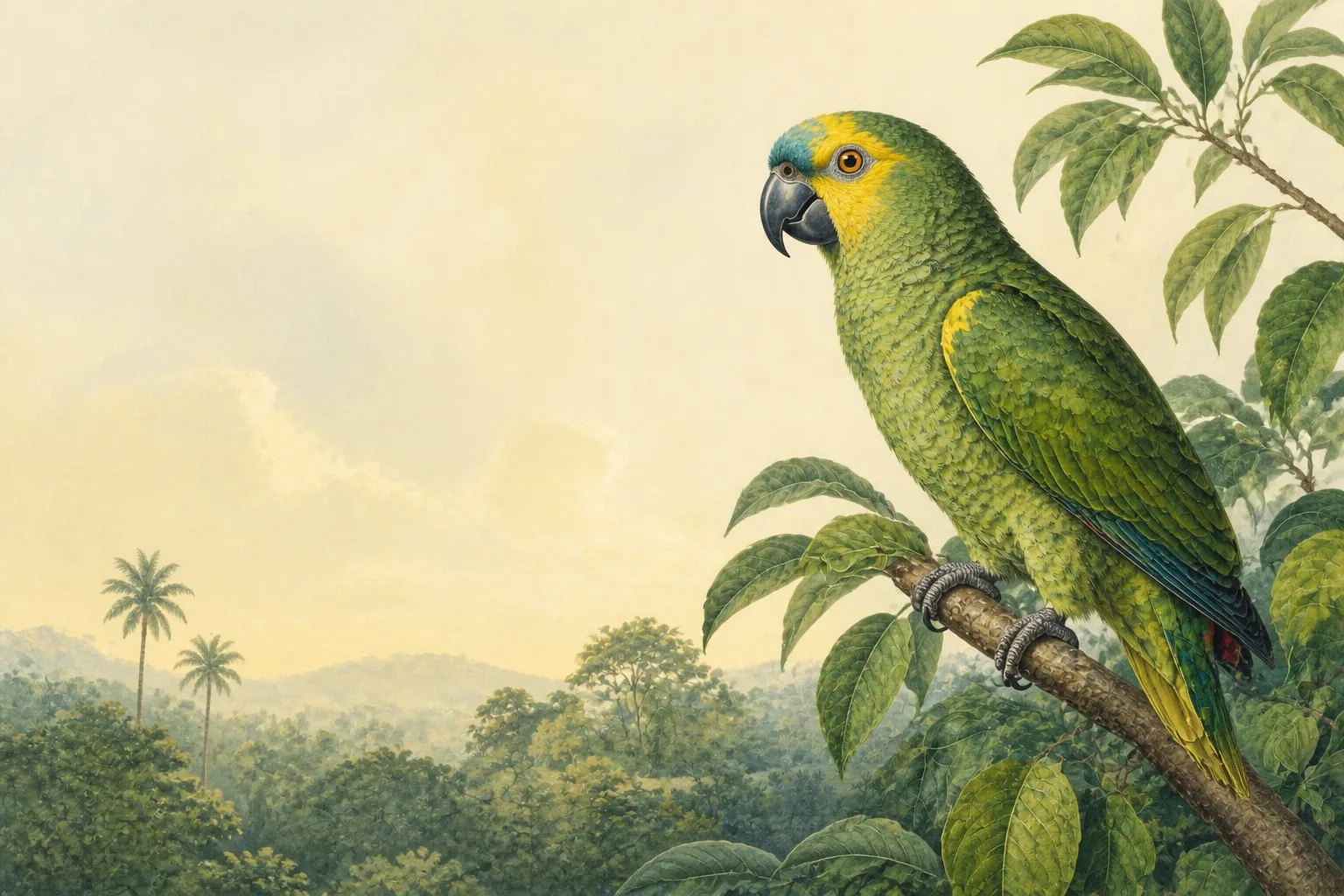
Chew and shred toys address the second half of the problem: beak wear and the tactile need to destroy something. Soft wood, palm fronds, paper rolls, and woven seagrass all serve this function. A bird that has a proper target for its beak is much less likely to treat its own feathers as the available alternative. For species prone to feather-plucking - the African Grey parrot, cockatoos, some Amazon species - preening toys made from soft fibres give the beak a legitimate outlet. Read more about what parrots can eat to understand the connection between dietary variety and reduced destructive behaviour.
Physical challenge toys - swings, ladders, rope bridges, and hanging rings - address the third need: movement. A bird that can climb, swing, and grip at different angles develops better coordination and expends energy that would otherwise go into pacing or screaming. A free-standing play stand outside the cage adds climbing routes the cage cannot.
Matching toy to bird
Size is safety-critical, not a preference. A budgie offered a macaw-scale toy gains nothing and risks injury. A scarlet macaw offered a budgie toy destroys it in minutes and gains nothing either. Match the toy’s material resistance to the bird’s beak strength.
| Bird size | Examples | Right material weight |
|---|---|---|
| Small | Finches, budgies, canaries | Paper, card, fine wood |
| Medium | Cockatiels, conures, lovebirds | Softwood, thin leather, light rope |
| Large | Macaws, cockatoos, Amazons | Hardwood, chain, thick sisal |
Before buying, check whether any toy contains zinc, lead, or PVC. These are toxic to birds in any quantity. Many cheap imported toys carry these materials without labelling them clearly. Inspect weekly for frayed rope strands long enough to catch a toe, splintered wood with loose shards, or small pieces that have worked free and become a swallowing hazard. A toy that was safe at purchase may not be safe three weeks later. The full guide at how to choose age-appropriate bird toys walks through each material category in detail.
Rotation, not accumulation
Keeping 20 toys in a cage does not improve on keeping five. The bird habituates to fixed objects the same way it would habituate to any permanent feature of its environment. The solution is rotation: three to five toys in the cage at any time, swapped every one to two weeks. A toy that has been out of sight for a month is new again when it returns. This also keeps the cage navigable - overcrowded cages restrict flight and climbing routes, which defeats the physical-challenge purpose.
Introduce any new toy slowly. Some birds, particularly older birds or birds with anxiety histories, treat novel objects as threats. Set a new toy outside the cage where the bird can see it for a day or two before hanging it inside. Watch the first session. Aggression toward a toy is rare but real. Fear is common and passes quickly once the bird learns the object is stationary.
Toucans and sleep
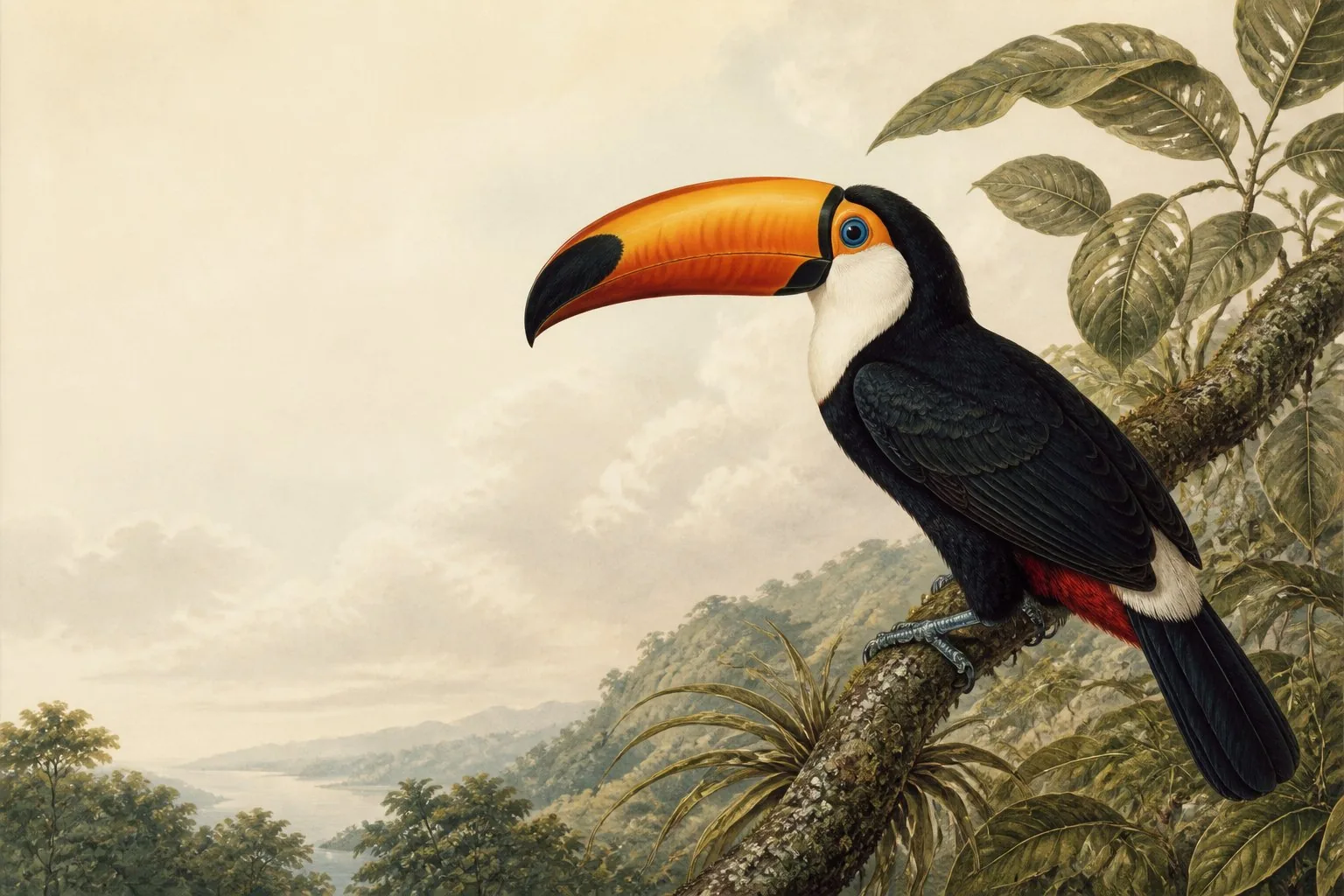
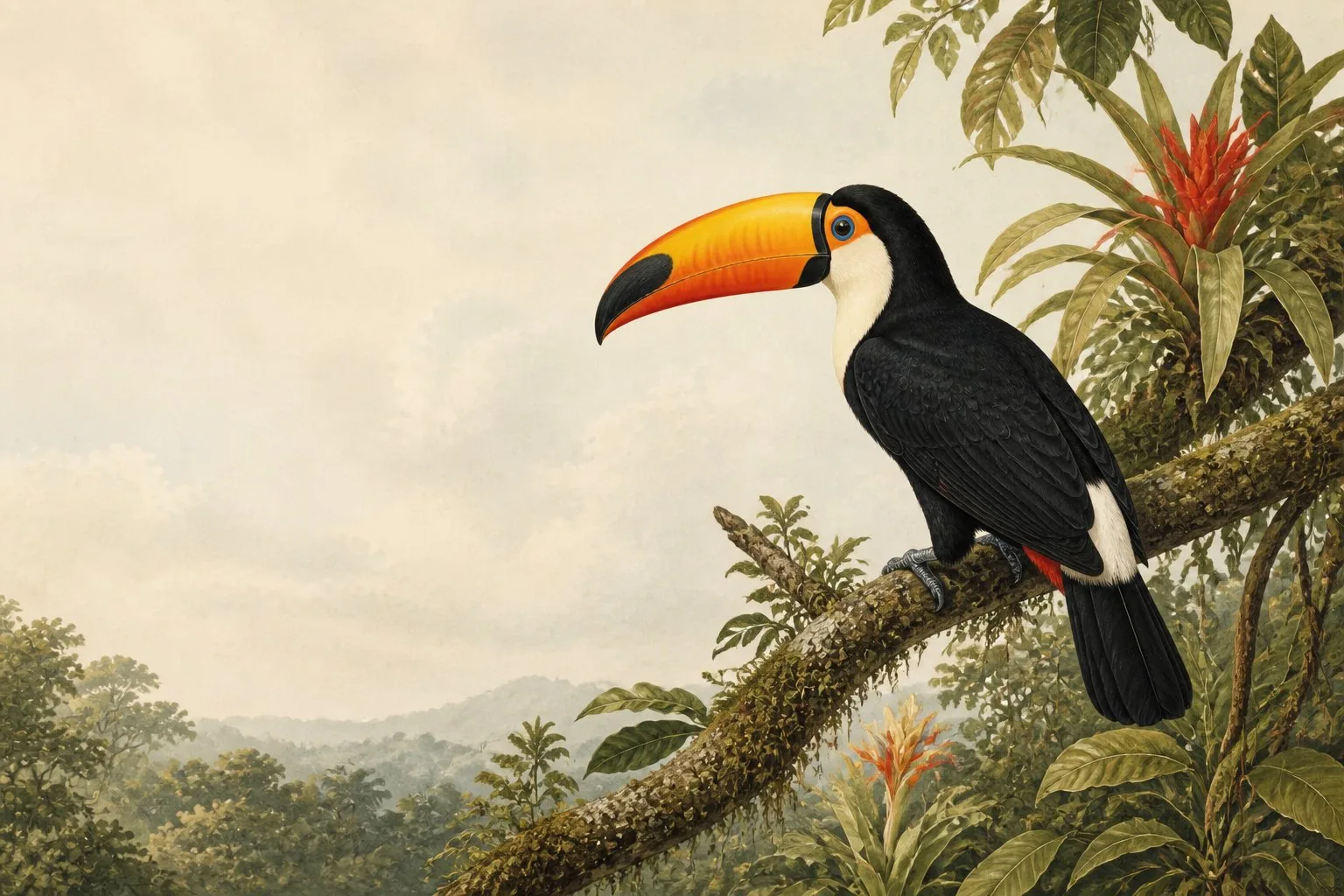
Pet bird care is one piece of a wider understanding of how birds allocate their time and energy. The work a pet bird does during its active hours - foraging, climbing, chewing - shapes how it rests. If you are new to housing a bird, reading about how toucans sleep gives a useful model for understanding that wild birds structure their days around peaks of activity and rest, and that captive birds need the same pattern deliberately built into their environment.
The argument in one line
People who dismiss bird toys as a commercial excess have it backwards. The empty cage costs more - in vet bills, in feathers, in a bird that screams from eight in the morning until someone pays it attention.
Give the bird the job. What it does with that job will tell you everything about what kind of animal you are actually keeping.