Field Guide
Snowy Plover
You nearly step on the nest before you see the bird. One moment the beach is empty white sand. The next, something low and frantic is dragging its wing across the ground six feet ahead of you, veering left, falling, lurching right, trailing a wing at an impossible angle. It looks mortally wounded. It is not. The Snowy Plover is running one of the oldest cons in shorebird evolution, and you have been the mark.
Take a step back. Look at the sand where you were about to put your foot. Three pale olive eggs, each the size of a large grape, sit in a shallow scrape. They are patterned with fine black streaks and spots that mimic dried wrack, shadow, and shell fragment. They look exactly like the substrate they are laid on. The bird that laid them is somewhere behind you now, watching, still performing its broken-wing display until you are far enough away that the act is no longer worth the energy.
This is how a Snowy Plover lives. At the margin. In the open. Invisible by design.
What It Looks Like
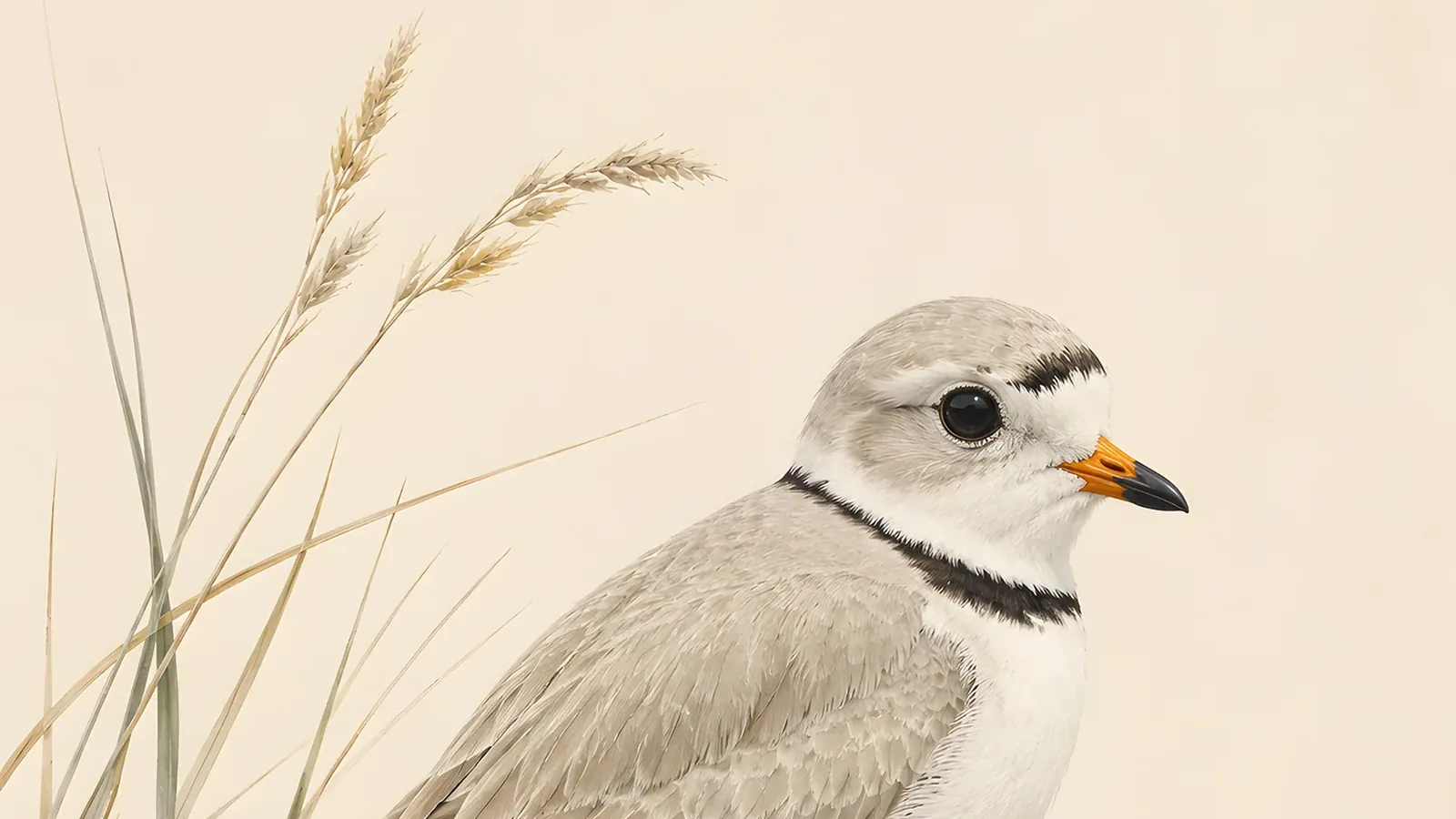
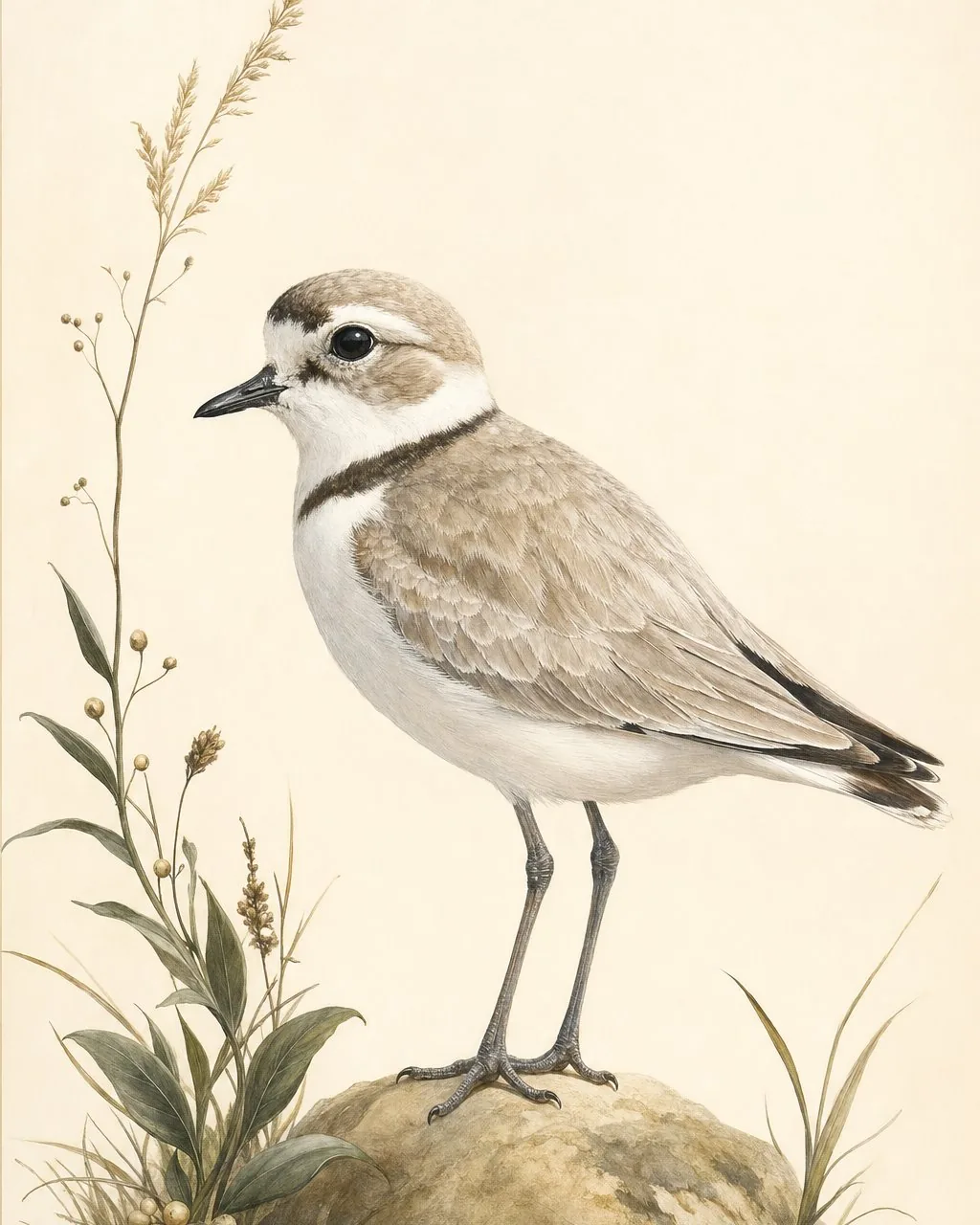
The Snowy Plover is a small, pallid shorebird built to disappear against pale substrates. The upperparts are sandy brown - not the warmer rufous of a Semipalmated Plover, not the dusky gray of a Dunlin, but genuinely sandy. The tone matches dry beach wrack, salt-flat crust, and alkali shoreline so closely that the bird appears to materialize from the ground only when it moves.
The underparts are white. The face is white with a dark patch behind the eye and a dark partial collar at the side of the neck. This is the key field mark: the collar does not complete. Other small plovers in the genus wear a neat ring around the neck. The Snowy Plover stops short, leaving a gap at the front. The effect is of a collar slightly too wide for the bird, left unfastened. The bill is short, thin, and dark. The legs are pale gray to grayish-black, giving the bird an overall washed-out look that no photograph quite captures until you see it standing on the sand it was built for.
Males in breeding plumage show a black patch on the forehead and a stronger black mark behind the eye. Females are similar but the dark markings are reduced to brownish rather than black. In non-breeding plumage, both sexes are even plainer - the dark face and neck patches fade to brown, the bird becomes a pale oval on legs, and the chance of finding it without movement is close to zero.
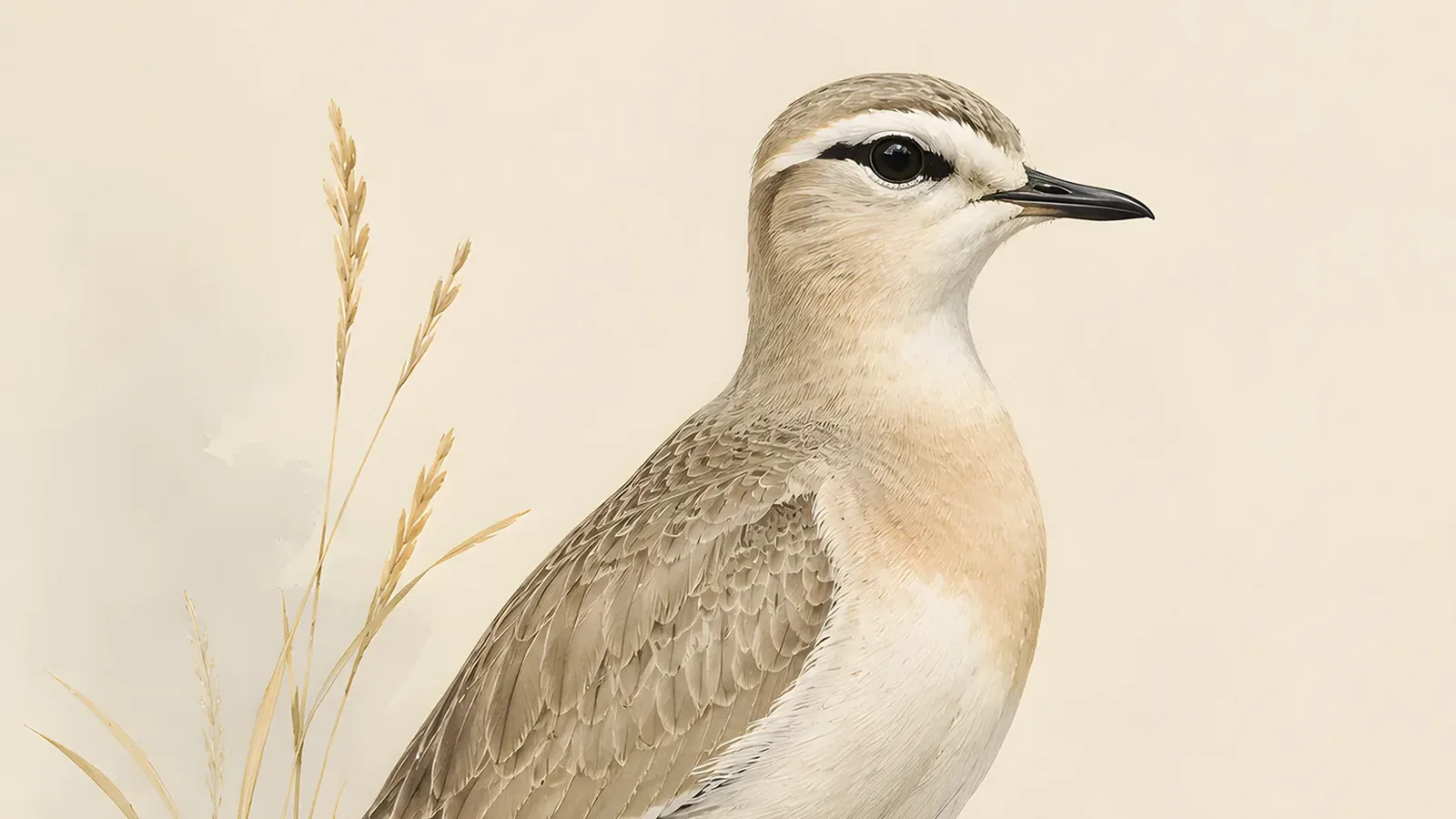
The Snowy Plover is smaller than a piping plover and paler than a mountain plover. In the field, size and habitat context help: Snowy Plover runs in short bursts on open beach or flat, pausing, then running again in the characteristic plover style.
Measurements
| Measurement | Range |
|---|---|
| Length | 15 - 17 cm |
| Weight | 35 - 60 g |
| Wingspan | 33 - 37 cm |
| Lifespan (wild) | 3 - 10 years |
Voice and Song
The Snowy Plover is not a loud bird. The calls are soft, low-pitched, and easily lost against wind and surf. The most common call is a short, whistled pu-weet or ku-weet, rising slightly at the end. Birds also give a dry, rolling prrt as a contact call between mates or between parent and chick.
During distraction displays near the nest, the calls become more urgent - a rapid, repeated kip kip kip as the bird wings-drags away from the threat. On breeding territories, males give a longer, repetitive song from an elevated sand mound or piece of driftwood: a soft, bubbling whistle repeated several times in succession. It carries poorly, which in a bird whose survival depends on not drawing attention to itself is probably the point.
“The eggs lie in a hollow in the sand that I almost step on before the plover launches its broken-wing act twenty feet away, dragging itself along the wrack line, everything in its manner suggesting catastrophic injury. The nest itself is three eggs in a small cup, lined with bits of shell, and so perfectly colored to sand that I cannot find it again without the reference point of my own footprint.”
Range and Habitat
The Snowy Plover occupies a wide but discontinuous range across the Americas. In North America, two populations are recognized and managed differently. The Pacific Coast population breeds from Washington south through California and into Baja California, nesting on sandy ocean beaches, sand spits, and the margins of coastal lagoons and estuaries. This group is listed as Threatened under the Endangered Species Act.
The interior population is less well known but equally interesting. These birds nest on the salt flats, alkali lake margins, and dry playas of the Great Basin, the Great Plains, and the southern interior of the continent. In Texas, birds use the Gulf Coast beaches and also push well inland to nest on the white caliche flats and saline lake edges of the Trans-Pecos and Panhandle. Across the Caribbean and down into South America, the species continues on beaches and tidal flats.
Habitat is consistent: flat, open, pale substrate with minimal vegetation and clear sightlines. The Snowy Plover cannot hide in grass or shrub. It hides in openness, in its own coloring, in the same landscapes that make it so vulnerable to the machines and feet we bring to beaches.
Outside the breeding season, birds aggregate on coastal beaches, tidal mudflats, and the margins of salt ponds, often mixing with Sanderlings, Western Sandpipers, and Dunlins in winter flocks.
Diet
The Snowy Plover feeds almost entirely on small invertebrates picked from the surface or shallow substrate. Prey includes beetles, flies, and their larvae, small amphipods, marine worms, and tiny crustaceans along tidal margins. The foraging style is the classic plover run-and-stop: several quick steps, pause, tilt forward, pick, repeat. The bird works the wrack line, the wet-dry interface on beaches, the muddy margins of salt ponds, and the cracked surface of alkali flats.
Birds do not probe deeply like sandpipers. Everything is taken from the surface or from a peck just into the substrate. The pale coloration serves foraging as well as camouflage - the bird approaching insects across an open flat is nearly invisible to prey that relies on movement detection.
Breeding
The nest is a scrape in sand or on flat, open substrate - no more than a shallow depression, sometimes lined with small shells, pebbles, bits of dried vegetation, or fragments of crab claw. The lining appears incidental rather than constructed. The eggs, usually three, are laid directly into the sand-colored hollow and are sand-colored themselves: pale olive to buff, heavily speckled and streaked with black and dark brown. When the incubating bird flushes, the nest becomes almost impossible to locate.
Both parents incubate. Incubation runs roughly 28 days. The chicks are precocial - they hatch covered in down that matches sand almost as well as the eggs did, and they are running within hours of hatching. The parents brood them against cold and sun, but the chicks feed themselves from day one.
The Snowy Plover is one of the few shorebird species where serial polyandry is relatively common. A female may lay a clutch, leave it in the care of the male, and re-nest with a second male during the same season. Males do the majority of late-season chick-rearing. The system appears to be an adaptation to high nest-failure rates: one parent can keep a brood going while the other attempts another clutch.
When the nest is threatened, the broken-wing or “injury-feigning” display is the primary defense. The adult runs low, drags one wing, calls repeatedly, and leads the predator or person away from the nest location. When the threat is far enough away, the display stops and the bird circles back.
Human Impact
The Snowy Plover nests on the most intensively used landscape in North America: the public beach in summer. Every nesting pair contends with foot traffic, off-road vehicles, dogs, kite-flyers, beach-volleyball nets, and the accumulated garbage that draws corvids and gulls that are efficient nest predators on their own.
On the Pacific Coast, the conflict between recreational beach use and nesting shorebirds has been contested for decades. State and federal agencies rope off nesting areas, post signs, and station volunteer monitors during the breeding season. The monitors count nests, track hatch rates, and explain to beachgoers why a small section of sand is fenced. The approach works when compliance is high. In years when storms reduce nesting habitat to a narrow strip, when ATV corridors run directly adjacent to protected zones, or when enforcement is absent, the numbers drop.
Predation by corvids, foxes, and domestic cats is a serious mortality source. Ravens and American Crows, which thrive around human food waste and trash, have increased in many coastal areas over the same period that Snowy Plover populations have declined. The relationship is direct: more human food waste, more corvids, more nest failures.
The Pacific Coast population of the Western Snowy Plover was listed as Threatened under the Endangered Species Act in 1993. Recovery plans require minimizing disturbance on key nesting beaches, predator management, and monitoring. Some beaches now have seasonal closures. Some towns push back. The argument repeats itself every spring along the California coast, and the plovers nest or don’t nest in the outcomes.
Interior populations are less studied and face different pressures. Alkali lake margins and salt flats are less used by recreationists, but water diversion alters lake levels, industrial mineral extraction disturbs flat substrates, and cattle grazing on playas can trample nests. The interior story is quieter, and less complete.
The Beach That Has to Share
The Snowy Plover does not ask much. A flat piece of pale ground, access to small invertebrates, clear sightlines, and the chance to run away from predators rather than into them. The beach provides all of this, or did before we arrived with our trucks and our dogs and our capacity to scatter three-egg clutches without ever knowing they were there.
The bird’s camouflage, which evolved over millions of years to defeat the eyes of hawks and foxes, does nothing against the weight of an ATV tire or the indifference of a running dog. The broken-wing display, which evolved to lead predators away from nests, leads predators with much longer strides than a plover anticipated. The same openness that makes the Snowy Plover nearly invisible in its habitat makes that habitat completely visible to us.
The conservation argument is not complicated. The beach is wide enough. The nesting season is short. The roped-off area is small. The Snowy Plover nests where it does because it has been doing so for far longer than we have been going there.