Biology
Do Hawks Eat Birds?
A Cooper’s Hawk (Accipiter cooperii) lands on the fence three feet from your feeder and the yard goes silent before you can register what happened.
Every bird on the platform - the chickadees, the house finches, the white-throated sparrow you have been watching for a week - is gone. The hawk sits. It waits. It knows what it is doing because it has been doing this longer than your feeder has existed. The short answer to the question is yes: hawks eat birds. But the more accurate answer is that some hawks are built specifically to eat birds, and the distinction matters if you are standing at your kitchen window wondering what just arrived.
Accipiters hunt birds. Buteos mostly do not.
The two main hawk groups in North American backyards are accipiters and buteos, and they are built for different prey.
Accipiters - Cooper’s Hawks and Sharp-shinned Hawks (Accipiter striatus) - have short, rounded wings and long, banded tails. This body plan is a tool for threading through dense cover at speed. They pursue birds through tree canopy, suburban shrubbery, and thickets. The Cornell Lab of Ornithology notes that Cooper’s Hawks, once persecuted as poultry thieves and called “chicken hawks,” have actually increased in numbers as suburban forests matured. A Cooper’s Hawk at a feeder is not an anomaly. It is the expected outcome of providing a concentrated food source.
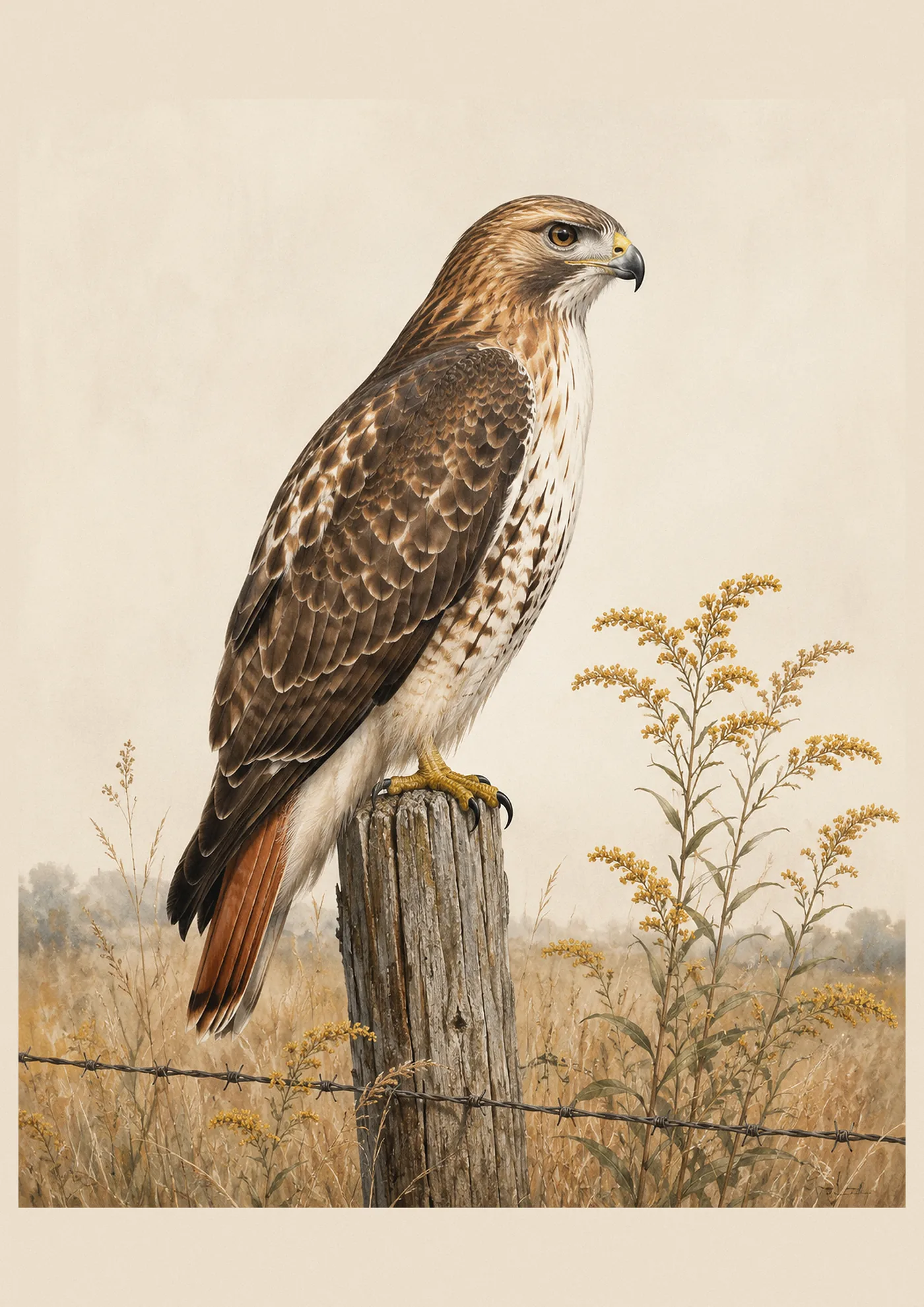
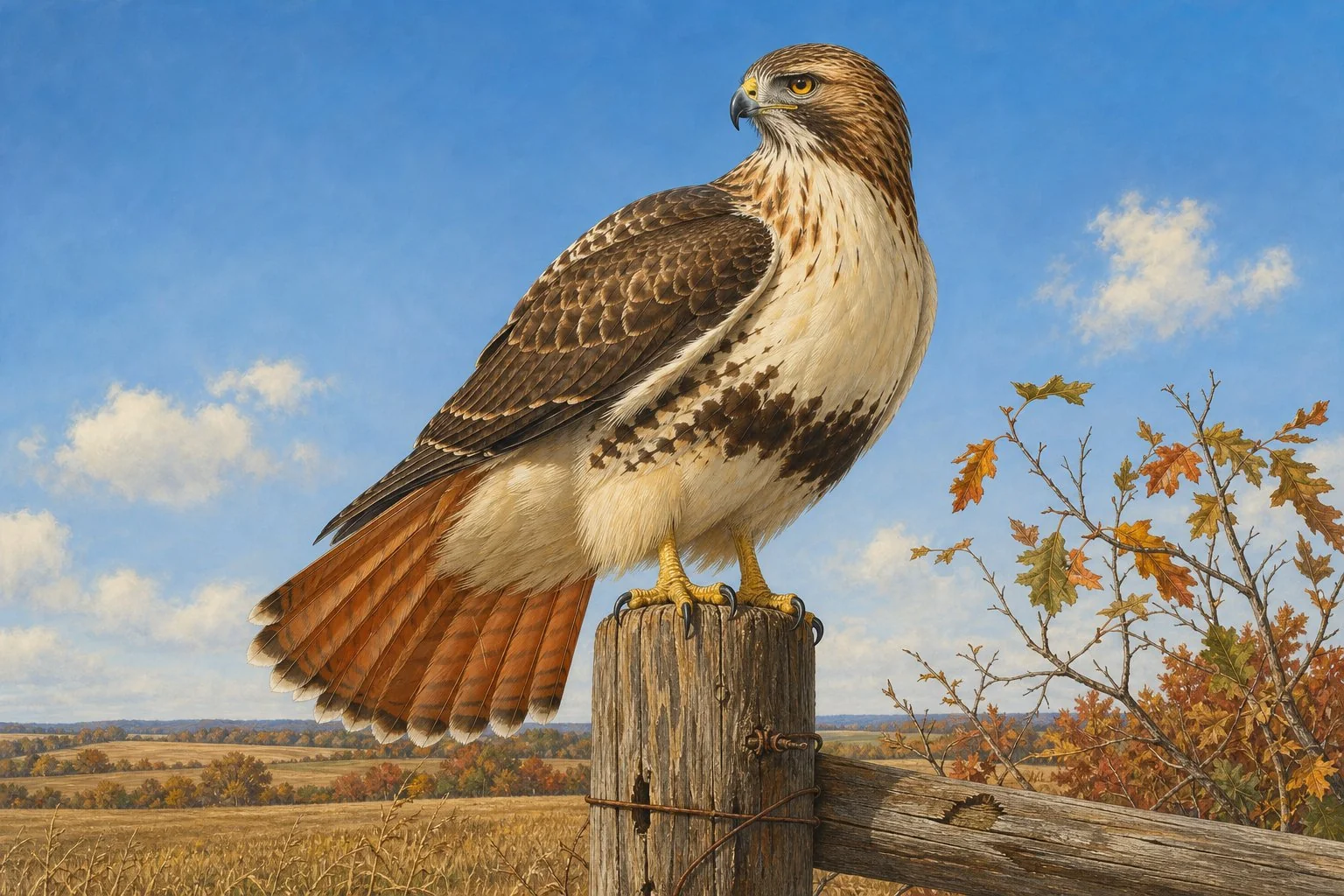
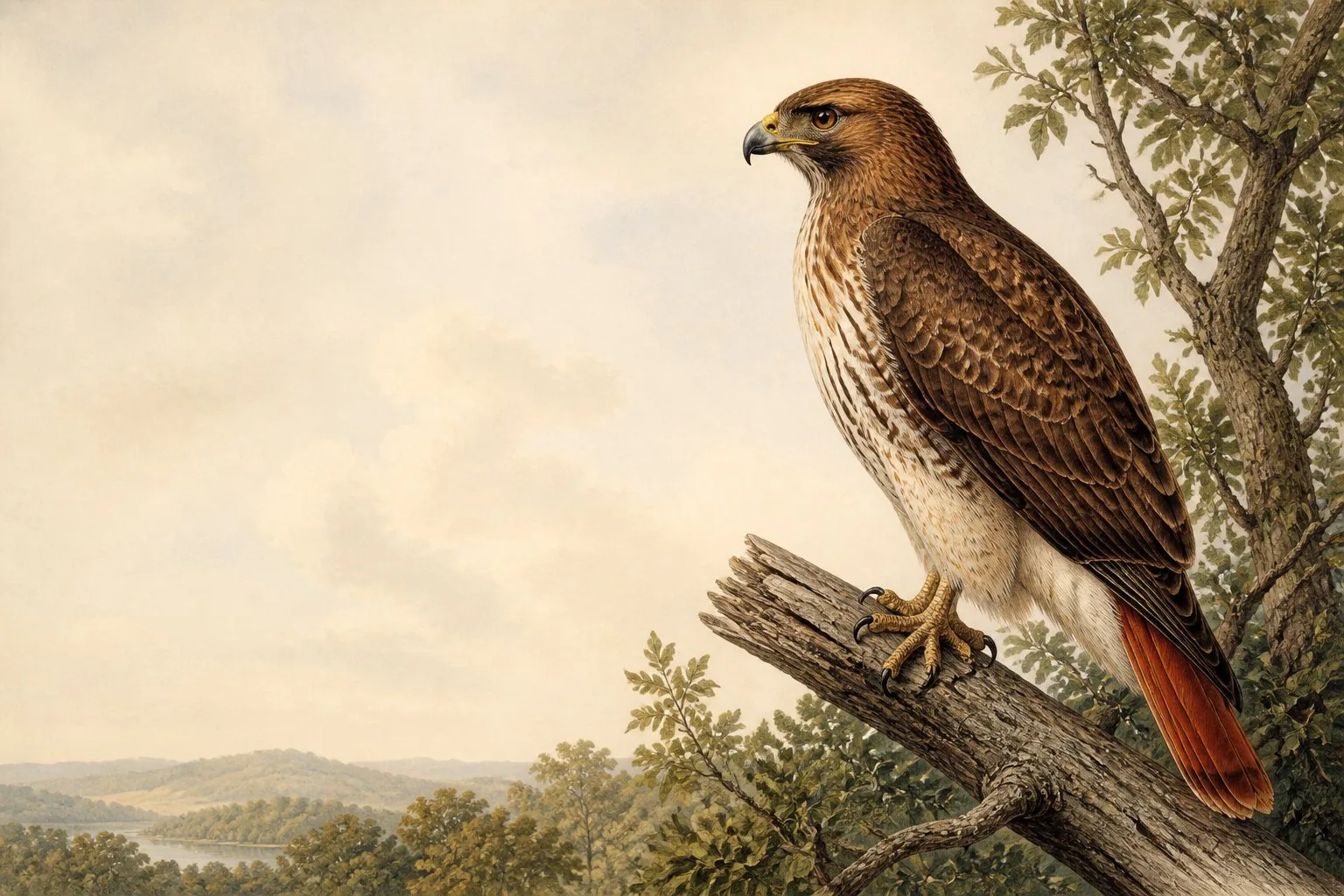
Buteos are the soaring hawks: the Red-tailed Hawk (Buteo jamaicensis) overhead at the highway interchange, the Swainson’s Hawk over open grassland. They have long, broad wings and short, fan-shaped tails. Their primary prey is small mammals - voles, mice, rabbits. They take birds occasionally, particularly fledglings on the ground, but a buteo visiting a feeder is after the yard’s mice population, not the goldfinches.
| Group | Examples | Primary prey | Wing shape |
|---|---|---|---|
| Accipiters | Cooper’s Hawk, Sharp-shinned Hawk | Birds | Short, rounded |
| Buteos | Red-tailed Hawk, Red-shouldered Hawk | Rodents, rabbits | Long, broad |
Sharp-shinned versus Cooper’s
These two accipiters confuse birders constantly. The Sharp-shinned Hawk is the smaller of the two - roughly the size of a Blue Jay. The Cooper’s is closer to a crow. Both visit feeders. Both hunt the same prey. Where they differ is in the birds they can take: a Sharp-shin targets sparrows and small finches, while a Cooper’s can take a Mourning Dove or a medium-sized thrush.
Both hunt by ambush. They perch in concealed positions near a concentrated food source, wait for a bird to land in the open, and close the distance before the prey has processed the threat. This is daylight work, which is why the question of whether hawks hunt at night has a clearer answer than most people expect. The short wings that make them look compact in flight are what allow them to fly at full speed through branches. A Sharp-shinned Hawk chasing a sparrow through a hedge is not being reckless. It is operating at the design specification.
Hawks eating birds at backyard feeders is predation working correctly. A Cooper’s Hawk that visits your yard has discovered a reliable food source in the same way your cardinals have - and it has as much claim to it.
What this means for your feeders
The impulse, when a hawk shows up, is to pull the feeders. This works in the short term. A hawk that finds the buffet cleared will move on within a few days. If a single individual is hunting your yard every day, removing feeders for one to two weeks breaks the pattern.
But the longer view is worth holding. Cardinal molting and other biological stresses make small birds most vulnerable in late summer and early autumn - exactly when many accipiter migrations peak along the East Coast. Dense plantings near feeders give small birds escape cover that matters more than any feeder cage. The birds that survive a Cooper’s Hawk visit are the birds that know where to go. Your shrubs teach them that.
For more on attracting the songbirds hawks target, the biology of Northern Cardinals covers the cover and food preferences that make a yard worth defending. What a group of cardinals is called is also a reminder that cardinals aggregate in loose winter flocks - which makes them more visible to both birders and hawks alike.
The question people rarely ask is whether a hawk at your feeder means anything beyond the immediate alarm. It usually means the yard has enough prey to sustain a visit. That is, counterintuitively, a sign of health. A yard with no hawks and no raptors is often a yard that has been simplified past the point where a predator finds it worth hunting. The hawk is not a problem the feeder created. It is an indicator the feeder is working.
The Sharp-shin on the fence this morning will be 200 miles south by Thursday if it is on autumn migration. The Cooper’s that has decided your feeders are a territory feature will be harder to shift - but even it will move on when food concentrations change. What it leaves behind is the memory of that silent yard, every feeder bird pressed into the hawthorn at once, the air holding a shape where sound used to be.
That pause is the hawk’s signature. It wrote itself briefly into your morning and then lifted away.