Biology
Do Wild Birds Have Fleas?
A house sparrow in a dry patch of garden soil, beating its wings into the dust like it is trying to put itself out - this is a bird dealing with parasites. It is not distressed. It is working.
Wild birds carry ectoparasites as a matter of course. Fleas, feather lice, mites, ticks: most free-flying birds host several species simultaneously. The load is part of a bird’s biology, and the behaviour you see at the birdbath, at the dust patch, on the sunny fence post, is a centuries-old management system running on instinct.
What parasites wild birds carry
| Parasite | Where it lives | What it does |
|---|---|---|
| Bird fleas | Body and nest material | Feed on blood; heavy loads cause anaemia in nestlings |
| Feather lice (biting lice) | On feather shafts | Eat feather material and skin debris, not blood |
| Feather mites | On the barbs of flight feathers | Feed on feather material, degrade plumage over time |
| Ticks | Skin near head and neck | Feed on blood; can carry disease |
| Body mites | Under feathers on skin | Cause irritation and sometimes feather loss |
Feather lice are the most common. Nearly every wild bird carries some. A healthy bird with a normal louse population shows no obvious symptoms - the lice stay below a threshold the bird can manage through preening alone.
Fleas are a different situation. They breed in nest material, not on the bird’s body. The adults feed on the host, but eggs fall into the nest and larvae develop in the accumulated warmth and debris at the nest cup. This matters for understanding how fleas spread: they are a nest problem as much as a bird problem.
How birds manage the load
The bird at the dust patch is doing something precise. Dry soil particles work into the feather structure, absorb the oils and residue that mites feed on, and physically dislodge crawling insects. Dust-bathing is not random; birds seek out specific substrates and return to the same spots repeatedly.
Preening does the close work. A bird running its bill down a flight feather is removing individual lice and mite eggs. It is also redistributing preen oil, which has mild antimicrobial properties. Birds with intact bills and normal mobility maintain low parasite loads through this alone.
Sunning - the posture you see in a blackbird spread flat on warm pavement, wings akimbo, looking stunned - raises the skin temperature in feathered areas that normally stay cool. Heat and UV at close range kill surface parasites. Birds that have access to sunny, exposed perches carry lighter mite loads than birds that do not.
Anting is the strangest method. Some corvids and thrushes pick up live ants and rub them through their feathers, or spread their wings over ant columns to let the ants run through. Formic acid, which ants secrete as a defence, kills feather lice on contact. The bird exploits one insect to kill another.
A bird doing something that looks uncomfortable - writhing in dust, spreading flat in sun, rubbing itself with ants - is almost certainly healthy. It is the birds that stop doing these things that need watching.
Can bird fleas reach humans?
They can bite but they cannot establish. Bird fleas (Ceratophyllus species, primarily) are adapted to avian blood chemistry and body temperature. On a human host, they bite once or twice and then die or leave. They will not reproduce in a home without a bird nest present.
The risk scenario is narrow but real: an old nest in a roof void, attic, or chimney, left undisturbed until late summer after the birds have gone, can become a reservoir of adult fleas that emerge and seek a host. Remove old nests from accessible eaves between seasons, after the birds have fledged and before the following spring. Wear gloves. Bag the material immediately.
Feeders are not the problem here. Fleas do not transfer at feeders. The bigger disease risk at a dirty feeder is bacterial - Salmonella and Trichomonas from droppings accumulating on seed. Clean feeders regularly. That is a separate concern from ectoparasites entirely.
The parasite load as a health signal
A bird preening heavily, dust-bathing often, or sunning for long periods is not in trouble. These are signs of an active immune response. The bird to watch is the one sitting still, feathers puffed, unresponsive to movement nearby. That bird is unwell, and the parasites may be a consequence rather than the cause.
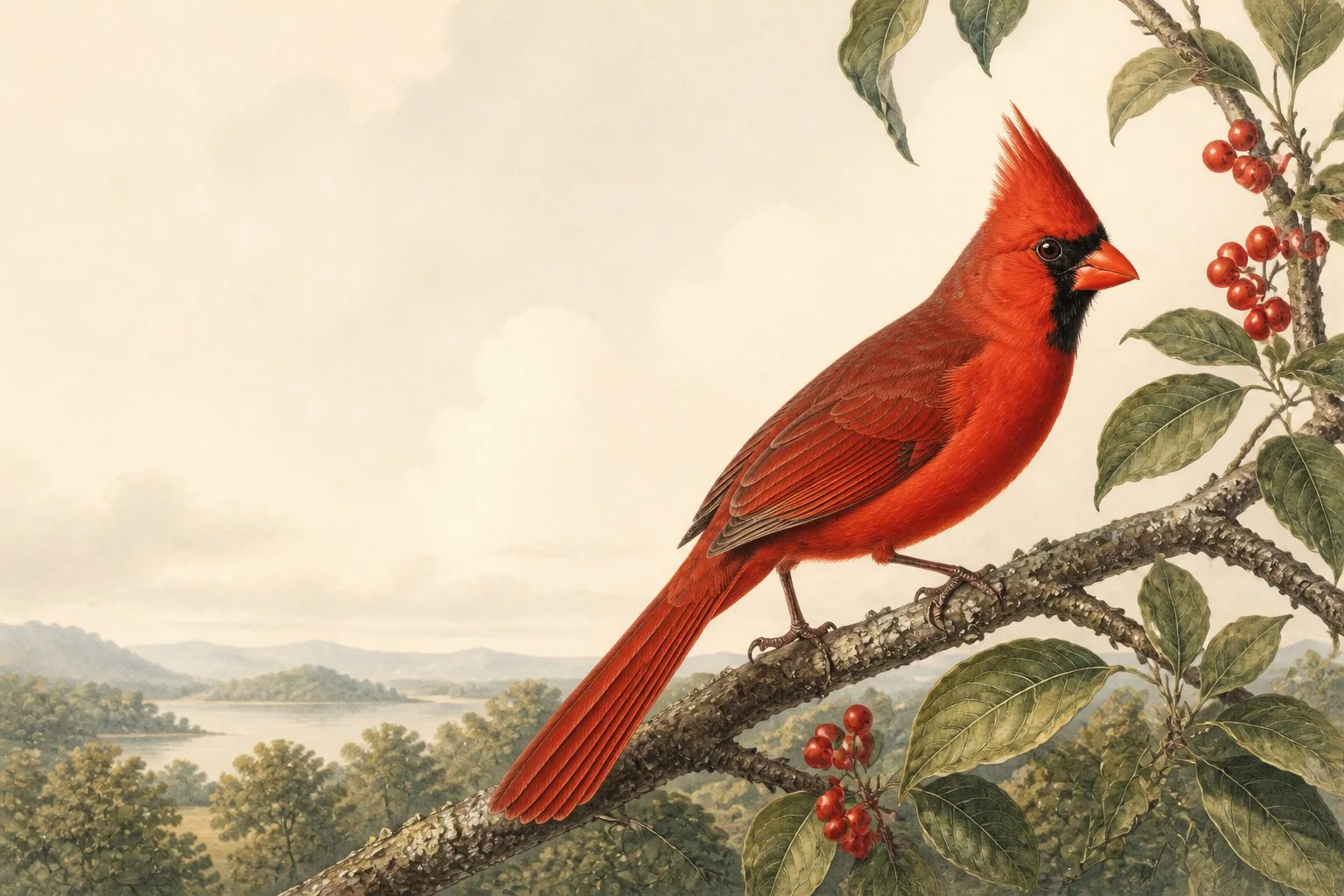
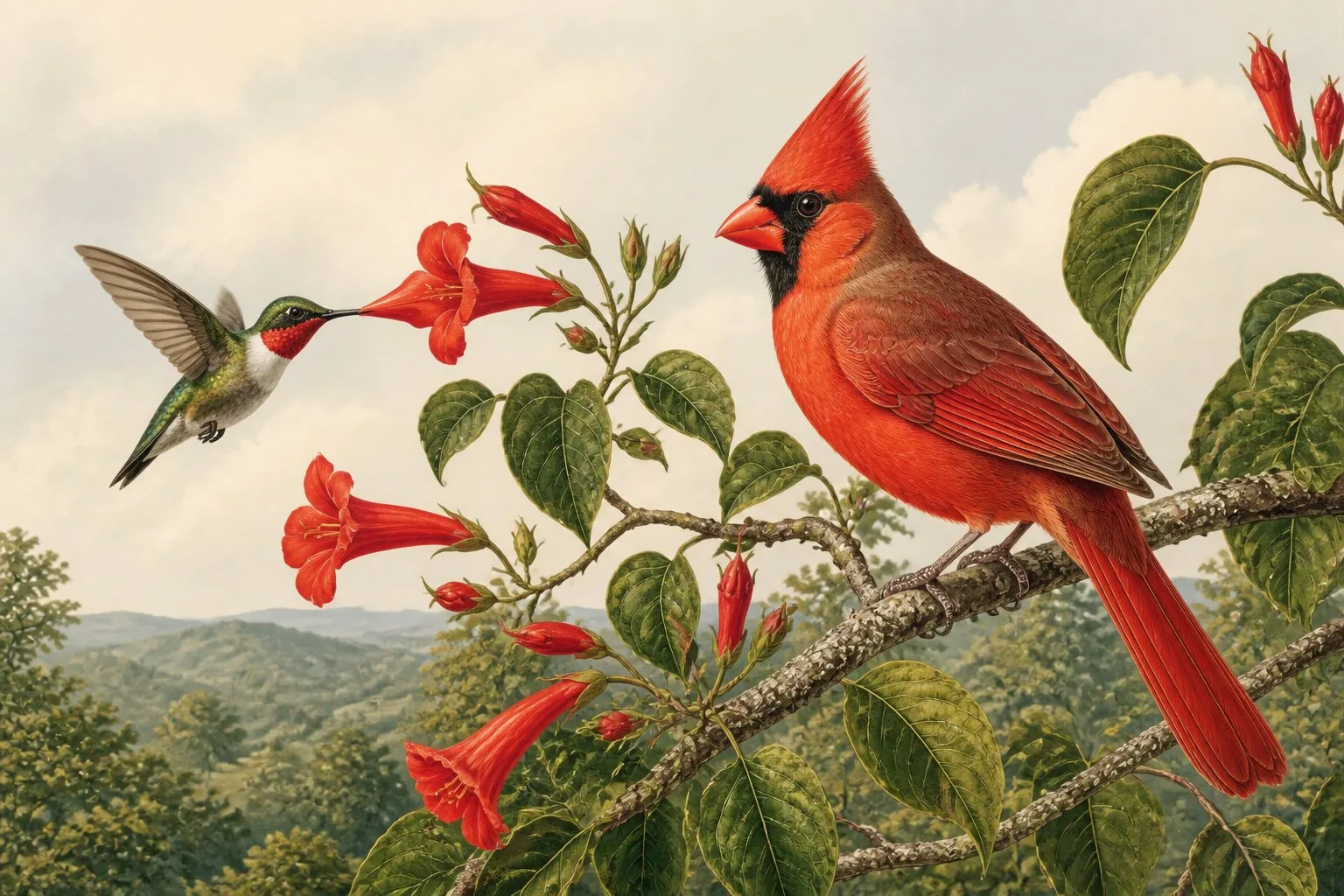
The link between cardinal molting and feather mites is worth noting here. As described in the cardinal molting piece on this site, the ‘bald cardinal’ of late summer - the bird whose head feathers all drop at once - may be shedding a heavy mite load in a single rapid moult. The behaviour is still not fully explained, but it points to how closely plumage condition and parasite management are intertwined.
Northern Cardinals are also among the species most regularly observed anting. They are documented dust-bathers and sunners. The parasite-management repertoire of a single species is broader than it appears from one observation at one feeder.
This connects to something worth understanding about backyard bird health in general. The birds coming to your feeders are managing far more complexity than the feeder interaction suggests. Knowing what a group of cardinals at your feeder is actually doing - and why their behaviour changes by season - gives the feeder a different weight. The dust patch in the corner of the garden, which looks like nothing, may be as important to those birds as the seed you put out.