Symbolism
That Hawk Is Not Your Grandfather
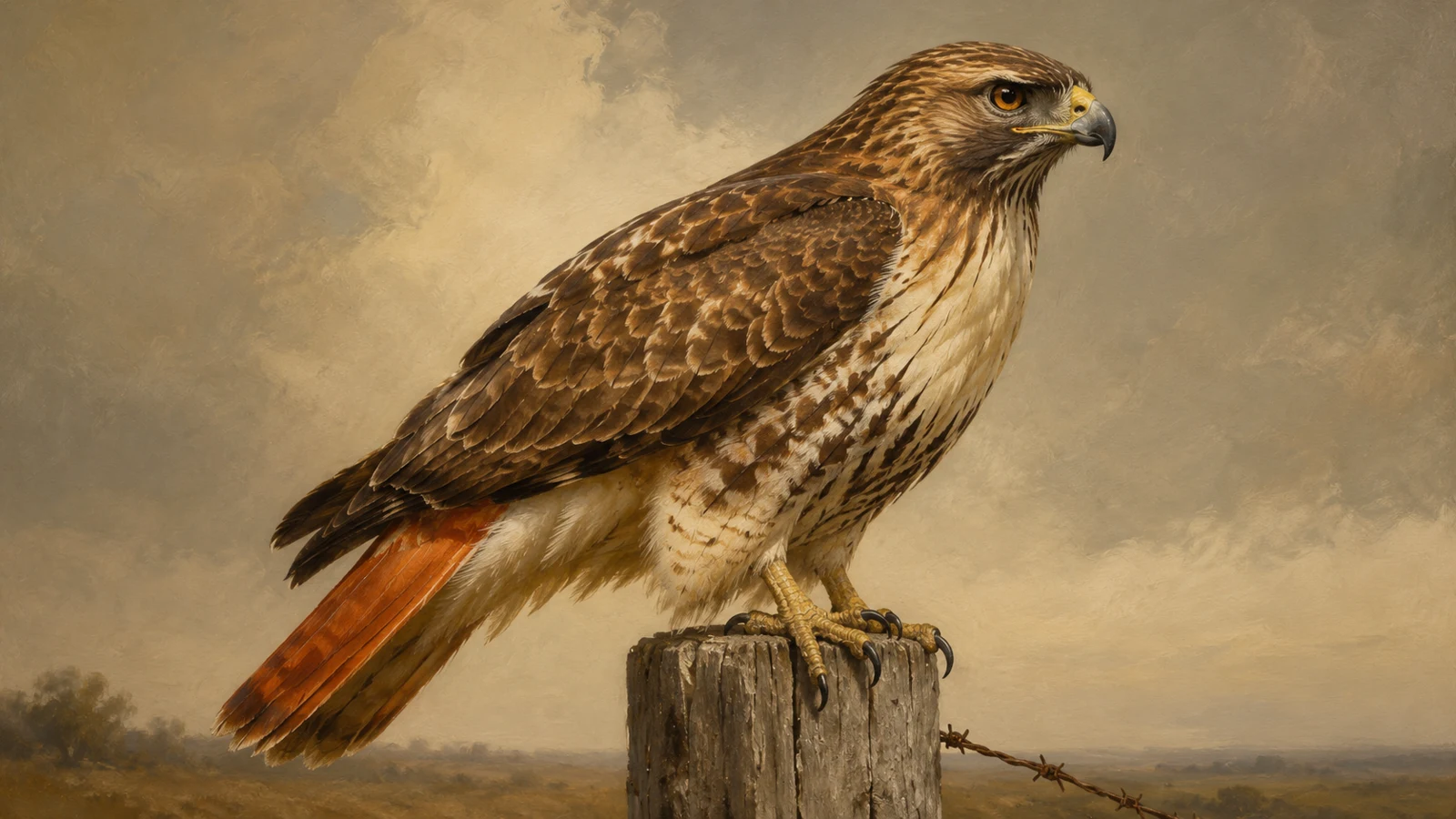
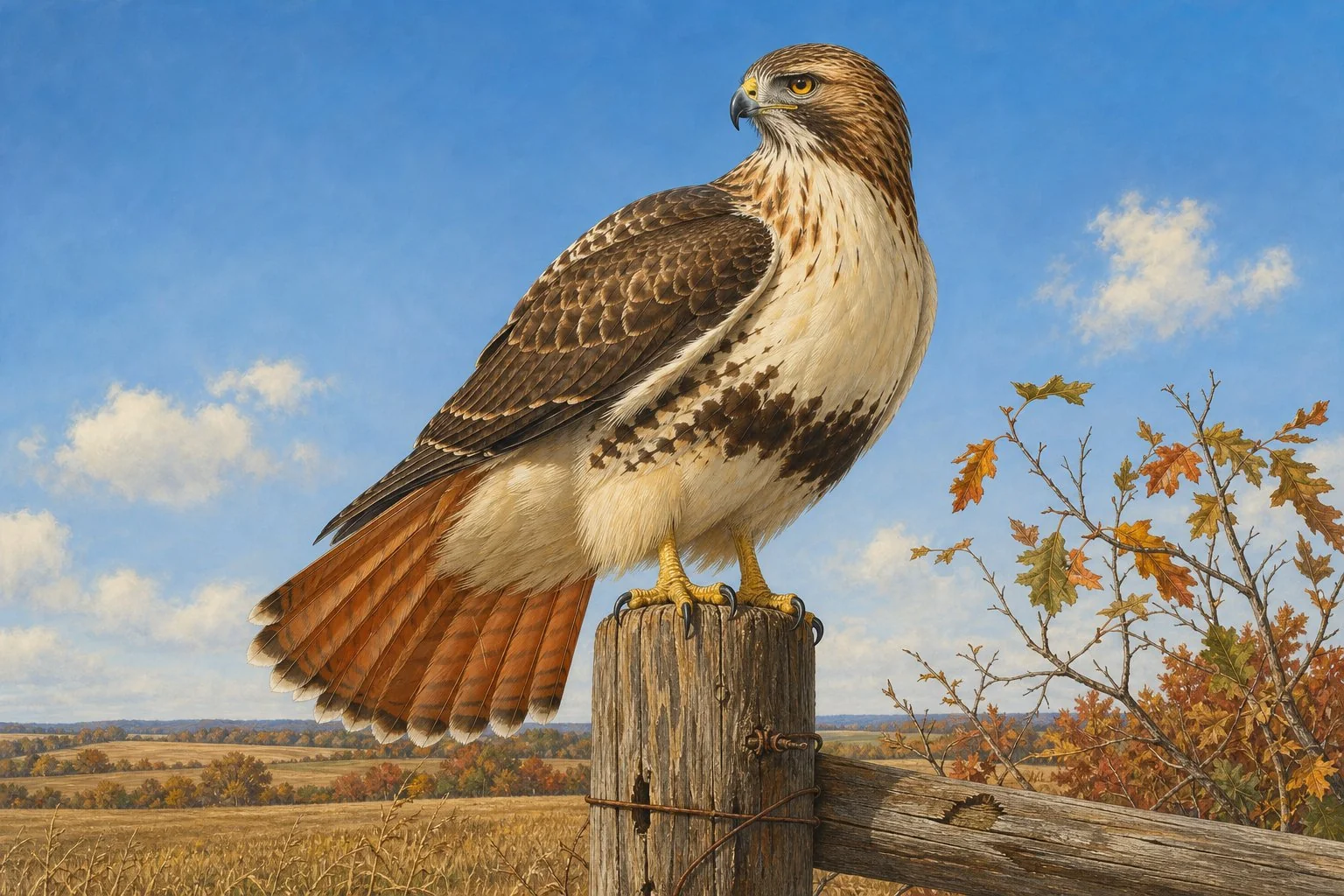
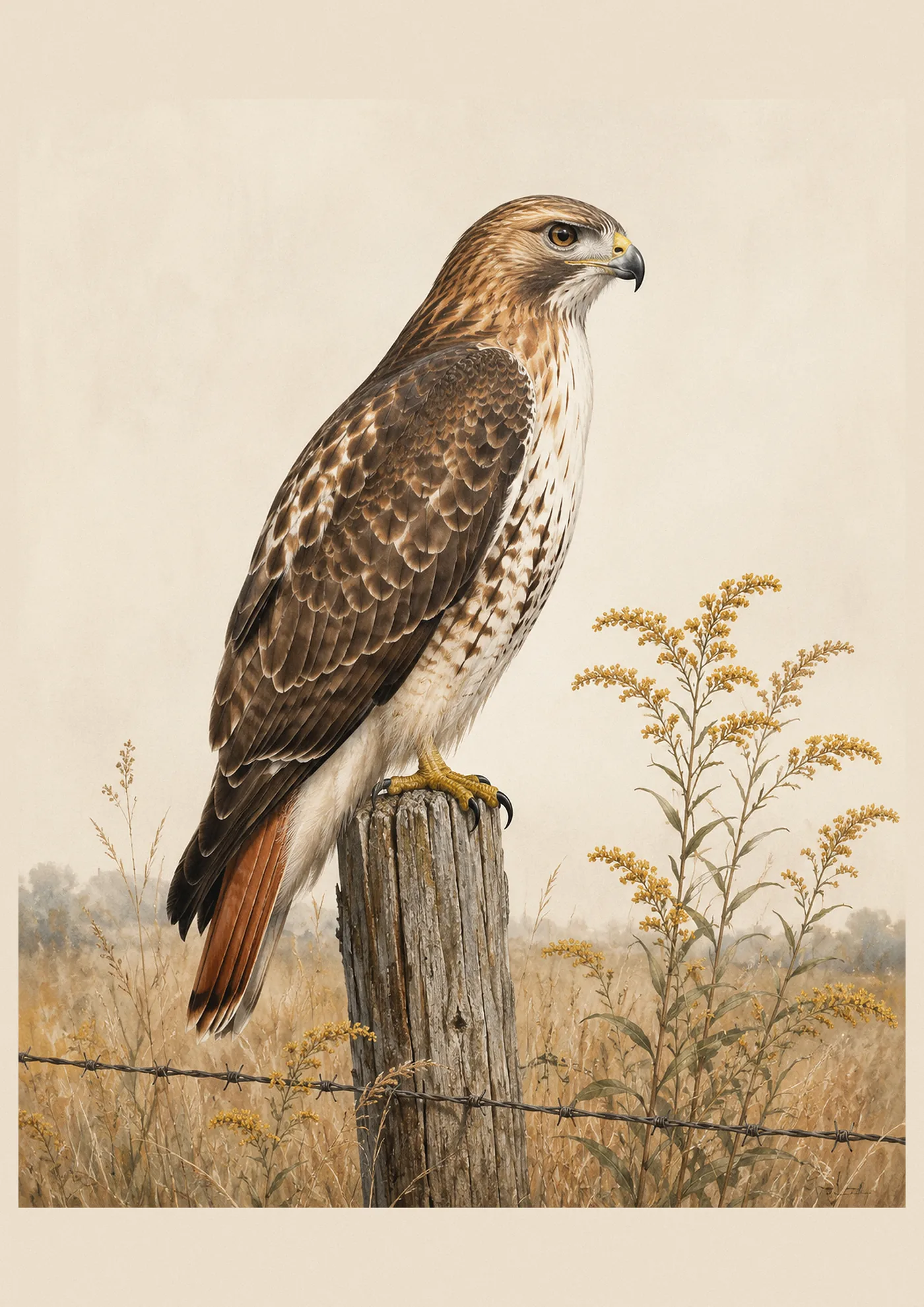
The hawk appeared after your father died. It sat on the fence post and watched you. It was close enough that you could see the rust-red of its tail.
It was not your father.
This is worth saying plainly because an enormous amount of online content exists to tell you the opposite - that a hawk appearing at a meaningful moment is a message from a deceased loved one, that this is an ancient belief across many cultures, that “Native Americans” held this teaching. None of this content cites a specific tribe, a specific document, or a specific date. The hawk-as-messenger-of-the-dead is not an ancient tradition. It is a contemporary North American folk belief, about thirty years old, built by the same mechanisms that produced the “cardinals appear when angels are near” phrase and the “hummingbird as grief visitor” belief.
The older hawk traditions are about something else entirely.
The Egyptian Falcon: A God, Not a Messenger
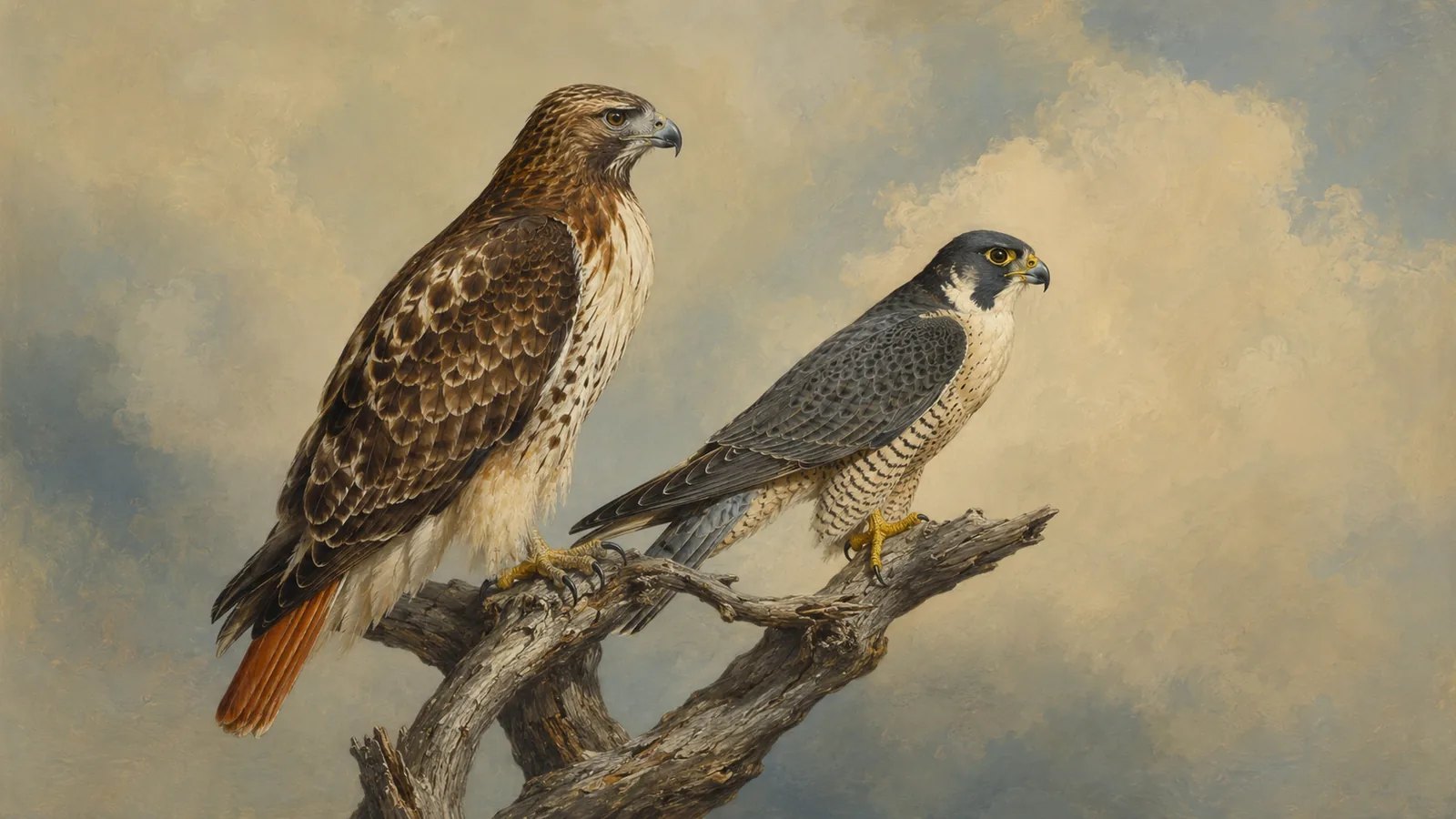
The hawk most associated with Egyptian mythology is technically a falcon, specifically the Peregrine Falcon (Falco peregrinus), and the distinction matters. The ancient Egyptians were observant enough to differentiate raptors at a level most modern birdwatchers do not bother to reach. Horus - the falcon-headed god whose eyes were the sun and the moon - is identified in hieroglyphic iconography by the markings of a Peregrine: the distinctive dark malar stripe below the eye, the barred underparts, the shape of the wing in flight.
The Pyramid Texts, carved in the burial chambers of Old Kingdom pyramids at Saqqara beginning around 2400 BCE, are the oldest religious texts in the world. They refer to Horus extensively. The pharaoh in life was considered the living Horus. At death, the pharaoh became Osiris. The transfer from Horus to Osiris at death was not an individual messenger appearing to a bereaved family. It was a cosmological transfer of divine status. The bird associated with that transfer was not bringing personal communications. It was the form the divine took in the visible world.
The Eye of Horus - used in amulets, medical fractions, and architectural decoration across three thousand years of Egyptian history - is a stylized falcon eye, not a hawk eye. The popular conflation of hawk and falcon in online symbolism writing collapses a distinction the ancient Egyptians did not make.
What Different Peoples Actually Held
Various North American peoples had specific hawk traditions, and they were specific. The Lakota used Red-tailed Hawk feathers in warrior regalia. The Red-tailed Hawk is the most widespread buteo in North America, present across the continent from Alaska to Panama, year-round in most of its range. Warrior regalia using the feathers of the most visible and widely distributed hawk on the continent is not a general “hawk as spirit messenger” teaching. It is a particular use of a particular material in a particular ceremonial context.
The Pueblo peoples used hawk feathers in kachina ceremonies. The Thunderbird of many Pacific Northwest coastal traditions is sometimes described as a hawk or eagle - it is neither, exactly; it is a supernatural being whose form draws from multiple raptor species, whose wingbeats are thunder and whose eyes produce lightning. The Thunderbird is not a hawk that visits bereaved families. It is a being of meteorological force.
The “Native Americans believe hawks are messengers from deceased loved ones” phrasing that appears across hundreds of websites names no specific people because it cannot. The belief as stated does not appear in ethnographic documentation of any specific tribal tradition. It appears in new-age books of the 1990s and 2000s and spreads as if it had ancient authority.
This is worth being specific about, because the actual documented hawk traditions of specific peoples are worth knowing and are being crowded out by a generic comfort belief attributed to all of them at once.
The Sound You Hear in Every Film
There is a concrete way to measure how much the Red-tailed Hawk dominates American cultural perception of raptors.
The scream you hear in every film and television show whenever any bird of prey appears on screen - the piercing, descending, two-noted cry - is a Red-tailed Hawk. It has been used as the generic “raptor sound” in film and television sound editing since approximately the 1960s. When a Bald Eagle is shown in close-up on the American flag, the cry you hear is a Red-tailed Hawk. When any hawk, falcon, or eagle appears in a drama or documentary, the cry is almost certainly a Red-tailed Hawk.
The Bald Eagle’s actual call is a thin, reedy, almost comical series of chirps - nothing like the gravitas Americans project onto their national symbol. The Red-tail got the national bird’s voice.
This matters to the symbolism question because the hawk that visits people in their grief - usually large, usually perched conspicuously, usually making direct eye contact - is, in the eastern and central United States, almost always a Red-tailed Hawk. It is common, confident around humans, and adapted to exactly the kind of open-country suburban and rural interface where people have fence posts, power lines, and freshly mown fields. The hawk at the fence post after your father’s funeral is the most frequently encountered large raptor in North America, sitting on a human structure because the vole population in the grass below makes it a reliable hunting perch. It is watching the grass.
Cooper’s Hawks and the Feeder
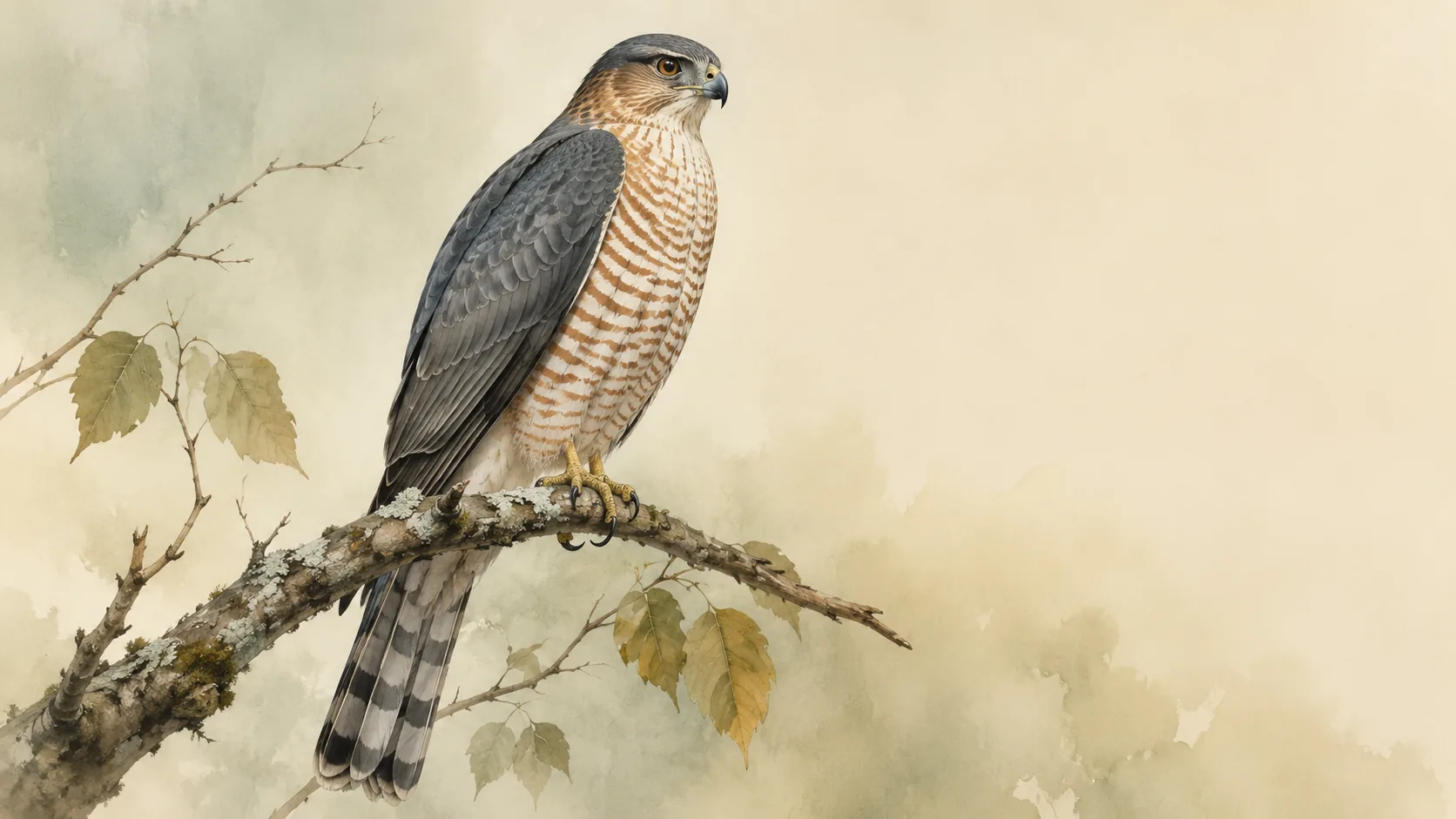
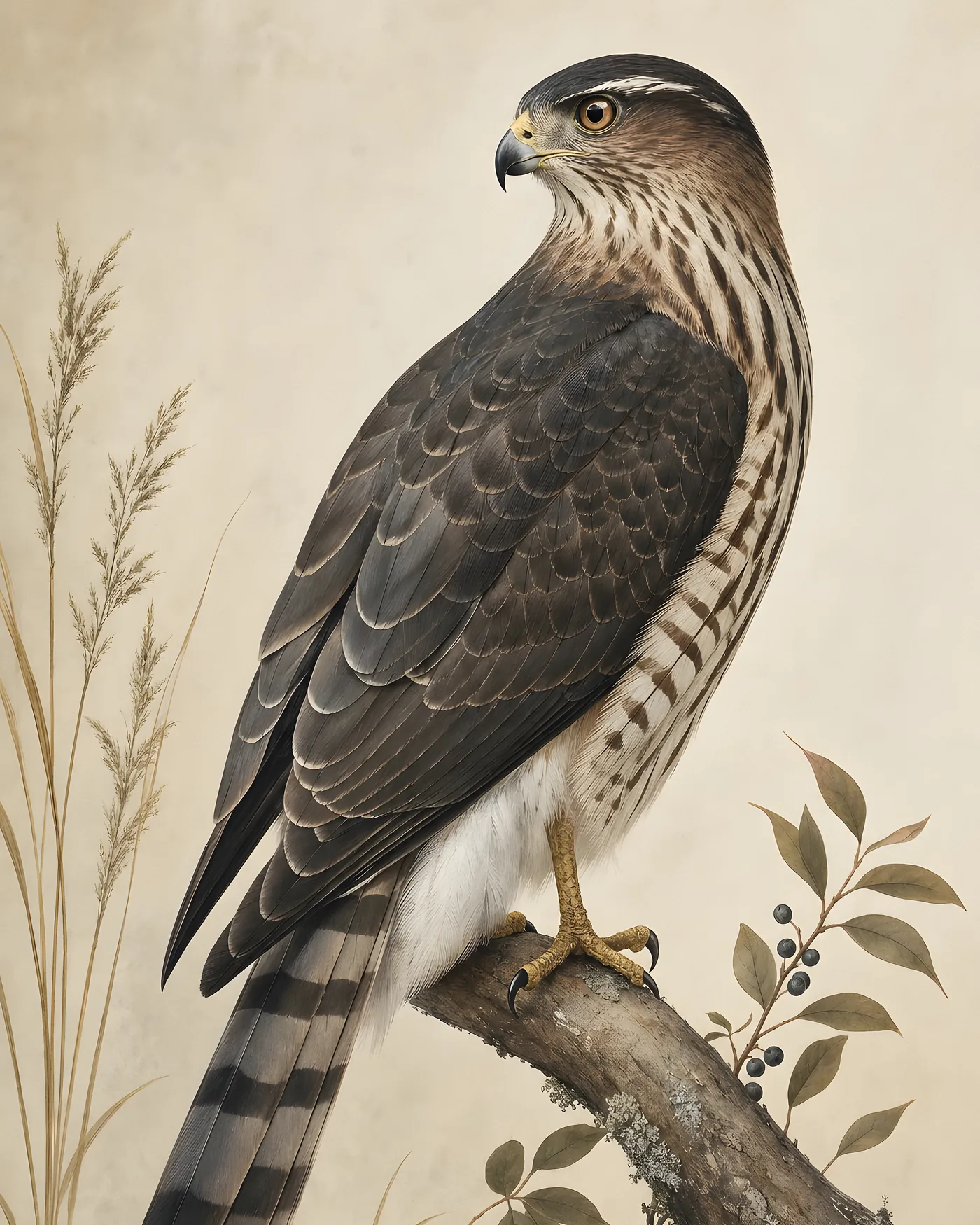
The Cooper’s Hawk (Accipiter cooperii) is a different kind of hawk entirely - not a buteo that soars on thermals, but an accipiter that hunts by flying fast through dense cover to take smaller birds. It evolved for the forest interior, where the ability to maneuver between branches at speed determines whether you eat.
In the last fifty years, bird feeding has produced a change in Cooper’s Hawk behavior. House Finches, House Sparrows, Mourning Doves, and other feeder birds aggregate at suburban feeders in predictable numbers. Cooper’s Hawks learned that feeders are reliable hunting grounds. The bird that evolution built for deep forest is now one of the most commonly observed hawks in American suburbs and cities.
The Cooper’s Hawk at your feeder - sitting motionless in a nearby tree, watching the finches - is not there because it found you. It is there because you built an efficient trap for small birds and positioned it in your yard. The hawk noticed your yard months ago. It has a route.
How Thermals Work
The hawk at great height, circling lazily, requires almost no energy. It is not contemplating. It is not watching you from above in any metaphysical sense. It has found a thermal.
A thermal is a column of rising warm air created when the sun heats a surface unevenly - a dark asphalt road, a building roof, a bare field - and the warm air rises relative to the cooler air around it. Raptors enter thermals and circle within them, gaining altitude for free, then glide out toward the next thermal or toward prey sighted from height. A hawk that appears to soar effortlessly over a highway is using the thermal rising off the blacktop. The highway is doing the work.
Fence posts and power lines are hunting perches because the cleared land around them makes prey visible. What looks like stillness and observation is the hawk watching a very small area of grass for very small movement. The vole has no idea what is above it. The hawk has found a reliable geometry: elevated position, unobstructed sight lines, cleared approach.
None of this prevents the hawk from being beautiful. The Red-tail’s russet tail, visible when the bird banks or fans for a landing, is genuinely striking. The size, the stillness, the directness of the gaze - birds of prey make eye contact differently from small birds, and the eye contact reads as intention.
It is not intention. But the hawk was really there, and it really sat on the fence post, and you really saw it on a hard day.
The Honest Accounting
What is documented: Horus as the falcon-headed Egyptian god with solar and royal cosmological functions, present in the Pyramid Texts from 2400 BCE. The Lakota use of Red-tailed Hawk feathers in warrior regalia. The Pueblo use of hawk feathers in kachina ceremony. The Thunderbird as a Pacific Northwest supernatural being of meteorological force. These are specific, sourced, and various.
What is not documented: the general belief that hawks appear as deceased loved ones to comfort the bereaved. This is not an ancient teaching of any specific people. It is contemporary North American grief culture applied to the most conspicuous raptor available, with borrowed authority from unnamed “Native Americans” to make it feel older than it is.
The hawk at the fence post the week after the funeral is exactly where it was the week before the funeral. It does not know your father died. It does not know you. It is watching the voles.
You are not wrong to notice it. You are not wrong to be moved by it. The beauty of a large raptor close enough to see the individual feathers on its breast is real. The connection you feel is real. The hawk participating in the connection is the only part that isn’t there.
The older traditions - Horus the divine falcon-king, the Thunderbird of meteorological force, the warrior feathers of the Lakota - do not offer personal comfort in the way the modern belief does. They are not designed to. They are designed to explain larger things: the movement of the sun, the authority of the king, the force of weather, the weight of battle.
A hawk that carries the sun across the sky is a more demanding idea than a hawk that carries a message from your grandfather. It asks more of you. It does not offer to make grief easier. It says instead that the bird is embedded in something much larger than any individual loss, and that the individual loss is also embedded in something much larger than the hawk.
That is, depending on your need, either less comforting or more.