Biology
Why Are Male Birds More Colorful Than Female Birds?
Watch a female mallard slip off her nest when a fox moves through the reeds. She is the same ochre brown as the dead grass around her. Thirty yards away, her mate - green-headed, chestnut-breasted, impossible to overlook - is standing on a mudflat doing nothing useful. This is not coincidence. This is the system working exactly as it evolved to.
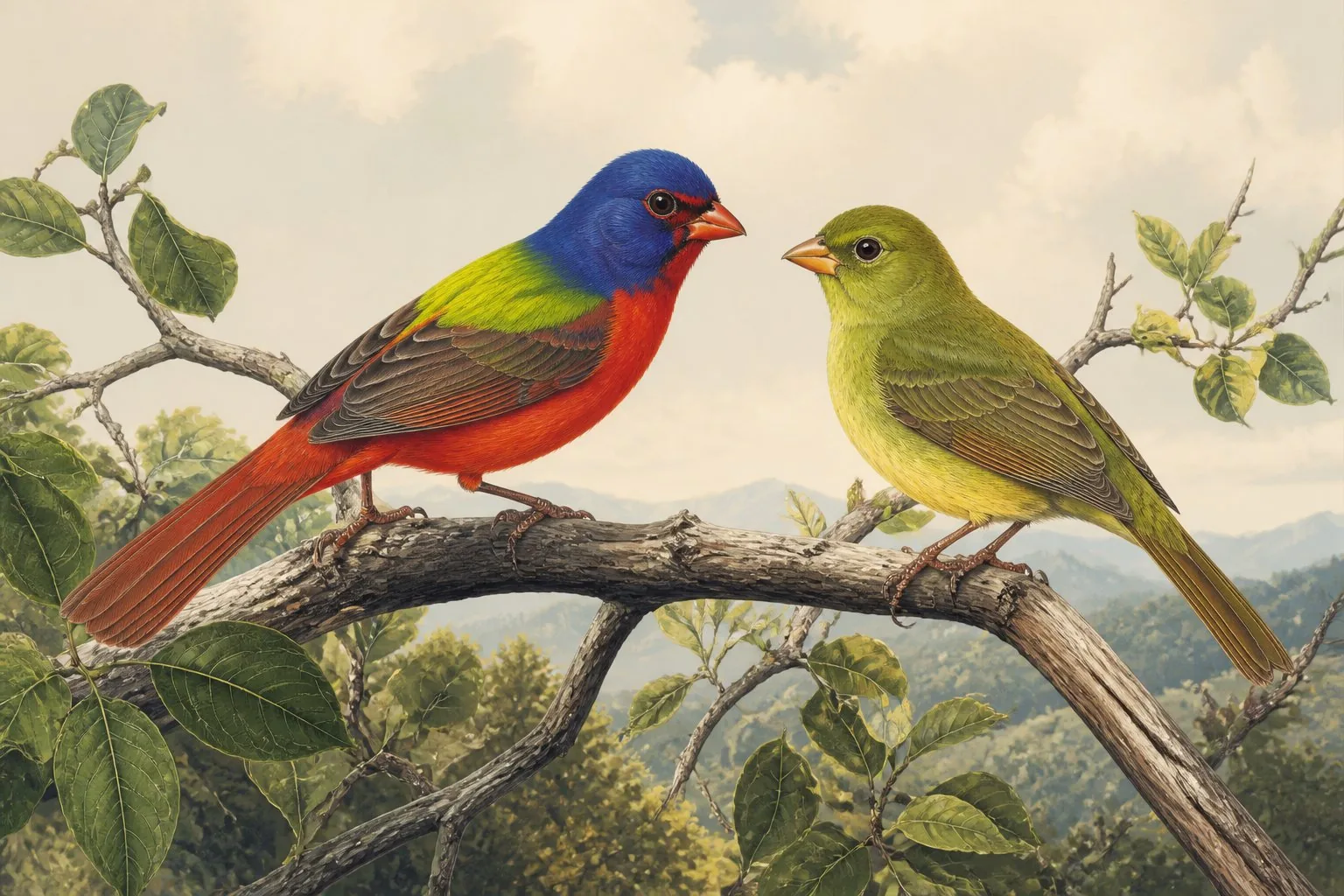
The color gap between male and female birds is the product of two separate pressures acting on two separate sexes at the same time. Getting either one wrong leaves the question half-answered.
The female’s logic
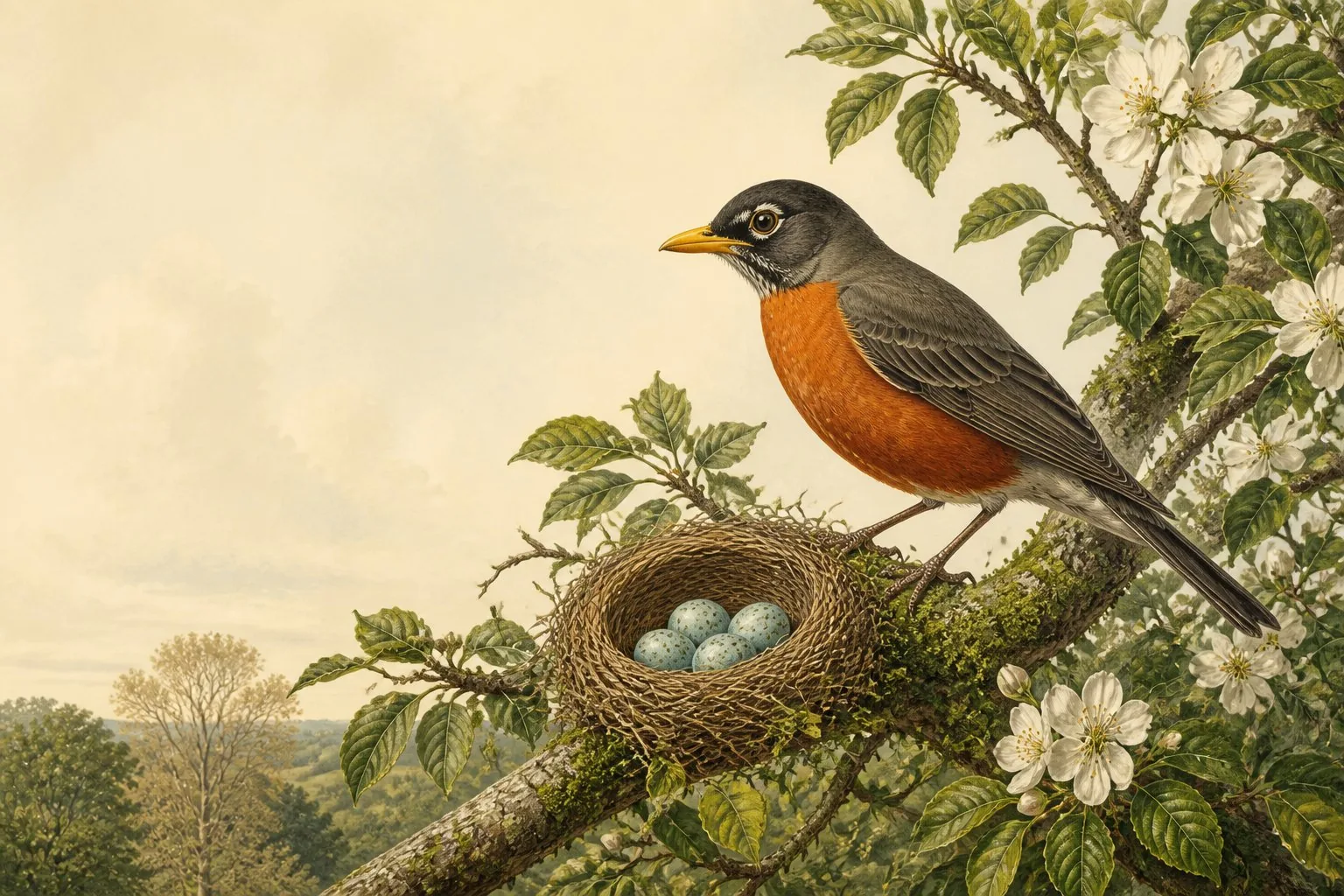
Alfred Russel Wallace - Darwin’s co-discoverer of natural selection and his sharpest early critic - argued in the 1860s that the drab coloration of female birds was not a default condition but an active adaptation. Females that incubate eggs in open nests are sitting targets. A female who matches her background survives. A female who does not, does not. The genes for crypsis accumulate over generations simply because cryptic females leave more offspring.
Modern research supports him. A 2012 study by Soler and Moreno in the Journal of Evolutionary Biology tested Wallace’s hypothesis across European passerine species and found that nesting type shapes the color gap between the sexes - females in cavity-nesting species are measurably more conspicuous than females in other nesting types, while males in open-nesting species tend toward more cryptic plumage. The nest shape predicts the color gap. When the female is protected by structure, she can afford a little color. When she is exposed, she cannot.
The female cardinal’s warm brown, the female house finch’s streaked gray, the female mallard’s mottled ochre: all are the product of the same calculation. She cannot afford to be seen on the nest.
The male’s logic
Darwin’s part of the explanation operates on the male. While natural selection pushed females toward crypsis, sexual selection - driven by female mate choice - pushed males toward display. The mechanism in most colorful species runs through a class of pigments called carotenoids.
Birds cannot synthesize carotenoids themselves. They must eat them - in fruit, seeds, plant material - and deposit them into growing feathers. Cornell Lab’s All About Birds notes that the reddish-orange patches on a male house finch (Haemorhous mexicanus) come from the same compounds found in carrots and tomatoes. A male that finds and eats carotenoid-rich food through the winter grows brighter feathers. A male that cannot manage it grows dull ones. Audubon reports that male house finches with the brightest red patches recover faster from illness and survive harder winters. The female is not responding to beauty for its own sake. She is reading a health report written in color.
The same logic governs the male Northern Cardinal. His CYP2J19 gene converts yellow dietary carotenoids into red pigments, and his feathers during the fall molt are assembled from whatever carotenoids he managed to acquire that season. Audubon’s research on cardinals shows that the brightest males tend to demonstrate better immune function and improved foraging efficiency. Females prefer them. The preference is not arbitrary. It selects for the trait that produced the color in the first place.
His color is not ornamentation. It is a record of his diet, his health, and his parasite load - all encoded in pigment by a process the female did not design but that her ancestors refined, season by season, by consistently preferring the redder male.
The parental care test
The strongest evidence for this framework is what happens when parental roles switch. In phalaropes - shorebirds that breed across arctic and subarctic latitudes - males incubate the eggs and raise the chicks alone. The female is the brighter bird in all three phalarope species. She competes for mates and defends territories. He sits still on the nest. The logic is identical to the cardinal’s; only the sexes have exchanged roles.
The Audubon guide to bird breeding behavior notes more broadly that elaborate male ornamentation is most common in species where males contribute little or no parental care after mating - lekking species like greater prairie-chickens, whose males display communally with bright yellow eye-combs and orange neck pouches and then leave all incubation and chick-rearing entirely to the female. When parental care is shared equally, the color gap between the sexes is narrower. When one sex does all the nest work, the other gets the costume.
What the birds of paradise demonstrate
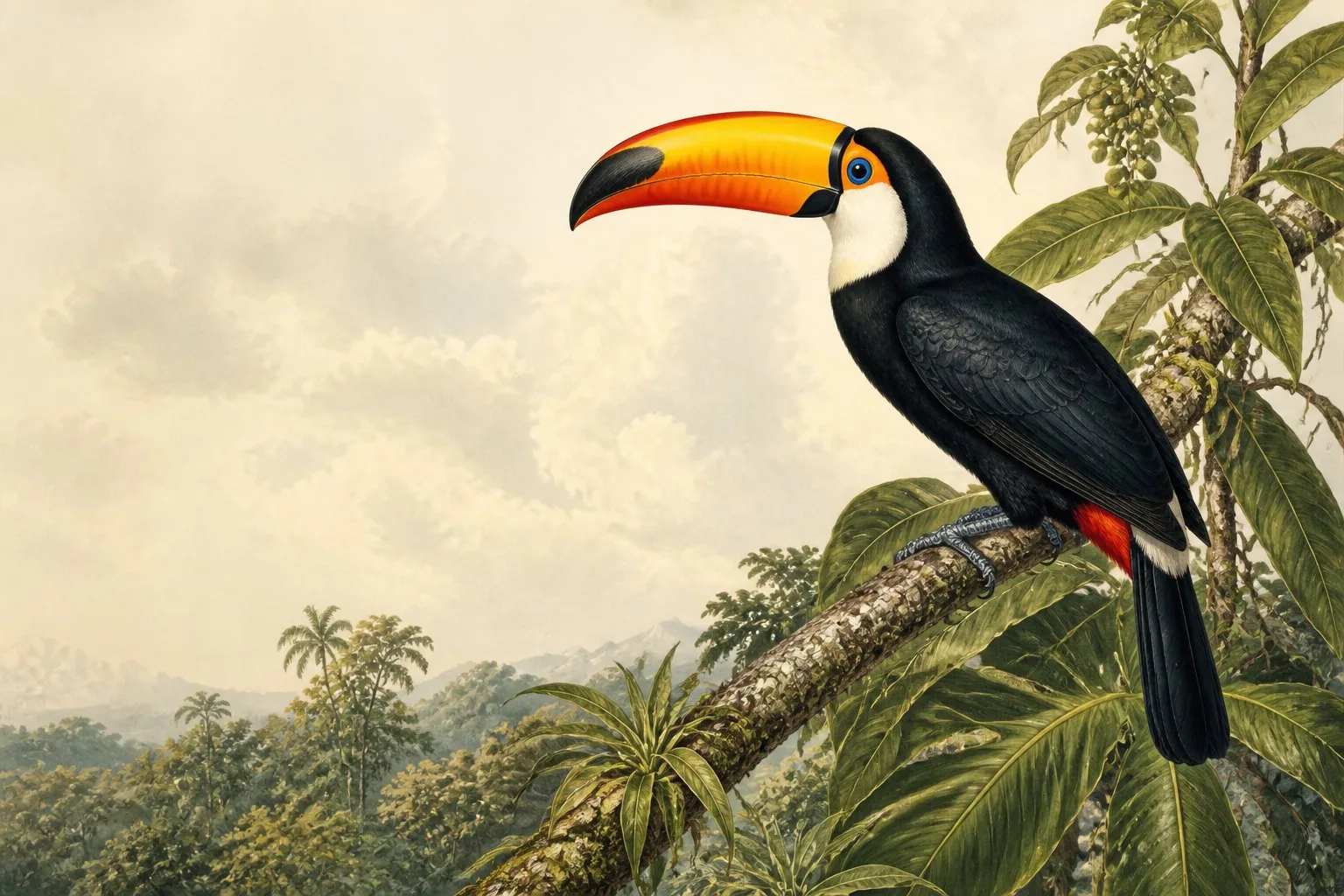
There are around 44 known species of birds-of-paradise, mostly found in New Guinea and northern Australia. The males are, by any measure, among the most extreme sexual ornaments in the natural world - cascades of iridescent feather, electric-blue wattles, wire-like tail extensions longer than the body. The females are plain brown.
Cornell Lab ornithologists published research in 2018 - in PLOS Biology, led by Russell Ligon - analyzing almost 1,000 video clips, 200 audio clips, and nearly 400 museum specimens. Their conclusion: female birds-of-paradise do not evaluate single traits in isolation. They evaluate bundled combinations of appearance, movement, and vocalization simultaneously. Because females select on multiple traits at once, males face compounding pressure. Improve on one feature and you have not improved enough - you have to improve on all of them in concert. The plainness of the female is what made the elaboration of the male possible. She had time to choose, in a habitat without mammalian food competitors, and she used it systematically.
The exceptions that confirm the rule
The Eclectus Parrot (Eclectus roratus) of New Guinea had ornithologists convinced for decades that males and females were different species: males are brilliant grass-green, females are scarlet and blue. The two sexes look nothing alike, and early collectors catalogued them separately. Once the behavior was studied, the logic became clear. Female Eclectus parrots compete fiercely for rare tree-hollow nest sites and spend long periods inside them. Their red coloration advertises the site to rivals. It evolved to serve her competition, not his attraction.
This is the cleanest proof that the rule is not “males are brighter.” The rule is that the sex doing the choosing generates the pressure, and the sex being chosen pays the cost of the display. Most of the time, in most bird species, the female chooses and the male displays. The biology does not care which sex fills which role.
What you see at the feeder
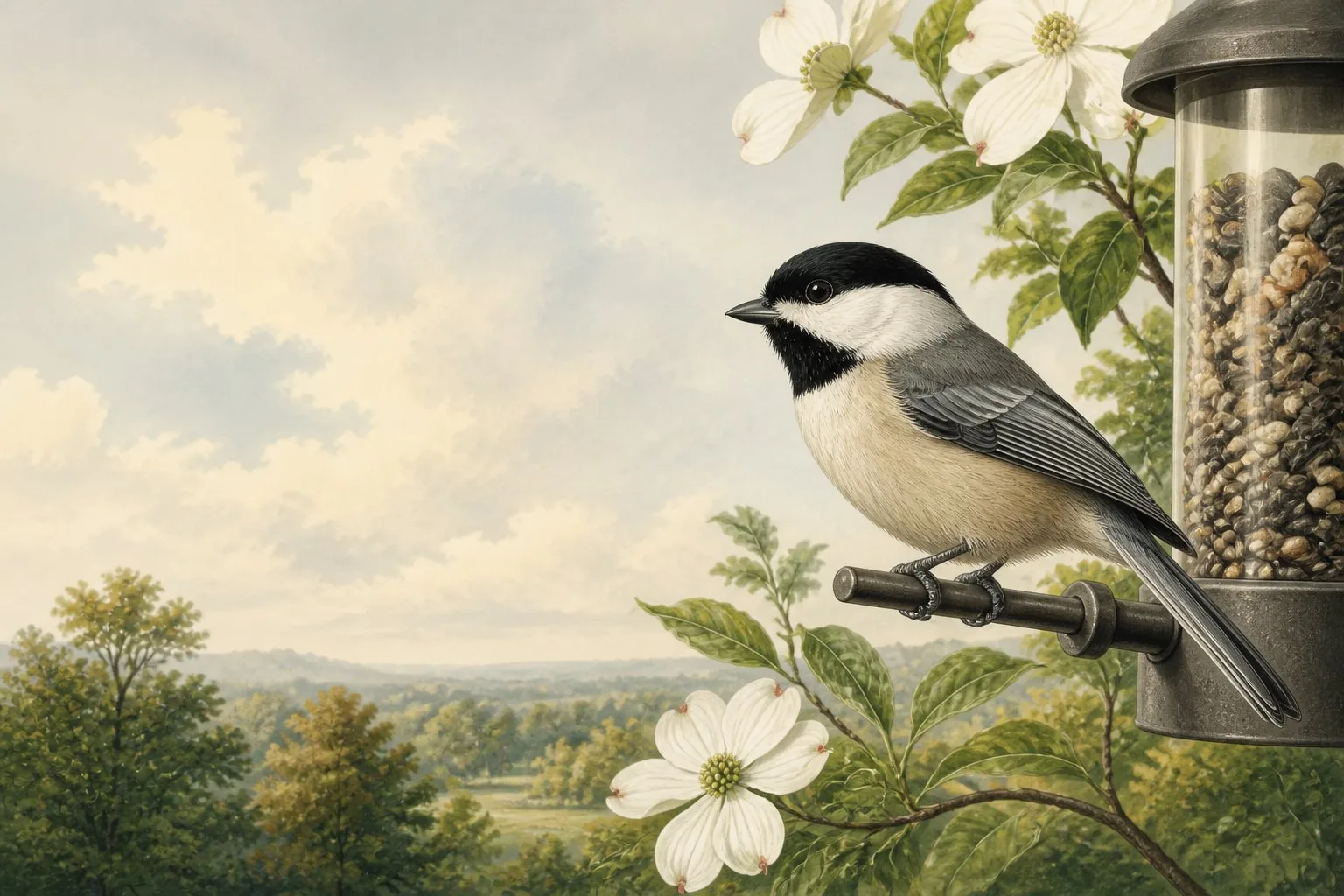
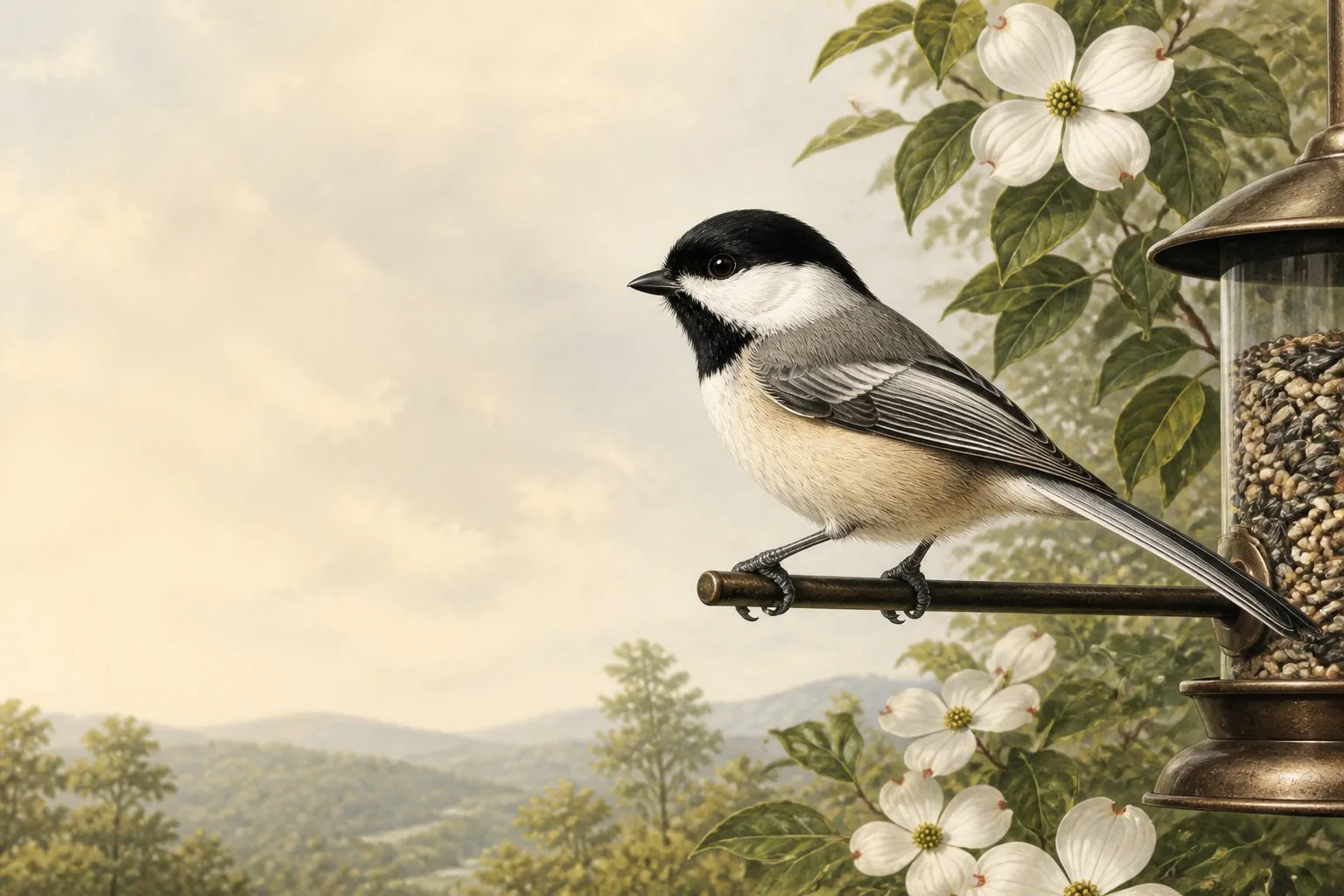
When you watch a group of cardinals at a winter feeder, you are watching selection in progress. The occasional white cardinal - a bird carrying leucism, a mutation that disrupts the pigment-routing mechanism - lacks the carotenoid signal entirely. He is white where he should be red. Female preference is understood to depend heavily on the red carotenoid signal he cannot produce. He exists as proof that the color is doing something specific.
The male cardinal blazing against November oak did not develop that color for himself. He carries it because his lineage of ancestors was chosen by a lineage of females who - without knowing the mechanism - consistently selected the reddest male available. Sexual selection is slow, but it is cumulative, and in a species that is not endangered and has been breeding continuously for millions of years, the pressure has had time to work.
The female at the feeder, the brown one most people glance past, is the product of a different kind of selection - one that kept her alive on the nest long enough to produce the next generation. Both birds are equally shaped by evolution. She is just shaped for a different purpose.