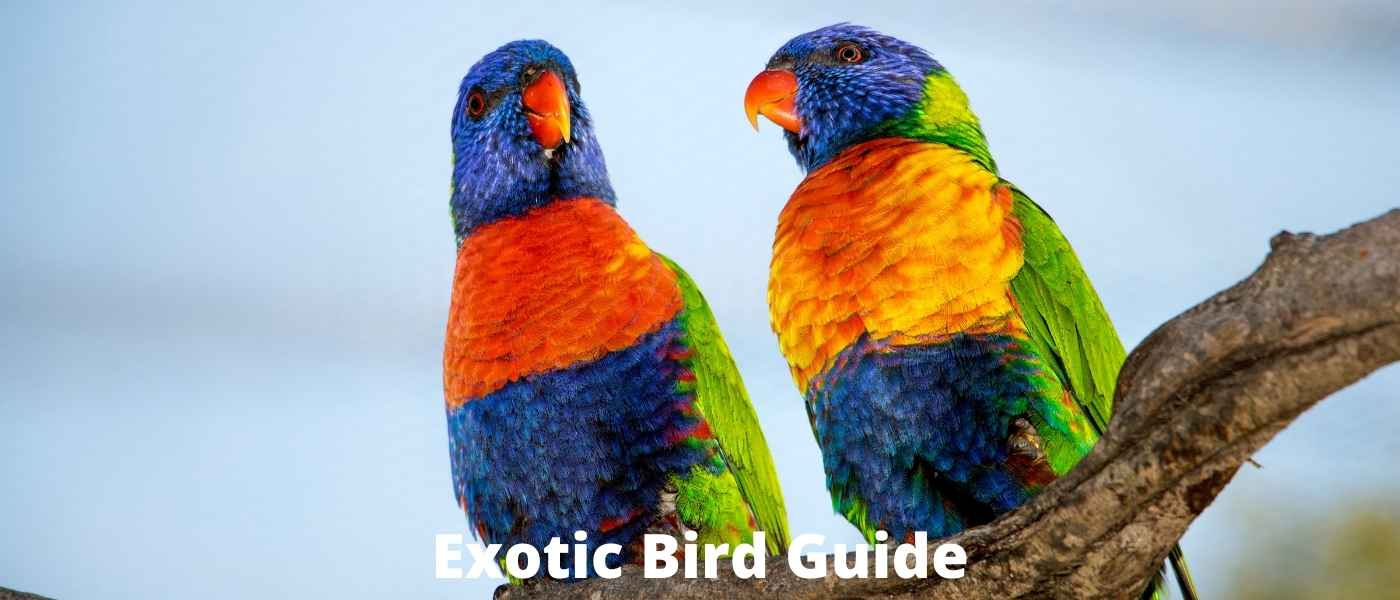
Exotic birds include parrots, macaws, cockatoos, toucans, and other tropical species kept as pets or admired in the wild. They are found across Central and South America, Africa, Asia, and Australia. Most live in tropical forests, though some inhabit grasslands and deserts.
Popular Exotic Bird Species
| Species | Size | Lifespan | Noise level | Pet suitability |
|---|
| African Grey Parrot | 33cm | 40-60 years | Moderate | Excellent talker, needs mental stimulation |
| Blue-and-Gold Macaw | 86cm | 50-60 years | Very loud | Needs huge space, very social |
| Scarlet Macaw | 81cm | 40-50 years | Very loud | Stunning but demanding |
| Cockatiel | 30cm | 15-25 years | Moderate | Great beginner exotic bird |
| Budgerigar | 18cm | 5-10 years | Low-moderate | Most popular pet bird worldwide |
| Cockatoo | 30-60cm | 40-70 years | Very loud | Extremely needy, bonds intensely |
| Eclectus Parrot | 35cm | 30-40 years | Moderate | Calm temperament, striking dimorphism |
| Toco Toucan | 55-65cm | 20-25 years | Loud | Very high maintenance |
| Lovebird | 13-17cm | 10-15 years | Moderate | Social, can be nippy |
| Conure | 25-50cm | 20-30 years | Loud | Playful, affectionate |
Exotic Bird Diets
| Diet type | Species examples | Key foods |
|---|
| Seed and nut eaters | Macaws, cockatoos, parrots | Sunflower seeds, almonds, walnuts, brazil nuts |
| Fruit eaters | Toucans, lorikeets, fruit doves | Papaya, berries, figs, banana |
| Nectar feeders | Lorikeets, sunbirds | Nectar, pollen, soft fruit |
| Insectivores | Some softbills | Mealworms, crickets, fruit flies |
| Omnivores | Most parrots, toucans | Mix of seeds, fruit, nuts, and insects |
Where Exotic Birds Live
| Region | Notable species |
|---|
| Central and South America | Macaws, toucans, amazons, conures |
| Africa | African Grey, lovebirds, Fischer’s lovebird |
| Australia | Cockatoos, cockatiels, budgerigars, lorikeets |
| Southeast Asia | Eclectus, hanging parrots, hornbills |
| Pacific Islands | Kea (New Zealand), various lorikeets |
Keeping Exotic Birds as Pets
| Consideration | What to know |
|---|
| Commitment | Many species live 30-70 years - this is a lifetime pet |
| Space | Large birds need flight aviaries, not small cages |
| Noise | Macaws and cockatoos are among the loudest animals in the world |
| Social needs | Most species need hours of daily interaction or a companion bird |
| Diet | Specialised diets required - not just seed |
| Vet care | Must find an avian vet experienced with exotics |
| Legal | Check local laws - some species require permits |
| Rehoming | Extremely difficult for large parrots that outlive their owners |
Toxic Foods for Exotic Birds
| Never feed | Why |
|---|
| Chocolate | Contains theobromine - toxic to birds |
| Avocado | Contains persin - can be fatal |
| Onion and garlic | Can cause digestive damage |
| Caffeine | Toxic to birds |
| Alcohol | Fatal even in small amounts |
| Fruit seeds (apple, cherry) | Contain cyanide compounds |
Exotic birds are intelligent, beautiful, and incredibly demanding. Before getting one, honestly assess whether you can provide decades of care, a proper diet, enough space, daily attention, and access to specialised veterinary care. For most people, enjoying exotic birds in the wild or at sanctuaries is the better option.