Biology
Do Hummingbirds Migrate in Winter?
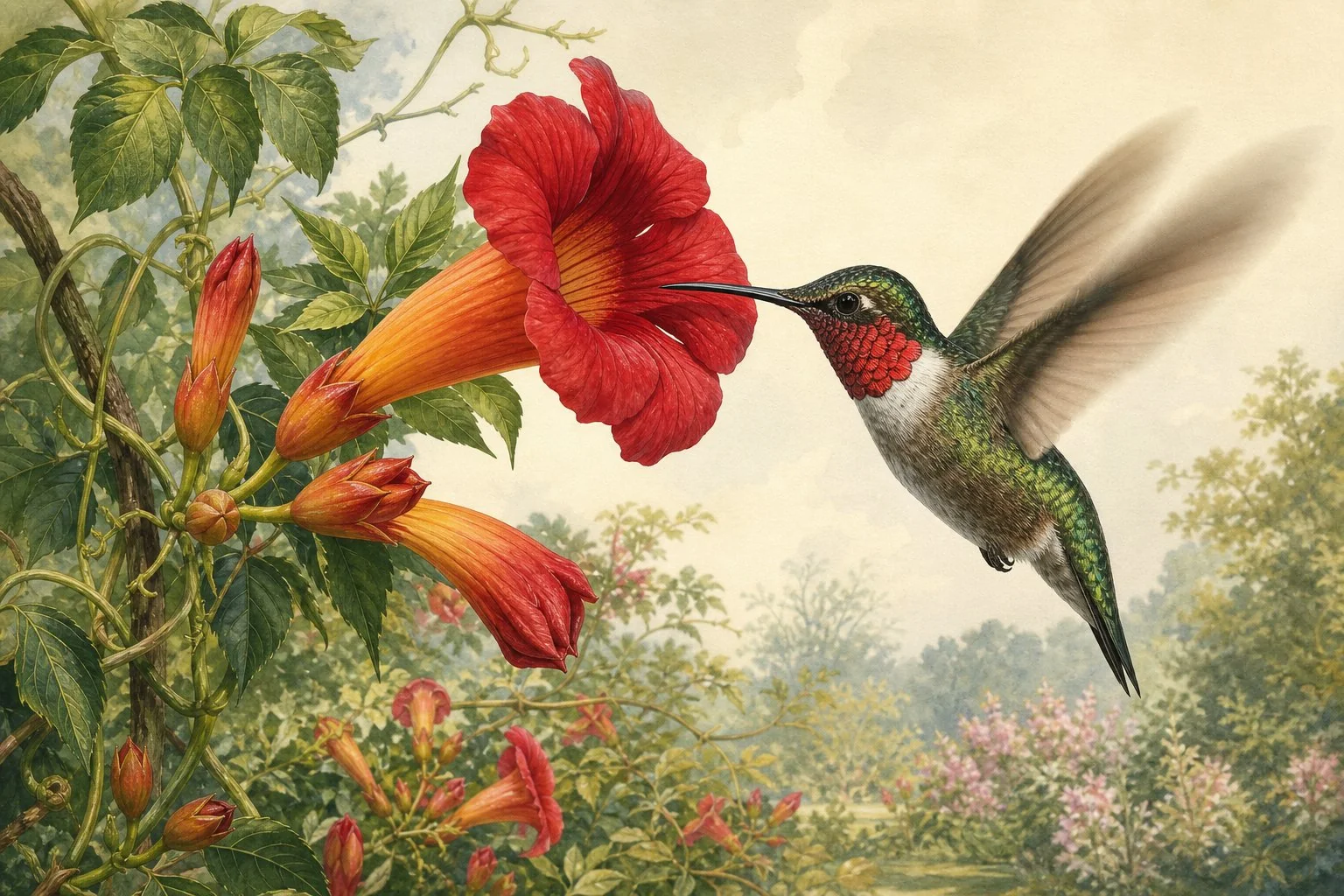
Some time in August, the ruby-throated hummingbirds at a Maine feeder begin to eat like they are storing for a siege. They are. Within weeks, they will attempt a non-stop crossing of the Gulf of Mexico.
The common assumption is that hummingbirds flee the cold. They do not. The trigger is photoperiod - the shortening of daylight hours in late summer - and the hormonal cascade it sets off. A hummingbird in the full heat of a mid-September afternoon, nectar everywhere, will still feel the pull south. Food availability is irrelevant. The calendar is not.
The journey
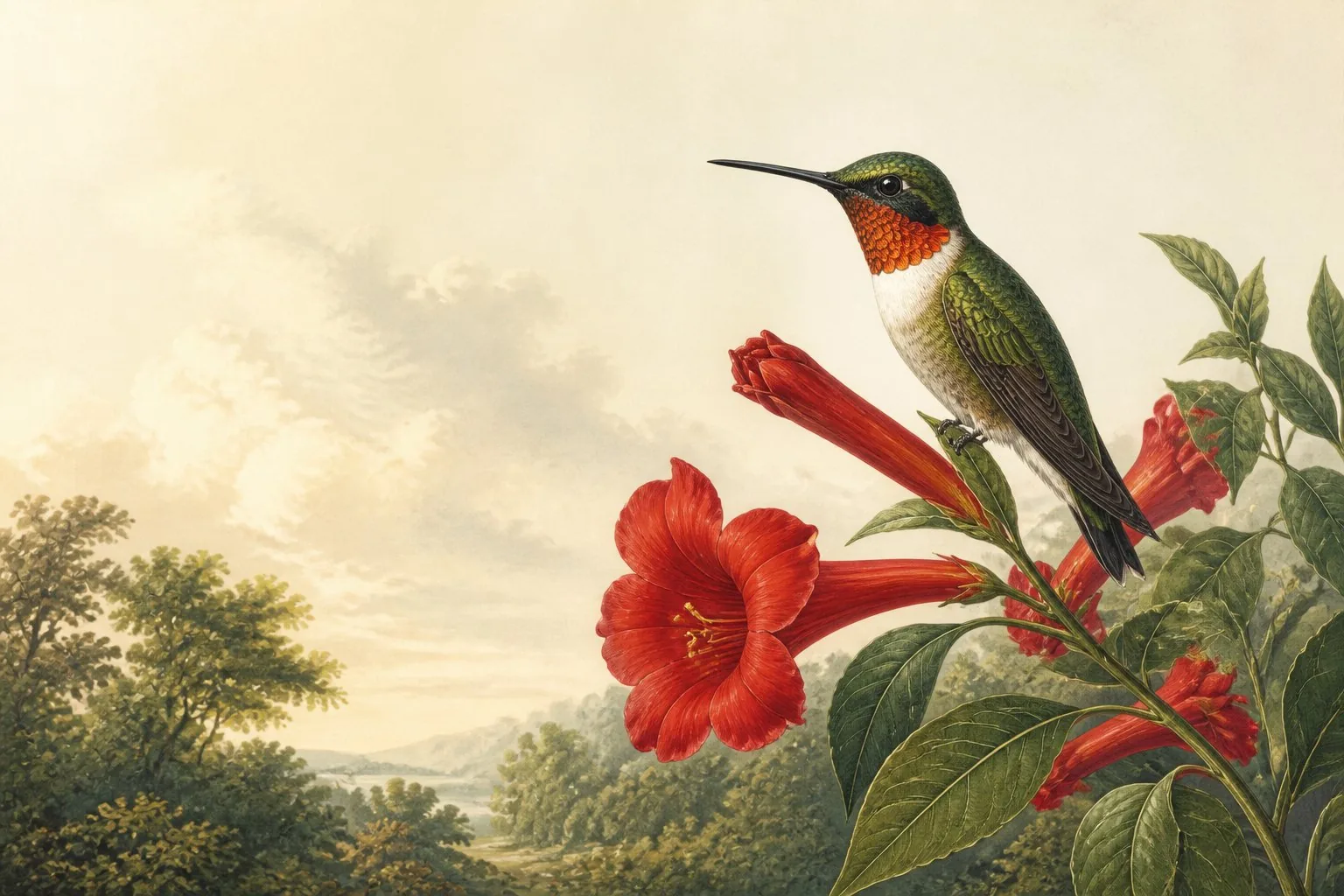
The Archilochus colubris - the Ruby-throated Hummingbird - is the only breeding hummingbird across most of eastern North America, and its autumn migration is one of the more audacious things a small bird attempts. Males leave first, typically in late August. Females and juveniles follow through September. Many fly south along the Gulf Coast and then cut across open water to the Yucatan Peninsula or Central America - a crossing of roughly 500 miles over water, with no place to land and nothing to eat. The flight takes somewhere between 18 and 22 hours.
The bird that does this weighs less than a nickel.
Pre-migration, a Ruby-throated Hummingbird nearly doubles its body weight by gorging on nectar and small insects. The extra weight is almost entirely fat. That fat is the fuel. When the bird arrives on the far shore of the Gulf, it is lean again.
The photoperiod trigger means a feeder left out through September will not delay a hummingbird’s departure. The urge to move is hormonal, not conditional on food supply. Late-season feeders help stragglers and vagrants, not the main population.
The Rufous migrates farther
The Rufous Hummingbird (Selasphorus rufus) makes a stronger claim to extreme migration. It breeds as far north as southeast Alaska and winters in Mexico - a round trip measured by ornithologists at close to 4,000 miles in a straight line, longer in practice because the routes differ by season. Heading south in autumn, Rufous Hummingbirds follow the Pacific coast. Returning north in spring, they move inland through the Rocky Mountains, tracking the bloom progression of mountain wildflowers. This is not a single straight path. It is a loop, tuned over generations to intercept flowers at peak production.
| Species | Rough round-trip distance | Winter range |
|---|---|---|
| Ruby-throated | Up to 4,000 miles | Southern Mexico, Central America |
| Rufous | Up to 8,000 miles | Mexico |
| Calliope | Up to 5,000+ miles | Southwest Mexico |
| Black-chinned | 2,000-4,000 miles | Central Mexico |
| Anna’s | Short local movements | Pacific coast year-round |
The one that stays
Anna’s Hummingbird (Calypte anna) is the exception that makes the rule clear. It does not migrate. It lives year-round along the Pacific coast from British Columbia to Baja California, surviving winter nights by entering torpor - a controlled drop in body temperature and metabolic rate that can cut energy expenditure by more than 90 percent. A torpid hummingbird is barely alive by the standards of a wakeful one. It will not respond to touch. Its heartbeat slows to near-stillness.
Anna’s range has expanded northward over recent decades, partly because of year-round garden feeders and winter-blooming plants in Pacific Northwest cities. The bird is adapting in real time to human infrastructure - a useful reminder that cleaning hummingbird feeders with vinegar regularly matters more in winter, when fungal growth in cold, slow-visited nectar is a genuine hazard.
Migration and the feeder question
Keeping a feeder stocked through late September helps birds fuelling up before departure and the occasional vagrant - a Rufous passing through the eastern US, a Calliope far off its expected route. It will not trap a hummingbird or prevent migration. The hormonal clock does not check the feeder.
In winter-mild parts of the Gulf Coast, Buff-bellied Hummingbirds make short seasonal movements but rarely leave the US entirely. A small number of Ruby-throated Hummingbirds have overwintered in the Gulf states in recent years, which surprises observers used to thinking of hummingbird migration as binary. Hummingbirds are not alone in blurring that line. The answer to do owls migrate and do falcons migrate is a similar mix of long-haul travelers and stay-put residents. Long-term monitoring by the Cornell Lab of Ornithology and other groups has documented these outliers with enough consistency to take them seriously.
What this means in practice
The migration timeline is predictable enough to plan around. In the eastern US, the last Ruby-throateds clear the Gulf Coast by late October. By December, the only hummingbird reliably wintering in the US is Anna’s, on or near the Pacific coast.
If you are in Anna’s range, keep the feeder up all year and bring it in on nights that threaten to freeze. If you are in the east, the last bird at your October feeder is probably a lingering juvenile or a vagrant - worth recording and reporting to a local birding group.
The Ruby-throated Hummingbird weighs less than a nickel and navigates from Ontario to Guatemala on fat reserves it spent three weeks building. The biology here is not soft. It is a precise machine running on sunlight, flowers, and a clock set by the tilt of the Earth.