Field Guide
White-headed Woodpecker
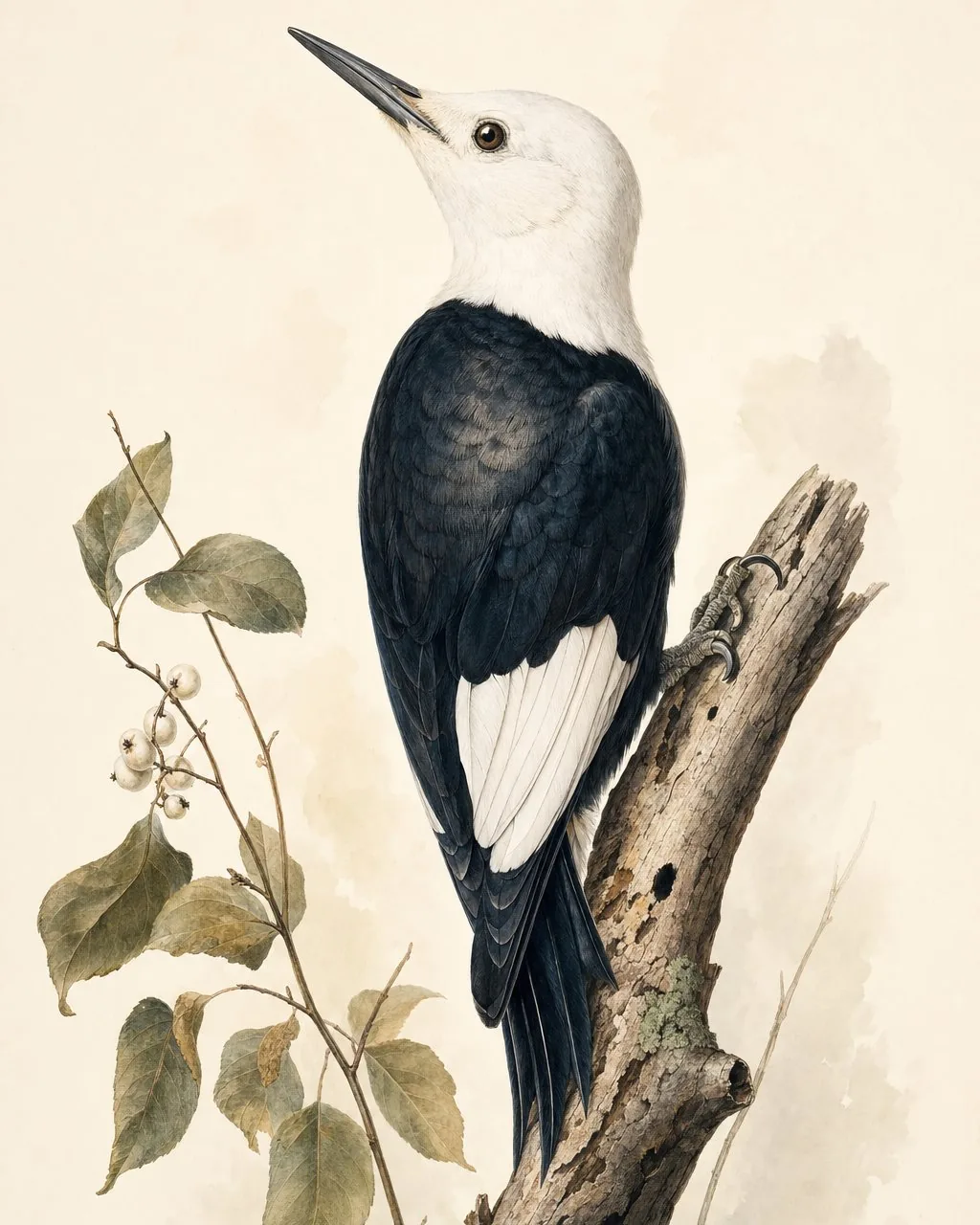
A Ponderosa pine in the eastern Sierra Nevada, bark warming in late morning sun, sap beading on the surface. A woodpecker lands high on the trunk and works across it sideways, not drilling but prying - easing the base of a cone scale open, extracting the seed from beneath. The body is jet black. The head is pure white. Nothing else in North America looks like this.
There is no identification problem with a White-headed Woodpecker. If the head is white and the body is black and you are in a pine forest west of the Rocky Mountains, you are looking at this species and no other.
What It Looks Like
The plumage is stark and unmistakable. The entire head and upper neck are pure white - an open, clean white that stands out against black body plumage like a reversed panda pattern. The remainder of the bird is glossy black, with a white wing patch that flashes prominently in flight. Adult males have a red hindcrown patch that females lack. Females are otherwise identical to males.
The bill is medium-length and chisel-shaped, typical of the woodpecker family but slightly less heavy than in the larger species. The legs and feet are dark. The eyes are reddish-orange in adults.
In flight, the white wing patches are the most immediately visible field mark - wide white patches along the inner primaries and outer secondaries that make the bird flash conspicuously as it moves between trees.
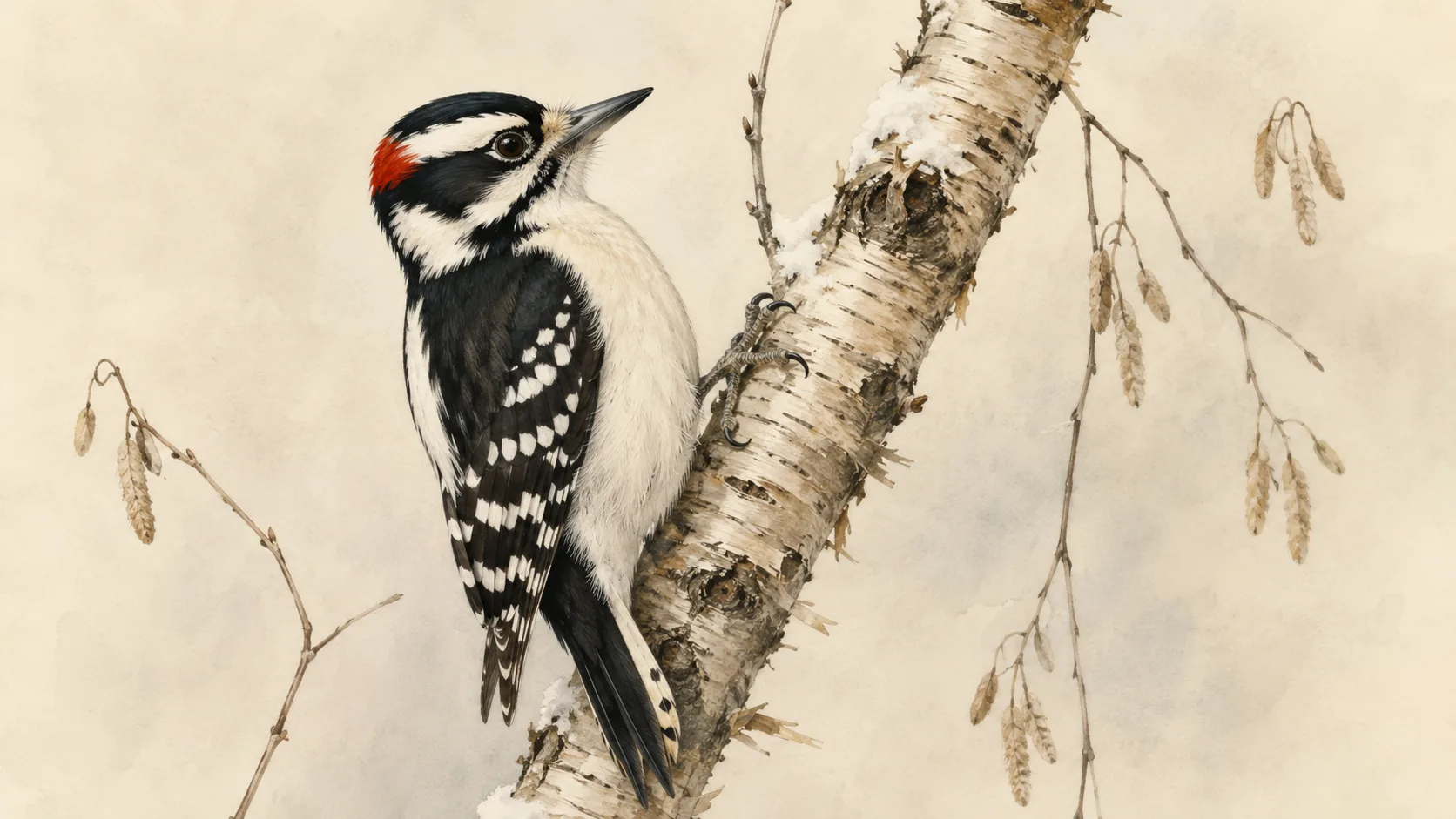
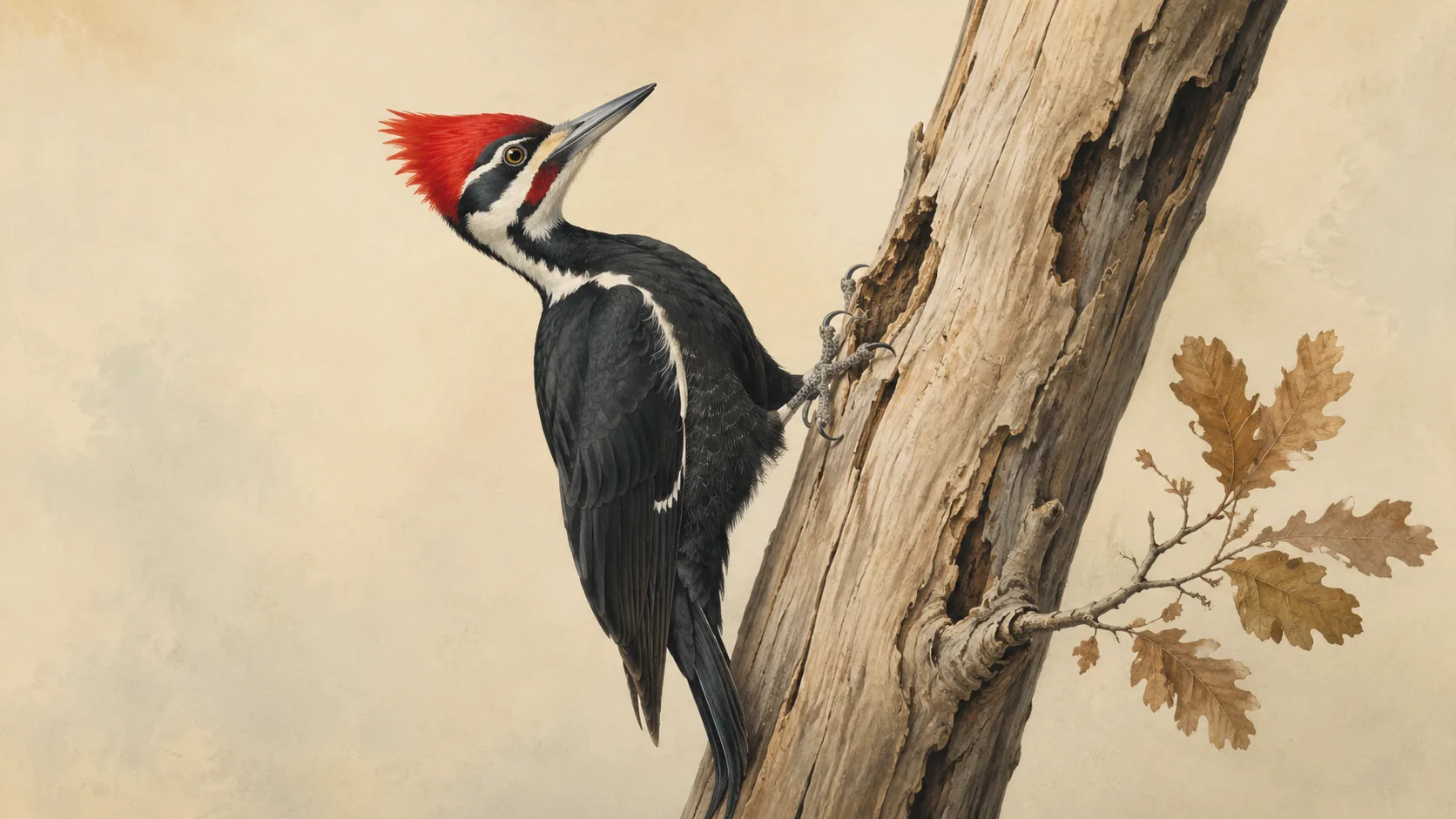
Compare the Downy Woodpecker, which shares mountain pine forests in the West: smaller, with a spotted and barred pattern, white back, and a pied rather than black-and-white-headed appearance. Compare the Pileated Woodpecker: much larger, red-crested, with white wing linings in flight but a black head. Neither is possible to confuse with the White-headed in good viewing conditions.
| Measurement | Range |
|---|---|
| Length | 23 - 24 cm |
| Weight | 65 - 90 g |
| Wingspan | 40 - 43 cm |
| Lifespan | 4 - 8 years |
Voice
The call is a high-pitched, sharp chick or chick-chick, sometimes given in rapid series. The drumming is steady and moderately paced, not as loud or accelerating as the Pileated’s. The calls have a quality that blends into the ambience of a pine forest in wind - audible at close range but not the dominant sound in the woods.
Range and Habitat
The White-headed Woodpecker is a species of the pine-dominated mountains of the American West. The range runs from southern British Columbia south through the Cascades and Sierra Nevada of California, and east into the Blue Mountains of Oregon and Washington and the mountains of Idaho and Nevada. A small, isolated population exists in the San Bernardino Mountains of southern California.
Within this range, the species is a specialist of mature ponderosa pine and sugar pine forest. It occurs most consistently where large, open-canopied pine stands with abundant cone production coincide with snags for nesting. It is largely absent from denser fir and spruce associations, though it will use mixed pine-fir habitat at the margins.
The bird does not migrate. It is a year-round resident at elevations typically between 1,000 and 2,700 meters, moving locally within a range to follow cone crops.
Diet
The White-headed Woodpecker’s diet is unusual for a woodpecker because it relies heavily on pine seeds rather than wood-boring insects. Large-coned pines - ponderosa and sugar pine in particular - produce seeds that are nutritionally rich and available in quantity even in winter. The woodpecker extracts seeds by prying open scales on green and mature cones, or by scaling bark in the manner of a nuthatch.
Insects are taken when available, including wood-boring beetles and ants, but the species is far less reliant on excavation feeding than most woodpeckers. This dietary flexibility is what allows it to persist through winter at elevation rather than migrating. Sap from the surfaces of pine trees is also consumed, particularly in spring when sap flow is high.
Breeding
Cavity excavation begins in April to May in most of the range. Nesting sites are typically in snags or dead sections of living ponderosa pine, with the cavity entrance usually located on the underside of a broken stub or slanted trunk - a position that may help shed rain from the entrance. Both sexes excavate, though males do the majority of the work.
The female lays 3 to 7 white eggs. Both parents incubate, with the male taking incubation duties at night. Incubation lasts about 14 days. The young are altricial and are fed by both parents in the cavity. Fledging occurs at approximately 26 days post-hatch. The family group may remain together through the summer.
A Pine Specialist in a Changing Forest
The White-headed Woodpecker is not endangered, but it is declining in parts of its range, and the reasons are not encouraging. The species is tied so tightly to large-diameter ponderosa and sugar pine that any large-scale change to those forests registers directly in woodpecker numbers.
Fire suppression over the past century has shifted western pine forests toward denser, more closed canopies - conditions less suited to the White-headed’s open-porch foraging style. The large old ponderosa and sugar pines that produce the most seeds per tree and provide the most suitable nest snags are also the trees most aggressively logged over the past 150 years. Wildfires of increasing severity in an era of drought and warming are now removing mature pine stands at rates that can outpace recovery.
This woodpecker’s future is, in the most direct sense, a function of how much old-growth and mature ponderosa pine remains. That is not an abstract conservation statement. It is the bird’s food supply and nest site rolled into the same tree.
The white head in a pine crown is not something you forget. Stark and clean against the bark, the bird works the cone with no particular urgency. The forest is old enough to hold it. Whether the forest stays that way long enough to hold the next generation is the question.