Field Guide
Western Snowy Plover
The wire exclosure is not much to look at - a few metal stakes driven into the sand, a perimeter of orange construction fencing, a small wooden sign on a stake asking people to keep out. Inside it, barely visible against the pale dry sand, a Western Snowy Plover sits on three eggs. She holds perfectly still. A jogger passes forty meters away. She stays down. A dog on a leash strains toward the fencing. She stays down. The volunteer monitor a hundred meters north with a spotting scope marks the observation in a notebook.
This is what conservation looks like at ground level. Small, hot, unglamorous, and it is working.
What It Looks Like
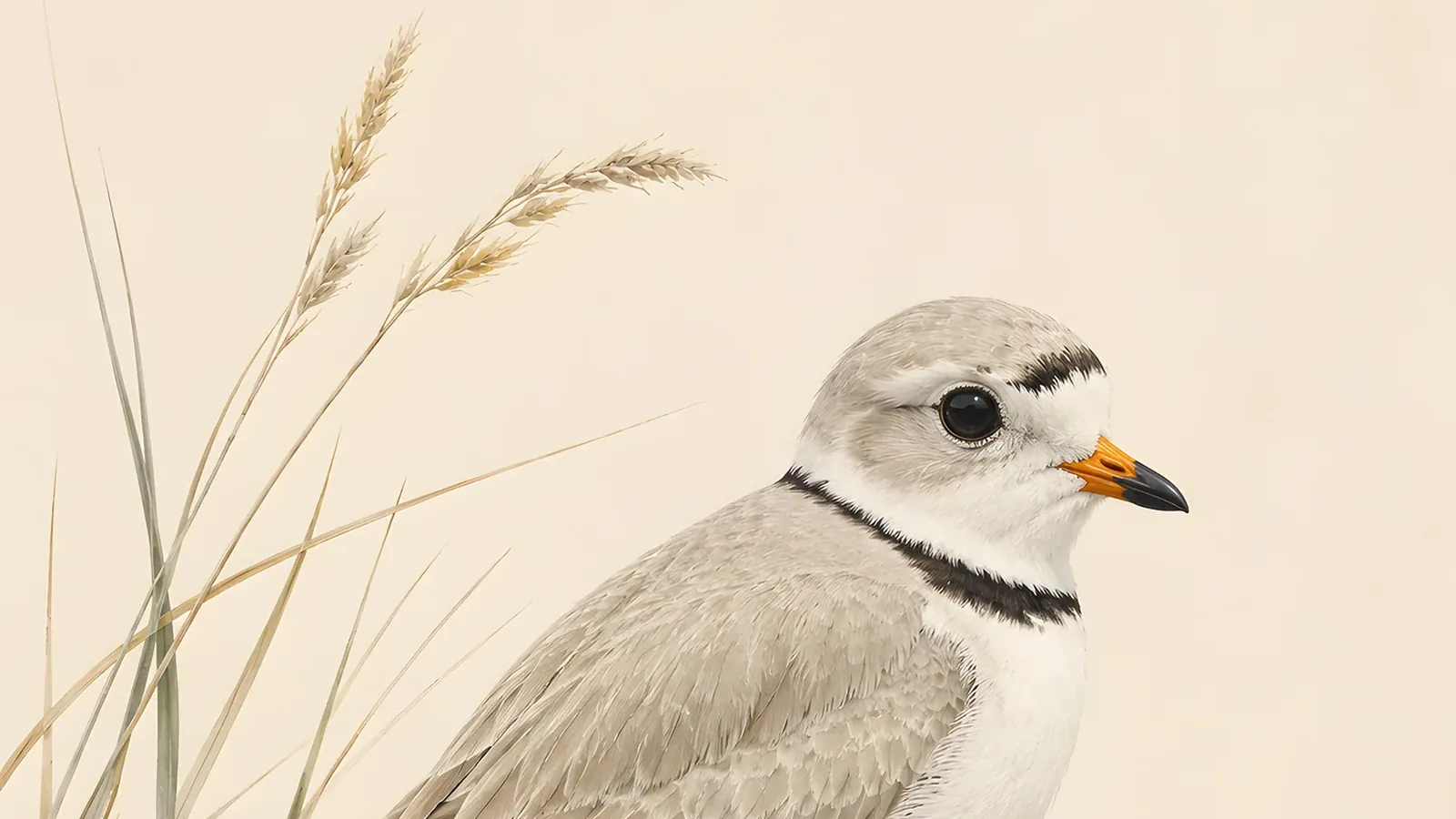
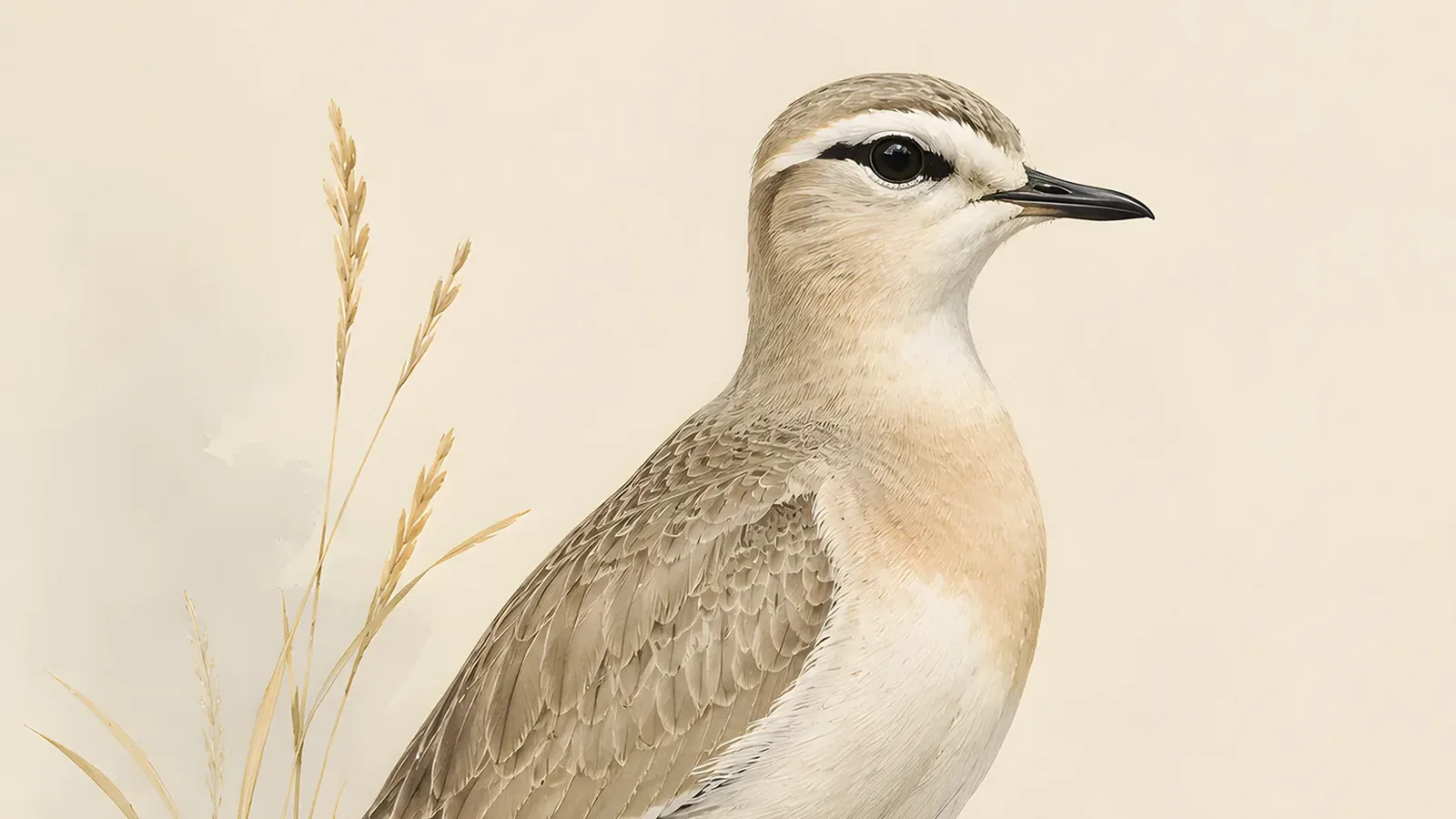
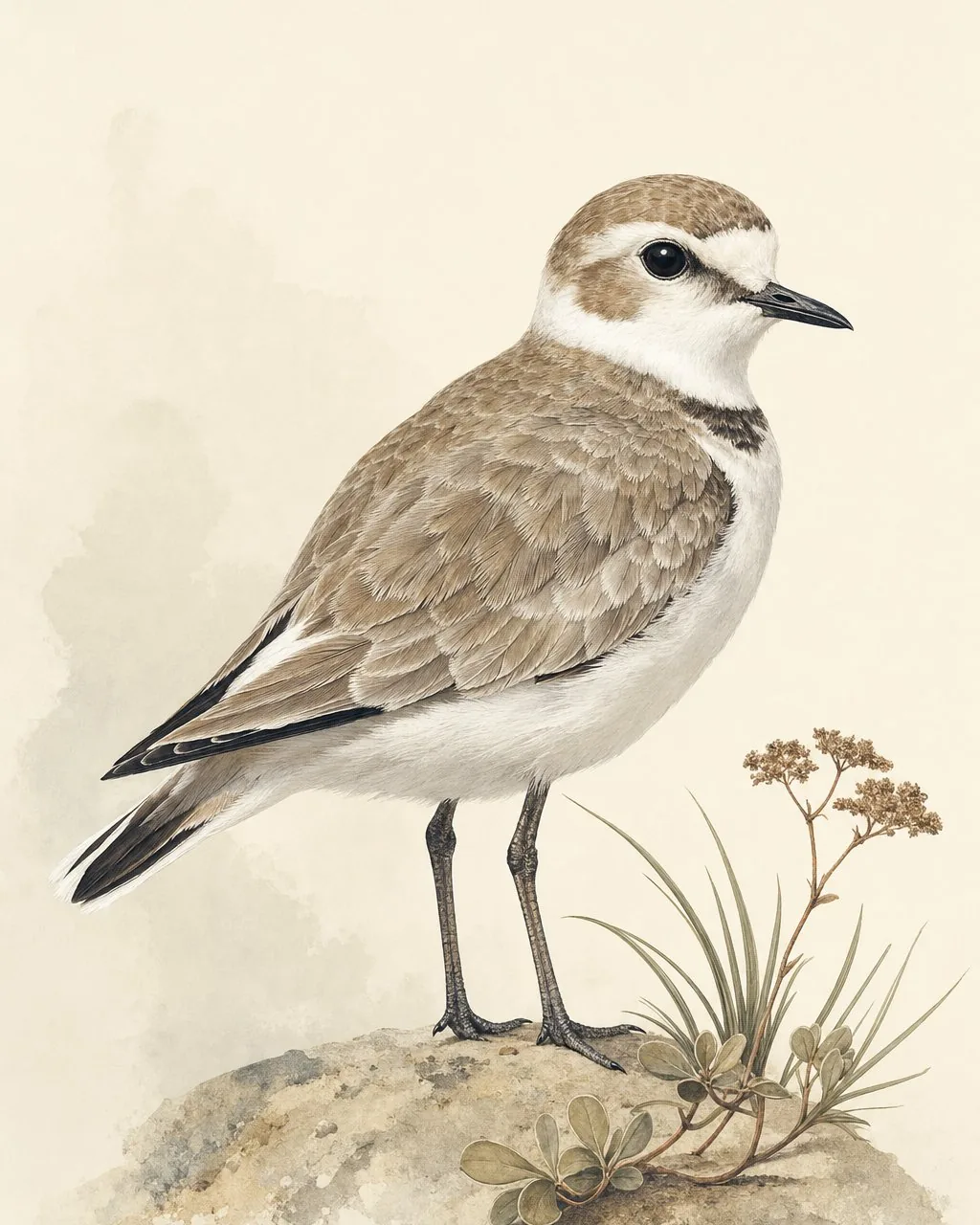
Pale, small, and easily overlooked. The Western Snowy Plover is one of the smallest shorebirds on Pacific beaches - lighter than a golf ball, and sandy-colored enough to disappear against dry sand in an instant. The upperparts are a warm sandy brown, the underparts white. A dark or blackish patch appears on either side of the breast, not meeting in the middle - making the “collar” incomplete, a useful distinction from the Piping Plover of eastern beaches, which can look superficially similar.
Additional marks: a dark patch behind and above the eye, a dark line through the lore, a dark bill, and pale gray-flesh legs. The bill is notably short and thin compared to larger shorebirds. Males in breeding plumage show darker, more defined markings than females. The species overall is paler and more washed-out than most small plovers, which is precisely what helps it vanish against white sand and bleached salt flat.
In flight, a white wing stripe becomes visible. The flight is low, fast, and direct.
| Measurement | Range |
|---|---|
| Length | 15 - 17 cm |
| Weight | 35 - 58 g |
| Wingspan | 33 - 37 cm |
| Lifespan | 3 - 7 years |
Voice
A soft, piping call - a low whistled note repeated at intervals, sometimes doubled. Alarm calls are more urgent and rapid. The voice carries well on open beaches but is gentle enough that it rarely draws attention from passersby who aren’t listening for it.
Range and Habitat
The Pacific Coast population - the one listed as federally threatened in the United States - breeds from Washington south through California and into Baja California. Breeding sites include open ocean beaches, coastal dunes, salt ponds, dry lake beds, and river sandbars near the coast. The population winters along the same coast, with birds from northern sites moving south to California and Mexico.
A separate interior population breeds at alkaline lake shores and salt flats in the western US interior: Utah, Colorado, Nevada, New Mexico, and adjacent states. The interior population is not federally listed. Oregon supports a small number of breeding pairs at coastal sites, and the birds are also found at some river mouth habitats.
Diet
Invertebrates gleaned from the beach surface and wet sand: small crustaceans, marine worms, insects, amphipods. The plover hunts by running short distances, stopping, tilting forward to pick at the surface, then running again - the signature plover feeding style. It does not probe into wet sand the way sandpipers do.
Breeding
Nesting begins in March on the southern end of the range and runs through August, allowing time for multiple clutch attempts if early nests fail. The nest is a scrape in dry sand, lined minimally with shell fragments, pebbles, and debris. The cryptic appearance of the nest and eggs is the primary defense: three eggs, buff with dark scrawling, sitting on sand that looks almost identical.
Males take the primary role in incubation, though females also incubate. The incubation period is about 28 days. Chicks are precocial, hatching with down and open eyes, and leave the nest scrape within hours to forage independently - following adults who alert them to danger.
The Western Snowy Plover practices a distinctive mating system in which females sometimes abandon a completed clutch to the male and pair with a second male, leaving the first male to incubate and raise the young alone. This means male-to-female ratios in the field can appear skewed toward males at any given nesting site.
A Threatened Species on a Crowded Beach
The Pacific Coast population was listed as federally threatened in 1993. The main drivers of decline were simple: beaches in California, Oregon, and Washington had become heavily used by people. Off-leash dogs, vehicles, pedestrian foot traffic, and kite flyers all caused nest abandonment and chick mortality. Nesting sites were also threatened by development, erosion management that altered sand dynamics, and nest predation by ravens, crows, foxes, and gulls - all predators that had increased in proximity to human habitation.
The response was one of the more intensive single-species conservation efforts mounted for a non-endangered shorebird. Agencies and volunteers began installing wire exclosures around nests in the late 1990s. Predator management programs at key sites reduced local populations of ravens and foxes. Beach closures during nesting season became standard at high-use sites. Interpretive signage explained to beach visitors what the fencing was for.
The effort has stabilized and modestly increased the Pacific Coast population, which numbered around 1,500 to 2,000 breeding adults at last comprehensive survey. Recovery targets have not been met, and the species remains threatened. Climate-driven sea level rise, increasing storm frequency, and beach nourishment projects that alter sand texture continue to work against it.
What the Western Snowy Plover needs is open, dry, undisturbed sand. That is not easy to come by on the Pacific Coast in summer. The gap between what the bird needs and what the coast has become is what makes exclosures necessary in the first place.
The volunteer folds up the spotting scope at dusk. The female plover is still on the nest. Three more days until the hatch, if the math holds. She will have no idea how many people spent hours ensuring those eggs weren’t crushed. That is not the point. The point is that the eggs are there.