Field Guide
Eastern Meadowlark
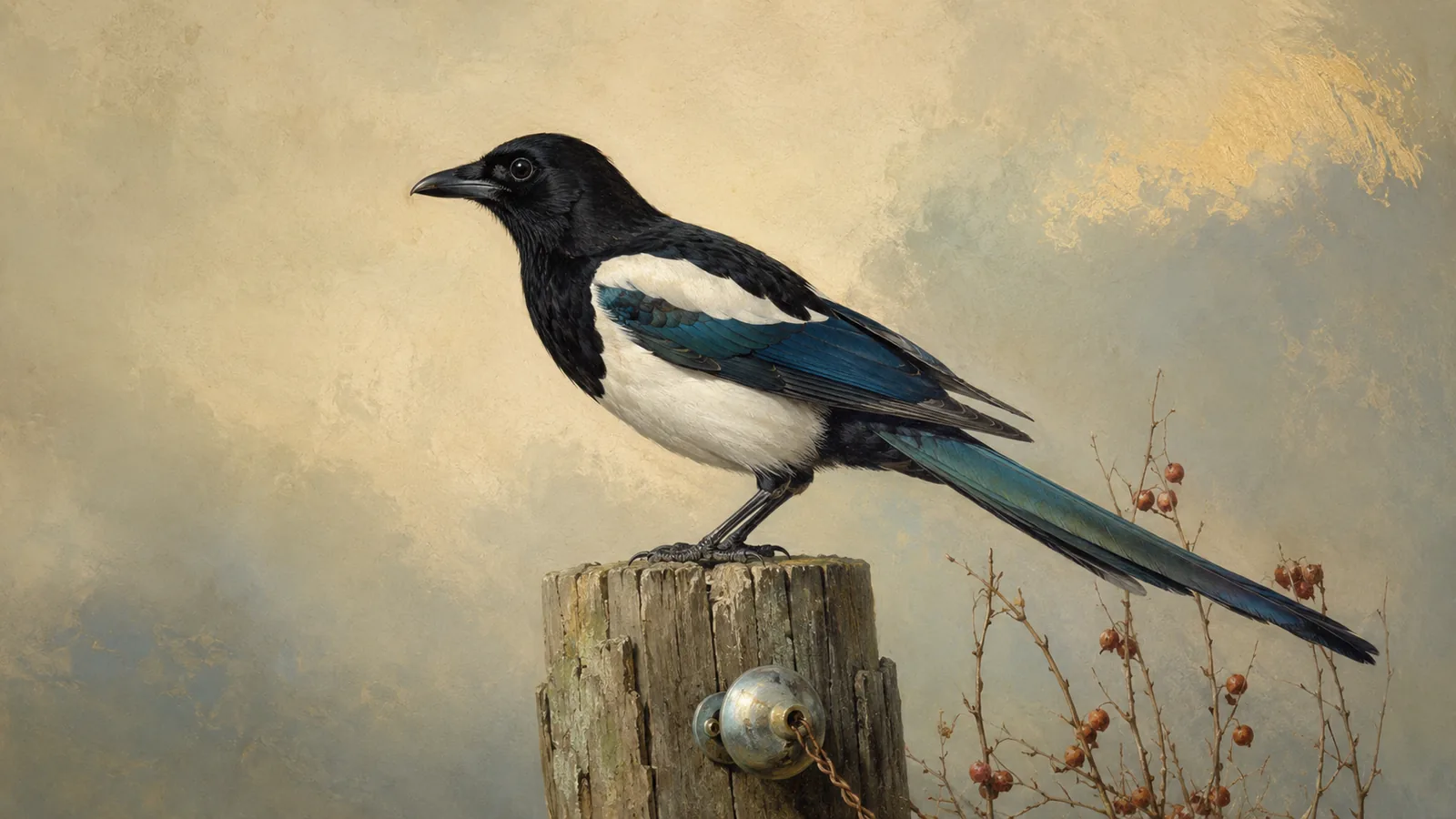
A late-April morning in Ohio farm country, still cold enough to see your breath. A wooden fencepost at the edge of a hayfield. And from that post, two clear descending whistles that sound like someone drawing a wet finger down the rim of a crystal glass. See-you, see-yeeeer. The singer is a Sturnella magna - the Eastern Meadowlark - and the song is a small act of defiance. The field behind him is one of fewer each year.
What it looks like
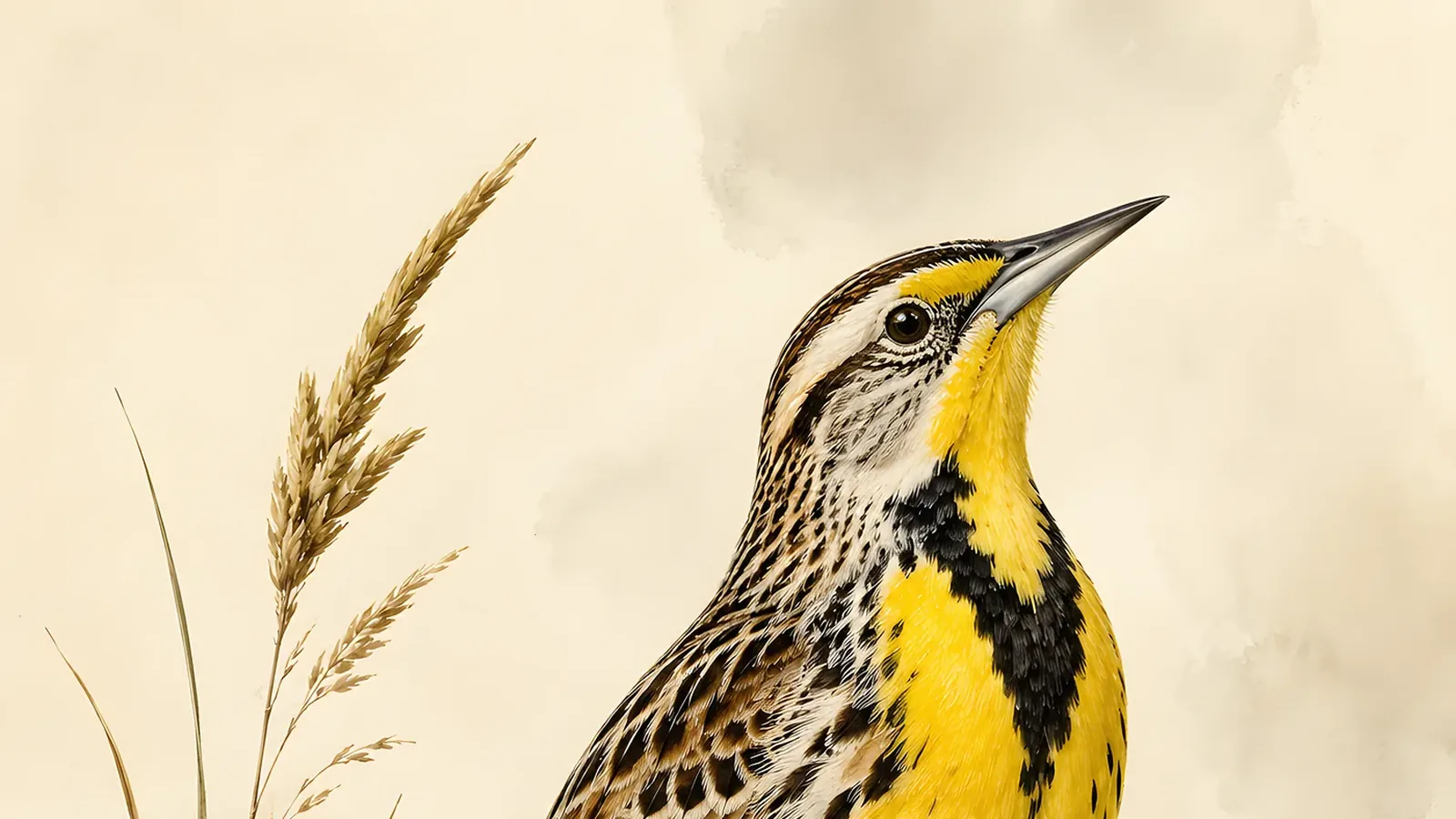
The Eastern Meadowlark is a bird built for two entirely different audiences. From the front, it is a declaration: brilliant lemon-yellow underparts crossed at the chest by a clean, bold black V, a mark so precise it might have been cut with a compass. From behind, it disappears. The back is a camouflage study in brown, buff, and black streaks - dark brown above with buff edges on the wing feathers and dark streaks on the crown and back. On the ground, walking through dead grass between clumps of forbs, the bird vanishes.
The bill is long, straight and sharply pointed, built for probing soil. The tail is short and often cocked. In flight the outer tail feathers flash white, and the wingbeats alternate rapid fluttering with brief glides - a pattern that identifies a meadowlark the moment it breaks from the grass, even at distance.
Adults measure 19 to 26 centimetres in length and weigh 90 to 150 grams (Audubon Field Guide, National Audubon Society). Wingspan runs 35 to 40 centimetres. Males are noticeably larger than females. The oldest wild Eastern Meadowlark on record, banded in Pennsylvania in 1926 and shot in North Carolina in 1935, was at least eight years and eight months old - Cornell Lab of Ornithology holds that record.
| Measurement | Range |
|---|---|
| Length | 19 - 26 cm |
| Weight | 90 - 150 g |
| Wingspan | 35 - 40 cm |
| Max recorded lifespan | 8 yr 8 mo (wild) |
The song
The primary song is three to five pure, plaintive, flutelike whistles, slurred together and falling gradually in pitch, up to two seconds long. The Cornell Lab transcribes the phrase as see-you, see-yeeeer. There is nothing harsh in it. It is one of the cleaner sounds in North American birdsong - open, uncluttered, carrying well across an open field.
The male sings from an exposed perch: a fencepost, a utility wire, the tip of a grass stem, occasionally in flight. He has a repertoire of 50 to 100 distinct song types and shifts between them through the morning, which may help him sustain territory advertising without the listener habituating to a single repeated phrase. The alarm call is entirely different - a sharp, buzzy dzzhrrt, harsh and rattling, that a person who knows it will not confuse with anything else in the field.
The male Eastern Meadowlark holds a repertoire of up to 100 distinct song types, rotating through them to keep rivals and mates engaged with a voice that never quite repeats itself.
The song is the first thing to notice and the last thing to lose. Fields that held meadowlarks ten years ago and now grow corn can still hold the memory of that whistle for the people who used to walk them.
Not a lark
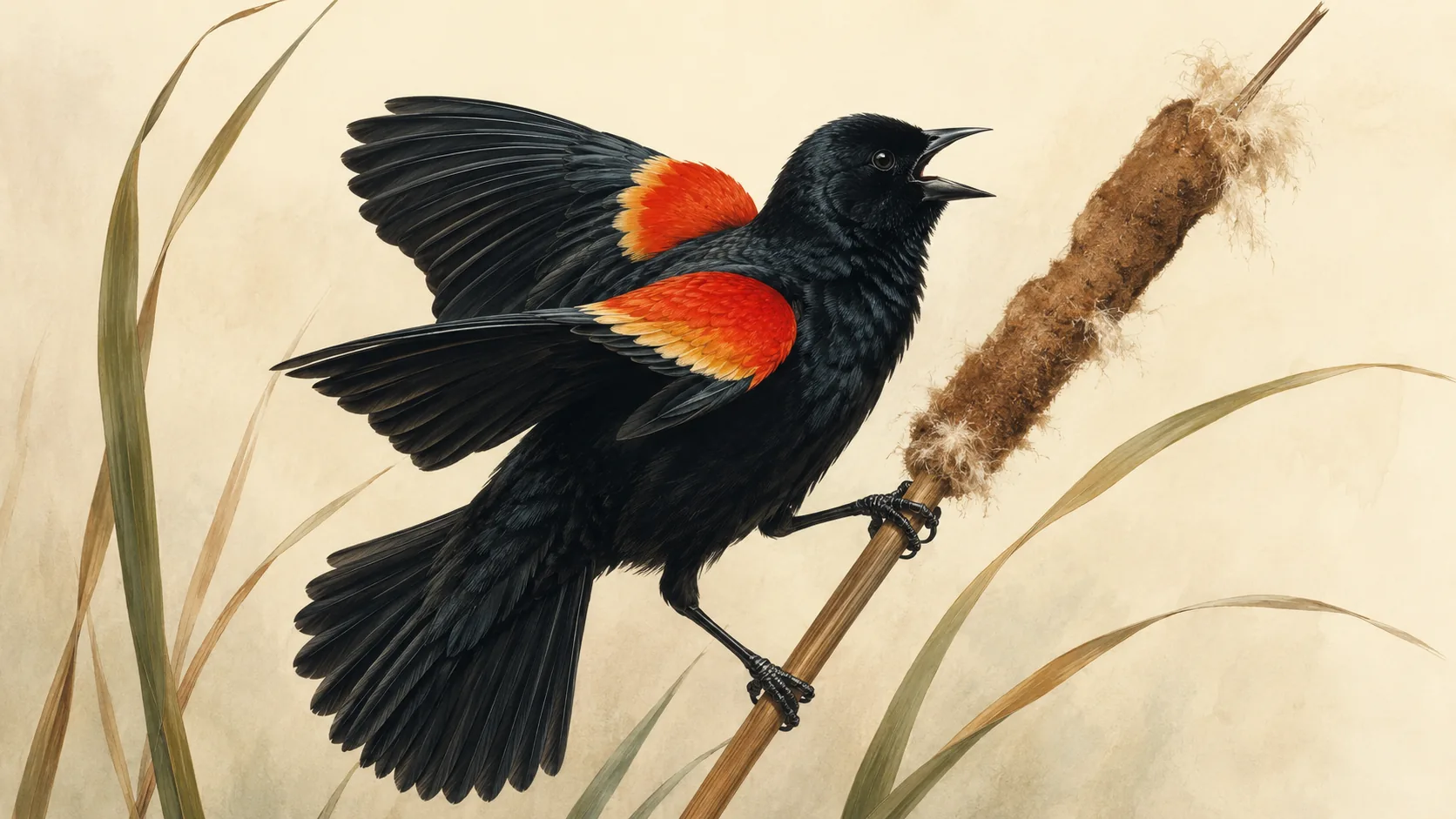
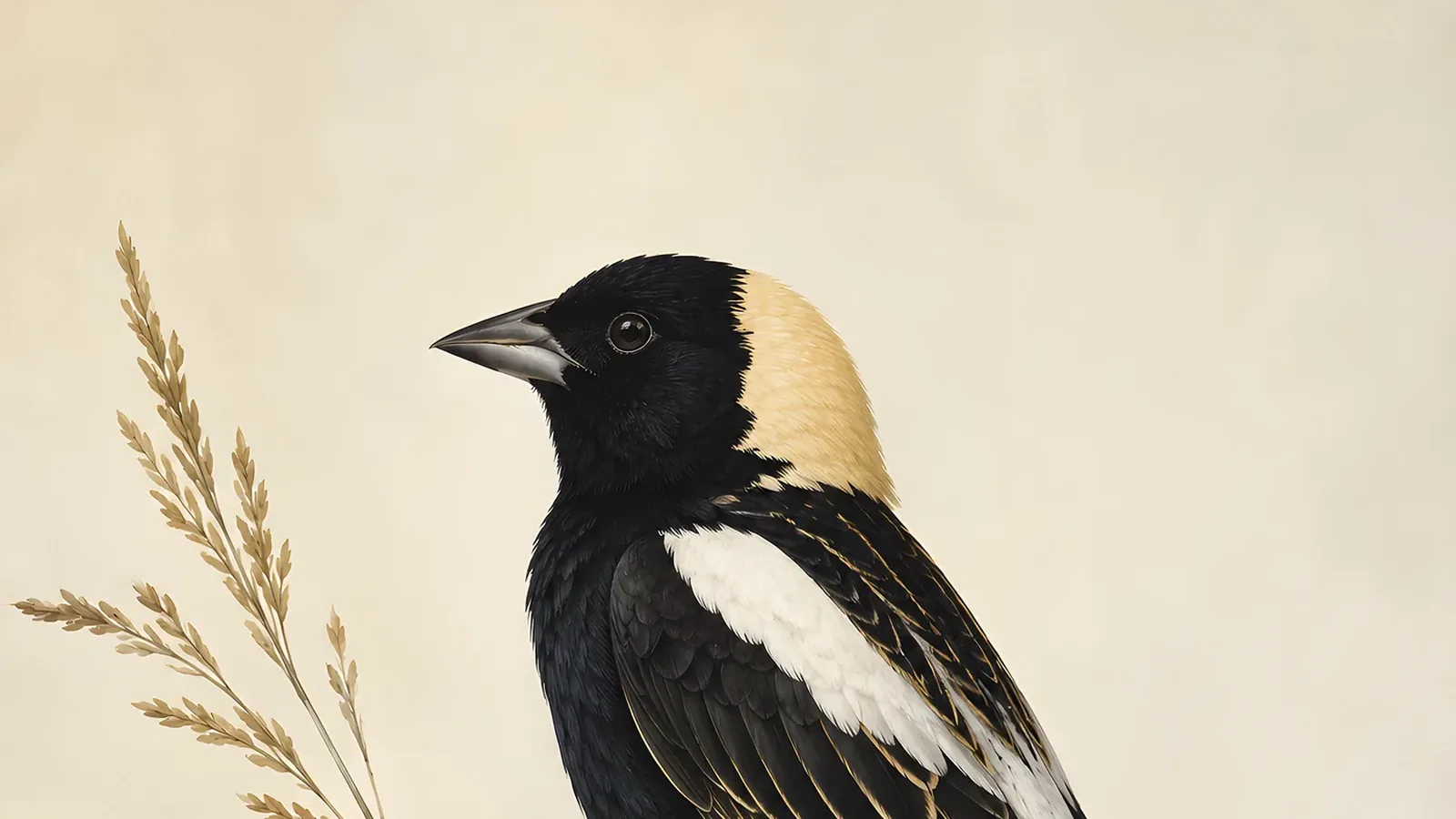
The name is a long-standing mislabelling. The Eastern Meadowlark is not related to the larks of Europe and the Old World - family Alaudidae - despite the open-country habits and the resonant song that invite comparison. It belongs to family Icteridae, the New World blackbirds and orioles, which includes the Red-winged Blackbird, the Bobolink, the Baltimore Oriole, and the grackles. Its closest relatives sing from cattail marshes and tropical canopies, not skylarking over English meadows.
The confusion is understandable but the phylogeny is unambiguous. Early European settlers in North America applied familiar names to unfamiliar birds, and “meadowlark” stuck. The bird’s chunky silhouette, its preference for open country, and its clear, carrying song all suggest a lark to someone who has grown up with them. The genetics say otherwise.
Range and the grassland decline
Sturnella magna breeds across eastern North America from southern Canada through the Great Plains and eastern United States, south through Mexico and Central America into South America, with a separate population in Cuba. In Kansas and the broader midcontinent grasslands, both Eastern and Western Meadowlarks breed close together, and where their ranges overlap the two species coexist by singing past each other.
That range is shrinking from the edges, and most of the middle is thinning fast.
The North American Breeding Bird Survey, which has tracked breeding birds continuously since 1966, records an average annual decline of roughly 2.6 to 3.3 percent per year for S. magna, resulting in a cumulative population loss of approximately 75 percent since the survey began (BBS data, USGS Patuxent Wildlife Research Center). In New England and the Mid-Atlantic region the losses exceed 95 percent over the past 50 years, according to the Vermont Center for Ecostudies. The IUCN lists the species as Near Threatened, with a declining population trend.
The Eastern Meadowlark is one of the representative casualties of what Rosenberg et al. (2019, Science) documented as the steepest magnitude of loss among North American breeding biomes. Grassland birds as a group lost more than 700 million individuals - a 53 percent reduction - across 31 species since 1970. The Eastern Meadowlark, tied to the very habitats that have declined most severely, sits near the centre of that loss.
The cause is structural, not subtle. Small mixed farms with pasture, hayfields, and ungrazed meadow margins are being consolidated into large row-crop operations or converted to development. The farms that once anchored Eastern Meadowlark populations across the eastern states are simply gone, and the fields that replaced them offer nothing a ground-nesting grassland bird can use.
Diet
Through the warmer months the Eastern Meadowlark is almost entirely insectivorous. Grasshoppers and crickets dominate in summer, supplemented by beetles, caterpillars, grubs, ants, and other invertebrates found by probing the soil and turning over grass clumps with that long bill. The foraging posture is methodical - the bird walks with the deliberate attention of something reading the ground rather than scanning it.
In autumn and winter, when insects are scarce, seeds and waste grain take over. Seeds of grasses and weeds, along with whatever grain remains in harvested fields, account for more than a quarter of the annual diet across the year (Audubon Field Guide, National Audubon Society). The bird does not typically come to feeders, and it rarely ventures into dense cover. It is a creature of the open, even when foraging.
Breeding
The male Eastern Meadowlark is polygynous. He holds a grassland territory by song and posture, attracting two or rarely three females to nest within his defended patch. The territory is maintained through continuous singing and occasional direct confrontation - he gives the sharp dzzhrrt alarm when a rival approaches his boundary, and the exchange of calls can go on for some time before one bird retreats.
The female builds the nest alone over four to eight days. It is a compact, domed cup of woven grasses with a side entrance and a short runway of tamped-down grass leading in - architecture that conceals the nest from above and channels approach from only one direction. The structure is set directly on the ground in dense grass, often underneath an overhanging clump of vegetation that further hides it from aerial predators.
She lays three to six eggs, white with brown and purple speckles concentrated at the broad end. Incubation is 13 to 14 days, entirely by the female. The young leave the nest at 10 to 12 days old, still unable to fly, and remain with the parents for at least two weeks after that. A female typically raises two broods in a season in warmer parts of the range. The timing of hay cutting is among the most direct human influences on nest success - mowing in late May and June destroys active nests and broods that cannot escape in time.
The Eastern Meadowlark is a bird whose breeding biology is perfectly fitted to a landscape that is being systematically dismantled. Ground nest. Dense grass. Open field with no disturbance. Each year the window of suitable habitat gets a little smaller, and the two-brood strategy that once allowed recovery from local failure now runs into earlier and more frequent mowing, more thorough consolidation of field edges, and less ungrazed margin left between the crop and the fence.
The whistle from the fencepost is not a sound in decline because the bird is fragile. It is in decline because the fencepost is going, and the pasture behind it, and the farm that kept both. What remains is still worth hearing. What that whistle represents - a living grassland with enough structure to sustain a nesting pair across a full season - is worth considerably more.