Field Guide
Eurasian Blackbird
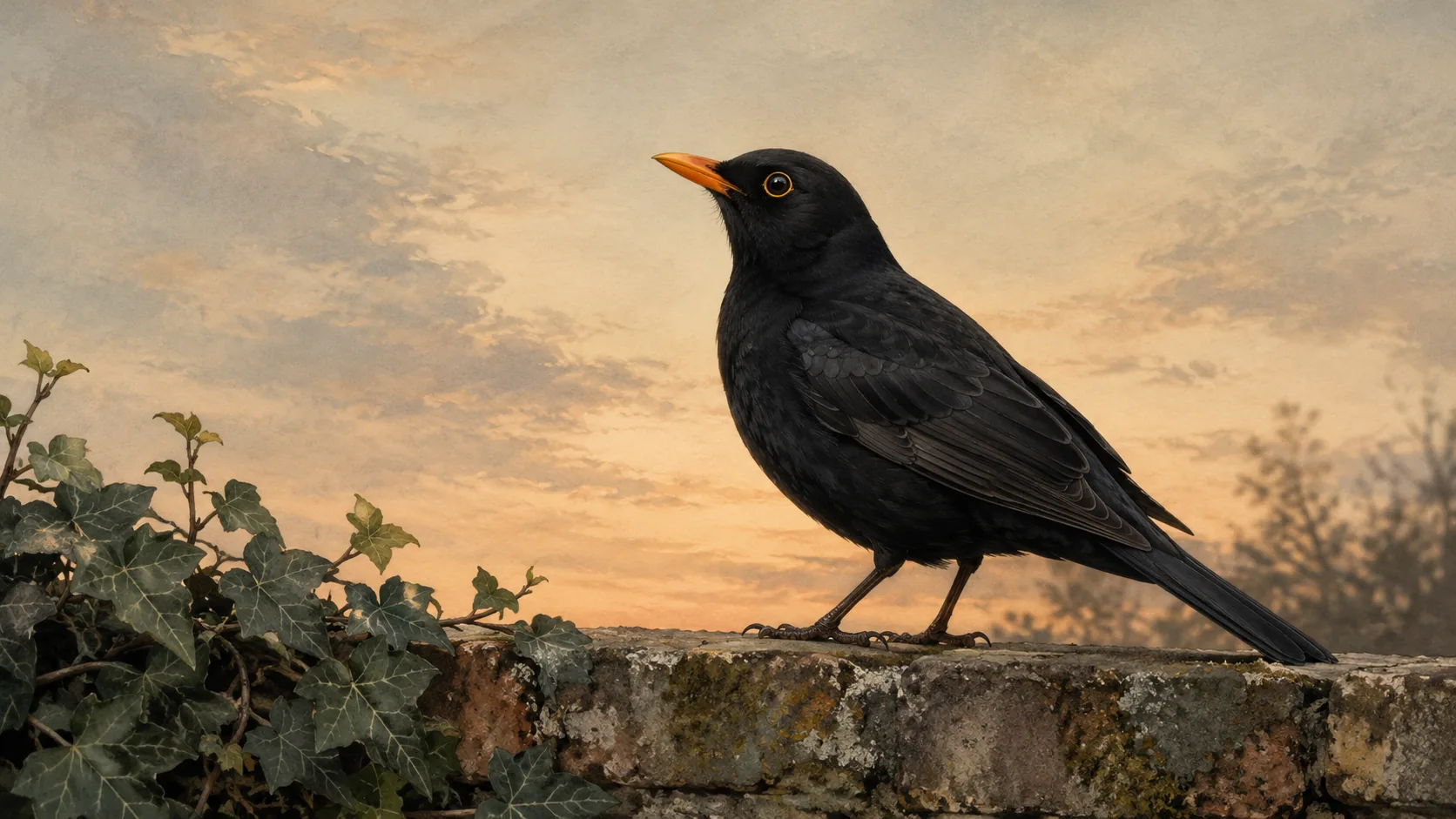
At four in the morning in a British April, before first light is visible to any human eye, a male Turdus merula opens his bill on a chimney pot and begins the dawn chorus. He is almost always first. Before the great tit, before the song thrush, before any other voice joins in, the blackbird sings into absolute darkness.
This is not merely a poetic detail. The RSPB identifies the blackbird as the habitual leader of the UK’s dawn chorus, and anyone who has spent a spring night in a British garden can confirm the sequence. The blackbird does not begin because he is bolder or louder than his neighbours. He begins because he can. His eye contains proportionally more rod cells than most songbirds of his size, giving him better low-light vision. He starts early because he can see what others cannot yet see.
That one fact changes how you watch every blackbird that lands on your lawn. He is a more capable, more precisely adapted animal than his ubiquity suggests.
What he looks like
The adult male is a study in high contrast and cannot be mistaken. He is entirely black - jet on the wings and back, slightly more matte on the belly - with a bright orange-yellow bill and a matching ring of bare skin around each eye. In winter the bill can dull to a brownish yellow, but that orange ring gives him away in any light. Length runs 23 to 29 centimetres, weight 80 to 125 grams, wingspan 34 to 39 centimetres, confirmed across multiple sources including measurements compiled by the Animal Diversity Web.
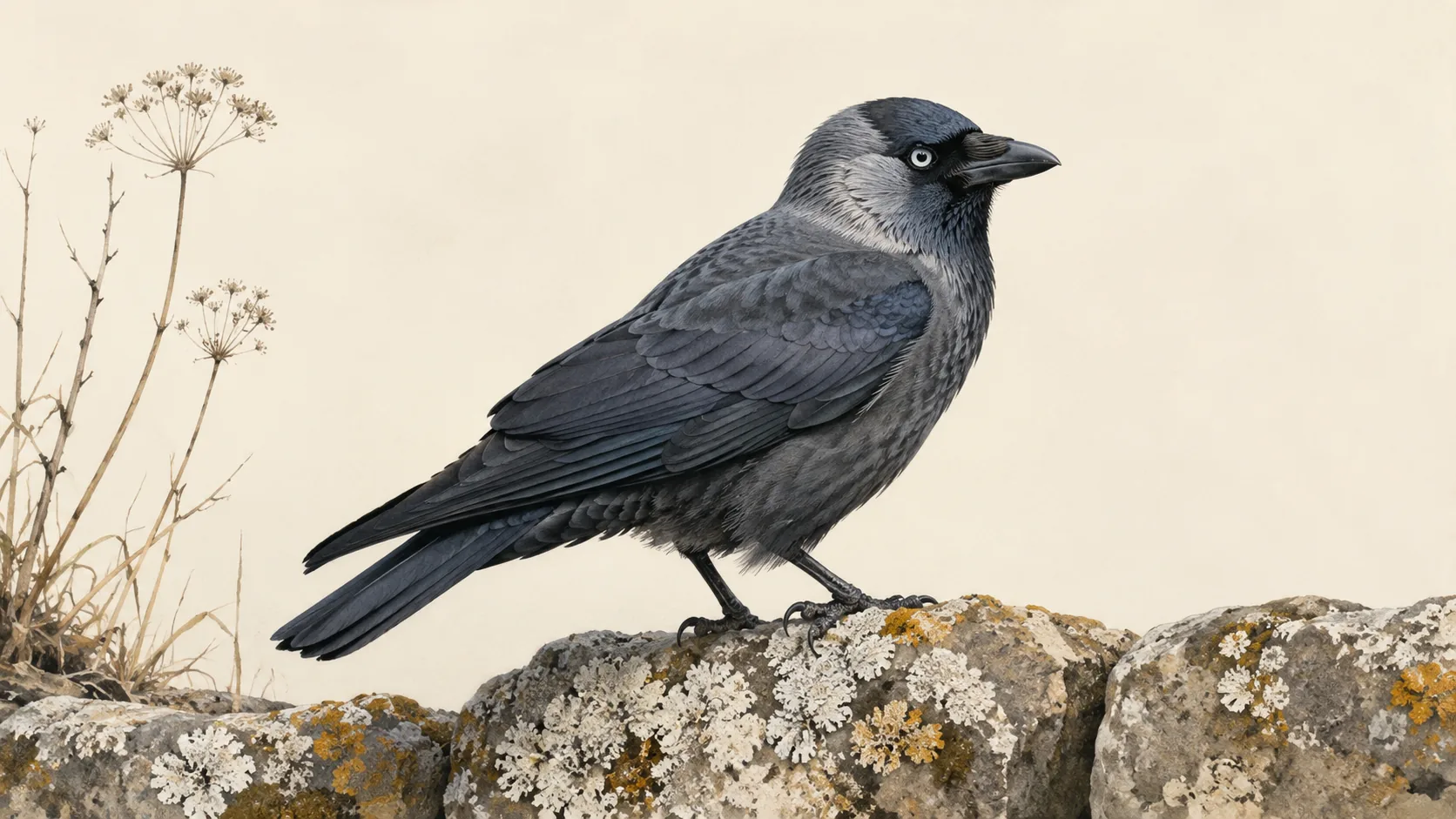
The female is a different bird visually. She is deep brown above, paler and streaked below, with a bill varying from brown to a dull yellow-brown. First-year birds of both sexes have a copper-streaked look that fades as they mature. There is no other resident British bird that could be confused with a male blackbird at any sensible distance. The common starling is iridescent, shorter-tailed, and spotted. The crow is larger and heavier-billed. The jackdaw has a grey nape and calls entirely differently.
Juveniles resemble females but carry a faint rufous mottling on the upperparts for their first summer - a detail worth noting if you find what appears to be an unusual female in midsummer.
What he sounds like
The song is the defining characteristic, and the standard field-guide word for it - ‘mellow’ - is accurate but undersells it. The blackbird sings in rich, unhurried phrases with a quality that suggests improvisation. No two males sound identical. Research on song learning in corvids and thrushes has established that young blackbirds learn their songs from neighbours during a sensitive period in their first year, then continue to modify their repertoire into adulthood. The result is that the blackbird in your garden carries, in his phrases, fragments of the songs he heard as a nestling on that particular street.
The alarm call is entirely different from the song: a loud, rattling ‘chook-chook-chook’, repeated insistently when a cat moves through the garden or a sparrowhawk passes overhead. You will learn to read your garden’s safety by whether the blackbird is singing or alarming.
Range and habitat across the year
The BTO’s breeding data shows blackbirds occupying approximately 95 per cent of UK survey squares year-round, a density matched by few other species. They are found from sea-level gardens to around 500 metres altitude, with presence thinning above that. In autumn, the resident population is joined by significant numbers of blackbirds arriving from northern Europe - Scandinavia and northern Germany particularly - where the species is migratory. These winter visitors are indistinguishable in the field from resident birds.
Habitat preferences are broad: gardens, parks, hedgerow country, deciduous and mixed woodland, scrub, and farmland with hedges all hold breeding birds. The BTO data rates villages and towns as peak-density habitat, which reflects both the abundance of earthworms in cultivated soil and the year-round availability of fallen fruit in gardens. The species is absent from open moorland, intensive arable fields without hedges, and the higher Scottish peaks.
Diet
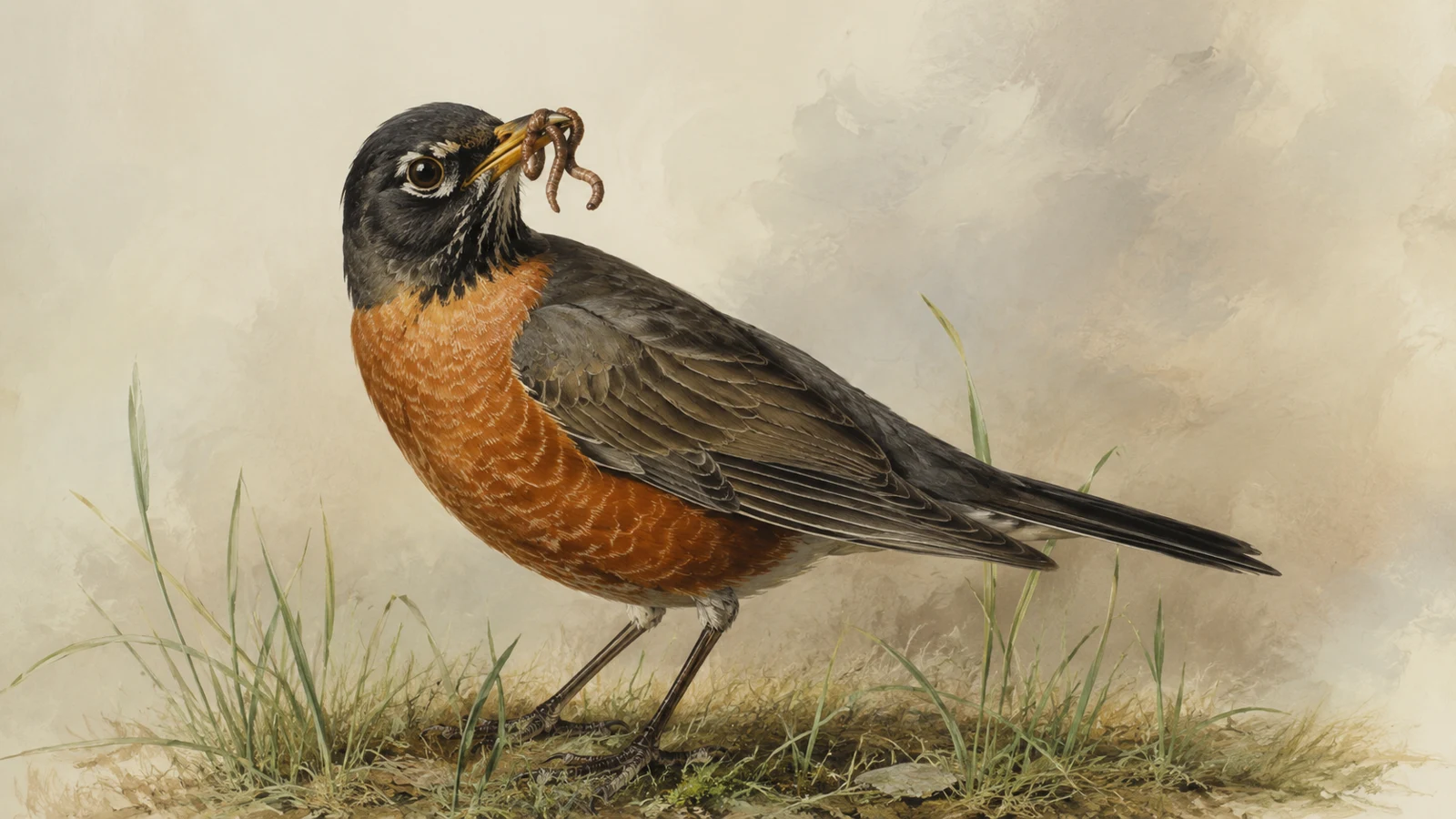
Earthworms form the dietary backbone, particularly during breeding season when the energetic demands of feeding nestlings are intense. A blackbird hunting on a lawn is doing something precise: she runs a few steps, stops, tilts her head - and there is debate about whether that tilt is primarily auditory or visual, though the balance of research suggests vision does most of the work at close range. She pulls the worm vertically, resisting the worm’s muscular grip, before flying back to the nest.
Outside the breeding season the diet shifts toward fruit. Hawthorn, elder, ivy, and crab apple berries are taken heavily in autumn and winter, and blackbirds are frequent visitors to windfall apples in British orchards. The Woodland Trust notes fallen fruit as a key winter resource. In hard frost, when earthworms retreat below the frozen layer, berry-bearing shrubs can be the difference between surviving the winter or not.
Breeding and nesting
The BTO’s nest recording data places the average first clutch date at 22 April, with a range from 22 March to 14 June. That averages three to four eggs per clutch, with incubation of 12 to 14 days carried out by the female alone. Both parents feed the chicks, which fledge in 13 to 16 days. Two to three broods per season is standard, with exceptionally productive pairs attempting five. The female builds the nest: a compact cup of twigs and plant material lined with mud, placed in dense cover - a thick hedge, a climbing rose, a dense shrub - often within two metres of the ground.
The nest structure is worth examining if you find an old one in winter. The mud lining is distinctive and sets blackbird nests apart from song thrush nests (which use a smooth mud cup with no grass lining above it) and from dunnock nests (which use no mud at all). The female carries mud pellet by pellet and moulds it with her breast.
A behaviour worth watching
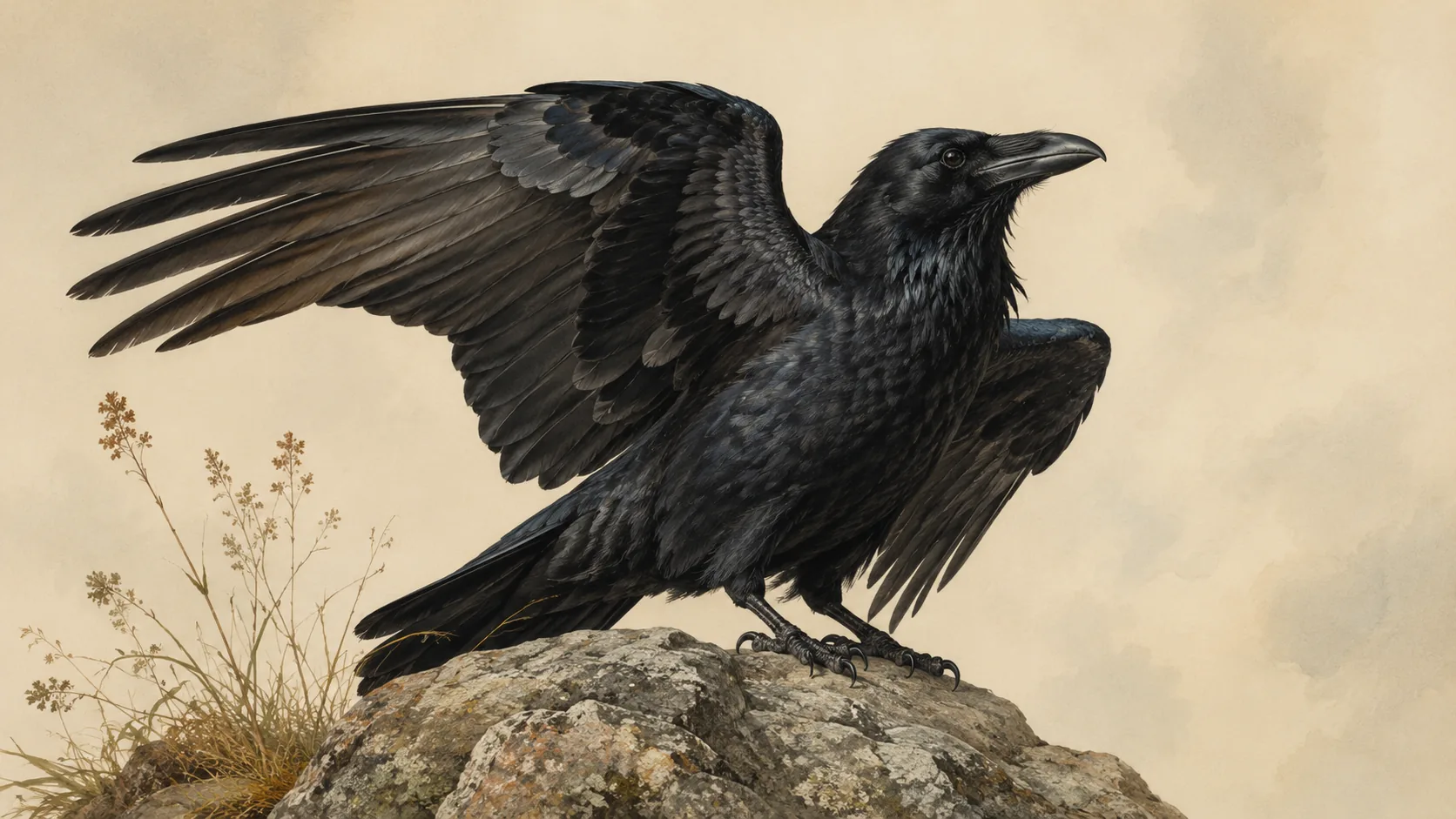
Blackbirds sunbathe, and they do it in a way that looks alarming the first time you see it. A sunbathing blackbird spreads one or both wings wide, droops them toward the ground, flattens the feathers, and holds perfectly still - sometimes with the bill open and the head tilted at an uncomfortable angle. First-time observers frequently believe the bird is dying or injured.
It is not. The likely functions are two: warming the plumage for comfort in cold conditions, and disrupting feather lice and other ectoparasites by heat. Some individuals have also been observed ‘anting’ - pressing themselves against an active ant nest and allowing the ants to move through their feathers, taking advantage of the formic acid the ants secrete, which may suppress parasites in the same way. The behaviour is not unique to blackbirds but it is more readily observed in them than in most species, because they do it openly on garden lawns and sunlit patches of bare earth.
The common and the overlooked
The blackbird’s conservation standing is Least Concern on the IUCN Red List, and its UK status is Green under the Birds of Conservation Concern framework - the lowest tier of concern. The BTO’s long-term monitoring records a 20 per cent decrease in UK population between 1967 and 2023, a figure that sits behind the Green listing and deserves more attention than it typically receives. A species can be abundant and declining simultaneously.
The blackbird was introduced, accidentally or deliberately, to Australia and New Zealand in the nineteenth century and now breeds throughout both countries as an established alien species. It has, in other words, demonstrated the full reach of its adaptability: a bird of the Palearctic that can colonise gardens in Melbourne without meaningful modification to its behaviour.
The male singing from your television aerial at 4 a.m. is, in this light, something more than common. He is the most accomplished urban ecologist in Britain - early-rising, sonically sophisticated, behaviourally flexible, and quietly declining. He warrants the attention he has not quite earned.
The blackbird is the first voice of every British spring morning. He earns the position by being able to see in the dark.