Free shipping to the US, Canada & Europe
State Guide
Utah's red birds divide by elevation. House Finches own the desert, Cassin's Finches the mountain belt, and Red Crossbills are nomads that may not stay.
July 9, 2024 4 min read
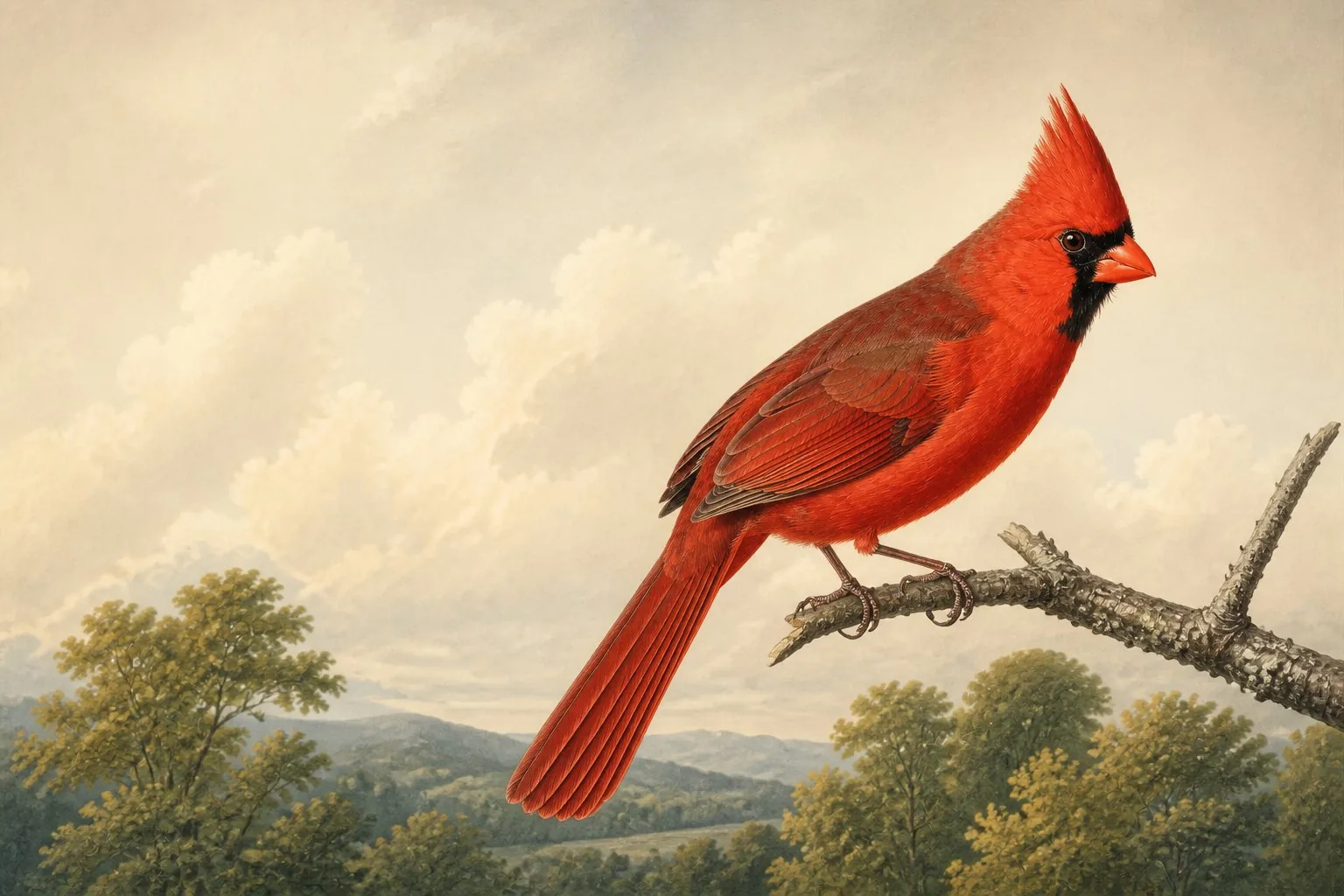
Stand at the base of the Nebo Loop Scenic Byway in early June and the bird above you is not the same species as the one behind you.
Behind you, a male Haemorhous mexicanus - House Finch - calls from a juniper on the desert flat, his head raspberry-red in direct sun. Above you, somewhere in the spruce belt at 9,000 feet, a Loxia curvirostra - Red Crossbill - is prying open a cone with a bill that looks like something went wrong. Utah stacks distinct habitat bands from salt flat to alpine. The red birds sort themselves by elevation and do not mix.
The House Finch is Utah’s most democratic red bird. He breeds statewide, from St. George in the south to Logan in the north, in suburbs, canyon mouths, and desert towns. Males vary considerably in color - from pale orange-yellow through deep raspberry - because carotenoid pigment comes directly from food. A male raised on poor desert fare comes out dull. One with access to richer fruit and seed comes out vivid.
The Cassin’s Finch, Haemorhous cassinii, occupies the band above. He prefers the Engelmann spruce and subalpine fir forests of the Wasatch and Uinta ranges. His red is a cleaner, pinker tone than the House Finch - more rose crown than raspberry hood - and his posture is more upright, his crest slightly peaked. The two finches overlap at forest edges and both turn up at mountain feeders, which is how most visitors get them confused. The simplest field mark: Cassin’s has heavier streaking on the breast and a notched tail that catches the eye in flight.
Then there is the crossbill.
The Red Crossbill spends time in Utah’s mountain forests in any given year - but calling him a Utah bird in the way you would call the House Finch a Utah bird misrepresents the situation. Crossbills are irruptive nomads. They follow cone crops across the continent and do not hold territories in the way most songbirds do. When the spruce and fir crop is good in the Wasatch, crossbills appear in numbers. When it fails, they move on. Long-term monitoring by ornithologists across the West has documented this pattern repeatedly: crossbills are present until the food runs out, then they are elsewhere.
Their bill is the argument. The crossed mandibles, which look like a manufacturing error, are built for one task: insert the closed bill into a cone scale, open it laterally, and the scale springs apart. No other North American bird does this. The trade-off is complete dependence on conifer seed, which means they go where the cones are and nowhere else.
Utah’s Red Crossbills are not residents tethered to a territory - they are specialists following a resource, and the resource moves.
This is an important distinction for anyone planning a birding trip around crossbills. You can reliably find House Finches at any Utah feeder year-round and Cassin’s Finches in the Wasatch forest belt in summer. You find crossbills by watching for them, checking recent eBird reports, and accepting that their presence is conditional.
Utah has two genuinely scarce red birds, both at the northern edge of their ranges. The Vermilion Flycatcher, Pyrocephalus rubinus, turns up along the Virgin River corridor near St. George - a burning red-orange male, small, tail-pumping, hunting from low perches near open water. The Summer Tanager, Piranga rubra, is a late-spring possibility in cottonwood riparian habitat along the Colorado River drainage near Moab. Neither is reliable north of Washington County.
| Elevation band | Species to expect |
|---|---|
| Desert and towns (below 6,000 ft) | House Finch, Vermilion Flycatcher (south), Northern Flicker (red-shafted) |
| Gambel oak and mixed forest (6,000 - 8,000 ft) | House Finch, Cassin’s Finch |
| Spruce-fir and subalpine (above 8,000 ft) | Cassin’s Finch, Pine Grosbeak, Red Crossbill (irruptive) |
The Nebo Loop is particularly useful for moving through all three bands in a single drive. For backyard birders in the Wasatch Front, House Finches show up at platform feeders year-round and Cassin’s Finches move down to suburban feeders in winter when mountain food runs short. Sunflower seed draws both. The Cassin’s is the more satisfying find.
The red birds of other states - the orange-toned finches of Michigan, the Arkansas summer species, the Ohio and Illinois feeder regulars - share the same carotenoid pigment logic as the House Finch: color is dietary, not fixed, and the brightest birds in spring are the ones that ate well in autumn. Utah’s crossbill is the outlier. His red is not an audition costume for a female’s appraisal in the way the cardinal’s molting process is. It is simply what he is, useful for nothing except being recognized by his own kind, in the brief window before the cone crop runs out and the flock moves on.
As an Amazon Associate we earn from qualifying purchases. Linked products are ones we genuinely recommend.
 July 9, 2024
 4 min read