Symbolism
What the owl actually means
Owls cannot rotate their heads 360 degrees.
The maximum is 270 degrees in one direction. The confusion is understandable: owls can rotate in either direction, so the effective visual field covers a full circle, but no single rotation completes it. Cornell Lab of Ornithology is unambiguous on this. The 360-degree figure circulates because it sounds remarkable and nobody checks it.
This matters because it tells you something about how owl symbolism works in general. The true facts are already extraordinary. The embellishments are unnecessary. And yet the embellishments are what most people repeat.
Why the owl looks the way it does
Owl eyes are not spherical. They are tubular, fixed in the socket, immovable. An owl that wants to look sideways must move its entire skull. This forces constant head-turning, which produces the watchful, swivelling quality observers have noted since antiquity.
The forward-facing eyes give owls a binocular visual overlap of about 70 degrees. Most birds have eyes on the sides of their heads. The owl faces you directly. This activates human face-recognition circuits in the same way car fronts do. The owl appears to be looking at you, specifically, with consideration. This is not a cultural projection. It is a predictable neurological response to a configuration that resembles an attentive human face.
Add the flat facial disc, the upright posture, the complete silence of approach (flight feathers are serrated at the leading edge and fringed at the trailing edge, suppressing aerodynamic noise above 2 kHz), and you have an animal that arrives without warning, faces you directly, and appears to study you with focused attention. It also has asymmetric ears hidden under its feathers, placed at different heights on the skull, allowing it to triangulate sound in three dimensions and catch prey under snow by hearing alone.
Pre-scientific observers across every inhabited continent watched an animal that appeared to perceive invisible things, arrive from nowhere, and never look away. The symbolism that accumulated around this is not surprising. What varies is whether cultures read those qualities as threatening or admirable.
Athens and the specific owl on the coin
The Greek association with wisdom was never about owls in general. It was about one species: Athena noctua, the Little Owl, roughly the size of a fist, common in Athens’ olive groves, daylight-active enough to be seen in the city itself. The species is named after the goddess. The Barn Owl was too large and too associated with haunting farmsteads; the Little Owl nested in the cliff face of the Acropolis.
The Greek word for Little Owl was “glaux.” The word “glaukos” means gleaming, pale blue-green, the colour of sea-surface or clear eyes. Athena’s most persistent Homeric epithet is “glaukopis,” compounding glaukos with opis (eye, face). Scholars have argued for centuries whether this means bright-eyed, grey-eyed, or owl-eyed. The ambiguity is the actual story: the goddess and the owl share a characteristic piercing gaze. Homer uses the epithet across the Iliad and the Odyssey without resolving it.
After 510 BCE, the Athenian silver tetradrachm bore Athena’s helmeted head on the obverse and the Little Owl on the reverse, with an olive sprig and the letters ΑΘΕ. These coins were called “glaux” throughout the Mediterranean trading world. The phrase “bringing owls to Athens” was a proverb Aristophanes recorded - the ancient equivalent of carrying coals to Newcastle, because Athens was already full of owl-coins and actual owls.
Aristotle, in the Metaphysics, used the owl not as a simple wisdom symbol but as a precisely observed philosophical instrument: “As the eyes of bats and owls are blinded by daylight, so the reason in our soul is blinded before things which by nature are most obvious.” The owl masters darkness as the philosopher must master complexity. This is a more honest reading than the flat “owl equals wise” version that descended from it.
Rome: the inheritance and the tension
Rome absorbed Athena as Minerva and the owl came with her. But Roman popular belief was independently suspicious of owls, and the two traditions sat uneasily together.
Ancient sources record that owl calls preceded the deaths of Julius Caesar, Augustus, Agrippa, and the Emperor Commodus. Pliny the Elder, in Natural History, describes a dead owl nailed to a doorpost as a ward against evil. Roman witches were believed to transform into owls and suck the blood of infants - an association that would feed directly into medieval European witch iconography.
Minerva’s owl was therefore simultaneously prestigious and ominous. Wisdom and death, arriving in the same bird.
Georg Wilhelm Friedrich Hegel exploited this tension deliberately. In the 1820 Preface to the Philosophy of Right, he wrote: “The owl of Minerva spreads its wings only with the coming of the dusk.” He meant that philosophical understanding of any era comes only after that era has ended. Wisdom arrives too late to prevent, only to understand. This is the single most cited philosophical use of owl symbolism, and it works because it holds both the Greek wisdom and the Roman dusk-and-death readings simultaneously.
Celtic: the night-hag and the punished woman
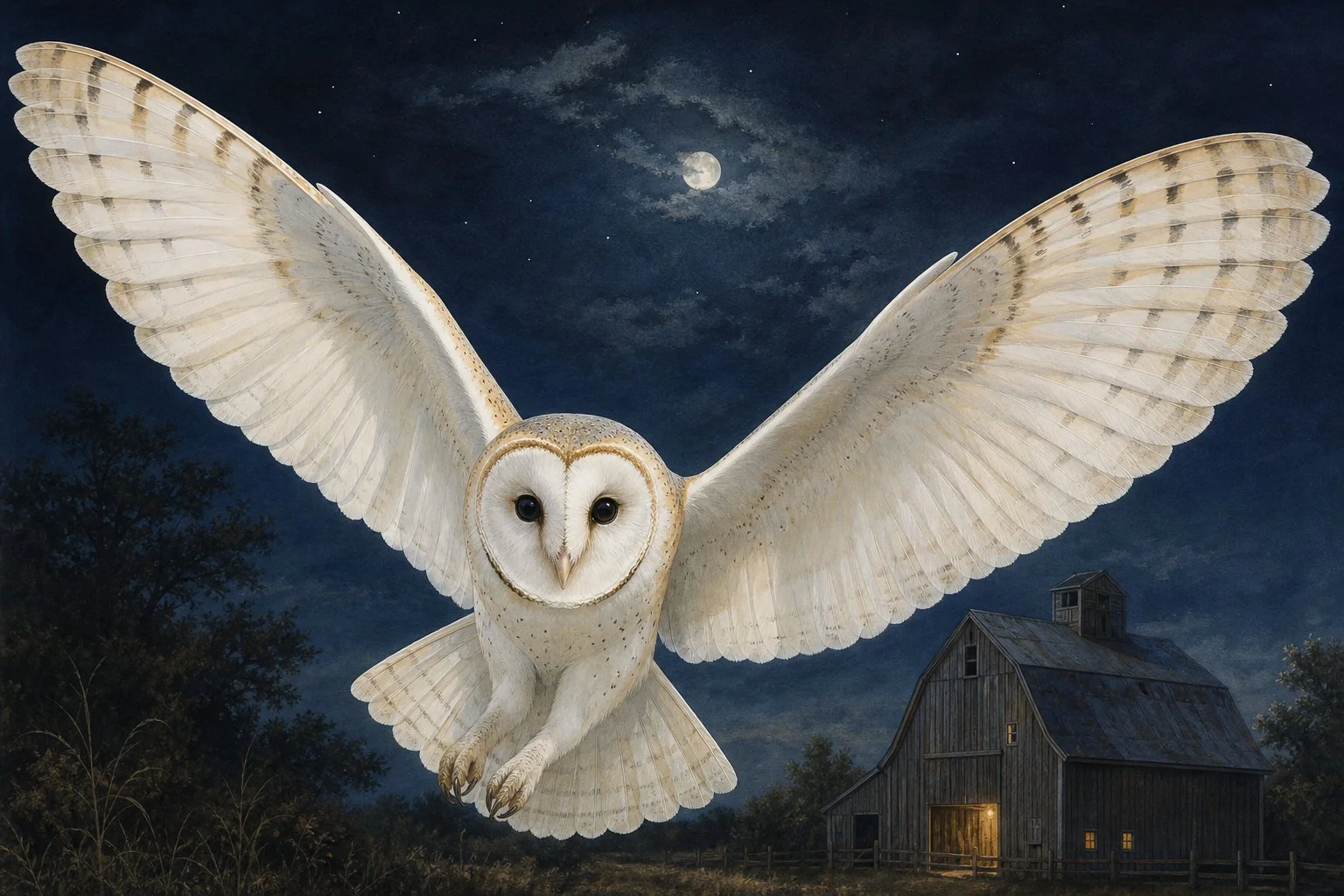
In Scottish Gaelic, the standard word for owl is “cailleach-oidhche” - old woman of the night. The Barn Owl variant is “cailleach-oidhche gheal,” the white old woman of the night. The Cailleach is a major figure in Scottish and Irish mythology: a divine hag of winter, storms, and the cycle of death and renewal. Owls belong to her. The association is with the crone aspect specifically, not the maiden or mother. This is dark knowledge, not comfortable wisdom.
The most specific and documented Welsh source is the Fourth Branch of the Mabinogi. Blodeuwedd is a woman created from the flowers of oak, broom, and meadowsweet by the magicians Math and Gwydion, made as a wife for Lleu Llaw Gyffes because a curse prevented him marrying a human woman. Blodeuwedd takes a lover and conspires to kill her husband. When Gwydion tracks her down, he transforms her into a Tawny Owl as punishment.
His words, from the text: “You shall not dare to show your face at the light of day ever again, and that through fear of all the other birds. All the other birds will be hostile to you - and it shall be their nature to strike you, mob you and drive you away wherever they find you.”
The word “blodeuwedd” in Welsh means both flower-face and owl-face, referring to the owl’s flat facial disc. Her name was always a pun on her origin and her fate. Her punishment is the behaviour now known as mobbing - the documented anti-predator response in which small birds aggressively harass owls. The myth describes actual ornithology.
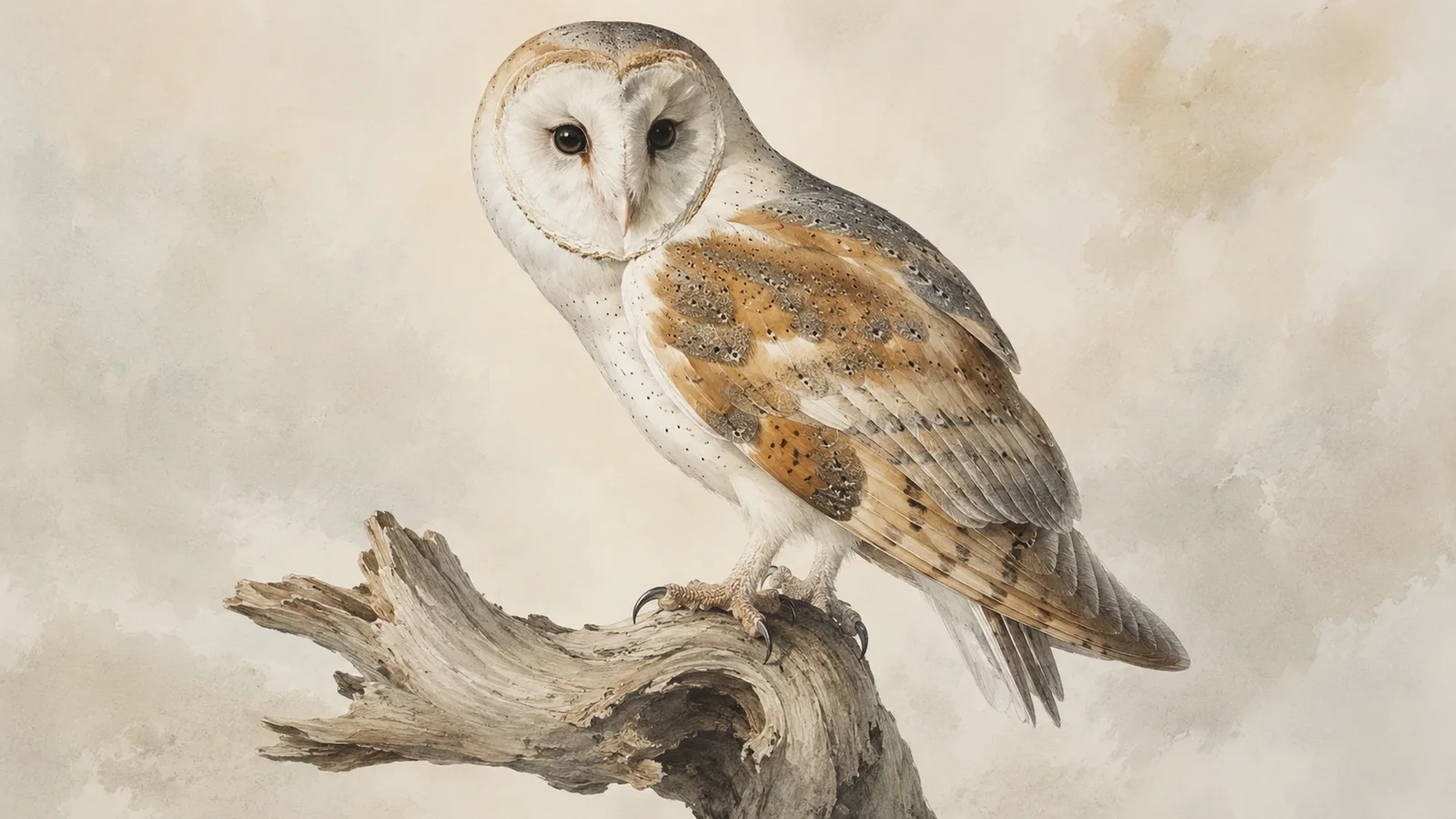
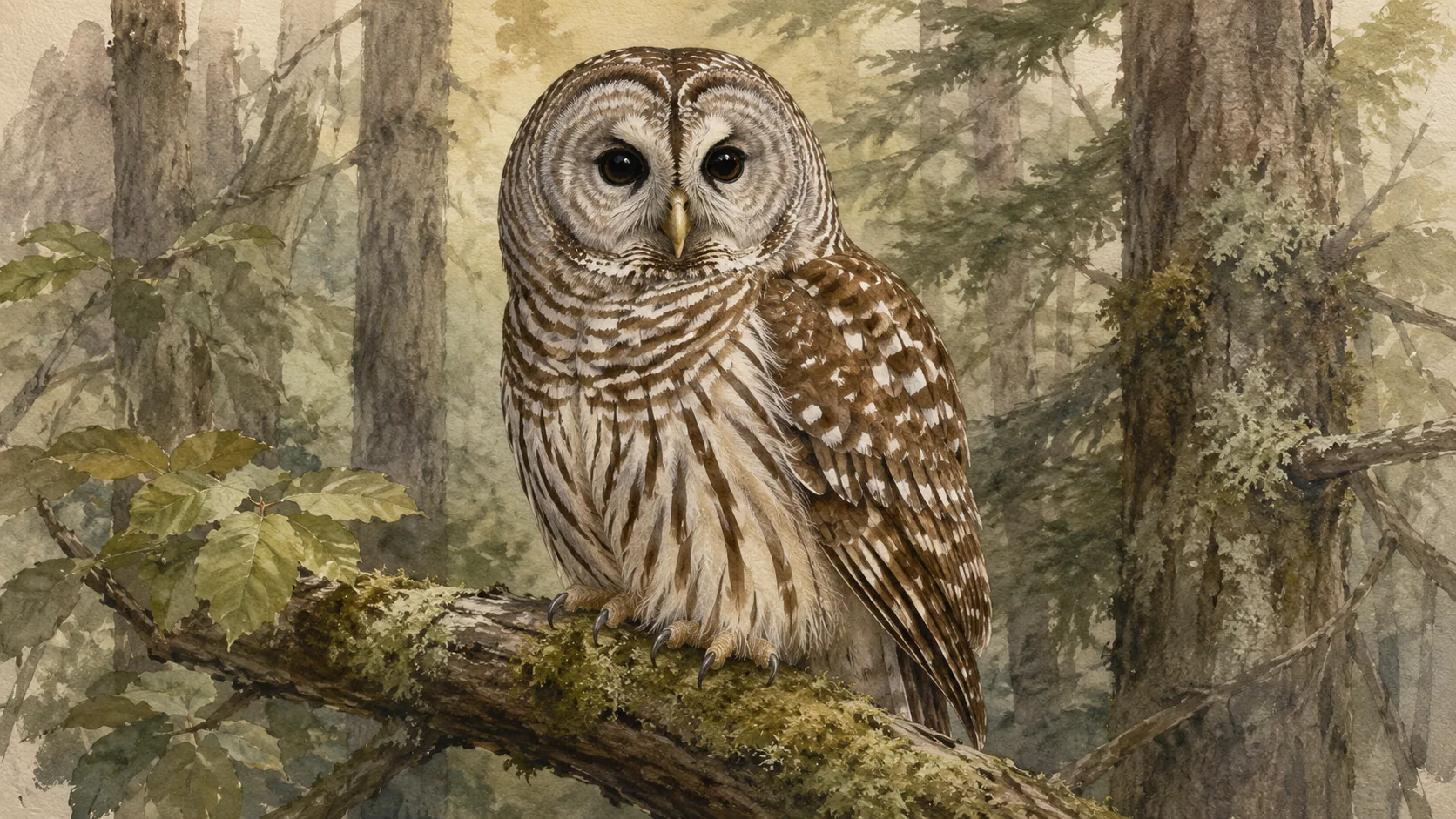
The Welsh Tawny Owl is the emblem of betrayal and banishment. In England, the Tawny Owl is the bird whose call sounds like “twit-twoo” and which most people associate with cosy autumn evenings.
Native American: by nation
There is no “Native American” view on owls. Stating one is an editorial error that erases documented differences between specific nations.
The Navajo (Diné) understand owl calls as warnings of death or as signs that a chindi - the malevolent remnant of a dead person’s spirit - is nearby. Traditional Navajo teachings include injunctions against touching owl feathers or keeping owls near the home. Medicine people (hataali) may work with owls in ceremonial contexts, but outside that initiated practice the bird carries genuine danger.
The Apache taboo is comparable and may be stricter in its social effects. Apache warriors historically would stand down if owls were heard before battle - not from dismissible superstition, but from the belief that owl calls indicated the dead were present and that engaging under those conditions compounded spiritual danger. This is documented in 19th century military and ethnographic accounts.
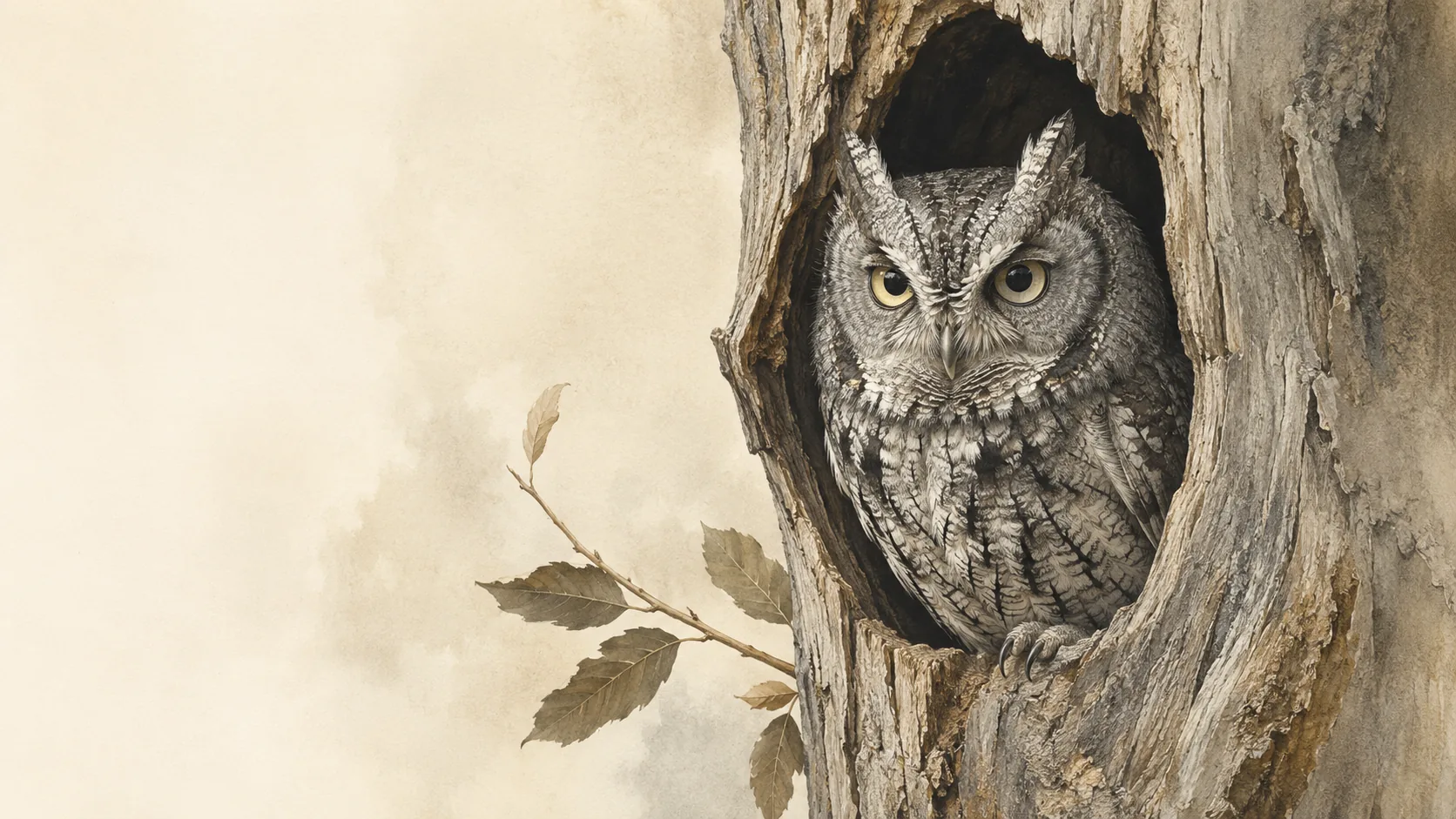
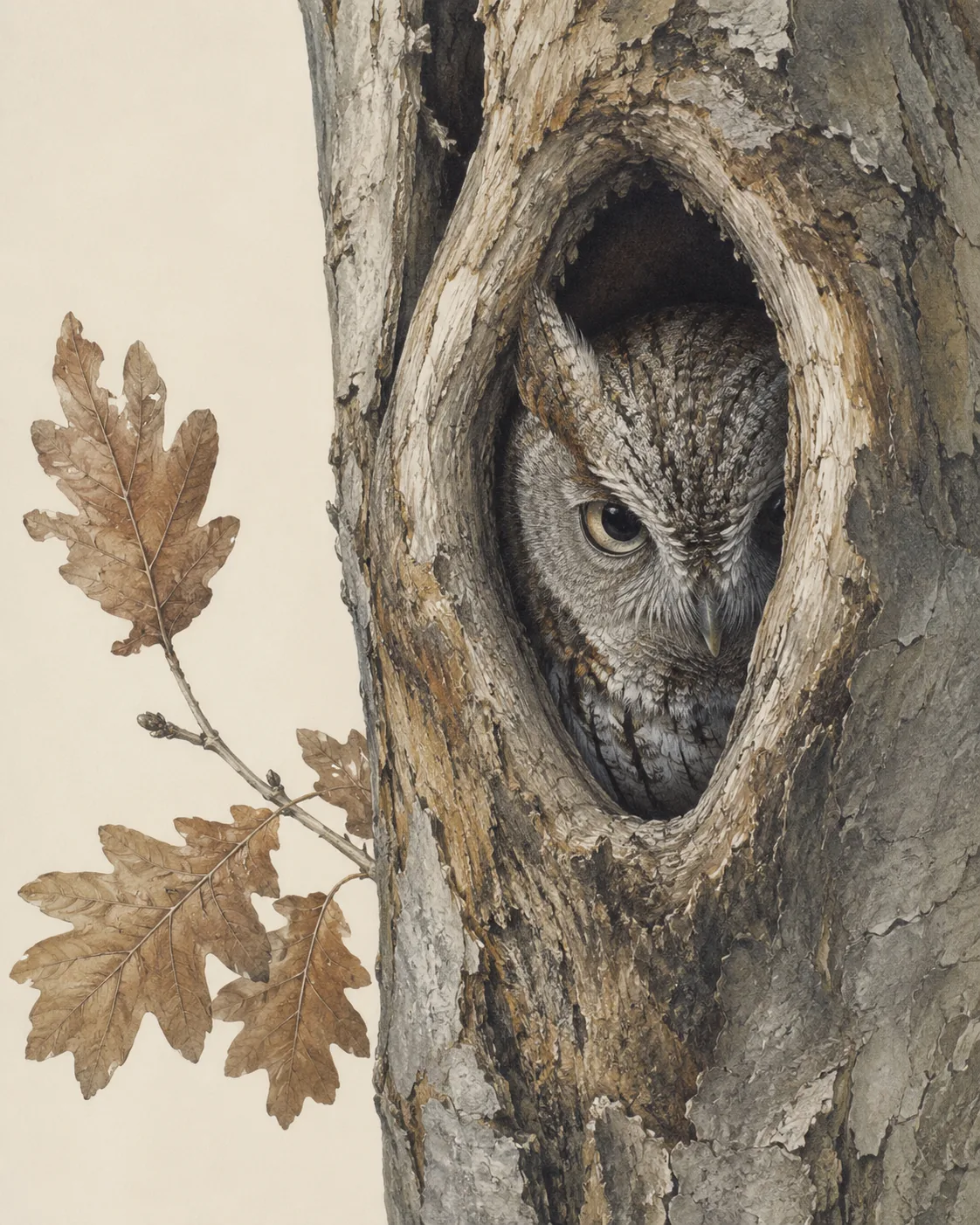
The Cherokee relationship is different in kind. Eastern Screech Owls specifically were consulted by medicine people for their knowledge of hidden things, including diagnoses of illness. Ordinary people feared owls; medicine people sought them out. The night vision was a literal metaphor for the knowledge of concealed things.
The Ojibwe (Anishinaabe) scholar Wendy Makoons Geniusz, writing in Algonquian and Iroquoian Linguistics, documents that the Midewiwin (the Grand Medicine Society) uses the owl image on high-level initiation scrolls on birchbark. Ojibwe medicine people placed a stuffed owl nearby while preparing medicine “so that it could see if they do it right” - the owl as witness to correctness. The owl occupies both registers in Ojibwe tradition: dangerous outside initiated ceremonial practice, valuable inside it.
The Lakota afterlife involves Hihankara, “Owl-Maker” - an aged crone who guards the entrance to the Milky Way, the path of the dead. She examines the tattoos of arriving souls. The marked pass; the unmarked are pushed back to earth to wander as ghosts. The owl governs the threshold between life and death.
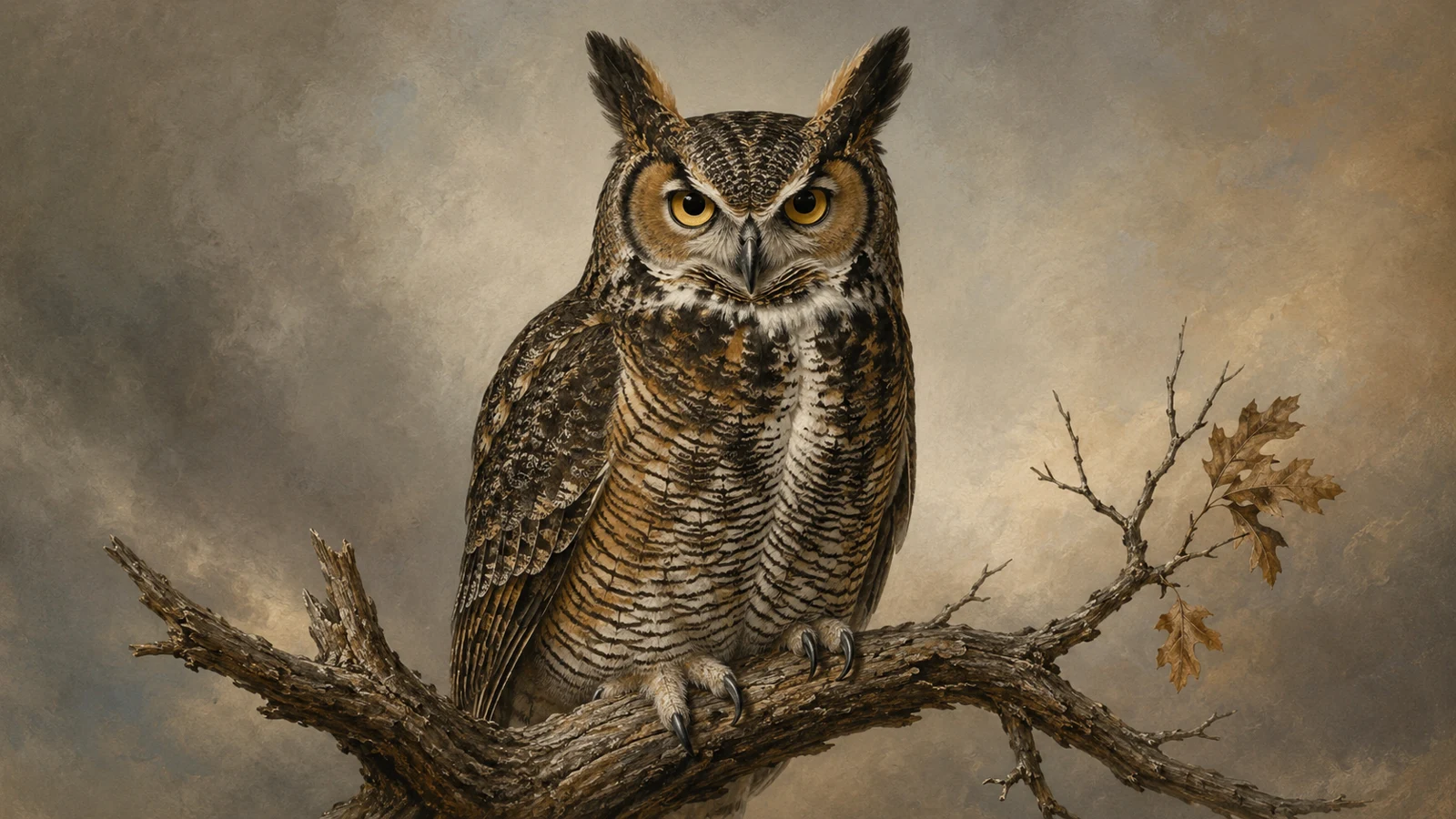
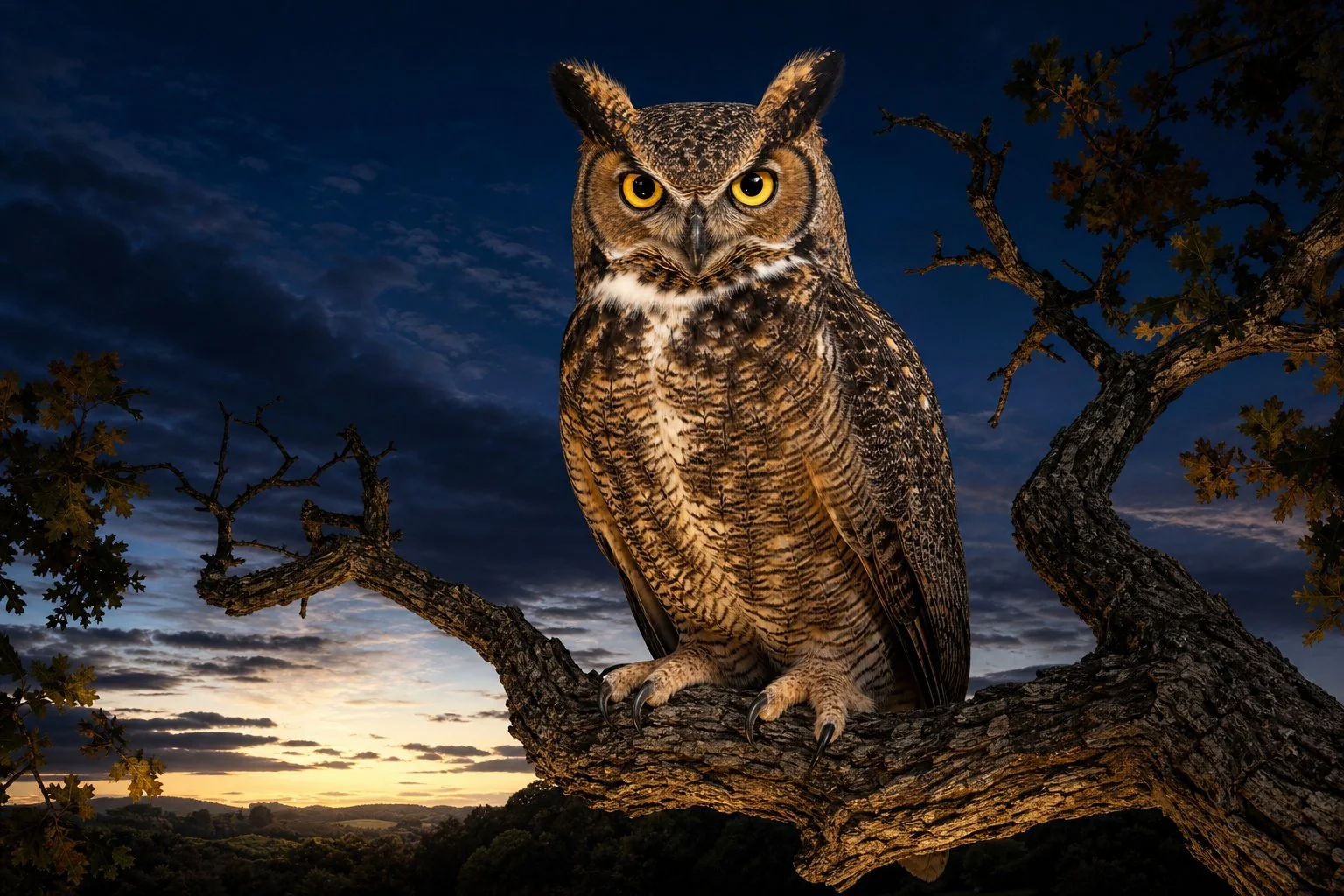
The Hopi Great Horned Owl, Mongwu, appears in a specific ceremonial role as a humorless counterpart to sacred clowns, reinforcing social order. The Burrowing Owl gives its name to the Burrowing Owl Clan. Here the bird is a social regulator. Among Tlingit and Northwest Coast nations, owls are clan animals on totem poles - lineage markers. Among the Muscogee (Creek), the Screech Owl Dance and the Horned Owl Dance are documented ceremonial forms.
Two nations on the same continent: one where hearing an owl after dark is so serious that mentioning it is taboo; another where owls are honoured in ceremony. There is no synthesis of these positions.
Aztec: the owl-man who became the devil
The Nahuatl word for owl is “tecolotl.” In Aztec cosmology, the couplet “tecolotl, in chiquatli” - owl, barn owl - signified the messengers of Mictlantecuhtli, Lord of the Dead, and Tezcatlipoca, god of discord and darkness. Sahagún’s Florentine Codex, compiled between 1545 and 1590 and the most comprehensive colonial-era Aztec ethnographic document, devotes Book 5 to evil omens and their remedies. Owl calls are among them. Mictlantecuhtli’s iconography includes owl feathers in his headdress. The owl guided souls through the nine levels of the underworld.
The compound “tlacatecolotl” - man-owl - became, by the 1540s, the term Spanish missionaries used to translate the word “devil” into Nahuatl. Two completely independent “owl equals evil” traditions - Aztec and Medieval Christian - collided under colonialism. The missionaries did not impose the association; they found it already there and merged the two. The convergence is documented in early missionary texts.
A folk saying still heard in rural Mexico: “Cuando el tecolote canta, el indio muere.” When the owl sings, the Indian dies. The colonial framing is uncomfortable, and the deep-time death association pre-dates European contact by centuries.
Medieval Europe and Shakespeare
Medieval Christian theology absorbed Roman owl-fear and amplified it through biblical association. Job 30:29 places the owl among mourning and desolation. Isaiah 34:11 lists owls among the ruins of Edom. In cathedral manuscript margins, an owl typically indicates heresy, sorcery, or moral corruption - a documented art-historical convention.
Hieronymus Bosch placed owls in nearly half of his surviving paintings. Scholars have argued for decades about what they mean. Earlier art historians read them as wisdom symbols, watchful moral observers. More recent scholarship argues Bosch’s contemporary viewers would have read them as the devil’s representatives, consistent with the dominant medieval Christian iconography. The Garden of Earthly Delights contains a prominent owl hidden in the hollow of a fantastical fruit structure in the central panel. Both readings have scholarly defenders. The ambiguity is not resolvable with current evidence.
Chaucer, in Parliament of Fowls (c. 1382), described the owl as “that of dethe the bode bringeth” - who brings tidings of death. This is the standard 14th century English literary reading.
Shakespeare used owls as death omens across ten plays without exception. In Macbeth, Lady Macbeth hears the owl and identifies it as “the fatal bellman, / Which gives the stern’st good-night.” In Julius Caesar, Casca sees an owl hooting at noon in the marketplace - a daylight owl, a powerful omen of unnatural events preceding the assassination. In Henry VI Part 3: “The owl shrieked at thy birth, an evil sign.” In Richard III: “Out on you, owls! Nothing but songs of death.”
Not once does Shakespeare use owl as a positive symbol of wisdom.
How the wisdom reading won
The sequence runs like this.
Aesop, probably 6th century BCE, wrote a fable in which an owl warns other birds about dangers they refuse to heed. The owl is wise because it stays silent and observant. This is the narrative origin of the archetype, separate from Athena.
Athens placed the Little Owl on its coinage from 510 BCE. The wisdom association spread across the Mediterranean with Athenian silver.
Rome imported the wisdom reading and competed with its own death-omen tradition. Medieval Europe suppressed the wisdom reading almost entirely for roughly a thousand years.
On April 10, 1875, Punch magazine published: “There was an owl liv’d in an oak / The more he heard, the less he spoke / The less he spoke, the more he heard. / O, if men were all like that wise bird.” John D. Rockefeller quoted it publicly in 1909. The Victorian nursery rhyme rehabilitation of the owl is arguably more important to modern symbolism than anything that preceded it.
A.A. Milne published Winnie-the-Pooh in October 1926. His Owl believes himself wise and knowledgeable but cannot spell, misremembers facts, and gives useless advice. This is a more honest rendering of the archetype than most: the pompous sage who is relied upon despite being wrong.
The Tootsie Pop commercial first aired in 1969-1970. A child asks various animals how many licks it takes to reach the centre of a Tootsie Pop. Only Mr. Owl, voiced by Paul Winchell, is the final authority. The commercial has never been off the air, making it one of the longest-running in American television history. Every American child who grew up after 1970 absorbed “owl equals measured adult authority” before they could read.
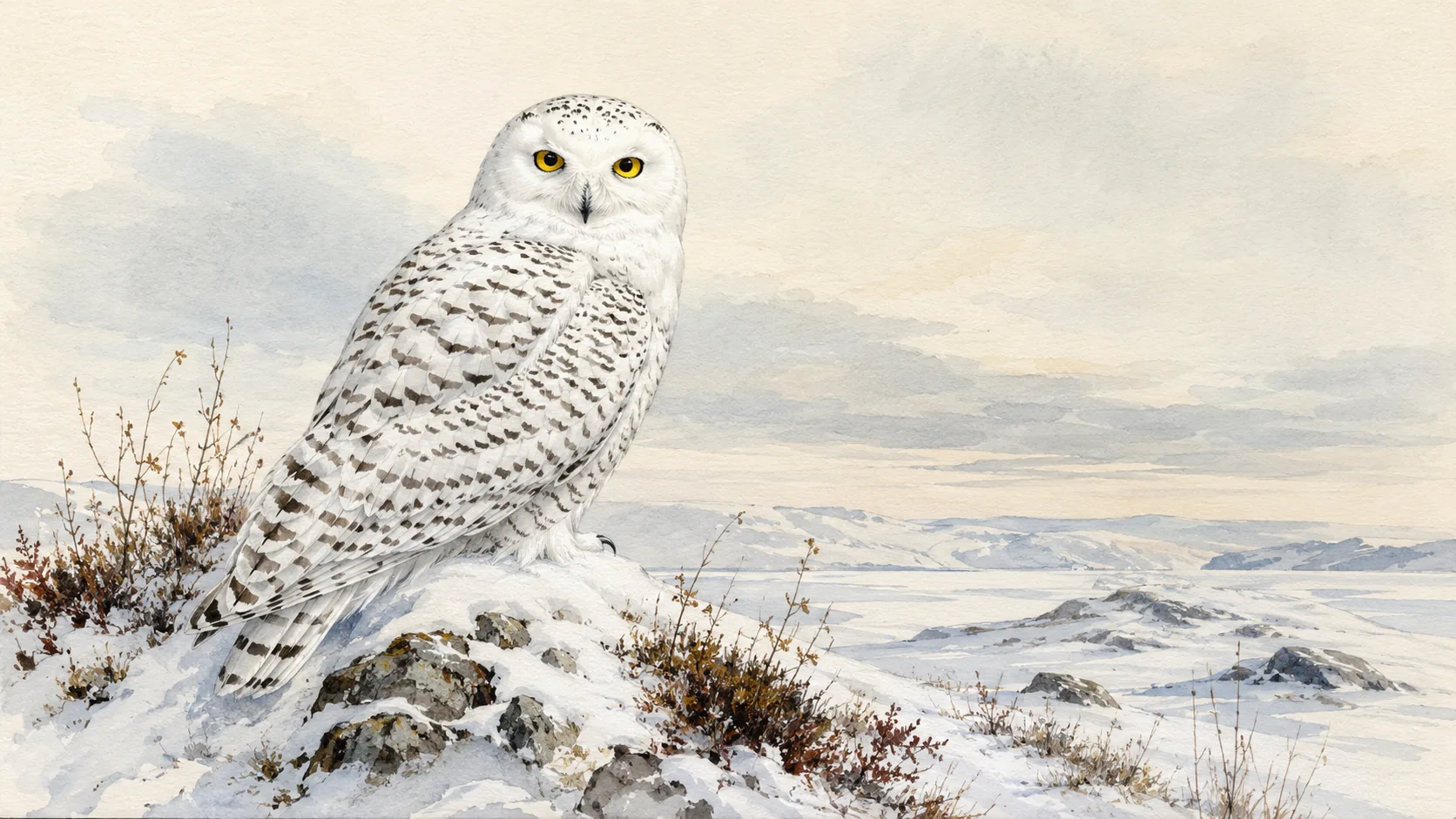
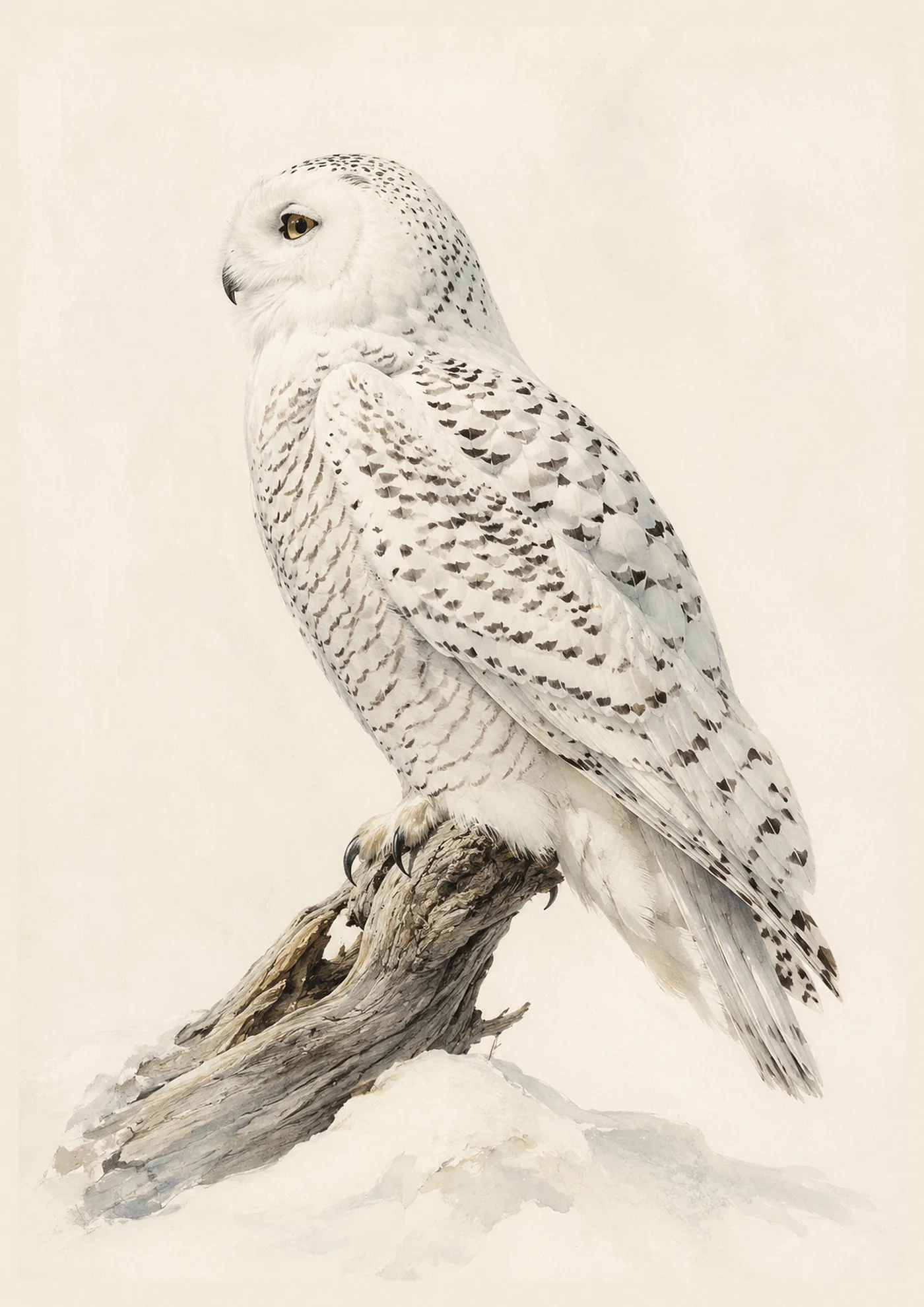
J.K. Rowling introduced Hedwig in 1997, a female Snowy Owl. The Snowy Owl is not native to Britain and is rarely seen there. Rowling chose the most visually dramatic owl species available. Hedwig’s death in Deathly Hallows is read by multiple scholars as marking the end of Harry’s childhood. The Snowy Owl became, for a generation, the legible shorthand for a wizard’s loyal and intelligent companion.
The wisdom reading won not because it was the majority position. It was never the majority position. It won because it attached to one specific prestigious cultural tradition in a city-state that happened to put birds on coins, and then it got laundered through Victorian children’s verse, American advertising, and one of the best-selling novel series in publishing history.
Across most of recorded history, in most of the world’s cultures, the owl meant something was about to die. The cosy sage in the oak tree is roughly 150 years old.