Field Guide
Yellow-billed Magpie
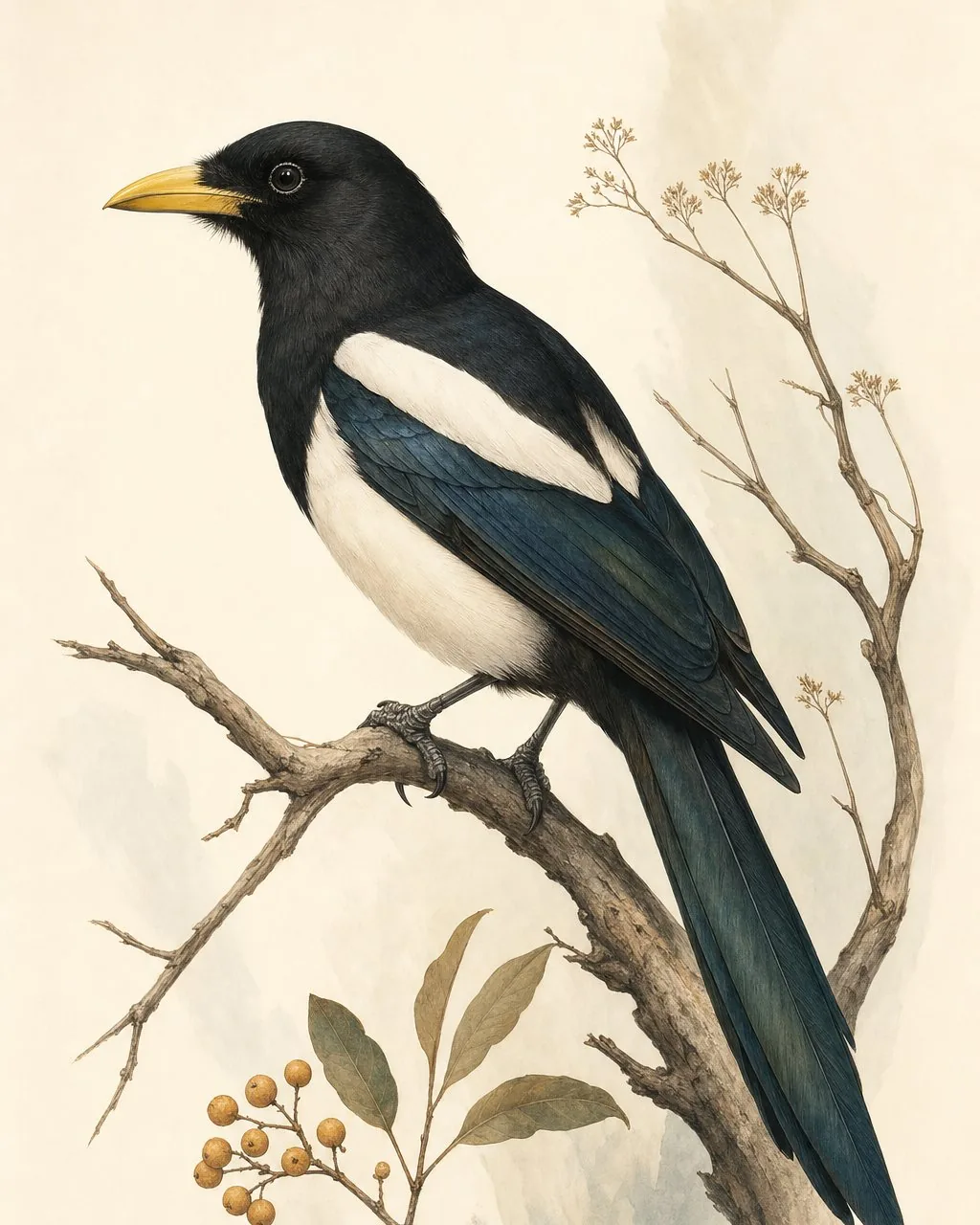
Drive north out of Sacramento in late afternoon and you’ll see them in the valley oaks along the roadsides - long-tailed, iridescent black and white, the yellow bill and yellow facial skin catching the low sun. Pull over and watch and you will quickly see that each bird is watching you back, with that corvid assessment that never quite leaves you comfortable. The Yellow-billed Magpie is not a subtle animal. It is also found nowhere else on Earth.
In 2004, half of them were dead within eighteen months. The story of how that happened, and what it revealed about the species’ vulnerability, is one of the more unsettling wildlife events of recent decades.
What It Looks Like
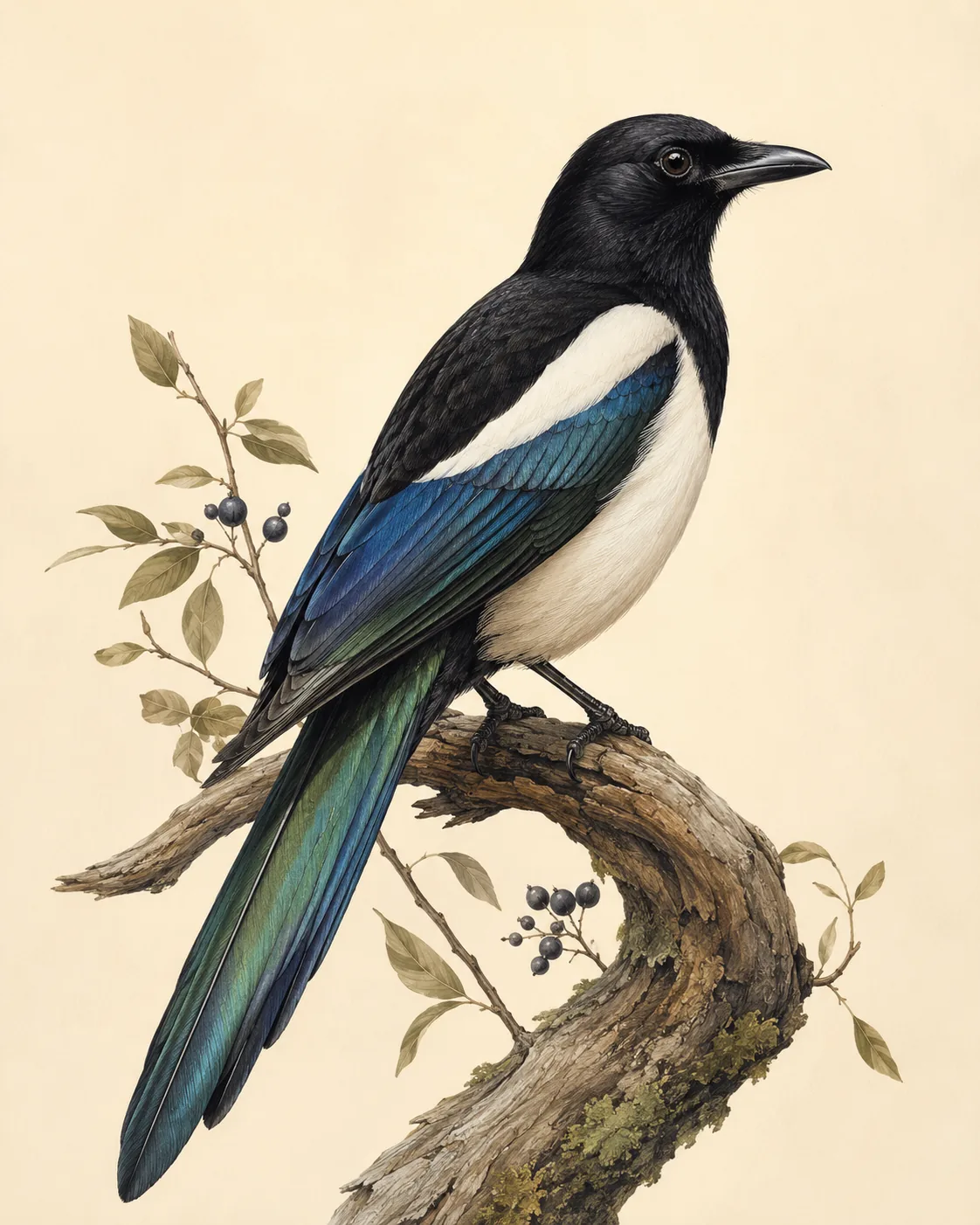
The Yellow-billed Magpie is structurally identical to the Black-billed Magpie of the western US interior - same bold black-and-white body plumage, same extraordinarily long iridescent green-blue tail, same large size among songbirds. The distinction is in the bare parts: where the Black-billed Magpie has a black bill and no facial skin, the Yellow-billed Magpie has a bright yellow bill and a patch of bare yellow skin around and below the eye.
That yellow facial skin is visible from a surprising distance in good light. In flight, both species show the same diagnostic pattern: white wing patches, black head, and a tail so long it makes up nearly half the bird’s total length.
In the hand - or in photographs - the two species are easily separated. In the field at range, the yellow of the bill and face is the immediate marker.
The iridescence on the wings and tail shifts between green, blue, and purple depending on viewing angle and lighting conditions. The body is otherwise flat black and pure white with clean borders.
| Measurement | Range |
|---|---|
| Length | 46 - 48 cm |
| Weight | 140 - 175 g |
| Wingspan | 58 - 62 cm |
| Lifespan | 5 - 10 years |
Voice
Loud, chattery, and varied in the manner typical of corvids. The most common calls are a rapid series of harsh notes - a shrill, repeated wek-wek-wek or a questioning waaak that rises at the end. Like other magpies and jays, the Yellow-billed also mimics other species occasionally. A flock at a roost or foraging site is never quiet.
Range and Habitat
The Yellow-billed Magpie is endemic to California and is found there only. The range encompasses the Sacramento Valley, the San Joaquin Valley, and the surrounding lower foothills of the Coast Ranges and Sierra Nevada foothills. Elevation is typically below 600 meters.
The characteristic habitat is open oak woodland and savanna - the valley oak landscapes of the California interior where large spreading trees stand in grassland or open understory. The birds forage in the open ground beneath and between the oaks, and nest in the trees themselves. They also use riparian corridors with large deciduous trees, and have adapted readily to suburban areas in cities like Sacramento and Stockton where valley oaks persist in parks and yards.
The species does not migrate.
Diet
An omnivore, consistent with corvid family habits. The Yellow-billed Magpie forages on the ground for invertebrates - beetles, grasshoppers, caterpillars - as well as seeds, grain, fruit, and carrion. It follows cattle in pastures, taking insects disturbed by hooves. Road-killed animals are a reliable food source along valley roadsides.
The species caches food, as corvids typically do. It also engages in the tick-picking behavior documented in Black-billed Magpies, landing on the backs of mule deer and cattle to remove external parasites.
Breeding
Colonial nesting is the rule. Yellow-billed Magpies nest in loose colonies of a few to several dozen pairs in suitable oak stands, with nests often within sight of each other. The nest is a large, domed structure of sticks with a mud cup lined with softer material - similar in construction to the Black-billed Magpie’s nest but perhaps somewhat smaller. The dome reduces predation pressure from above.
The female lays 5 to 8 eggs, pale green with dark spotting. She incubates alone for approximately 16 to 18 days. Both parents feed the young, which fledge at about 30 days old. Nesting is synchronized across a colony, and failed nests are not typically re-attempted in the same season.
The West Nile Crash
West Nile Virus arrived in California in 2003. By the summer of 2004, avian die-offs began appearing in the Sacramento and San Joaquin Valleys. By the end of 2005, the Yellow-billed Magpie population had declined by an estimated 50 percent.
This was, by any standard, one of the most catastrophic single-event population reductions ever documented for a non-endangered bird species in North America. The magpies’ vulnerability was a function of their range. They live everywhere and only there. A disease event that swept the California interior hit every breeding colony at once.
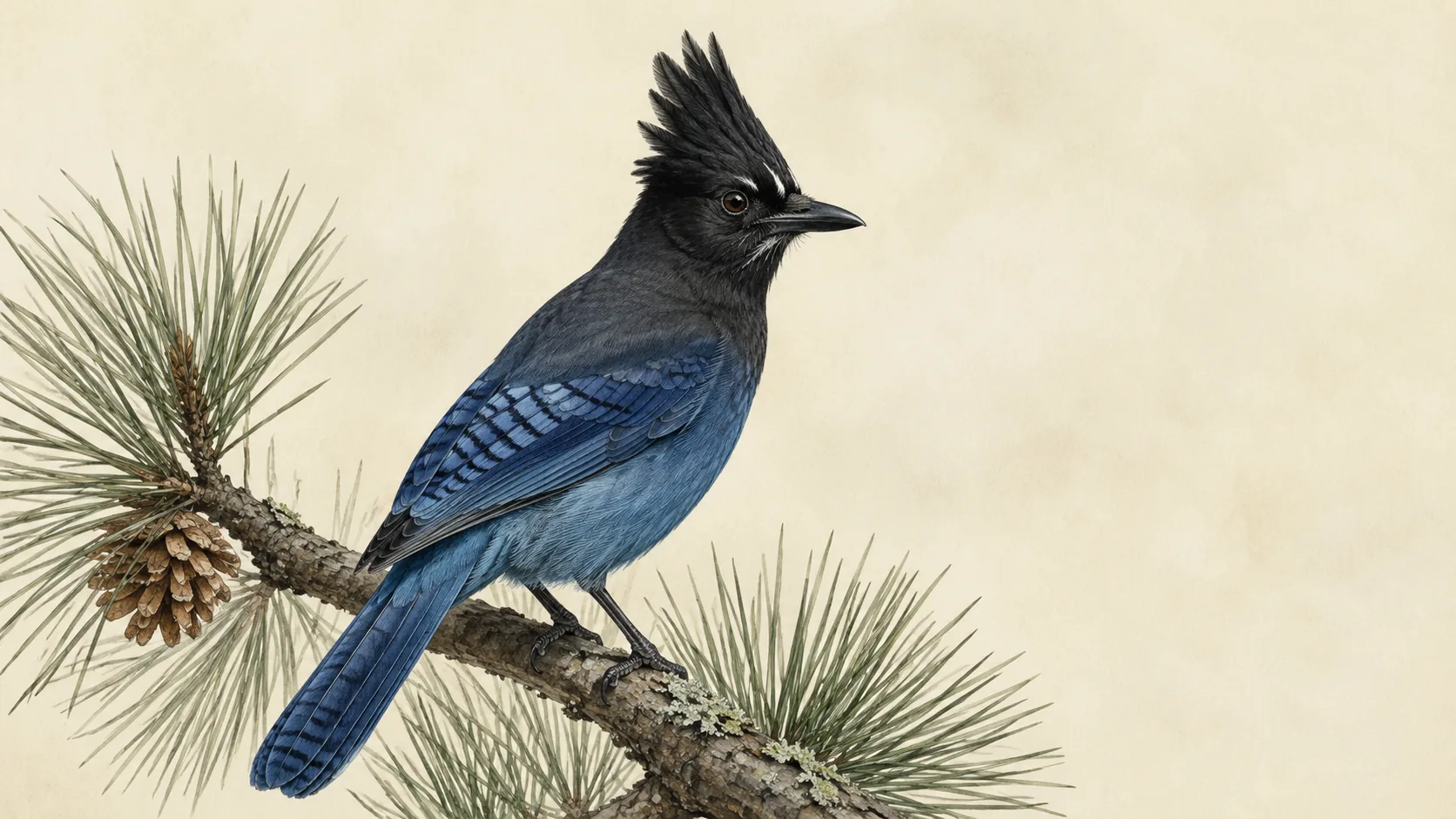
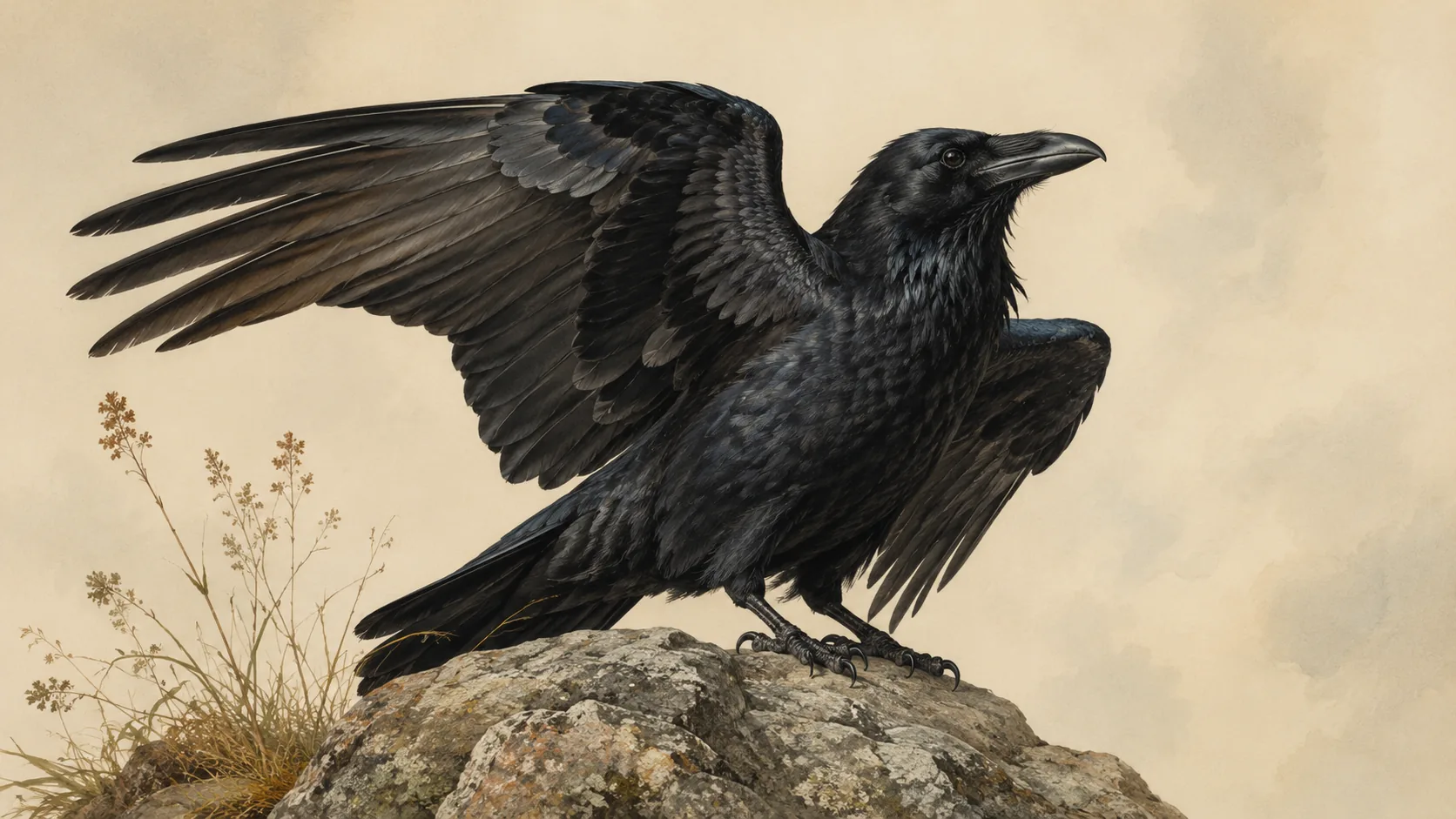
The mechanism was the same as in other highly susceptible corvids: the virus caused encephalitis and other neurological damage, with very high case fatality rates in some corvid species. Crows, ravens, and jays also died in large numbers, but populations large enough or range-distributed enough to absorb the losses. The Yellow-billed Magpie had neither of those buffers.
The population has partially recovered since 2006, as some birds appear to have developed resistance and immune-naive cohorts have been replaced by survivors. The IUCN now lists the species as Near Threatened, a category that reflects continued uncertainty about whether recovery is permanent or whether another West Nile outbreak could produce a similar crash.
California endemics face a structural problem in conservation biology: there is no elsewhere. If the oak valleys are inhospitable, no Yellow-billed Magpie is coming from Montana to fill the gap.
A year-round resident of the same valley where the oaks have stood for centuries. The bird and the habitat evolved together, each shaped by the presence of the other. That is both the logic of the endemism and the weight of it. There is nothing outside the valley to fall back on.