Field Guide
White-faced Ibis
A line of them crosses the sky over a Utah marsh at low altitude, curved bills obvious against the blue, wings beating with that distinctive stiff-flap-and-glide cadence. From a distance the birds look dark, almost black. Then one tilts and the western sun catches it - and the body ignites into deep chestnut and iridescent purple-green, as if something wet and burning moved through a dark bird shape. They are not black at all. They never were.
The White-faced Ibis is one of those birds that rewards a second look, and then a third.
What It Looks Like
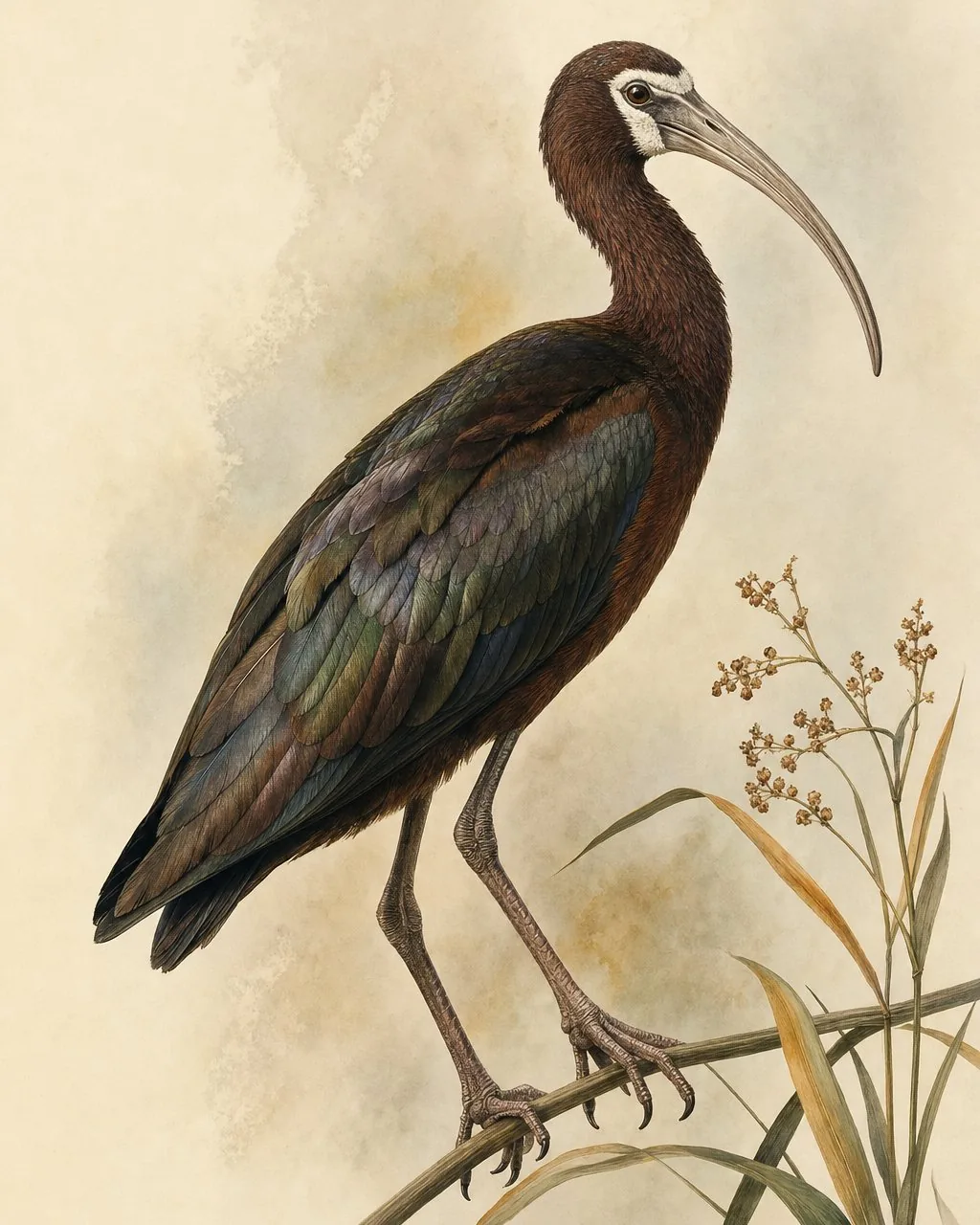
In breeding plumage, the adult White-faced Ibis is one of the most richly colored wading birds in North America. The body plumage is deep reddish-chestnut, shot through with iridescent purple-green and bronze on the wings and back. The bare skin of the face is red, surrounded by a narrow border of white feathering that gives the species its name and its most reliable field mark. The eyes are red. The legs are pink-red. The long decurved bill is gray-brown.
The white facial border is the key mark separating this species from the Glossy Ibis of the East, which otherwise looks nearly identical in field conditions. The Glossy Ibis has blue or gray-white facial skin bounded by a thin white or pale line, but the line is narrower and less clean, and the eye is dark rather than red. Both species can look simply “dark ibis” in poor light.
Outside of breeding season, the white facial border becomes less distinct or disappears, the plumage dulls, and both species become much harder to separate.
Immature birds are streaky dark brown on the head and neck, acquiring adult plumage over the first one to two years.
| Measurement | Range |
|---|---|
| Length | 46 - 66 cm |
| Weight | 450 - 650 g |
| Wingspan | 88 - 98 cm |
| Lifespan | 8 - 14 years |
Voice
The White-faced Ibis is not a vocal bird away from breeding colonies. At roost and nesting sites, it produces low grunting and croaking calls - a deep pig-like grunt is the most commonly noted sound. In flight, birds occasionally give a low, repeated croak. The calls are unassuming and easily missed.
Range and Habitat
The breeding range covers the intermountain West and Great Basin: California’s interior valleys, Nevada, Utah, Colorado, Idaho, Oregon, and into the northern Great Plains states. The largest colonies are in Utah’s Bear River Migratory Bird Refuge and adjacent wetlands. The species also breeds in scattered locations in the Gulf Coast states of Texas and Louisiana.
Migration takes birds south through Mexico to wintering grounds that extend from southern Mexico through Central America and into parts of South America. Some birds winter in coastal California and along the Gulf Coast.
Habitat is predominantly freshwater and alkali marshes, wet meadows, flooded agricultural fields, and the margins of shallow lakes and reservoirs. The species shows a preference for open, low-vegetation wetlands where it can forage by probing in shallow water or wet soil.
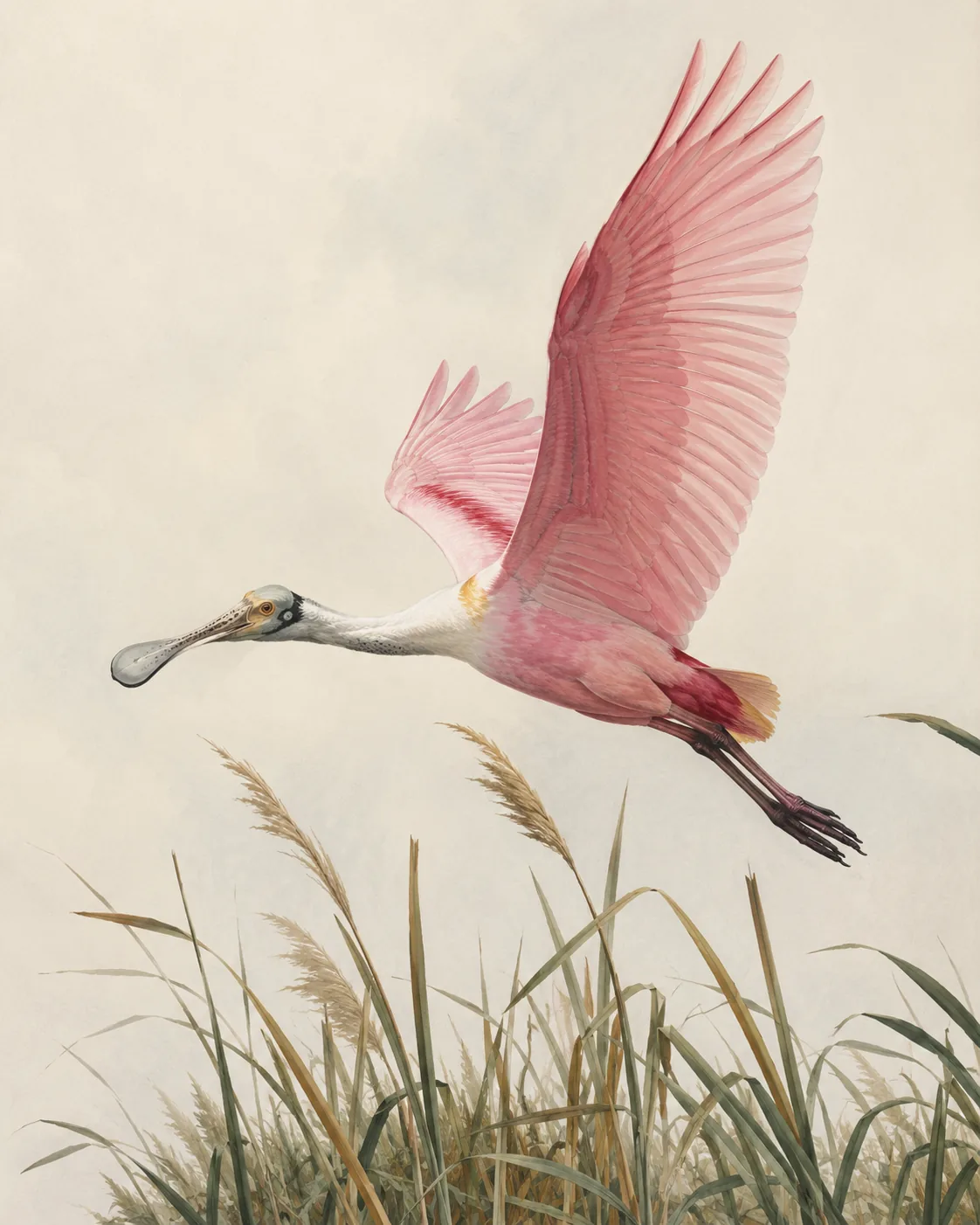
The Roseate Spoonbill occupies similar wetland habitats in the South and uses the same foraging style in similar substrate - both are probers working by touch in turbid water, though the ibis uses a bill that reads the bottom directly while the spoonbill sweeps.
Diet
The White-faced Ibis is an opportunistic feeder that probes into soft mud and shallow water with its sensitive, decurved bill. It feeds by feel rather than sight, detecting prey tactilely through the bill tip. Primary prey items include earthworms, crayfish, aquatic insects, small fish, frogs, and tadpoles. In flooded agricultural fields, it feeds heavily on earthworms and invertebrates brought to the surface by irrigation or flooding.
The species forages in flocks, often in mixed groups with other wading birds. Individual birds pace through the water or wet grass at a slow walk, probing repeatedly.
Breeding
Colonial nesters, White-faced Ibis form large breeding colonies - sometimes numbering in the thousands of pairs - at established sites with dense emergent vegetation for nest support. Colonies are often mixed with other species including herons, egrets, and cormorants.
The nest is a platform of sticks and plant material placed in cattails, bulrushes, or low willows over water. Both sexes build. The female lays 3 to 4 pale blue-green eggs, and both parents share incubation over about 21 to 22 days. Chicks are altricial, hatching with dark down, and are fed by both parents by regurgitation. They can leave the nest and clamber among the vegetation at 3 to 4 weeks, and fledge at about 6 weeks.
Recovery After DDT
The White-faced Ibis shared in the broad collapse of fish-eating and wading bird populations caused by DDT and related organochlorine pesticides in the mid-twentieth century. In the late 1960s and early 1970s, the major Utah colonies had largely failed: thin eggshells broke under incubating adults, chicks died, breeding adults abandoned nesting attempts. The Bear River colonies, once among the largest in the West, were essentially silent.
The situation of the ibis in the 1970s mirrored that of the Roseate Spoonbill in the South, the Brown Pelican on the coasts, and dozens of other species affected by biomagnification of pesticides through aquatic food chains.
DDT was banned in the United States in 1972. Recovery was slow and uneven - ibis populations began rebuilding through the late 1970s and 1980s as pesticide residues gradually declined in the food chain. By the 1990s and 2000s, colony sizes at key Utah and California sites had returned to historical levels or exceeded them. The species is now listed as Least Concern by the IUCN, a designation that reflects genuine recovery rather than wishful thinking.
Watch a White-faced Ibis in good afternoon light and you understand why people once called these birds sacred. The color does not follow the rules. Dark from a distance, and then, in one shift of the light, chestnut and purple-green and bronze all at once. The bird keeps moving. The marsh swallows it again.