Field Guide
Vaux's Swift
The first time you see it, you might not believe your count. Ten thousand birds. Then twenty. The sky above Chapman Elementary School in Portland, Oregon fills with them every September evening - a churning, spiraling column of smoke that isn’t smoke at all. It tightens and tightens over the old brick chimney, and then, as if poured, the flock begins to funnel down. The last bird vanishes. The crowd below erupts.
Vaux’s Swift is not a bird most people seek out. It is brown, small, and fast - a cigar with wings, to use the field-guide shorthand. But it is one of those creatures that, at the right moment, makes you understand why people get obsessed with birds in the first place.
What It Looks Like
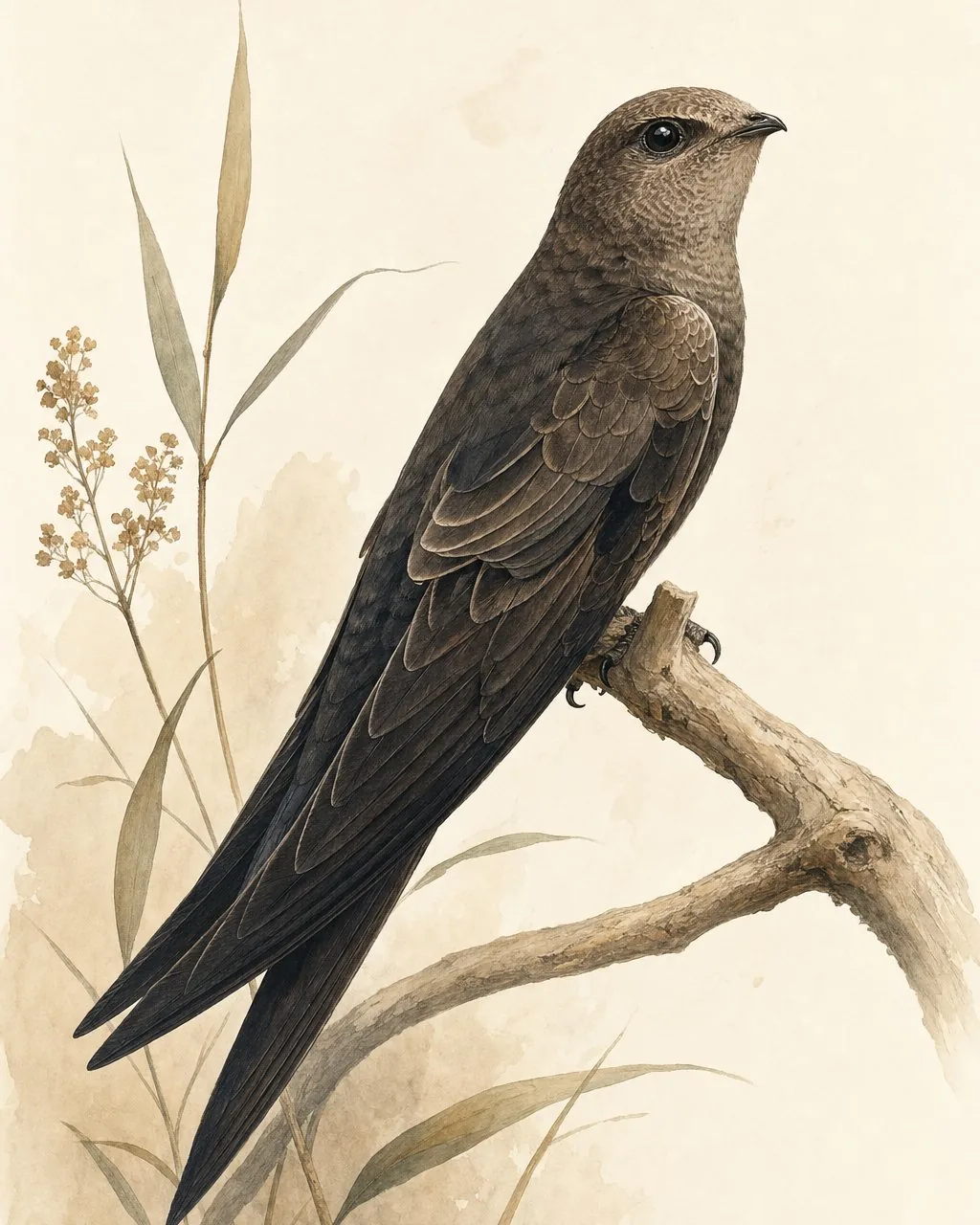
Compact and all-brown. That is nearly the whole description. The upperparts are dark sooty brown, the throat and underparts slightly paler - a dirty gray-buff that can look almost whitish in good light. The tail is short and slightly notched. The bill is tiny and deeply forecleft. In flight, the wings appear scythe-shaped and swept back, and the bird holds them stiffly, alternating rapid wingbeats with brief glides.
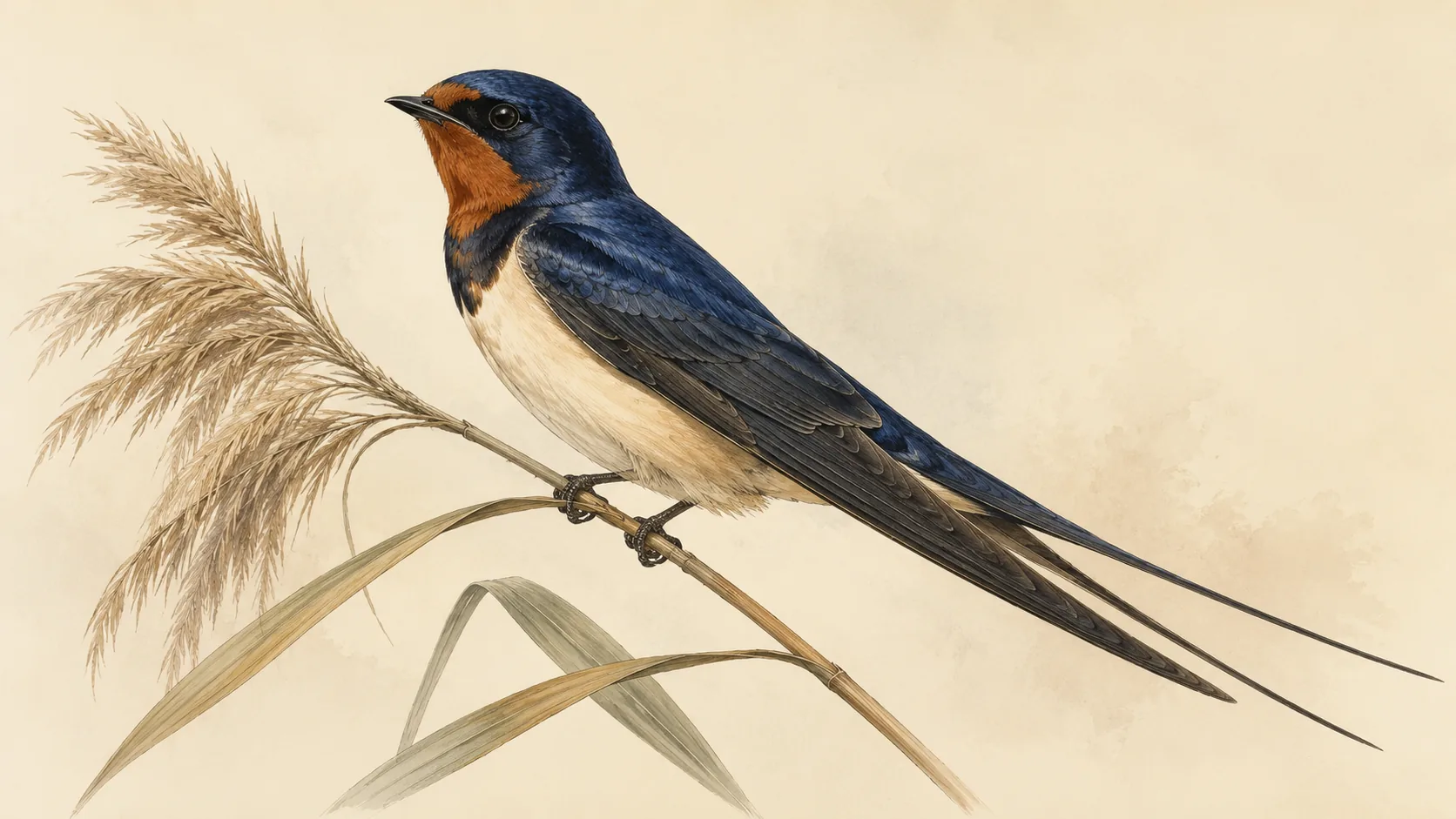
Compared to the Barn Swallow, the nearest lookalike most people will have seen, Vaux’s Swift appears smaller, rounder-tailed, and more uniformly colored. Swallows also flap with more flexibility and grace. Swifts look like they’re flying faster than they should be able to.
The species was named for William Sansom Vaux, a nineteenth-century mineralogist who helped finance the expedition that collected the type specimen. He never studied birds. Such is taxonomy.
| Measurement | Range |
|---|---|
| Length | 11 - 12 cm |
| Weight | 17 - 24 g |
| Wingspan | 27 - 30 cm |
| Lifespan | 3 - 8 years |
Voice
Swifts are not singers. Vaux’s Swift produces a rapid series of high, thin chips - a twittering chatter delivered while in flight. The calls are soft and insect-like, easy to miss against the background noise of a city. When thousands of birds are calling together over the Chapman roost, the combined sound is something else entirely - a white-noise rush that carries for blocks.
Range and Habitat
Vaux’s Swift breeds through the Pacific Coast states and into British Columbia, and along a separate inland track through the mountains. In winter, the species moves south through Central America, where it is common in forest openings and towns.
During the breeding season, the essential habitat is old-growth or mature second-growth forest with large hollow trees. The birds are aerial foragers and will hunt over any open ground - lakes, clearings, urban parks - but they need standing dead timber for nesting.
This dependence on old-growth puts the species in an uncomfortable position. As old-growth patches shrink, Vaux’s Swifts have increasingly shifted to nesting in chimneys - an adaptation that echoes the story of the Chimney Swift in the East. In many parts of the Pacific Northwest, chimneys now represent a significant fraction of available nest sites.
Diet
Entirely aerial insects. Vaux’s Swifts feed on flies, beetles, ants, flying termites, moths, and anything else small enough to catch in flight. They hunt by coursing through the air with their mouths open, taking prey by the literal mouthful. On cold days when insects are scarce, swifts can enter a state of torpor - dropping their body temperature and metabolic rate dramatically to survive a period without food.
Breeding
Pairs bond over the spring migration and establish nest sites in hollow trees or chimneys. The nest itself is a small bracket of twigs and plant material, cemented to the interior wall of the cavity with the swift’s own saliva - a glue secreted by enlarged salivary glands that hardens on contact with air. The pair builds together, snapping off small dead twigs in flight without landing.
The female lays 3 to 6 white eggs. Both parents incubate, tucking into the cavity to shelter the eggs with their own body warmth. Incubation takes about 18 to 19 days. The chicks hatch blind and naked, and they cling to the cavity wall almost immediately - an adaptation that keeps them from falling to the interior of a chimney or hollow trunk. They fledge at about 30 days old.
The Chapman Roost
The Chapman Elementary School chimney roost in Northwest Portland is one of the great wildlife spectacles in North America. Every August through October, Vaux’s Swifts stage in the region before and during southward migration. They converge on the old brick chimney at Chapman at dusk in numbers that build through the season, peaking in mid-September with counts exceeding 35,000 birds in some years.
The school knew about the roost for decades. In the 1990s, there was a proposal to cap the chimney - a standard energy-efficiency measure. Local birders and community members organized to stop it, and the school eventually agreed to delay capping the chimney each fall until the swifts moved on. The chimney is now functionally a wildlife monument. Hundreds of people gather on the surrounding hillside each evening with picnic blankets and binoculars.
Crows also know about the roost. Each evening, as the swifts spiral inward, a few crows take up positions near the chimney top and make opportunistic passes. The swifts respond by bunching tighter, the column narrowing and accelerating. Sometimes a Cooper’s Hawk appears and the whole flock explodes outward in a synchronized burst before reconsolidating.
The roost illustrates something important about urban wildlife conservation: sometimes the birds come to us, and what they need from us is simply that we not block the door.
Stand on the Chapman hillside on a clear September evening, and you will understand why Audubon himself kept coming back. The sky does things you don’t expect. The birds do things you can’t explain. That is enough.