Field Guide
Scott's Oriole
At first light in the high desert of the Southwest, in country where yucca spikes stand against pinyon and juniper, a clear, whistled song carries across the slope. It sounds like a Western Meadowlark singing from the wrong habitat. The bird delivering it is lemon-yellow and black, perched at the top of a flowering yucca stalk: Scott’s Oriole, the only oriole that has made the arid highlands its home, and the one that weaves its nest from the very plant it sings from.
Where the other orioles want water, cottonwoods and orchards, this one wants altitude, dry air and yucca. It is the desert specialist of the family.
What he looks like
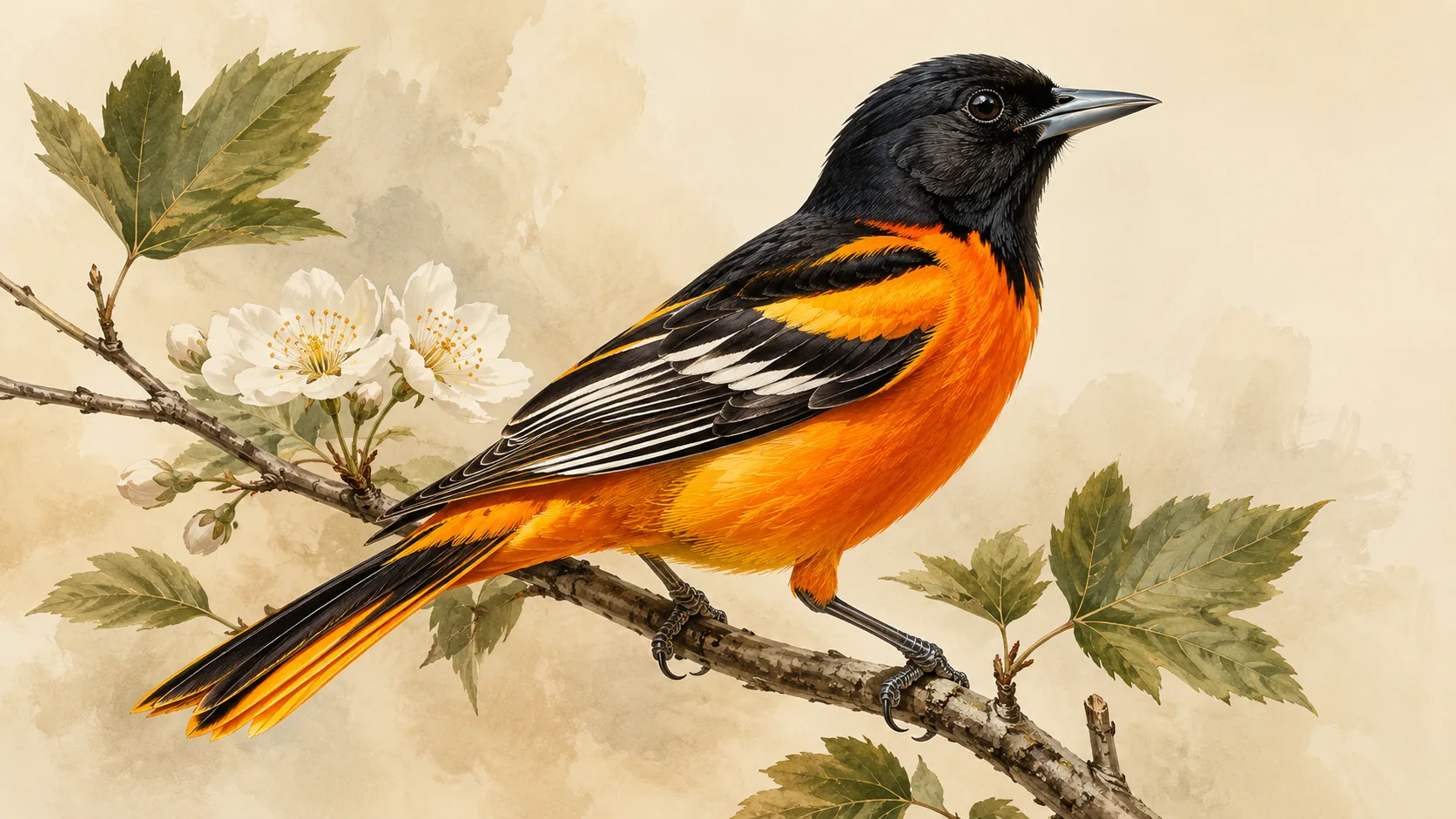
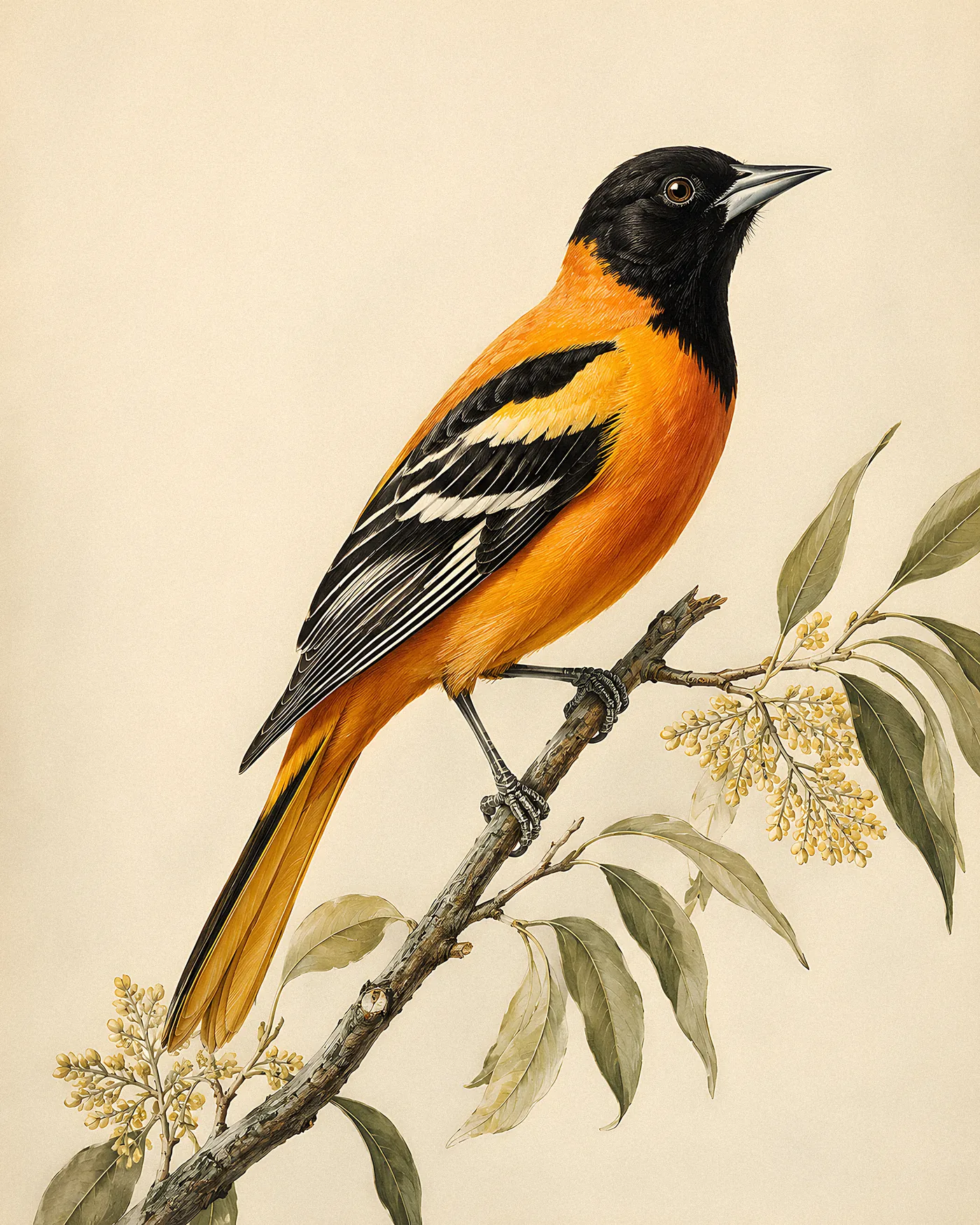
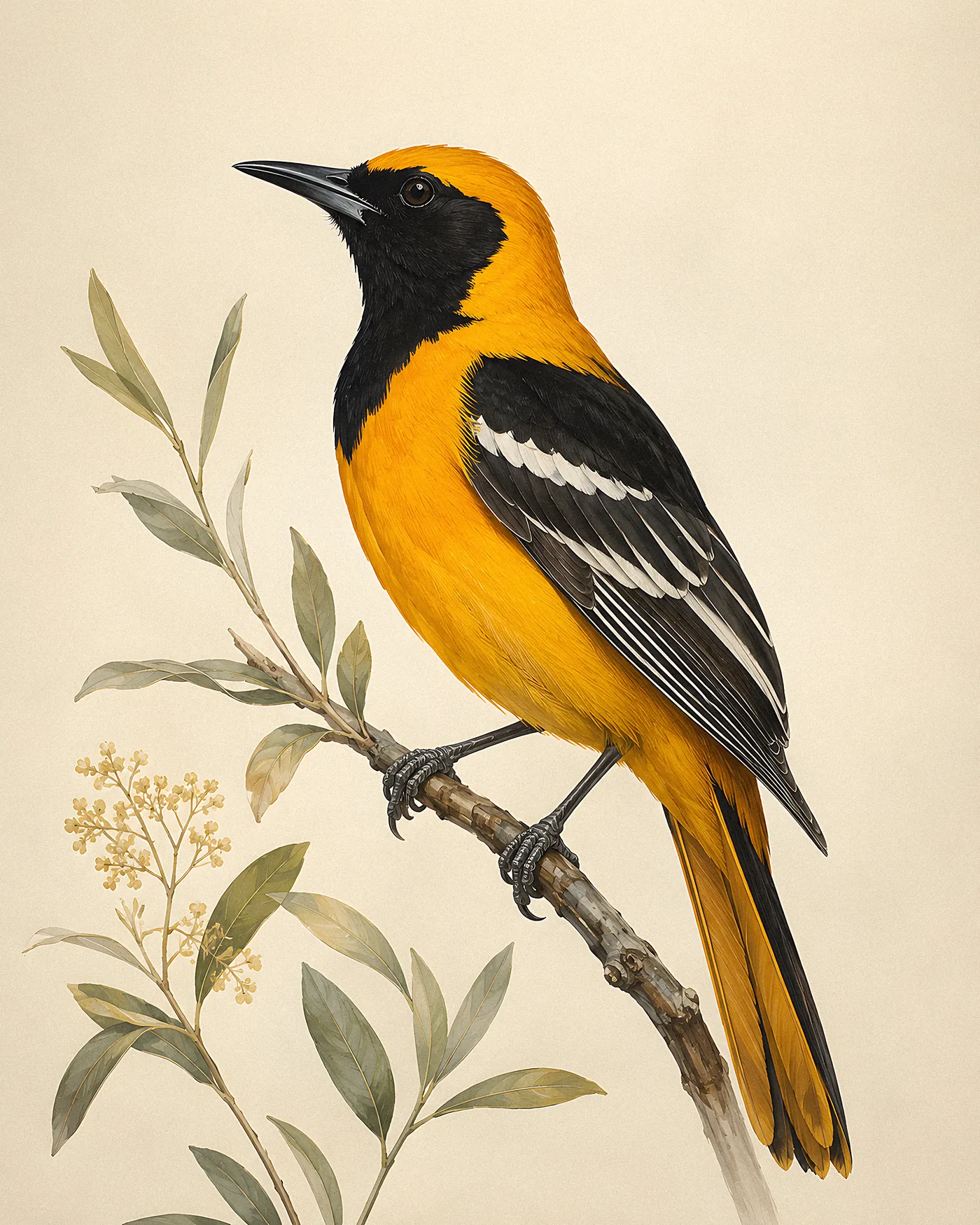
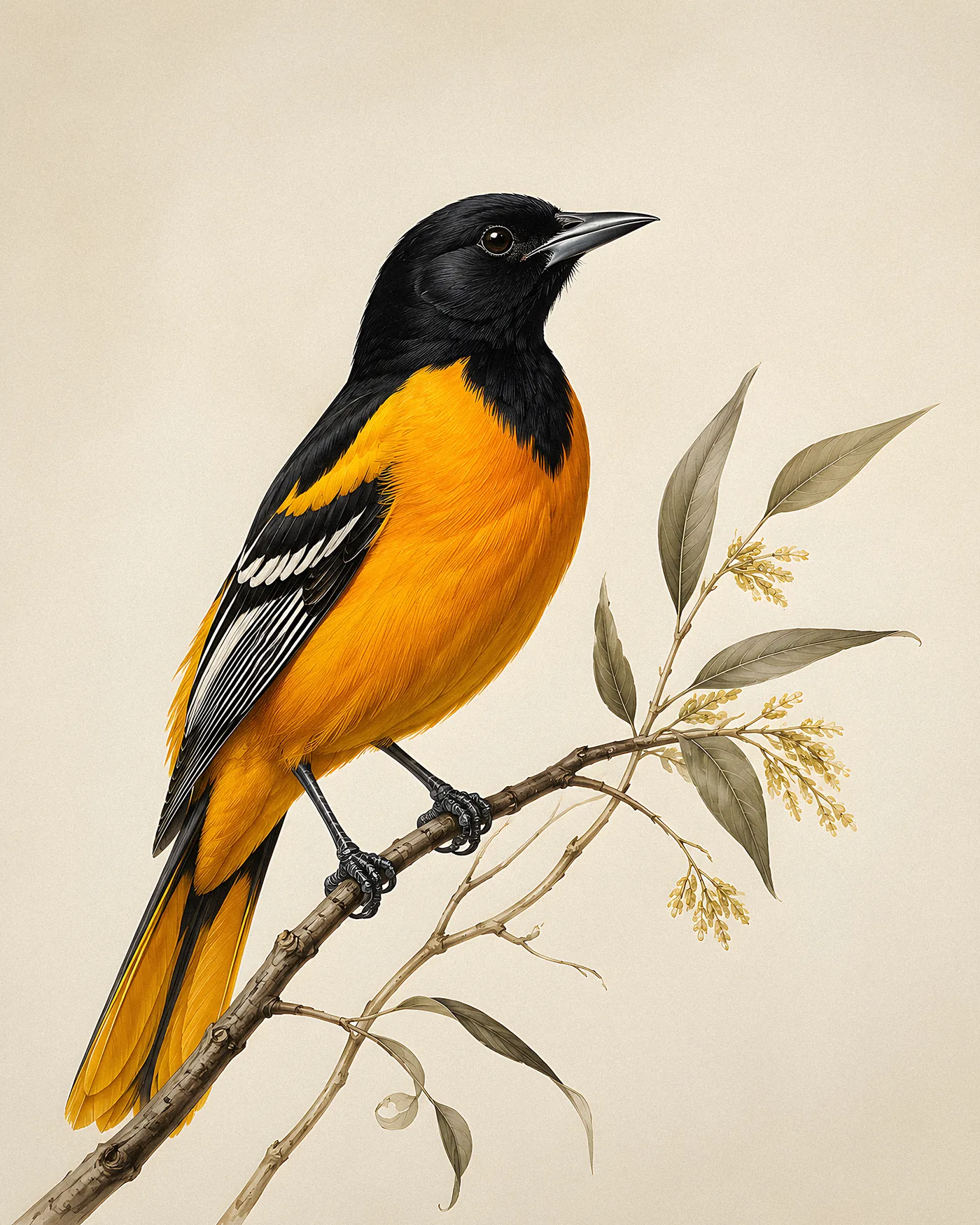
The breeding male is striking and clean: a deep lemon-yellow body with a solid black hood that extends down over the head, throat and upper breast and across the entire back, so the black forms a continuous bib-and-cape over the bright yellow below. The wings are black with a yellow shoulder patch and white wing markings, and the tail is yellow at the base with a black tip. The combination of full black hood and back over bright yellow is unlike any other oriole in its range.
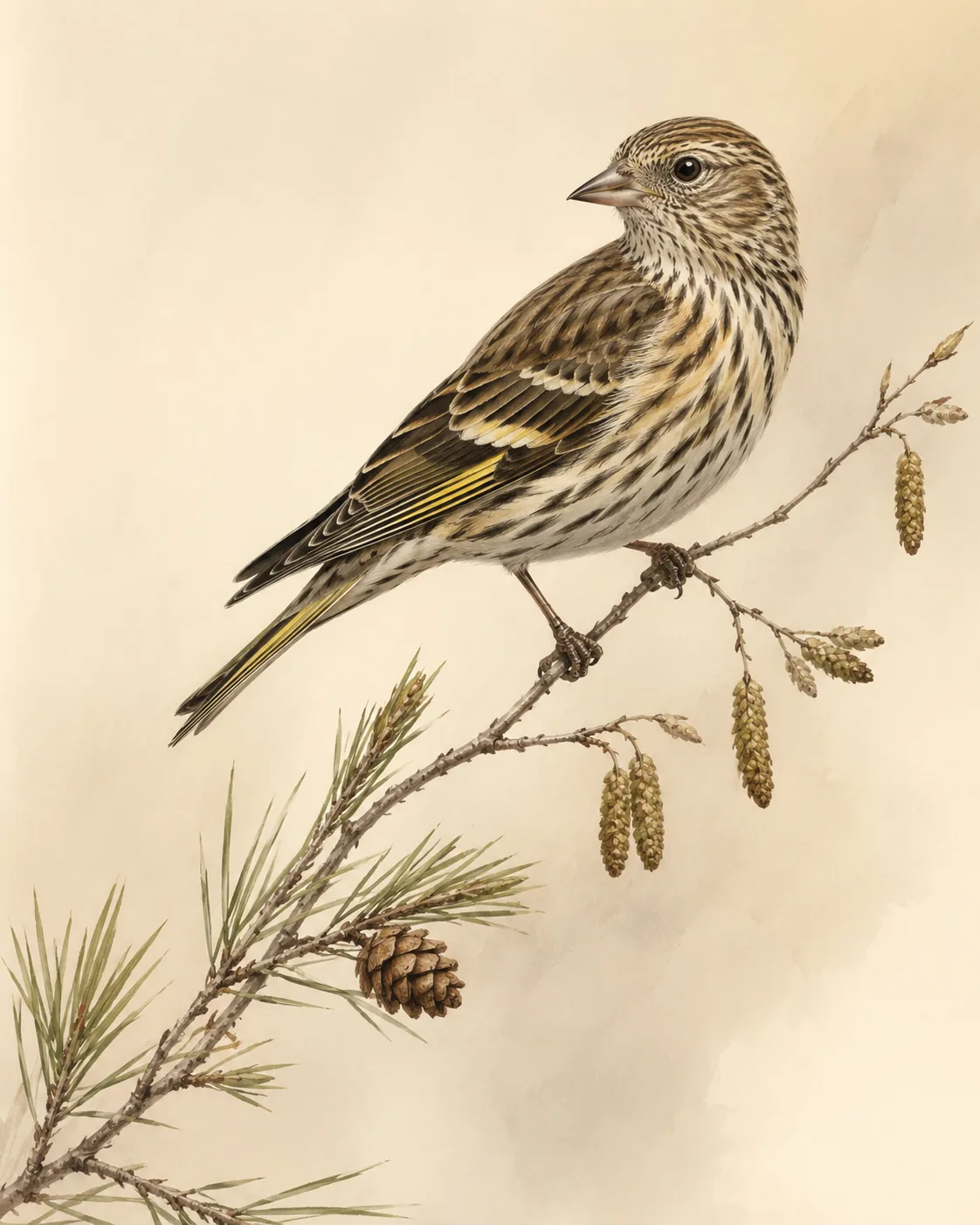
The female is duller and greener, yellow-green above with dusky streaking on the back and a yellowish underside, marked by two white wing bars. She is plainer than the male but greener and more uniformly yellow than the grey-toned female Bullock’s that may share her country. First-year males show a partial dark hood as they mature toward the full adult pattern, an intermediate stage that can confuse identification at the edges of the range.
What he sounds like
The song is the bird’s signature and the reason it is so often heard before seen. Cornell Lab describes it as a series of varied short notes, clear whistles interspersed with rapidly modulated phrases that rise and fall, and likens the overall effect to the song of a Western Meadowlark. It is rich, fluting and far-carrying, delivered from a high exposed perch and given through the heat of the day when many desert birds fall silent.
Both sexes sing. The call is a harsh shack and a chatter. For many desert birders the meadowlark-like whistle drifting over pinyon-juniper at dawn is the first sign that a Scott’s Oriole is on territory.
Range and habitat
Icterus parisorum is a bird of the arid Southwest and Mexico. In the United States it breeds from southern California discontinuously east across southern Nevada and Utah, Arizona, New Mexico and into southwestern Texas, and south throughout much of Mexico including the Baja peninsula. Cornell Lab and the desert literature place it in moderately elevated arid country: pinyon-juniper woodland, pine-oak woodland, oak and other scrublands, and above all slopes and flats where yucca grows.
The yucca tie is close. The plant gives the bird a singing perch, a nest site, a nest material and a food source. Most United States birds migrate south into Mexico for the winter, though some remain in the warmest parts of the range. It is a true desert and highland specialist, largely absent from the lowland riparian habitats the other orioles favour.
Diet
Scott’s Oriole feeds mainly on insects, taking grasshoppers, beetles, caterpillars and other adult and larval insects, and supplements them with fruit and nectar. It eats berries and cactus fruit, drinks nectar from desert flowers, and has even been recorded taking the occasional small lizard. The agave and yucca blooms that punctuate its range are a reliable draw, both for the nectar and for the insects the flowers gather.
It forages through scrub and low trees and probes flowers with its pointed bill, and within its range it will come to sugar-water and fruit at feeders. In a landscape with little standing water, nectar and juicy fruit also help meet the bird’s need for moisture.
Breeding and nesting
The nest reflects the habitat. The female builds a hanging cup, and in one study the nests were woven from strips of yucca leaf, lined with grass and seed fluff. The bird shreds the long fibres of the yucca and weaves them into a basket, slung beneath the leaves of a yucca, agave or in a tree or large shrub. Cornell Lab records most nests within about ten feet of the ground, occasionally up to twenty.
The species lays a clutch of eggs that both parents then help to raise once they hatch. Building a nest from yucca and slinging it among the spiny leaves gives the eggs and young a measure of protection, the armed plant standing guard around the cradle in a country with little dense cover to hide in.
Scott’s Oriole sings from a yucca, nests in a yucca, and weaves the cradle for its young from yucca leaves shredded by its own bill. The desert plant is its whole world.
The oriole of the high desert
Every other oriole in this guide is a bird of greenery: orchards, cottonwoods, palms, riverside woods. Scott’s Oriole broke ranks and went to the dry country, and it carries the desert with it in everything it does. It perches on the yucca, it sings the dawn open like a meadowlark, it shreds the yucca for its nest, it drinks from agave bloom, and it raises its young inside the armour of a spiny plant.
For the birder, finding it means going to the right country, the pinyon-juniper slopes and yucca flats of the Southwest, and listening at first light. The IUCN lists Icterus parisorum as Least Concern, with an extremely large range and a population in the millions, though one believed to be slowly decreasing. It is the brightest thing on a dry hillside, a lemon-and-black bird singing where you would not expect an oriole to live at all.