Field Guide
Nuttall's Woodpecker
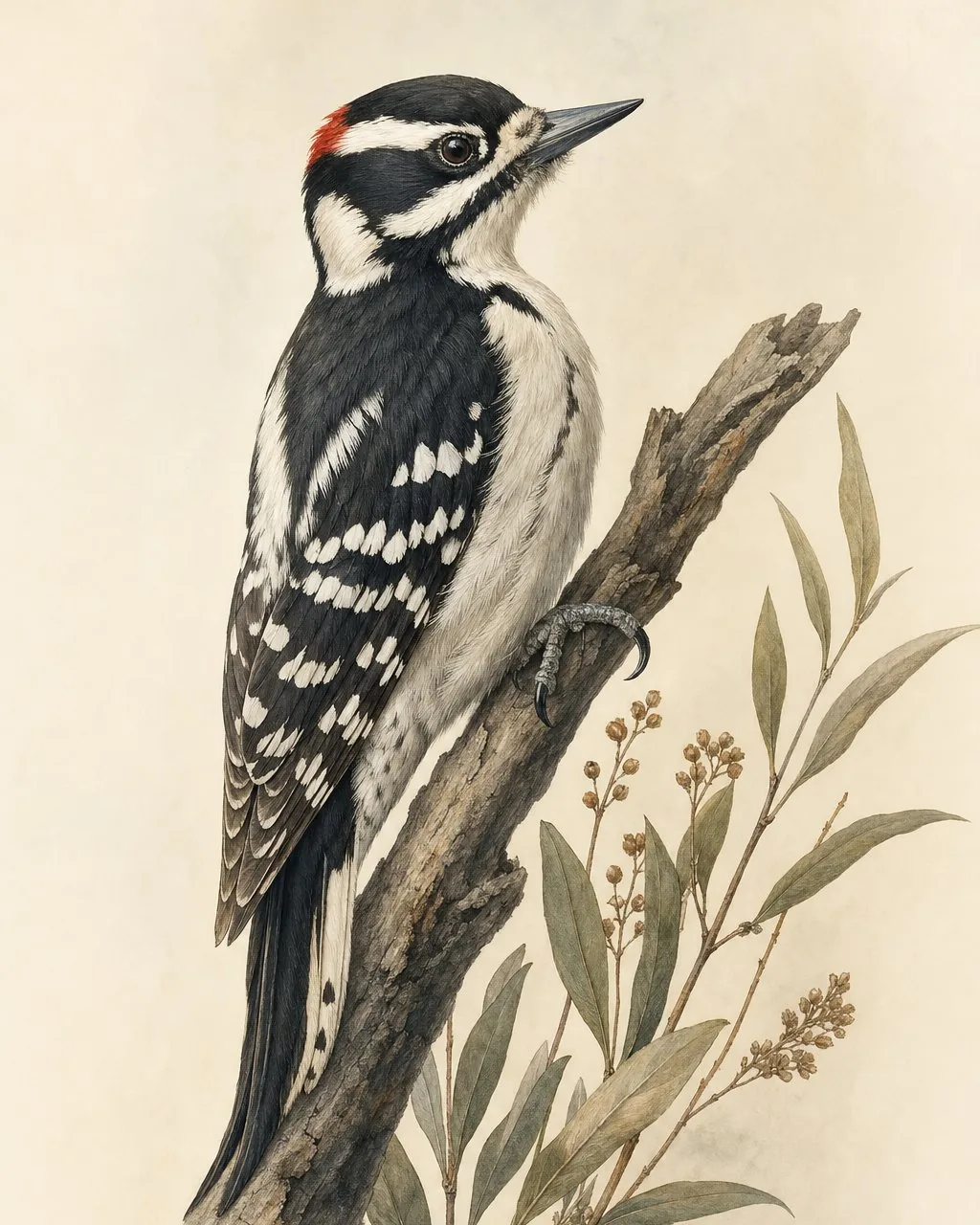
In a foothill oak woodland north of Ojai in February, the drumming starts before first light. A rapid, decelerating roll on a dead oak snag - not as loud as a Pileated, not as brief as a Downy. By the time the sun clears the ridgeline, the woodpecker is visible: black and white, black-barred back, working a section of oak bark with methodical efficiency, pausing to drum, moving up a foot, drumming again. This is Nuttall’s Woodpecker, and this oak woodland is, in the most literal sense, its entire world.
What it looks like
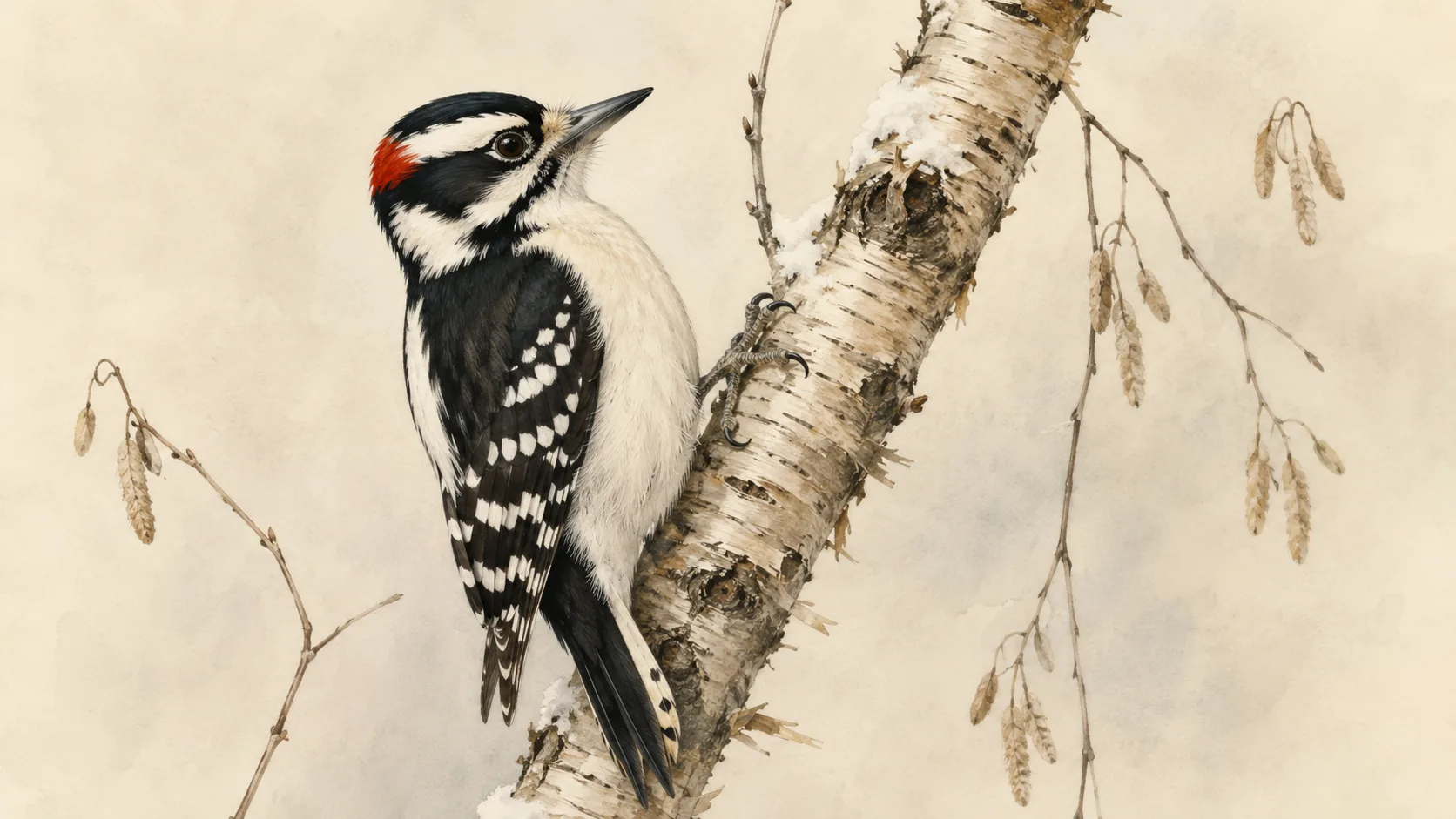
A small, ladder-backed woodpecker - the horizontal black and white barring across the back is the pattern shared with the Ladder-backed Woodpecker, its closest relative and most likely confusion species. On Nuttall’s the black is predominant on the back, the white bars comparatively narrow. The face has more black than the Ladder-backed: a black forehead and rear crown in females, a black forehead and red hindcrown in males. The underparts are white with black spotting on the flanks.
The key separating features from the Ladder-backed are the blacker face, the proportionally more black upperparts, and, most usefully, the range - the two species barely overlap, at the northern edge of Baja California and the very southern tip of the Nuttall’s range. In California proper there is no Ladder-backed, and any small, barred woodpecker in oak woodland is Nuttall’s.
The bill is chisel-shaped, straight and grey-black. The bird is longer and slightly slimmer than a Downy Woodpecker, with a proportionally longer tail used as a brace against tree bark.
| Measurement | Range |
|---|---|
| Length | 17 - 19 cm |
| Weight | 28 - 45 g |
| Wingspan | 27 - 30 cm |
| Lifespan | 4 - 9 years |
“The bird’s name honours Thomas Nuttall, the British-American botanist and ornithologist who traveled the American West in the 1830s and described hundreds of plant and bird species, often collecting specimens while other expedition members slept.”
Voice
The calls are the best way to find this bird before you have located it visually. The most common call is a rattling, staccato prrrt or pik-pik-pik, lower and coarser than the Downy Woodpecker’s call. There is also a dry, descending whinny. Drumming is rapid and slightly decelerating at the end - a softer, more intimate performance than the loud drumrolls of larger woodpeckers.
In the breeding season the male gives a long series of calls from a territorial perch, a semi-musical jumble that announces his presence across the oak canopy.
Range and habitat
Confined almost entirely to California, with a small extension into northwestern Baja California. Within California the bird is found wherever valley oaks, blue oaks and canyon oaks are common: the Coast Ranges, the western slope of the Sierra Nevada foothills, the Central Valley edges, and the southern California mountains.
It is not a bird of coniferous forest or dense riparian thickets. It follows the oaks. Where oaks are replaced by chaparral or conifers, Nuttall’s Woodpecker is absent. The dependence on oak woodland is so precise that the bird’s range map and the California oak woodland map are nearly identical.
This close binding to a single vegetation type is the feature of Nuttall’s Woodpecker that most influences its conservation status - not the current trajectory, which is stable, but the potential vulnerability in a future where oak woodland distribution may shift under climate pressure.
Diet
Insects and their larvae, particularly wood-boring beetles, ants and scale insects. The bird excavates bark with its chisel bill and probes crevices in oak bark to extract prey. It also eats some plant material - acorns, berries and fruit in season.
The foraging technique is deliberate and thorough. Nuttall’s Woodpeckers work sections of bark systematically, flaking and probing, before moving up or to the next tree. They can spend long periods on a single large oak trunk, working different aspects of the bark.
Breeding
Cavity-nesting, almost exclusively in dead or dying oak wood. The male excavates the nest hole, typically in a dead branch or snag, over a period of several weeks beginning in March. The nest chamber is 15 to 30 centimetres deep.
Four or five eggs, white, incubated by both parents for about 14 days. The male incubates at night. Both parents feed the young, which fledge after about three weeks. One brood per season.
The availability of dead oak wood is a limiting factor for nesting density. Woodlands where dead trees and branches are removed for aesthetic or fire-safety reasons have lower Nuttall’s Woodpecker densities than woodlands where snags are left standing.
Thomas Nuttall and the California list
Thomas Nuttall arrived in California in 1836 on the trading ship Alert, traveling with a party that included Richard Henry Dana, whose account of the voyage became the classic Two Years Before the Mast. Nuttall collected birds in the coastal scrub and live oak woodland around San Diego and San Pedro, and the specimens he gathered contributed substantially to the scientific documentation of California’s bird fauna.
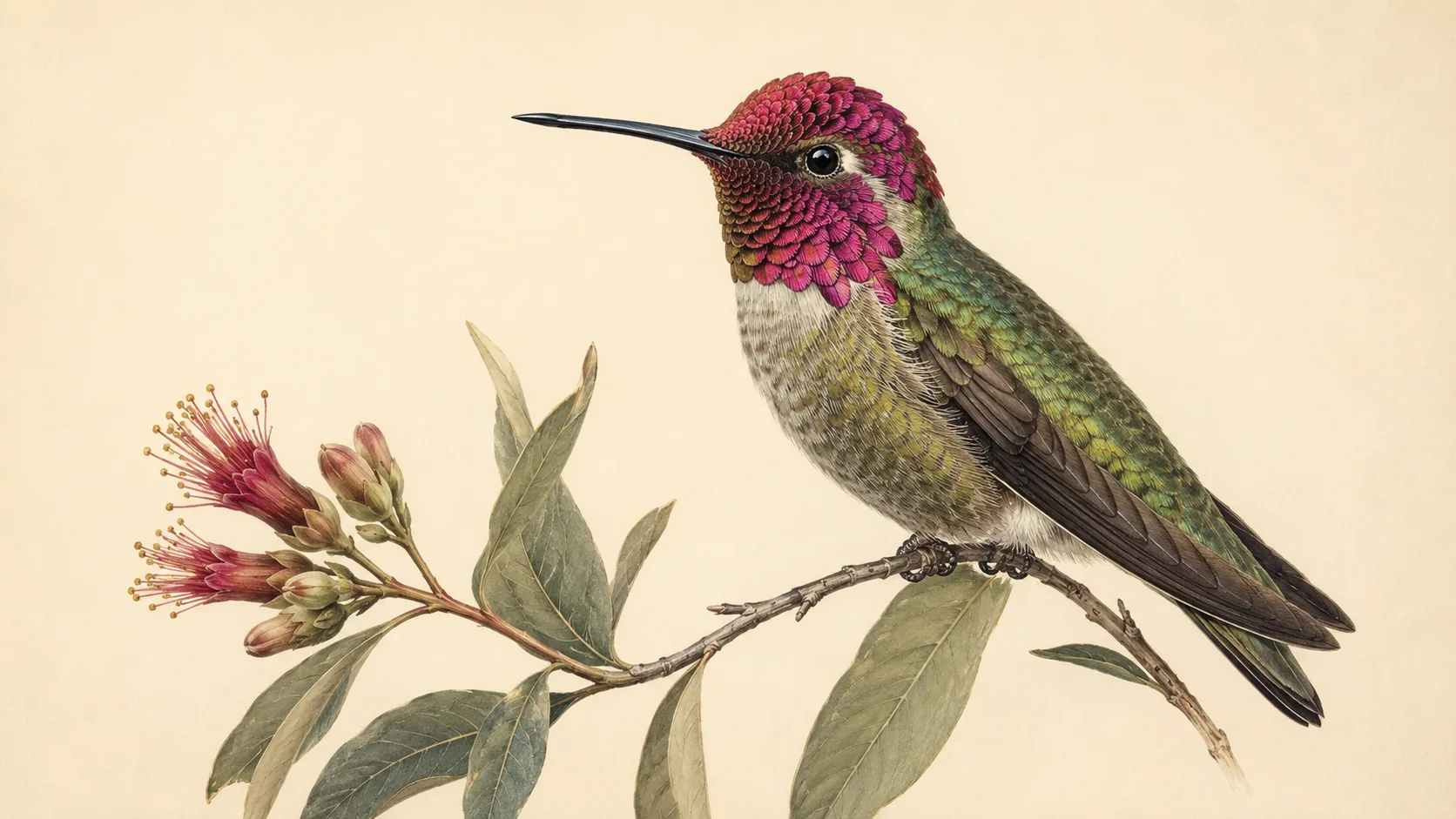
The woodpecker named in his honor is one of several California endemics that was first described in that mid-nineteenth century wave of naturalist exploration. The California Thrasher and Anna’s Hummingbird were documented in the same era, the birds and plants of the California Floristic Province being systematically catalogued by naturalists who arrived before the landscape had changed beyond recognition.
Nuttall’s Woodpecker is currently stable and widespread within its range. The oak woodlands it depends on are not disappearing at the rate that coastal sage scrub or wetland habitat is. But California’s oaks face slow-moving threats: sudden oak death, climate-driven drought stress, and the steady encroachment of development into foothill zones. A bird whose range is exactly co-extensive with a single tree genus is only as secure as that genus.
For now, the drumming on the oak snag at dawn is routine. The oak woodlands of the Coast Ranges and Sierra foothills are still largely intact, and the small black-and-white woodpecker with Thomas Nuttall’s name on it is going about its work in them. It is enough. It does not require more than a living oak and a dead branch, and for the moment those things are still available.