Field Guide
California Gull
June in Utah, 1848. The grain is half-grown and the fields are moving. Not with wind. A swarm of Anabrus simplex - the insect settlers called the Mormon cricket, a flightless katydid of the family Tettigoniidae - is working across the furrows in a dense, grinding mass. Then, from the direction of the Great Salt Lake, the gulls come. They arrive in long grey lines, wheel once, and descend. They eat until they can eat no more, drink from the irrigation ditches, bring the indigestible parts back up, and return to eat again.
Larus californicus, the California Gull, had fed on insect irruptions long before a settler ever put seed in the ground. That June it was simply doing what it had always done. The people watching believed otherwise, and a monument went up in Salt Lake City on the strength of it.
What it looks like
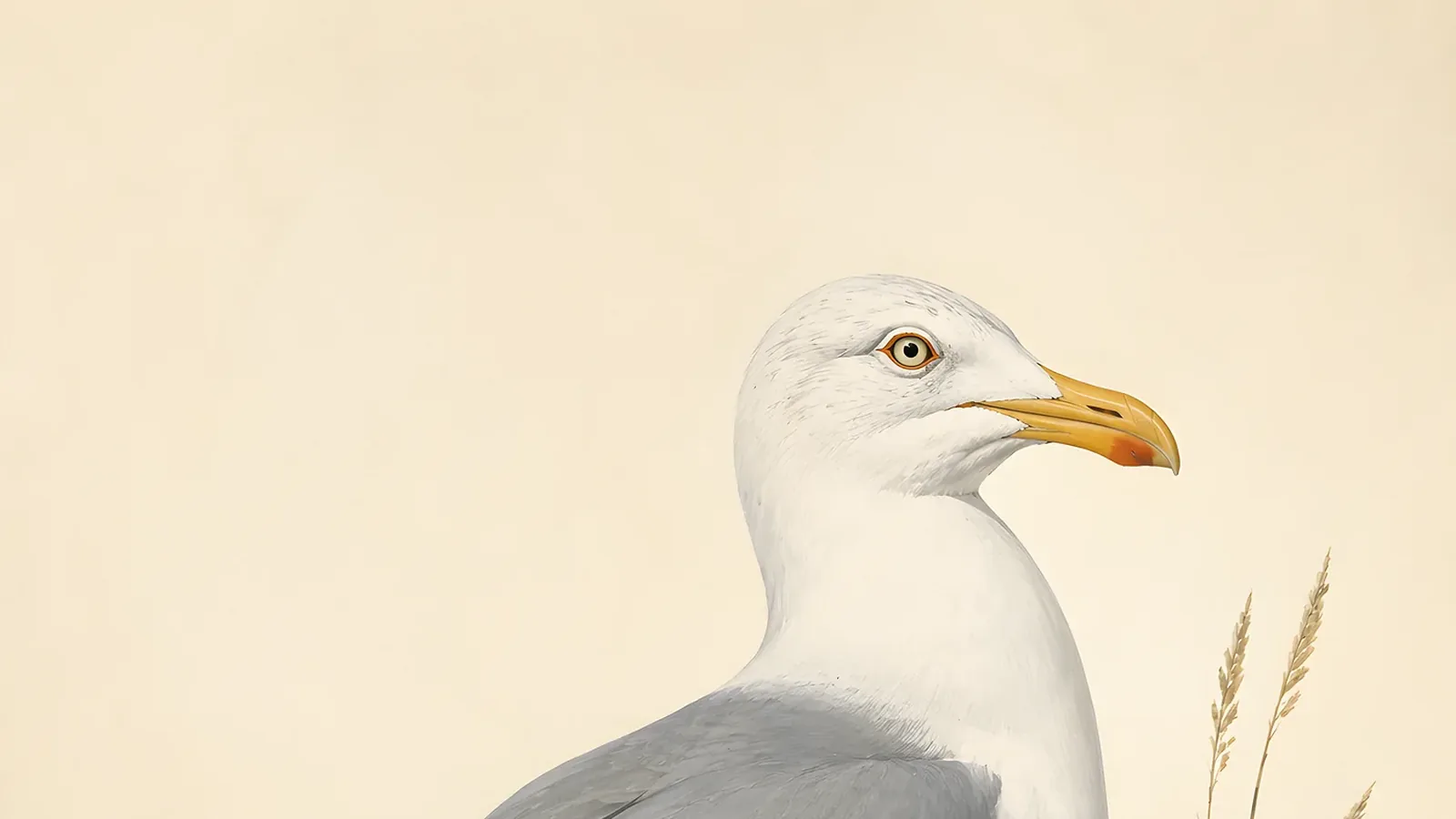
A medium gull, fitting neatly between the larger Herring Gull and the smaller Ring-billed Gull. Adults in breeding plumage have a clean white head and underparts, a back and upperwing of medium grey, and wingtips of black broken by two large white “mirrors.” This is a bird built on restraint - white, grey, black - except for three details that serve as field marks.
The bill is yellow. On the lower mandible, close to the tip, sits a red spot. Behind it, encircling the bill, is a black ring. This double mark - red and black on yellow - immediately separates it from the Ring-billed Gull, which carries only the black ring, and from the Herring Gull, which shows only red. The bill is the key.
The legs are yellow-green, a colour somewhere between lemon and sage, noticeably different from the pink-grey of the Herring Gull and the cleaner yellow of the Ring-billed. The eyes are dark brown, almost black. The combination of dark iris and those yellow-green legs is reliable year-round.
| Measurement | Range |
|---|---|
| Length | 46-55 cm |
| Wingspan | 122-137 cm |
| Weight | 430-885 g |
| Lifespan | 15-25 years |
Immatures are a different matter. First-year birds are entirely brown, mottled and messy, with a bi-coloured bill that is pink at the base and black at the tip. It takes four winters for the full adult plumage to arrive, with each year’s intermediate stage distinct enough to confuse a careful observer. The dark eye is the one consistent thread from hatch to adulthood.
The miracle of the gulls
The story as most people now know it overstates what happened. In May 1848 - the pioneers’ first full growing season in the Salt Lake Valley - vast swarms of Mormon crickets swept through the fields. Contemporary journals document the damage plainly: frost and drought had already hurt the harvest before a single insect arrived, and the crickets compounded a crisis that was partly built.
What followed is documented by the historian William Hartley in Utah Historical Quarterly (1970): settlers fought the insects through much of late May before gulls appeared in large numbers from the Great Salt Lake in early June. One contemporary journal entry captures the moment plainly:
The sea gulls have come in large flocks from the lake and sweep the crickets as they go; it seems the hand of the Lord is in our favor.
Accounts by John Smith and others describe the birds returning daily for three weeks, gorging, purging, and returning again. The harvest was not saved outright - significant losses had already been suffered - but the gull intervention was real, and the people who witnessed it believed it decisive.
The insect in the story deserves its own clarity. The Mormon cricket is not a cricket. Anabrus simplex belongs to the shield-backed katydid subfamily within Tettigoniidae, making it a long-horned relative of the grasshopper, quite distinct from true crickets of the family Gryllidae. The species was first formally described by Haldeman in 1852, four years after the event. The settlers named what they found by what it looked like. The scientists came later.
Utah designated the California Gull its state bird in 1955. The Seagull Monument on Temple Square in Salt Lake City was dedicated in 1913. The common name on the monument, “seagull,” persists locally, though this bird is no more a seagull than the cricket was a cricket.
Range and the inland lakes
The California Gull is a bird with a split life. It breeds inland, deep in the interior West, then migrates to the Pacific Coast for the winter.
Breeding colonies concentrate on islands in large, shallow lakes from the Canadian prairies south through the Great Basin. The Great Salt Lake holds the largest single population recorded anywhere: research by Don S. Paul, Joseph R. Jehl Jr., and Pamela K. Yochem, published in Great Basin Naturalist (1991), counted approximately 75,000 to 80,000 breeding adults at Great Salt Lake through the 1980s, a number that had remained stable since ornithologist William H. Behle’s survey in 1931. Including outlying colonies, the regional total reached close to 93,000 breeding birds.
Mono Lake in eastern California holds the second great concentration, with between 44,000 and 65,000 birds arriving each spring. Colonies exist across the Great Basin into Montana and the Dakotas, and a few reach the Canadian prairie provinces. By autumn, most birds have moved west or southwest to California beaches, harbours, and coastal fields. Unlike several of its relatives, this species rarely turns up on the Atlantic seaboard.
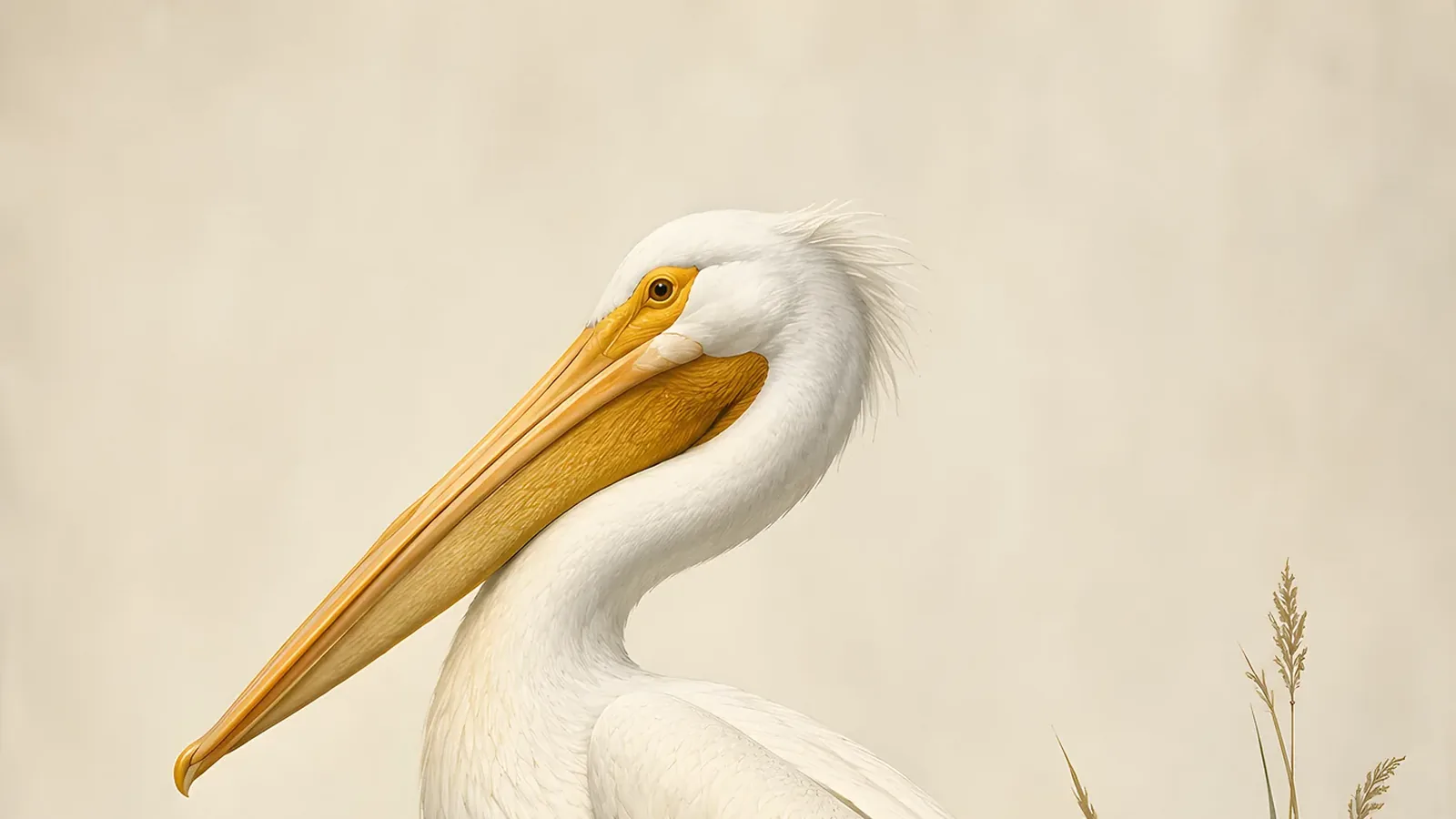
The American white pelican shares this improbable biography - another large, conspicuous waterbird that leaves the coasts to raise its young in the landlocked West, nesting on the same interior lakes where California Gulls crowd the islands. Both species challenge the assumption that a seabird belongs at the sea.
Utah is the only US state to make a gull its official bird, a distinction that says something about what this landscape values.
What it sounds like
Not subtle. California Gulls are among the louder residents of a breeding colony, and a colony at full volume - tens of thousands of birds on a lake island in June - is an experience that lives in the ears long after.
The territorial call, delivered with head lowered then raised, is a repeated, hoarse aow - lower and scratchier than equivalent calls in Ring-billed or Herring Gulls. A softer mew call appears during courtship and nest-relief exchanges. Away from the colony, single birds are quiet. On winter beaches they call occasionally but without the organised intensity of tens of thousands on a breeding island.
Diet
An opportunist with catholic tastes, which is partly why it does so well in modified landscapes.
In the inland breeding season the diet runs heavily toward insects - Mormon crickets when they swarm, grasshoppers, beetles, flies - along with earthworms, spiders, and small rodents. The species is known to take eggs and chicks from neighbouring colonies and to eat carrion without hesitation. On coastal wintering grounds the list expands to fish, marine invertebrates, scraps from fishing piers, and the discards of landfills. Foraging methods are equally varied: walking fields behind ploughs to pick up exposed grubs, kleptoparasitising other gulls, diving for surface fish, and patrolling shorelines.
The brine shrimp of the Great Salt Lake and the alkali flies of Mono Lake form a critical summer food supplement in those two colonies, providing concentrated protein while the birds are provisioning chicks. The gulls do not nest on those lakes by accident.
Breeding
Nesting begins in May on predator-free islands in interior lakes, typically in dense, noisy colonies that may number in the thousands of pairs. The nest is a shallow scrape on open ground or among rocks, lined with whatever vegetation is at hand. Females lay two to three eggs - olive, buff, or grey-brown, blotched with dark brown - at intervals of roughly two days. Both parents incubate for 23 to 27 days and both feed the chicks, which can walk within hours of hatching but cannot fly for 45 to 60 days. Sexual maturity arrives at four years.
Pairs form seasonal bonds and return to the same island year after year, though long-term monogamy has not been confirmed. The oldest individual on record reached 30 years.
Decades of research confirm that the total breeding population at Great Salt Lake has remained essentially stable since the 1930s - a rare piece of good news for a species that depends on an inland lake now losing 73 percent of its historical water volume to upstream diversion.
That stability is the harder story behind the monument. The gulls that arrived over the Mormon settlers’ fields in 1848 were not sent by providence. They were following insects, as they had followed insects on that basin for millennia before a seed was ever planted there. They will keep coming for as long as the lake holds water enough for an island to remain.
The question is what happens when it doesn’t.