Field Guide
Hawaiian Honeycreeper
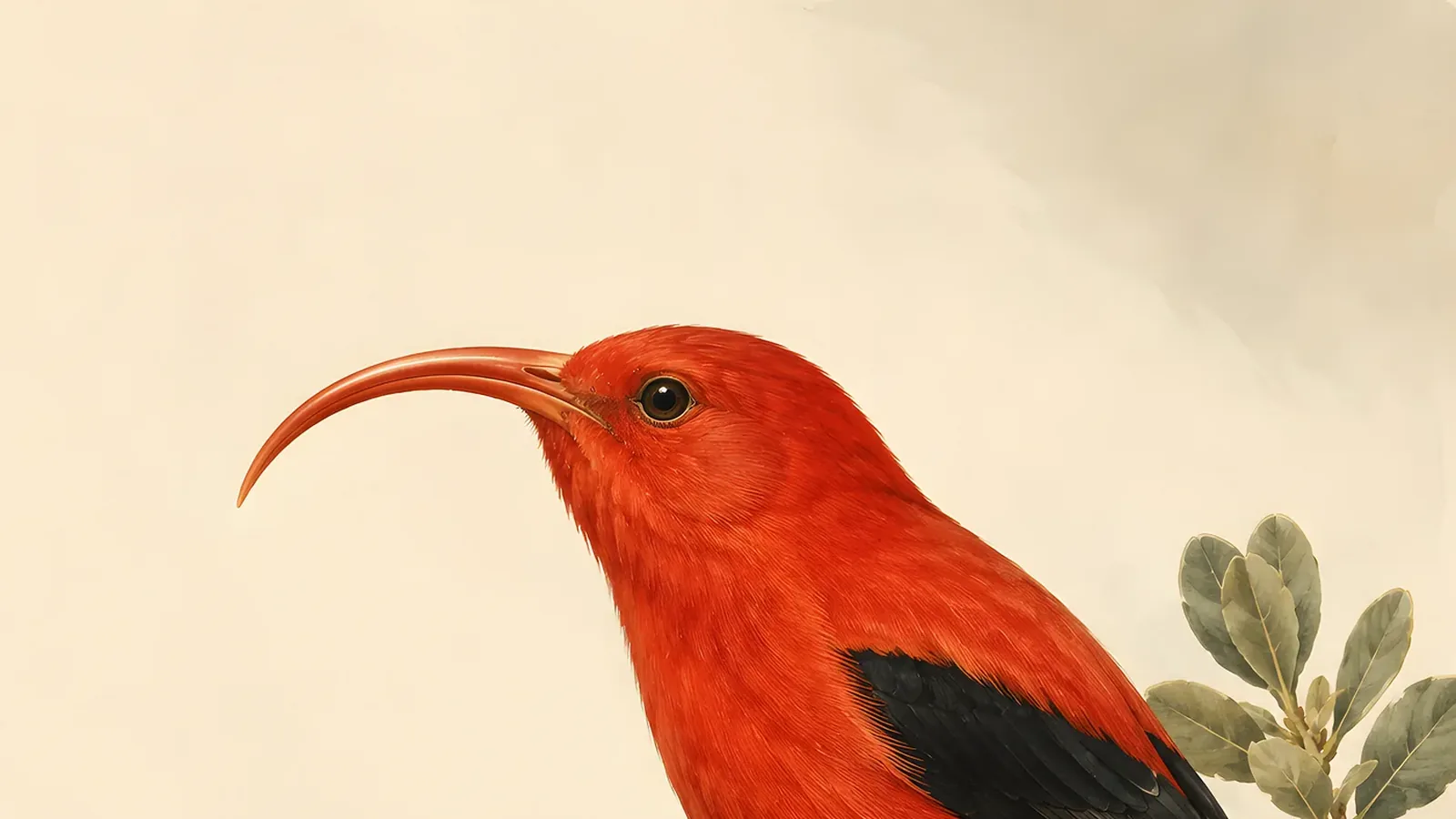
High on the slope of Haleakala, where the ohia trees push through mist and the air has a cold edge that feels wrong for any island in the Pacific, a flash of fire moves between branches. Drepanis coccinea - the Iiwi - drives its long salmon bill into a cluster of red lehua blossoms, the bill curving in an arc that matches the flower as precisely as a key matches a lock. The bird is the most visible survivor of the greatest bird radiation in the Pacific. It is also running out of mountain.
What the Iiwi looks like
Drepanis coccinea is 14 to 15 centimetres long and weighs 16 to 20 grams - roughly the size of a large sparrow, though the resemblance ends there. The adult is scarlet from crown to tail, a red so saturated it reads almost luminous in the filtered light of native forest. The wings and tail are glossy black. The bill is salmon-pink, long, and strongly decurved - a crescent of keratin precisely shaped for probing tubular flowers.
Immature birds are yellow-green and heavily streaked, so unlike the adult that early naturalists sometimes described them as separate species. The bill retains its curvature from the start. As the bird matures, the streaked plumage is replaced patch by patch with scarlet, the transition taking roughly a year and a half.
The bill length is not incidental. The Iiwi co-evolved for millions of years with the Hawaiian lobelioids, a group of flowering plants whose curved, tubular corollas match the bird’s bill with the precision of coevolution. As the lobelioids have declined through introduced grazing animals and land clearance, the Iiwi has shifted to the flowers of the ohia (Metrosideros polymorpha) as its primary nectar source. Researchers working on the original lobelioid relationship note that directional selection has since been pushing bill length shorter - the ohia flower is less demanding - though the long curve remains the bird’s most arresting feature.
| Measurement | Value |
|---|---|
| Length | 14-15 cm |
| Weight | 16-20 g |
| Bill shape | Long, strongly decurved, salmon-pink |
| Wing and tail | Glossy black |
| IUCN status | Vulnerable (VU) |
| ESA status | Threatened |
One finch, fifty birds
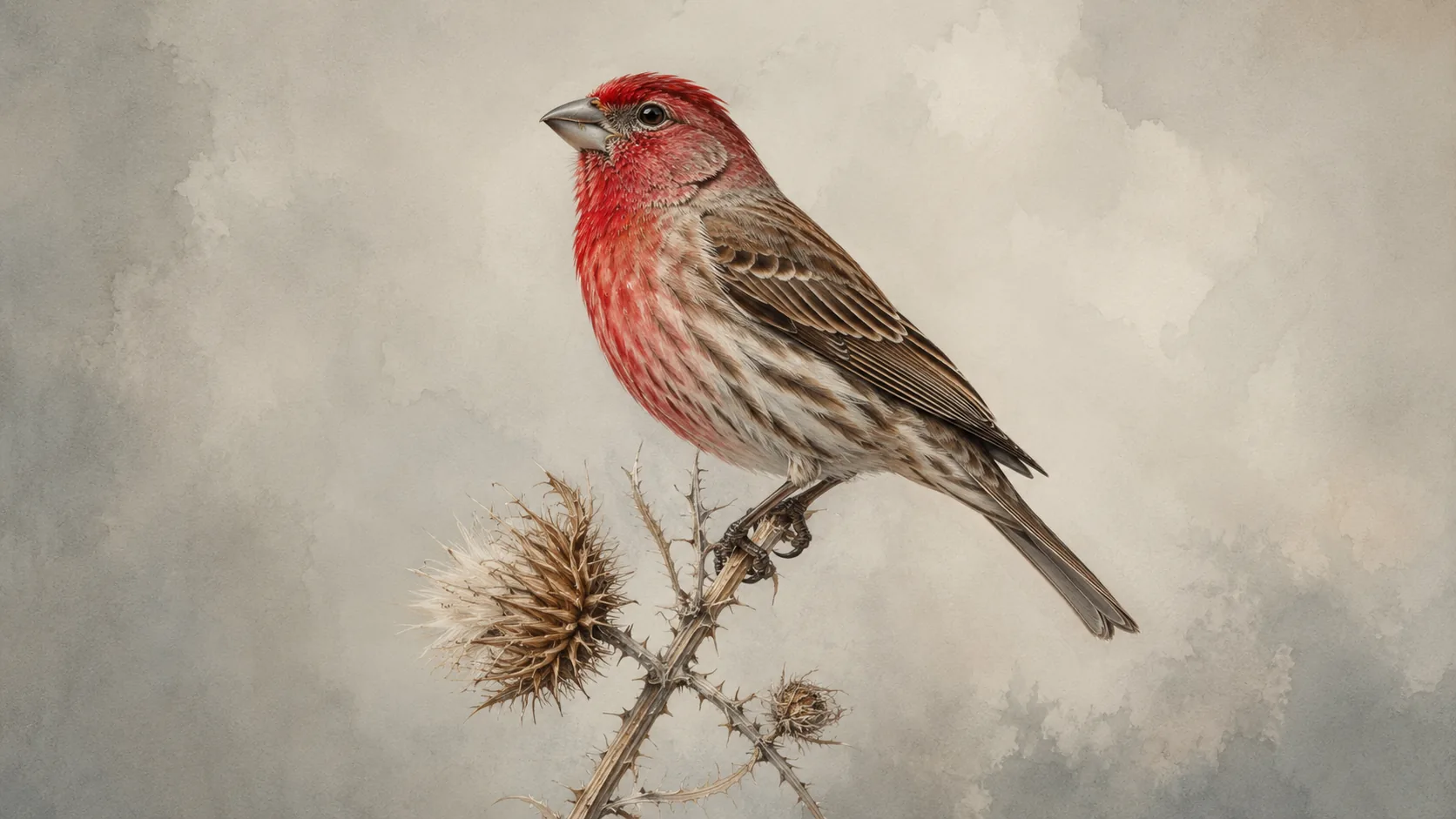
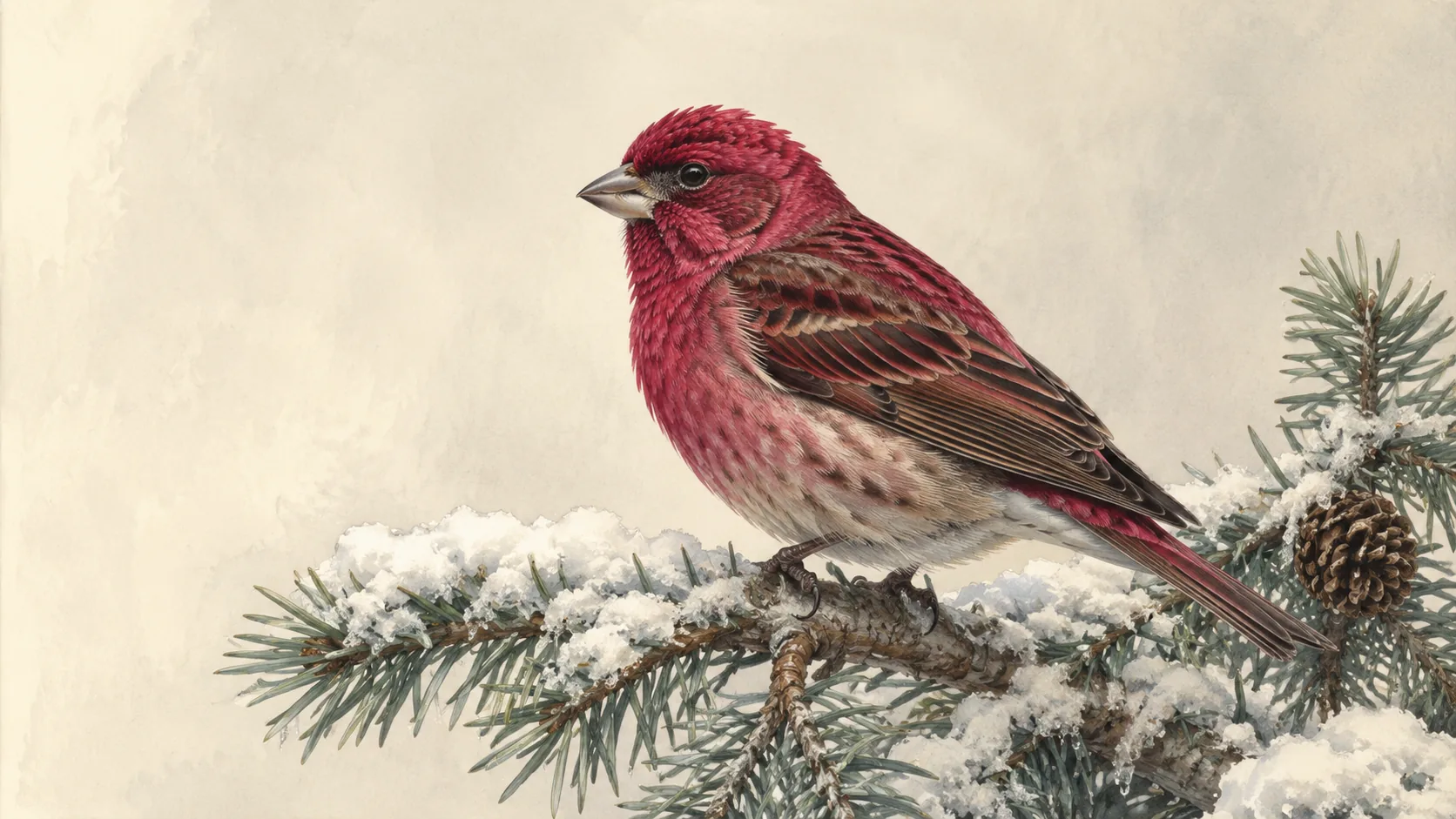
The Hawaiian honeycreepers are classified within Fringillidae - the same family as the house finch and the purple finch - and the resemblance to those familiar seed-crackers is the point. A single finch ancestor, closely related to Eurasian rosefinches of the genus Carpodacus, reached the Hawaiian archipelago roughly five to six million years ago. Lerner and colleagues (2011, Current Biology, doi: 10.1016/j.cub.2011.09.039) resolved the phylogeny using 13 nuclear loci and whole mitochondrial genomes, confirming the rosefinch origin and placing the most intense diversification between 4 and 2.5 million years ago, as the islands formed one by one and each new volcanic mass offered empty ecological space.
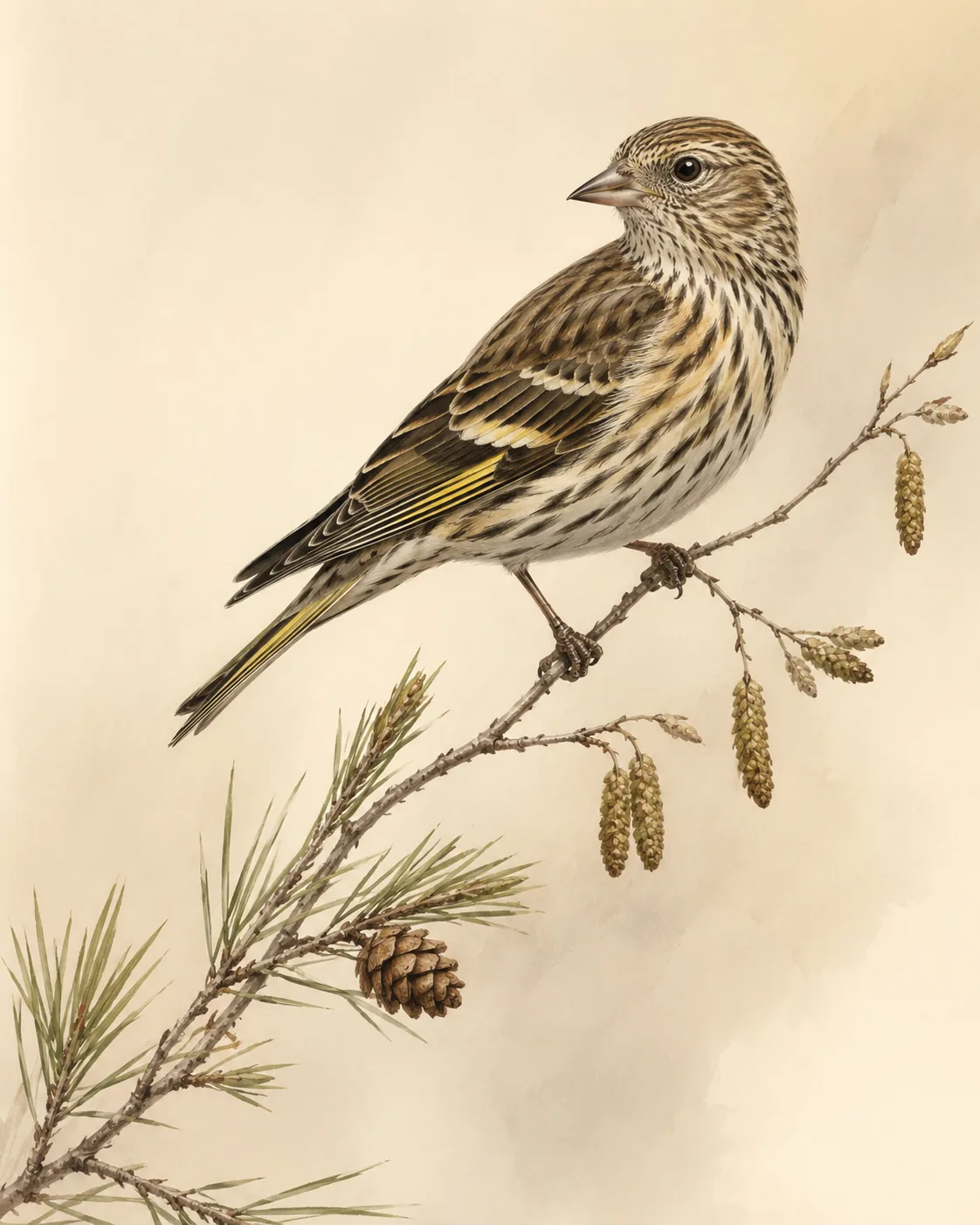
The radiation produced - at its peak - more than 50 distinct species. The bill shapes alone cover ground that in most of the world requires multiple unrelated families. Heavy, hooked bills for crushing hard seeds. Straight, thin bills for gleaning insects from bark. The crossed bills of certain species for extracting seeds from cones, paralleling the crossbills of the northern hemisphere that the pine siskin associates with across the continental boreal zone. And the long, curved nectar-feeders, of which the Iiwi is the most spectacular.
Lerner and her co-authors noted that honeycreepers “probably represent the most impressive example of an adaptive radiation in vertebrates” in terms of bill diversity. Whether that claim survives comparison with Darwin’s finches or the cichlids of African lakes is a conversation for systematists, but the Hawaiian case has one feature the others lack: it happened on the most isolated archipelago on Earth, with no land bridge, no nearby continent, no second chance for the ancestor if it failed.
Of those 50-plus species, only 17 survive today. The rest are gone - some before European contact, from Polynesian-era hunting and habitat clearance, others in the two centuries since. Among the surviving 17, Lerner’s study recorded six critically endangered, four endangered, and five vulnerable.
The mosquito and the malaria
The principal cause of the collapse is not habitat loss, though habitat loss has accelerated everything. It is a mosquito.
Culex quinquefasciatus, the southern house mosquito, was introduced to Hawaii in the 1820s, probably in water casks off whaling ships. It carried Plasmodium relictum, a blood parasite that causes avian malaria. Hawaiian honeycreepers had spent millions of years on an archipelago with no native mosquitoes. They had no evolutionary exposure to the parasite and, accordingly, no resistance.
The experimental evidence is precise. Atkinson and colleagues (1995, Parasitology, 111(S1): S59-S69) inoculated Iiwi with Plasmodium relictum under controlled conditions. Mortality reached 100 percent in high-dose birds. In low-dose birds it reached 90 percent. Capture-recapture data from wild populations produced an estimated field mortality rate of approximately 93 percent in susceptible birds. A single infected mosquito bite is, for most Iiwi, a death sentence.
The Hawaii Division of Forestry and Wildlife’s own fact sheet states it plainly: nine of ten individuals died within 37 days of receiving a single bite from an infected mosquito.
This is why the Iiwi no longer lives where most people in Hawaii live. The bird’s current range is restricted to high-elevation forest on Hawaii Island and Maui, above roughly 1,250 metres (4,100 feet). At those elevations, temperatures are cold enough that Culex quinquefasciatus cannot complete its larval development. The high forest is the refuge. It is the only ground where the bird can breed and survive.
The race up the mountain
The refuge is shrinking.
“Warming has already been observed at higher elevations in Hawaii, and malaria transmission is predicted to become more frequent and intense in high forests during the second half of this century.” - Liao, Atkinson, LaPointe, and Samuel, PLoS ONE, 2017.
Liao and colleagues (2017, PLoS ONE, 12(1): e0168880) modelled avian malaria transmission across the Hawaiian Islands under a range of climate projections through to the end of the twenty-first century. Under the high-emissions scenario (RCP8.5), temperatures at previously safe high elevations rise enough to permit stable mosquito breeding. The disease moves upslope. The zone where Iiwi can survive without encountering infected mosquitoes contracts. Iiwi population growth rates in the model collapsed to between 0.3 and 0.5 in worst-case scenarios - below replacement at every elevation. The authors concluded that mitigating malaria transmission at high elevations should be the primary conservation priority for Hawaiian forest birds.
The population of Iiwi in Hawaii - the Big Island - remains the largest. Surveys on Oahu and Molokai have found the species effectively gone, or present in numbers too small to track reliably. On Kauai, field crews from the Kauai Forest Bird Recovery Project now record the call of a single bird in the Alakai Swamp as a significant event. The call itself - a complex series of creaks and whistles often described as the sound of a rusty door hinge - has become something field biologists on Kauai stop to mark and record, because it means one is still there.
What it sounds like
The Iiwi’s voice is one of the stranger sounds in American birding. Cornell’s All About Birds and the Maui Forest Bird Recovery Project both describe a varied repertoire of creaks, whistles, gurgles, and reedy notes joined into a halting, improvised song. The call most likely to identify the species at distance - from a canopy too thick to see into - is a loud, rasping squeak compared by multiple field observers to a rusty door hinge or to the sound of two balloons rubbed together.
For a bird of such visual impact, the mismatch is striking. The Iiwi is one of the reddest birds on Earth. Its song sounds like something needs oil.
What is left
The U.S. Fish and Wildlife Service listed the Iiwi as Threatened under the Endangered Species Act in 2017. The IUCN assessment carries a Vulnerable status under criterion A2ace, reflecting the observed population reduction and the continuing threat from avian disease. The listing has driven investment in two principal strategies: predator control (rats, mongooses, and feral cats prey on nests and reduce breeding success), and more recently, large-scale mosquito control through the release of Wolbachia-infected male Culex quinquefasciatus that suppress the mosquito population by producing non-viable eggs - a method now being deployed at scale by the Birds Not Mosquitoes coalition in collaboration with the state and federal agencies.
Whether those interventions arrive fast enough is uncertain. The Liao et al. models suggest the window is measured in decades, not centuries. The high-elevation forests of Maui and Hawaii Island are cold enough, for now. The mosquitoes have not yet arrived in breeding numbers at the summit zones where the Iiwi holds on.
The radiation that produced 50 species from a single ancestor took roughly five million years. What is being decided on the upper slopes of Haleakala and Mauna Kea in the coming decades is whether the emblem of that radiation, the most recognisable bird in the Pacific, will be among the last things it produced.