State Guide
Red Birds in Pennsylvania
Stand at the edge of a mature oak stand in the Pocono highlands on a warm May morning and you will hear two red birds without seeing either. One call drops from the canopy in clean, burry phrases. The other answers from the thicket at your back in short whistled chips. The tanager is above you. The cardinal is behind you. Pennsylvania splits its red birds by elevation and habitat so cleanly that once you understand the pattern, you stop scanning and start listening at the right height.
The state runs from the coastal plain outside Philadelphia to the ridge-and-valley Appalachians in the centre to the high plateaus of the north. That range of elevation and forest age is exactly why Pennsylvania holds more red-plumaged species than most of its neighbours. Eleven species carry some red on the male. Five of them breed here. The others pass through, winter in small numbers, or irrupt from the north when food fails.
The species, sorted by where you will actually find them
| Species | Red feature | Season | Where |
|---|---|---|---|
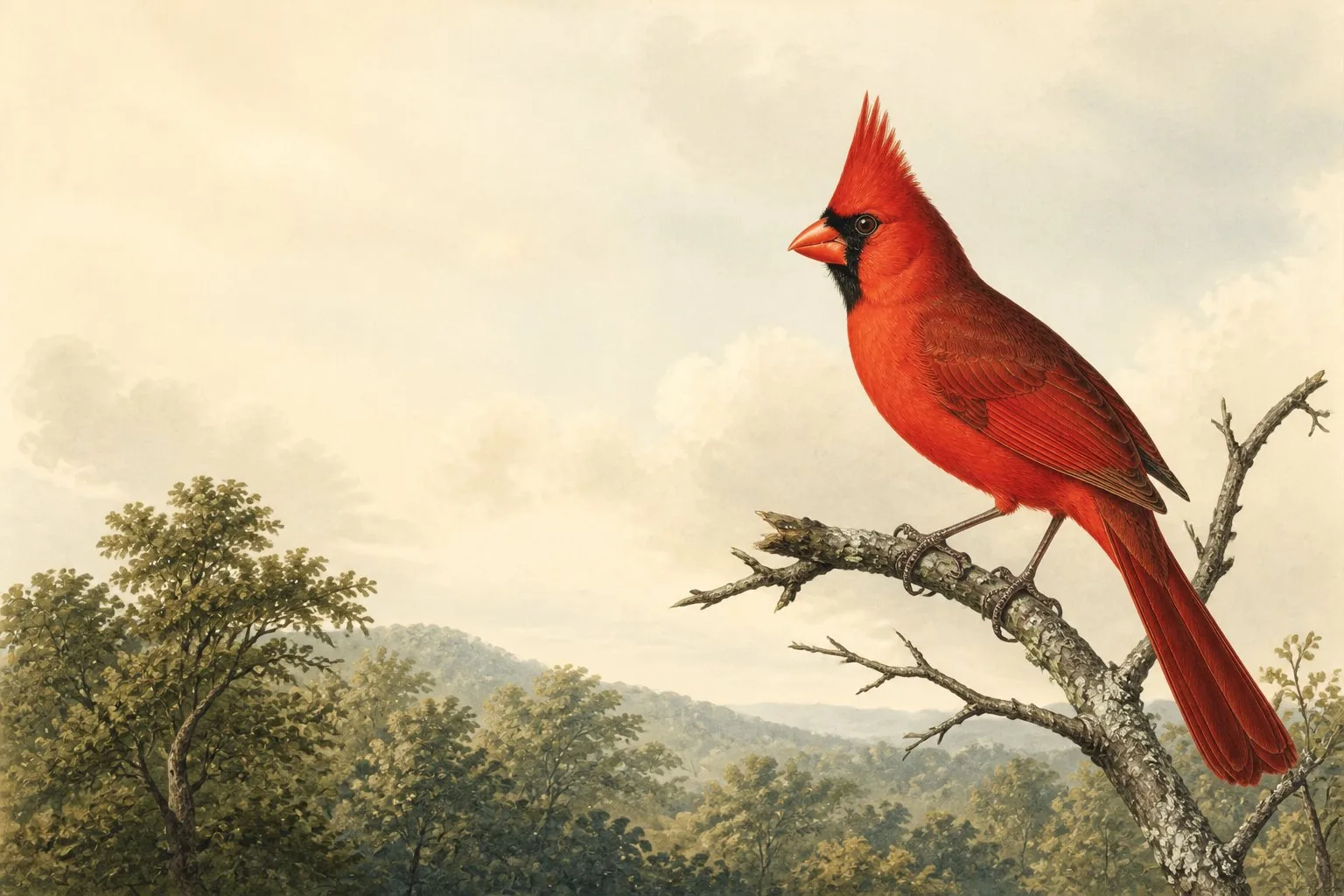
| Northern Cardinal | Male entirely red | Year-round | Suburbs, edges, thickets statewide |
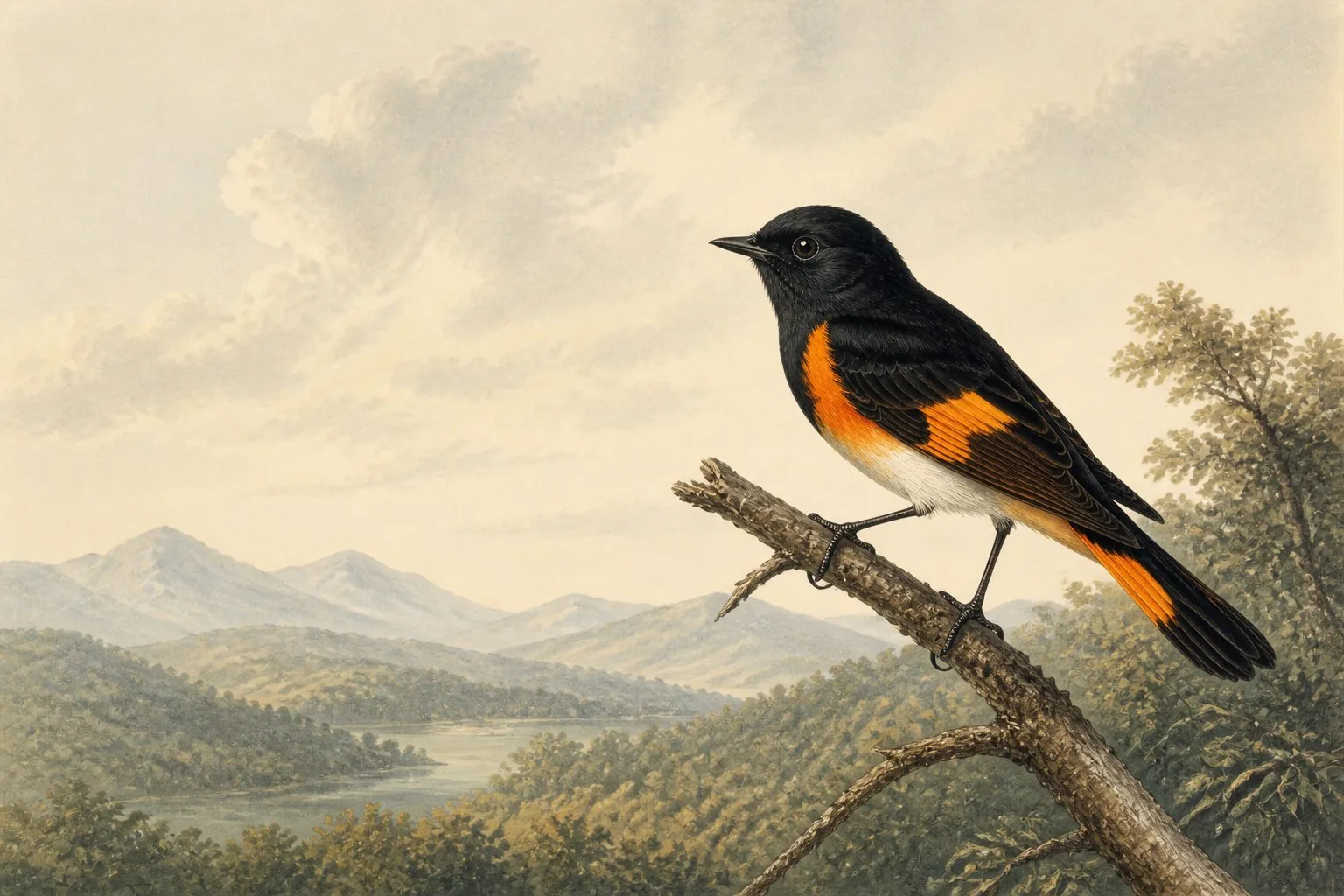
| Scarlet Tanager | Male red with black wings | May - September | Mature deciduous canopy |
| Rose-breasted Grosbeak | Red breast triangle | May - September | Deciduous woodland understorey |
| Red-headed Woodpecker | Entirely red head | Year-round (uncommon) | Open woods, large dead snags |
| Red-bellied Woodpecker | Red cap and nape | Year-round | Deciduous forests, suburbs |
| Pileated Woodpecker | Red crest, large | Year-round | Mature, unbroken forest |
| House Finch | Red wash on head and breast | Year-round | Urban and suburban feeders |
| Purple Finch | Deep raspberry wash | Year-round; winter peak | Forest edges, feeders |
| Ruby-throated Hummingbird | Red throat (male) | May - September | Garden edges, forest clearings |
| Red Crossbill | Males brick-red | Year-round in mountains; irruptive | Coniferous stands, ridge tops |
| White-winged Crossbill | Males rose-pink to red | Irregular winter | Spruce and hemlock stands |
The pattern inside that table: red birds at the top are predictable. Red birds at the bottom are not. Plan your spring and summer around the top half. Plan your winter around luck and cone crops.
The Scarlet Tanager’s one requirement
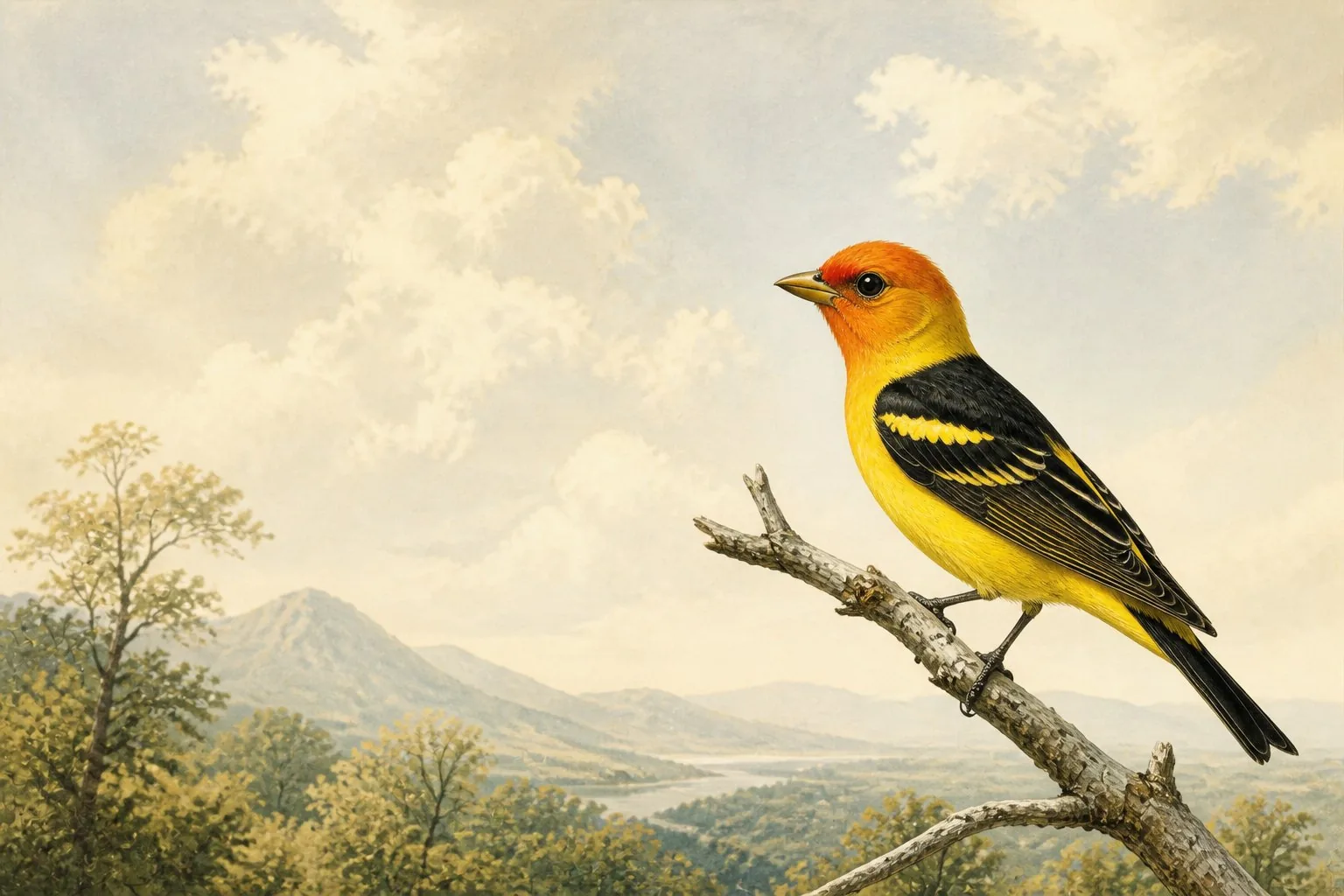
Piranga olivacea is not rare in Pennsylvania. It is common wherever old-growth or second-growth forest has matured to the point where the canopy closes 20 to 30 metres overhead. That condition is widespread in the Poconos, the Laurel Highlands, and the forest blocks between the ridges of central Pennsylvania. The tanager requires contiguous forest of that quality, not scattered woodlot fragments, which is why you will not find it in suburban yards even when cardinal and grosbeak appear at the same feeder. She is harder to see than he is - the Scarlet Tanager’s olive-yellow female is one of the most reliable sources of misidentification in eastern birding.
The male arrives in early May, usually within a few days of the first full leaf-out. He feeds almost entirely on caterpillars during nesting and eats hard mast in late summer before departing in September. From his perch at canopy height he is often heard before seen, and many people who know the song well have never had a clean view.
The Northern Cardinal’s argument
The Northern Cardinal, Cardinalis cardinalis, does not migrate and does not require old forest. He requires dense cover, a reliable seed source, and winter temperatures that do not exceed his metabolic threshold. Pennsylvania stays within that range statewide, which is why he is the only red bird you are equally likely to see in downtown Philadelphia and in a farmstead hedgerow in Lancaster County in February.
The cardinal’s year-round residency means every male you see in March - at his most intensely red, his plumage worn down to bare pigment - is the same bird who looked scruffy and half-bald at your feeder the previous August, rebuilding the feathers that carry the carotenoid pigment his mate uses to judge him. The colour is not ornament. It is a record of last summer’s nutrition.
For more on that August transformation, the full account is at Cardinal molting.
The cardinal print captures the March bird, which is deliberate. August is the honest version. March is the argument.
The crossbills and why they disappear
Red and White-winged Crossbills breed in Canada’s boreal forests and descend into Pennsylvania erratically. They follow cone crops, not seasons. In years when spruce and hemlock produce well across the state’s northern tier - Potter, Tioga, and Sullivan counties in particular - crossbills may linger through winter in numbers. In years when the crop fails across their normal range, they push south and appear in places they are rarely expected. The Cornell Lab’s eBird records show large irruption years in the early 2000s and again in recent winters, though no two invasions look the same.
The reason for the bill is the obvious one: crossed mandibles lever open cones that other birds cannot extract seed from. A crossbill feeding on a spruce cone works faster than it looks possible, twisting and prying with a bill shaped for exactly that gap.
Where to go
Hawk Mountain Sanctuary on the Kittatinny Ridge is the state’s most famous raptor watchpoint - long-term counts have tracked autumn migration there for decades - but it is not the best place to find red passerines. For tanagers and grosbeaks, any contiguous forest block in the Poconos or Laurel Highlands with mature oaks will outperform it. For cardinals, every county has them.
Presque Isle State Park on Lake Erie is worth a separate trip in May, when migrants funnel along the lakeshore and passerines that are hard to find inland appear in the park’s scrubby margins in concentrations. The park has recorded over 320 species in total and is the most reliable place in the state to see migrating birds at close range.
For crossbills, the northern plateaus in winter are the target. No specific site guarantees them; the search requires current eBird reports and some willingness to drive a logging road.