Symbolism
Seeing two cardinals: what it means
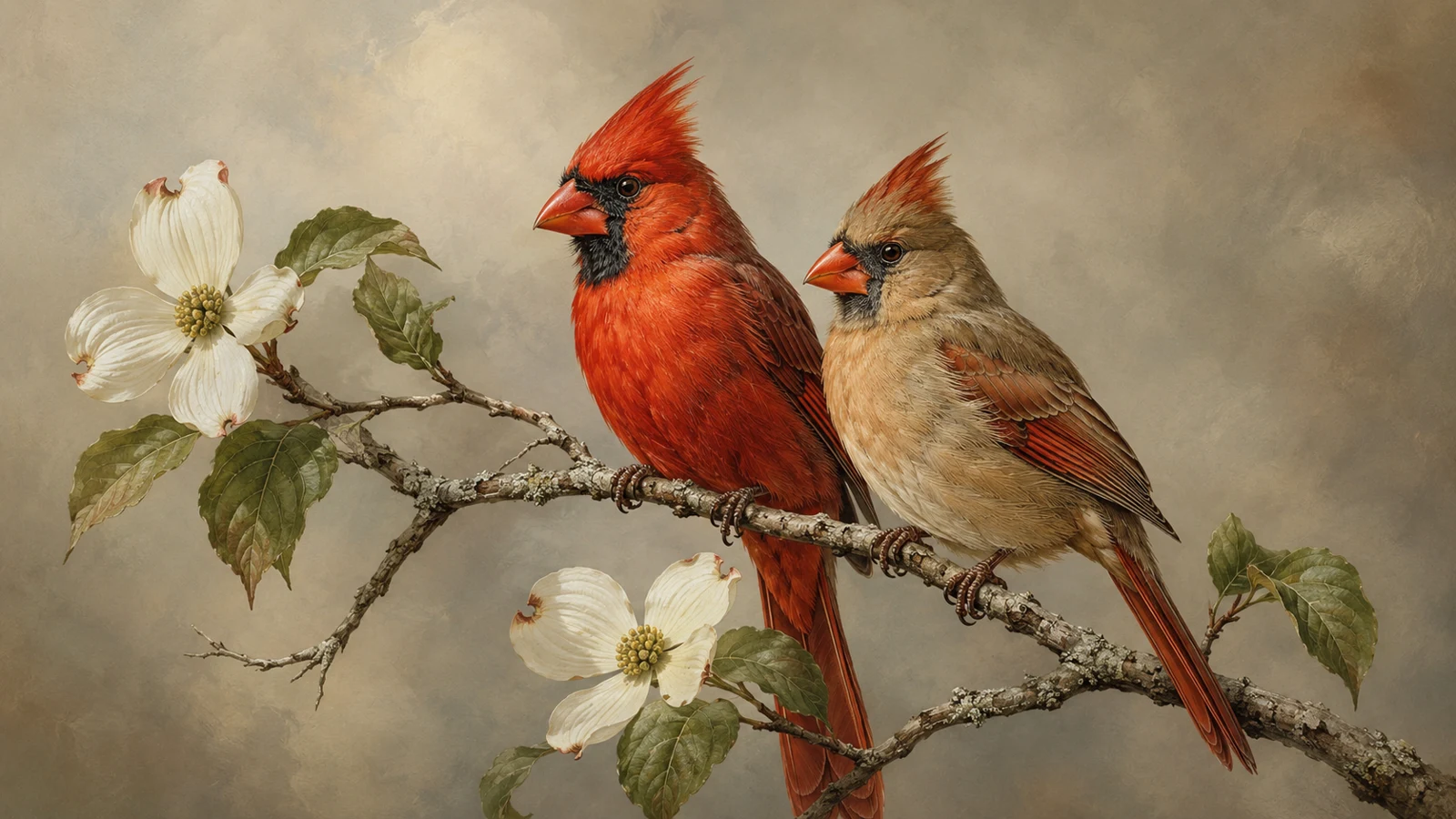
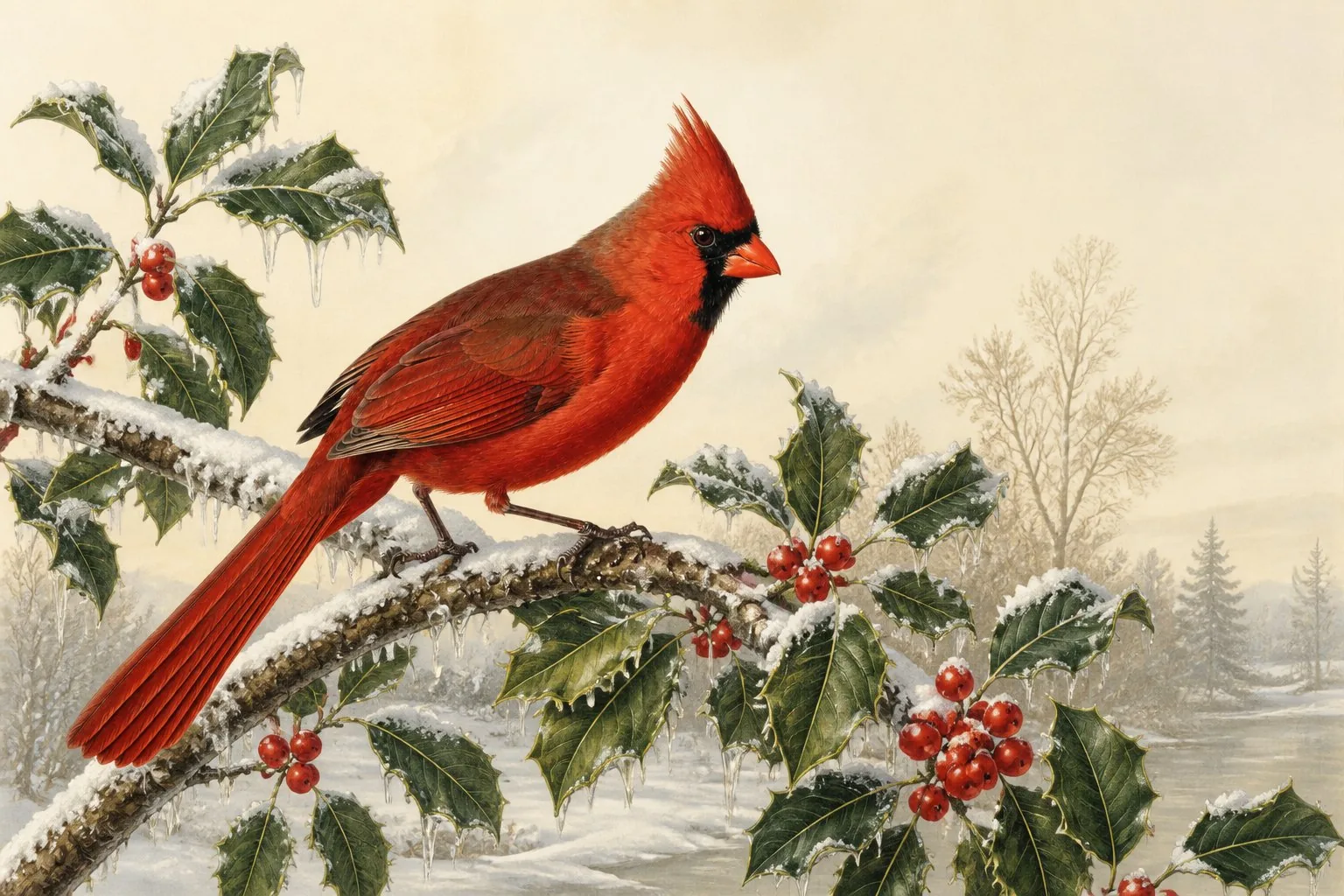
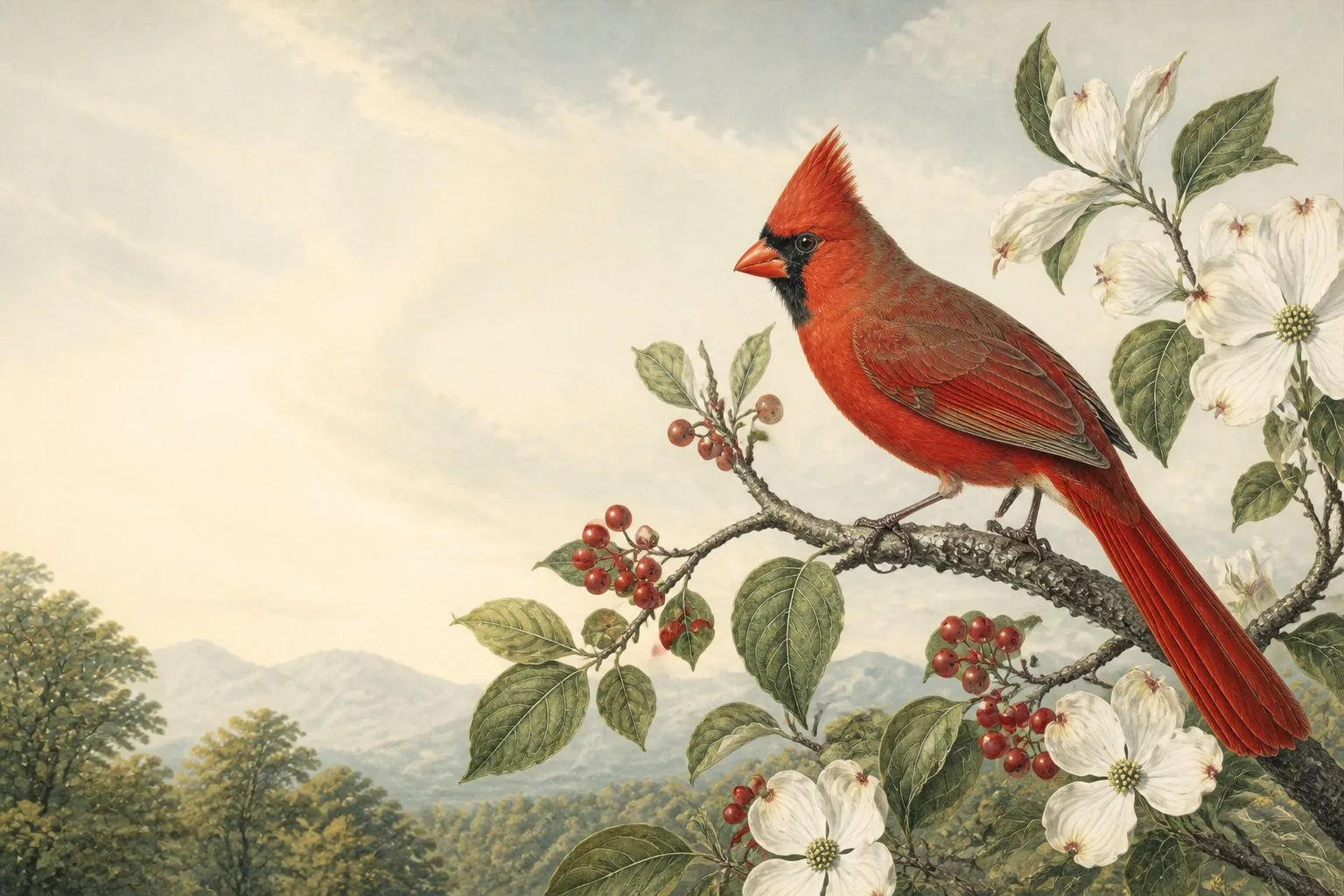
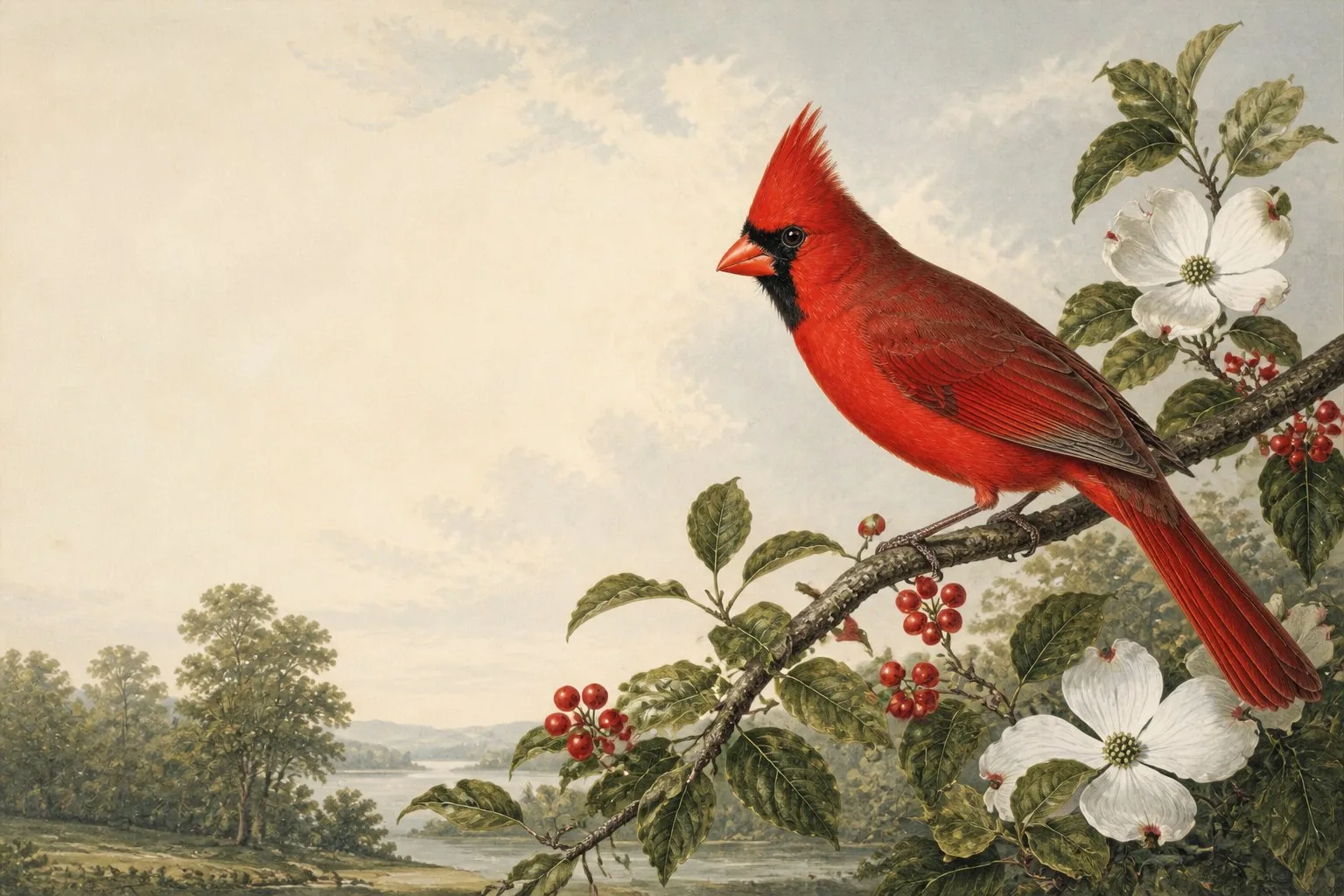
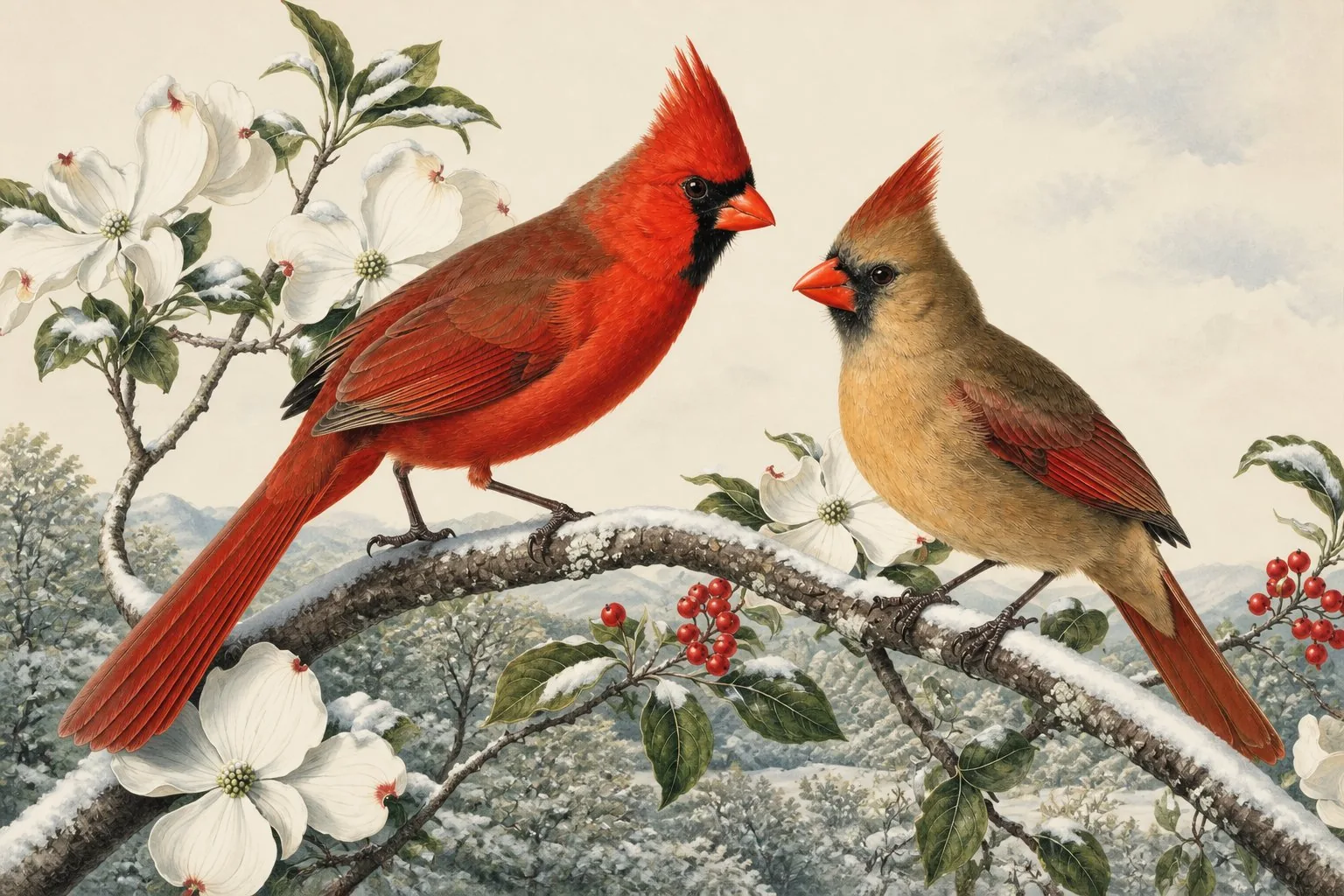
You walk to the kitchen window in the morning and there are two cardinals on the holly. The male is the bright red one you have seen for weeks. The female next to him is the buff-brown one with the rose-tinted wings. They are side by side. The question that immediately arrives is whether this means something.
Biologically, almost certainly. Cardinals pair-bond. Two cardinals at the same feeder, at the same time of year, on the same shrub, are roughly nine times in ten a mated pair who have been together for at least one breeding season and likely several. The pair is the standard cardinal social unit outside the brief winter convergences. If you see two cardinals together, you are looking at a couple at home in their territory.
Symbolically, the reading layered onto that biological fact runs in three directions.
The most common modern reading
A male-and-female cardinal pair at the feeder is, in contemporary North American folk reading, a sign of faithful partnership. The reading is reinforced by the cardinal’s actual mating biology - the bird does mate for life or close to it; the female is among the very few North American songbirds whose song matches the male’s in complexity; the pair stays together through winter when most birds split up. The folk reading is, in this case, biologically defensible.
The interpretation people commonly assign to a pair sighting:
- A relationship at a turning point. Forward or backward, but the bird has appeared at a moment of decision.
- A reminder of a long marriage. The pair sometimes registers strongly for people whose partners have died.
- A sign that balance is returning after a hard period.
- An encouragement to commit, propose, or repair.
None of these readings is in scripture or in older transmitted tradition. They have settled into modern folk usage through the same vectors that produced cardinals appear when angels are near: greeting cards, internet aggregation, devotional writing of the 1990s and 2000s. They are recent. They function regardless.
The reading about the dead
A smaller but persistent reading interprets a cardinal pair as two visitations rather than one. Two people who have died. The grandparents. The two parents. The first spouse plus another.
This reading is more particular and more situational. It surfaces most often for people who have lost two members of the same generation in close succession, or for people in long widowhood whose partner died and whose own parent died after. The pair carries the weight of both losses at once.
The reading is not in any tradition older than about thirty years. Its emotional logic is straightforward: the bird has appeared in twos, and the human is in a state where the twos line up with absent people.
The Native American thread
Several Eastern Woodlands traditions associate the cardinal with courtship and faithful partnership specifically. The bird’s pair-bond behaviour was observable to people who paid attention, and the cardinal’s role in some Cherokee and Choctaw oral teachings is as a marriage emblem rather than a death messenger. The pair, in this reading, is a sign that a relationship is intended to last.
How much of this reading reached modern non-Native readers through transmitted teaching versus internet aggregation is hard to track. The marriage symbolism appears to be older and better-supported than the visitation symbolism, but neither is universal across tribes whose ranges historically included cardinals.
What the bird is actually doing
A male-and-female cardinal pair feeding together in your garden is doing several specific things, and it is worth knowing what they are because the biological reading does not undermine the symbolic one. It anchors it.
- They are coordinating feeding. Cardinals do not generally feed simultaneously at the same dish in summer; the female feeds while the male watches for hawks, then they switch. Seeing them together at a feeder usually means winter, when territoriality relaxes.
- They are confirming the bond. Pair-bonded cardinals counter-sing and counter-call across the day. A pair at the same feeder is sustaining the relationship, in a literal sense.
- They are demonstrating to the human watching that the pair is still intact. Not consciously. But if one bird had died over the winter, the other would not appear with a new mate until early March at the earliest. Seeing both birds in December is, statistically, evidence that the pair from last summer made it.
The biological reading is, if anything, more compelling than the symbolic one. A pair-bonded relationship is hard to maintain in any species. Cardinals manage it across years, across hard winters, across multiple broods, across territorial disputes. The pair at your holly is a small ongoing success.
When the pair is not a pair
A small percentage of the time, two cardinals together are not a mated pair.
- Two males in early spring. A territorial dispute. Watch for crest-raising, dive-flight, calls. The encounter is brief.
- A female and an immature bird. In autumn, the female may travel with juvenile cardinals from late broods. These look like females but are her young.
- Two cardinals from a winter flock. From October to February cardinals form loose flocks of ten to thirty birds. Two from such a flock are simply two flockmates and may not be paired.
If you are unsure: the body language is the giveaway. A pair feeds without aggression, takes turns at the dish, and the male sometimes hands the female a seed directly. Non-pair cardinals do not feed each other.
How to receive the sighting
The same advice that applies to a single cardinal applies to a pair, with one addition. Stop what you are doing. Look at the birds. Notice the relationship between them. The pair-bond is one of the few enduring partnerships visible at a backyard feeder, and it is worth a minute of your attention regardless of what symbolic weight you attach to it.
The bird does not know you are watching. He is busy. The female on the next branch is his life. The encounter is freely given by birds who have no idea they are giving it.