Field Guide
Pueo
Midmorning on the slopes of Haleakala, and the grassland is bright and still. Then a brown-streaked shape lifts from a fence post at the edge of the field - low, buoyant, working into the wind with deep, floppy wingbeats. It quarrels back and forth over the grass like a hawk, face angled down. A pueo. The same owl that Hawaiians have called ancestor, guardian, and guide for as long as the islands have held people.
The pueo is the Hawaiian Short-eared Owl, a subspecies endemic to the Hawaiian Islands. It arrived here from the American mainland, colonised, and over thousands of years became something distinct - smaller, more daytime-active, more closely woven into the culture it shares the land with.
What it looks like
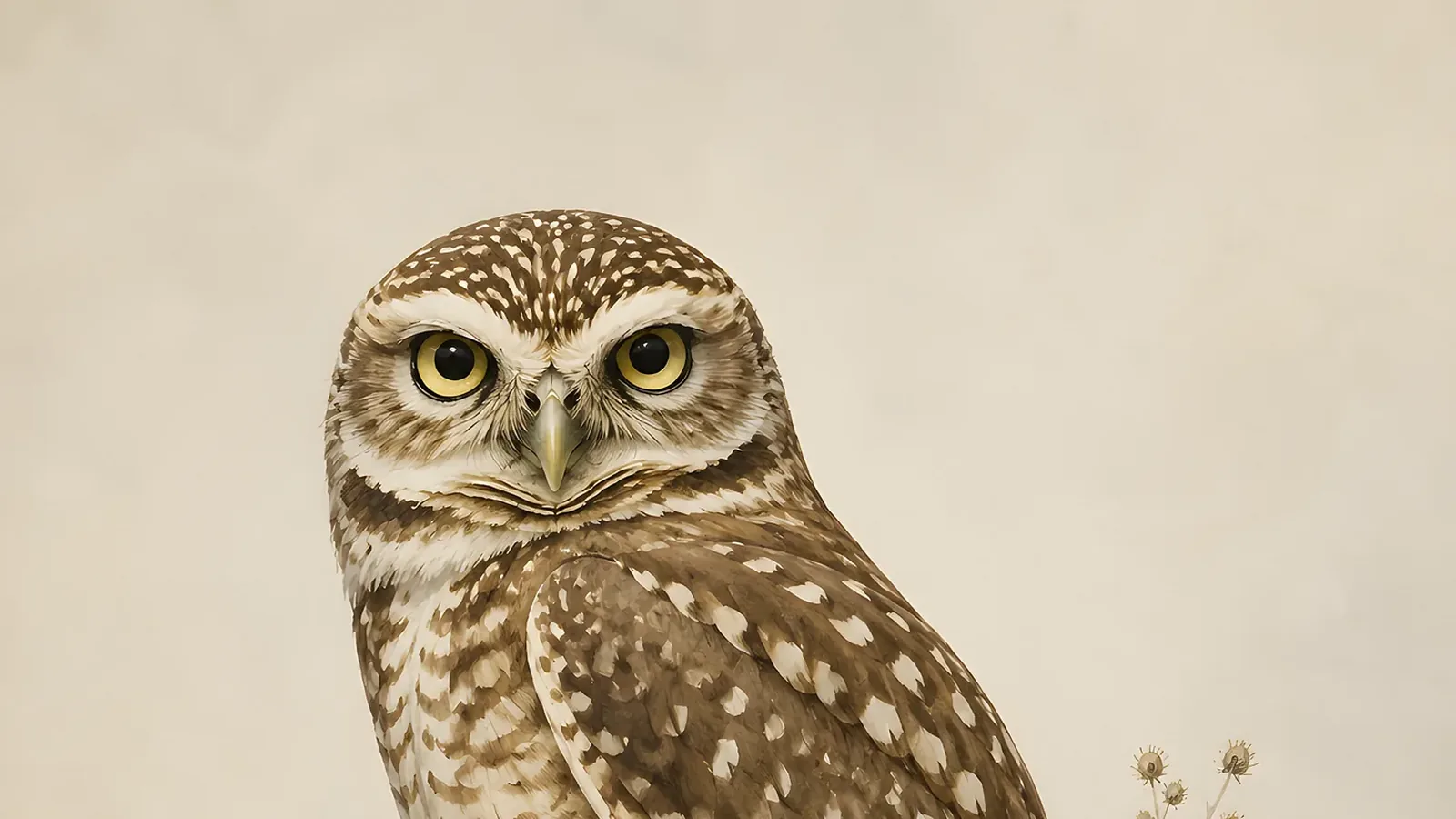
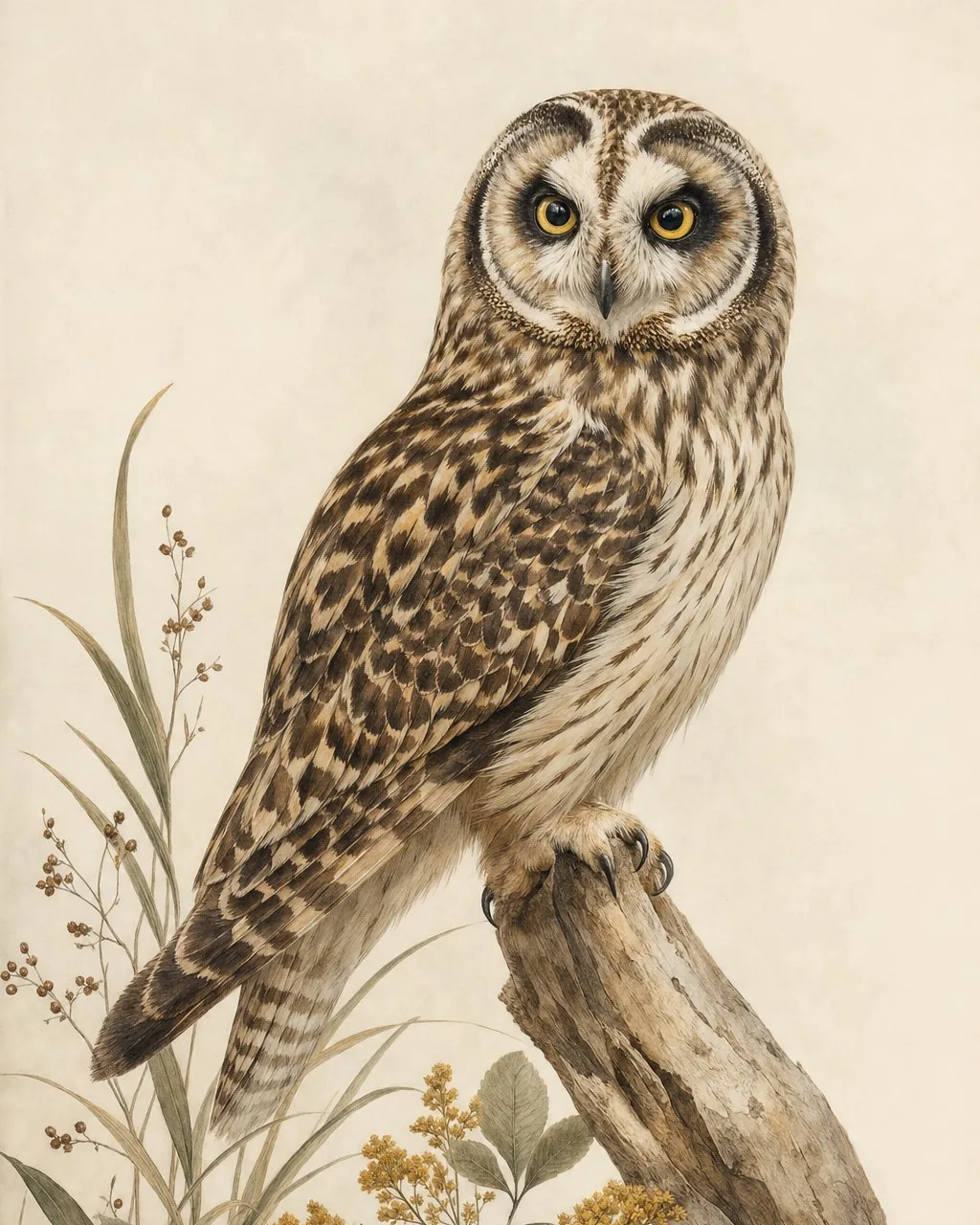
The pueo is a medium-sized owl with a round, flat face and bright yellow eyes. The facial disc is pale, outlined in dark brown. The upperparts are brown streaked with buff and white, the underparts paler with bolder streaking. The ear tufts that give “short-eared” its name are almost invisible in the field - small, rarely raised, easily missed.
In flight, the wings appear long and buoyant. The wrist of the wing shows a pale buff patch on the upper surface, and a dark carpal patch below - both useful field marks in a bird that spends a lot of time quartering in the open air. The wingbeats are loose, almost floppy, quite different from the swift, purposeful wingbeats of a falcon or hawk.
The pueo is slightly smaller on average than mainland Short-eared Owls, a product of island isolation and possibly of the different prey available in Hawaii.
| Measurement | Range |
|---|---|
| Length | 34-43 cm |
| Weight | 206-475 g |
| Wingspan | 85-110 cm |
| Lifespan | 4-12 years |
Voice
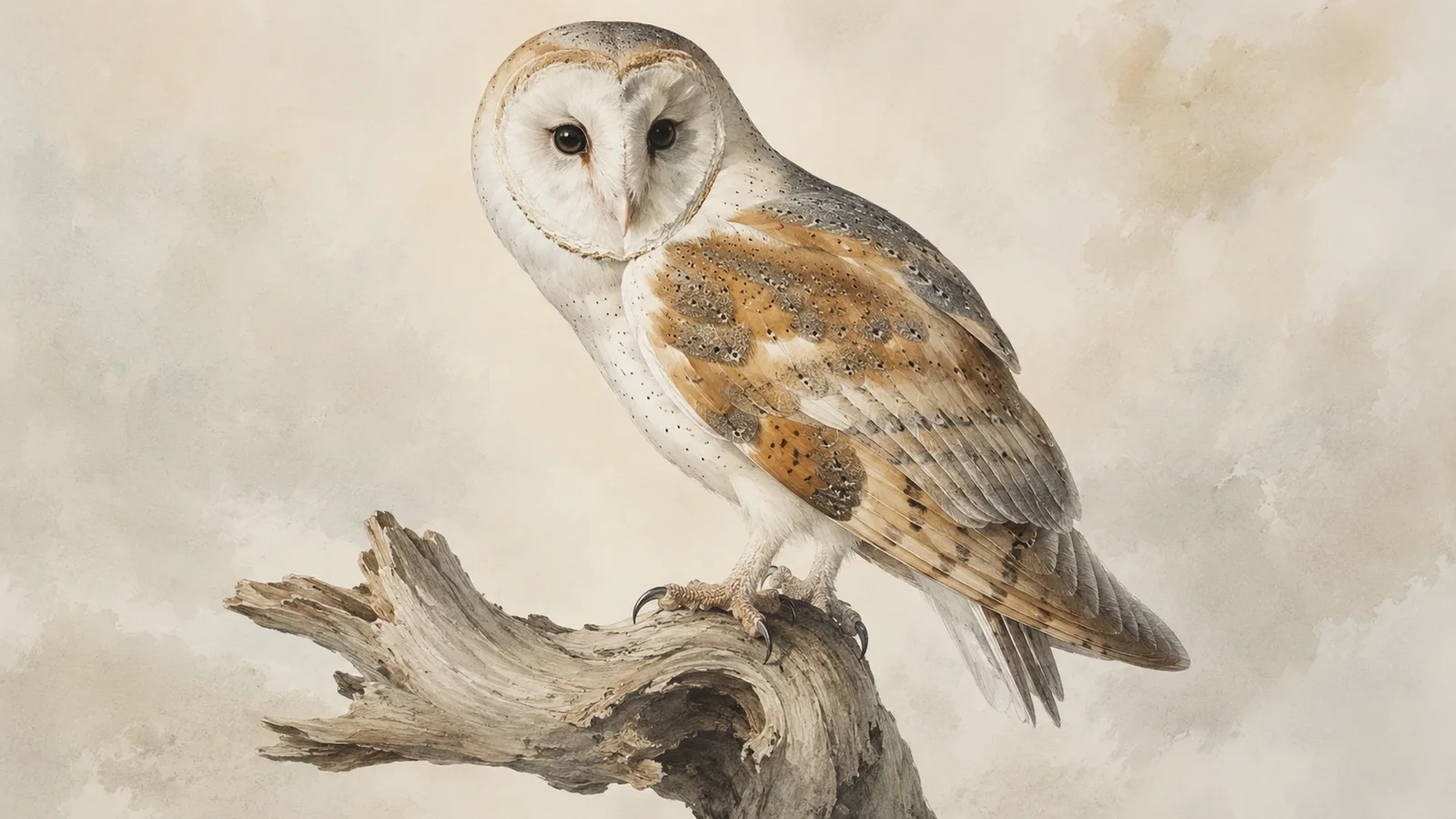
A rough, barking call - boo-boo-boo - and a hissing sound near the nest. In flight displays, males produce a wing-clapping sound, a series of rapid snaps made by the wingtips. The display is aerial and visible, rising and diving over the nest territory. The pueo does not hoot in the traditional owl sense, and its voice is unlike the Barn Owl that also inhabits Hawaii - the barn owl’s shriek is unmistakable by contrast.
“The Kumulipo, Hawaii’s great creation chant, places the owl among the very first creatures named. The pueo is not an afterthought in Hawaiian cosmology. It is foundational.” - traditional oral record
Range and habitat
The pueo is found on all the main Hawaiian Islands, from sea level to the summit zones of Maui and Hawaii island. It is most abundant in open country - grasslands, pasture, shrublands, agricultural margins, upland forest edges. On Kauai, populations are considered healthiest. On Oahu, the bird has declined sharply with urbanisation.
It is one of the few native Hawaiian birds that has adapted to human-modified landscapes. Converted sugarcane fields and cattle pastures provide hunting ground. Airport margins are used. This flexibility has helped it survive where more specialised native birds have not.
The pueo does not migrate. It is resident year-round.
Diet
Mainly small mammals - specifically the introduced house mouse and black rat that are now ubiquitous in Hawaii. This dietary shift onto invasive prey is ecologically interesting: the pueo consumes millions of introduced rodents annually, functioning as a native predator on an invasive prey base. It also takes native Hawaiian birds on occasion, and large invertebrates.
Hunting is primarily by low, quartering flight over open ground, using both hearing and vision. The facial disc functions as a parabolic dish, channelling sound toward the asymmetrically placed ears. In good light the bird hunts visually. In dim light or heavy grass, it listens.
Breeding
The pueo nests on the ground, in a scrape among grass or low vegetation, often on a hillside or open slope. The nest site is defended vigorously - adults will strike humans, dogs, and other perceived threats. Clutch size is two to seven eggs, larger clutches in years with high rodent prey.
Incubation is about four weeks. Chicks are mobile before they can fly - they scatter from the nest when disturbed, hiding individually in the grass, which makes them harder for a predator to take all at once. Both parents hunt to feed the young.
The aumakua
In Hawaiian tradition, the pueo is an aumakua - a family guardian spirit, an ancestor in animal form. This is not a metaphor or a decorative belief. In traditional Hawaiian cosmology, ancestors could take animal form after death and continue to protect their descendants. The pueo was one of the most widely recognised of these forms.
Families with pueo aumakua did not eat owls. They kept watch for them. A pueo circling overhead at a key moment - before a battle, at a birth, during a crossing at sea - was a sign of protection, of oversight from those who had gone before. To harm a pueo aumakua was to harm your own family line.
This protection was mutual. Hawaiians who recognised the owl as kin protected it, watched over its nest areas, and integrated it into the landscape of daily life. The bird had advocates built into the culture.
That relationship frayed with colonisation and the sweeping changes of the nineteenth and twentieth centuries. Introduced predators - rats, mongooses, cats, dogs - attack pueo nests with no such cultural check. Introduced owls are a different problem: the Barn Owl was deliberately introduced to Hawaii in 1959 to control rodents in sugarcane, and has established widely. It competes with the pueo for prey and territory, and in some areas appears to be the more aggressive competitor. Unlike the pueo, the Barn Owl has no tradition of protection behind it.
Hawaiian populations of pueo have declined significantly. The species is not yet listed as Endangered at the level of the global subspecies, but on Oahu its status is sufficiently worrying that it is listed as Endangered under Hawaii state law. Recovery efforts focus on predator control, habitat maintenance, and outreach that draws on traditional Hawaiian values - the aumakua relationship as a reason to protect.
There is something here that conservation biology does not often encounter: a case where the ecological argument and the cultural argument point in exactly the same direction. The native bird and the traditional belief system are allies.
Closing
Watch for it in the morning, low over pasture or the margins of agricultural fields. Its flight is unmistakable once you have seen it - that buoyant, ground-hugging quarrel into the wind. Look up and it is an owl. Look more carefully, in the light of what the islands carry in their memory, and it is something older: a presence that has been here, keeping watch, longer than any of the invasives that now crowd around it.