Field Guide
Lesser Goldfinch
The Lesser Goldfinch is the West’s little goldfinch. Smaller than the American Goldfinch, darker on the back, and far more at home in dry country. Where the famous yellow bird belongs to thistle fields and open meadows, this one works oak scrub, suburban gardens, and the brushy edges of arid land.
It is a bird most people meet at a feeder before they ever name it.
How to know it
Start with size. Spinus psaltria is tiny, smaller than a House Finch, and it gives the impression of a goldfinch that has been shrunk.
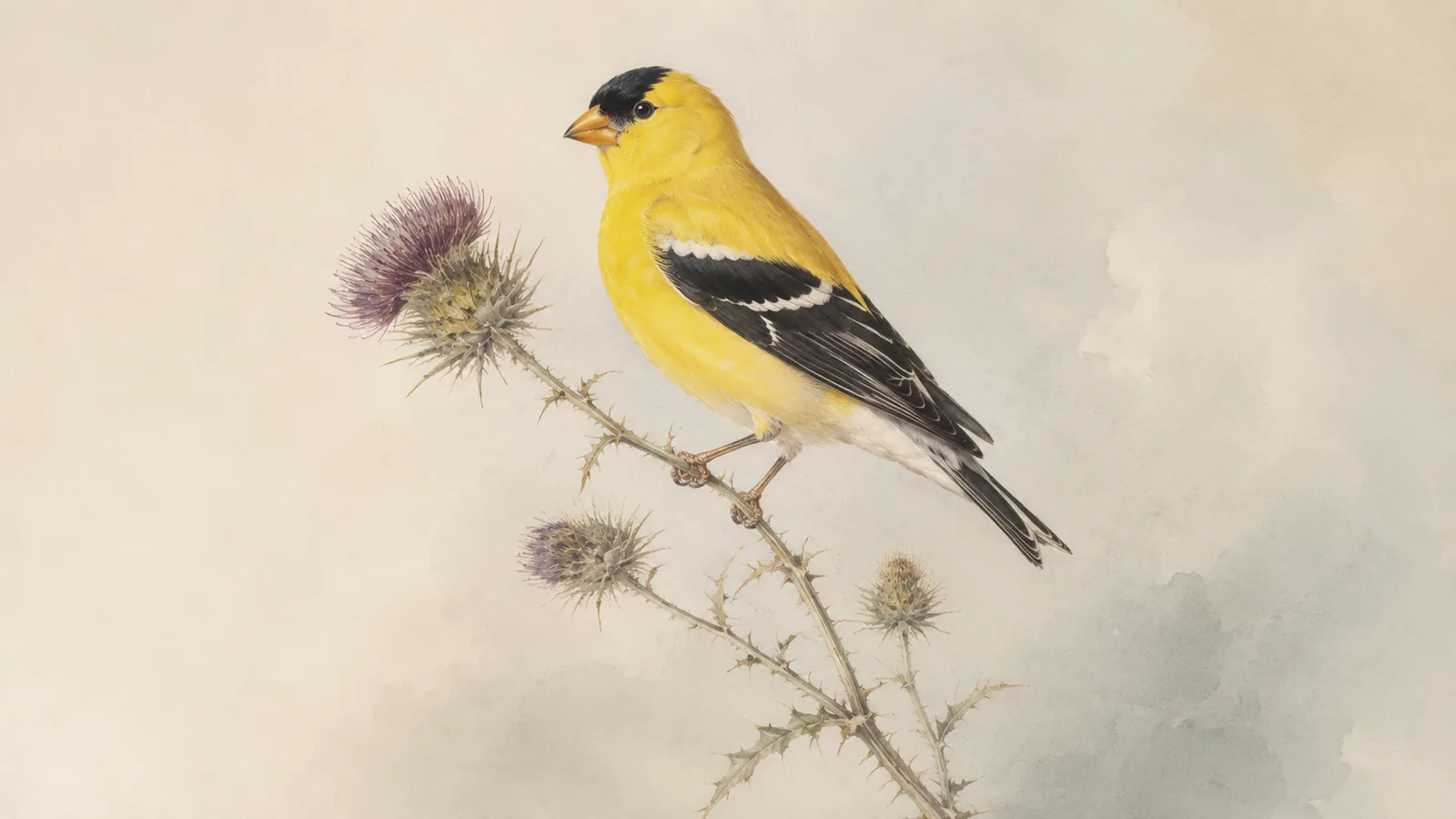
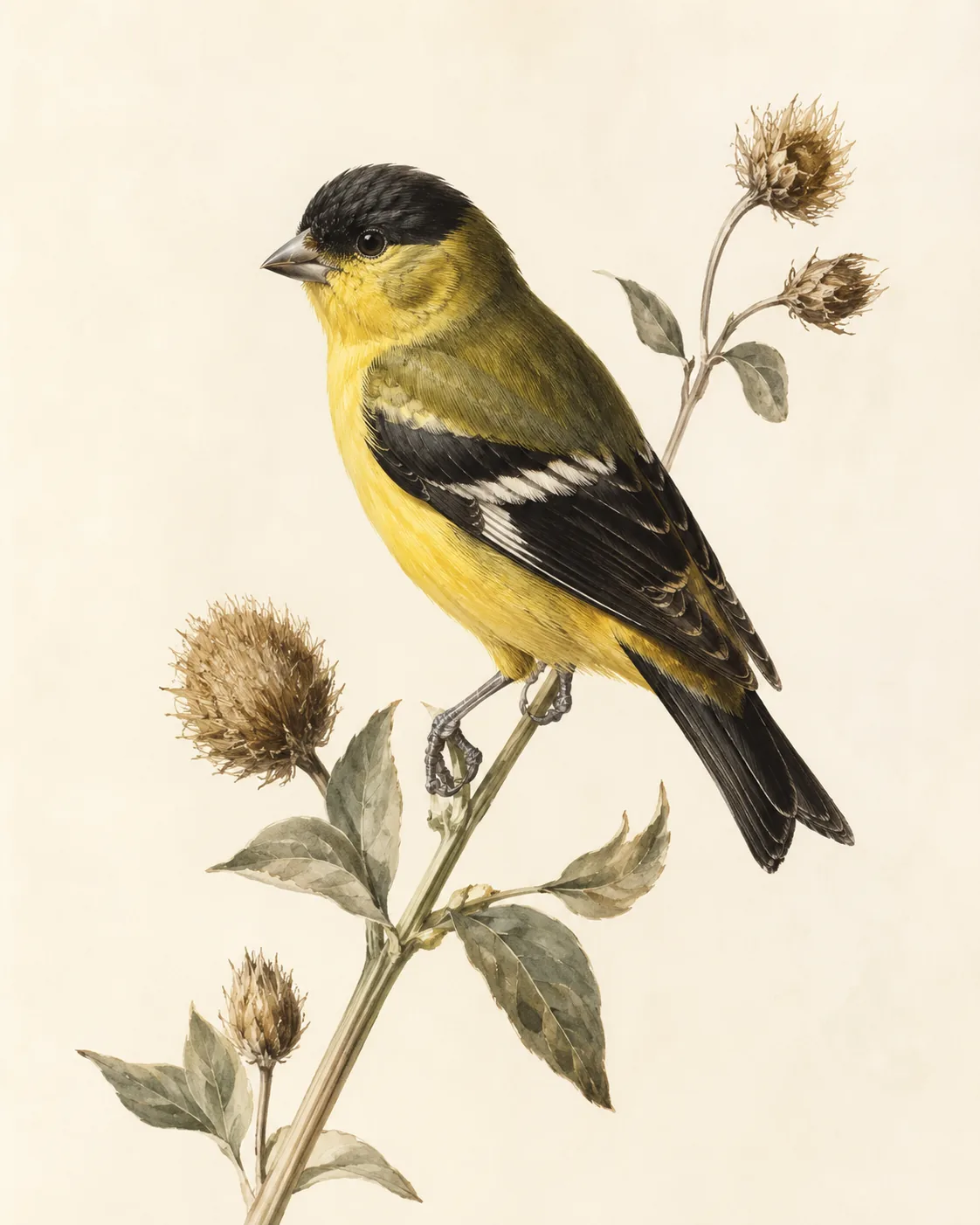
The male is the giveaway. Bright yellow underparts. A neat black cap on the forehead. And a back that runs from olive-green in western birds to glossy black in birds further east and south. That variable back is the field mark that separates him from the American Goldfinch, who keeps a clean yellow back in breeding dress.
Look for the white wing flash. In flight and at rest, a bold white patch shows on the wing. It flickers as the bird moves and catches the eye even at a distance.
The female is plainer. Olive above, dull yellow below, no black cap. She is best told from other small finches by company and by call.
Range and habitat
This is a bird of the American West and the lands south.
It is common from Texas and California through the Southwest, and it pushes well into Mexico, Central America, and the northern edge of South America. That long southern range makes it one of the most widespread goldfinches in the Americas.
It likes edges. Open woodland, weedy fields, oak and brush country, orchards, and watered gardens in dry towns. Anywhere with seed and a little cover will do. In much of its range it stays put year round, though northern birds drift south for winter.
Behaviour
Lesser Goldfinches are social and restless.
They feed in loose flocks, working seed heads with the agility of a much larger finch, hanging upside down without a second thought. Thistle, sunflower, and the seeds of many weeds make up most of the diet. At feeders they favour nyjer and small sunflower hearts.
They breed later than many songbirds, timing their nesting to the seed crop. The female builds a tidy cup of plant fibre, often in a shrub or low tree, and the pair raises the young on regurgitated seed.
Voice
The voice is the easiest way to find one.
Listen for a sweet, wheezy, rising call, often given in flight. The song is a long, varied, tumbling phrase, and a good singer borrows snatches from other birds, weaving them in. A plaintive falling note, almost a small sigh, is one of its signature sounds across the dry West.
Once you know the call, you start hearing them everywhere they live.