Field Guide
Gray Jay
The first sign is not sound - it is a shadow. A grey shape drops from a spruce bough and lands two feet from your lunch. The bird does not startle. It has been watching you since you sat down, calculating. It tilts its head, confirms the sandwich, and takes a piece of it before you have decided what to do. By the time you react, it is back in the spruce. This is the Canada Jay - called the Gray Jay for most of the twentieth century, called Whiskey Jack by generations of trappers and loggers who knew it as an inevitable companion in the northern bush.
The AOU renamed it Canada Jay in 2018, restoring an older usage. Whatever you call it, the bird is the same: the boldest corvid in the boreal, and among the most specifically adapted birds on the continent.
What it looks like
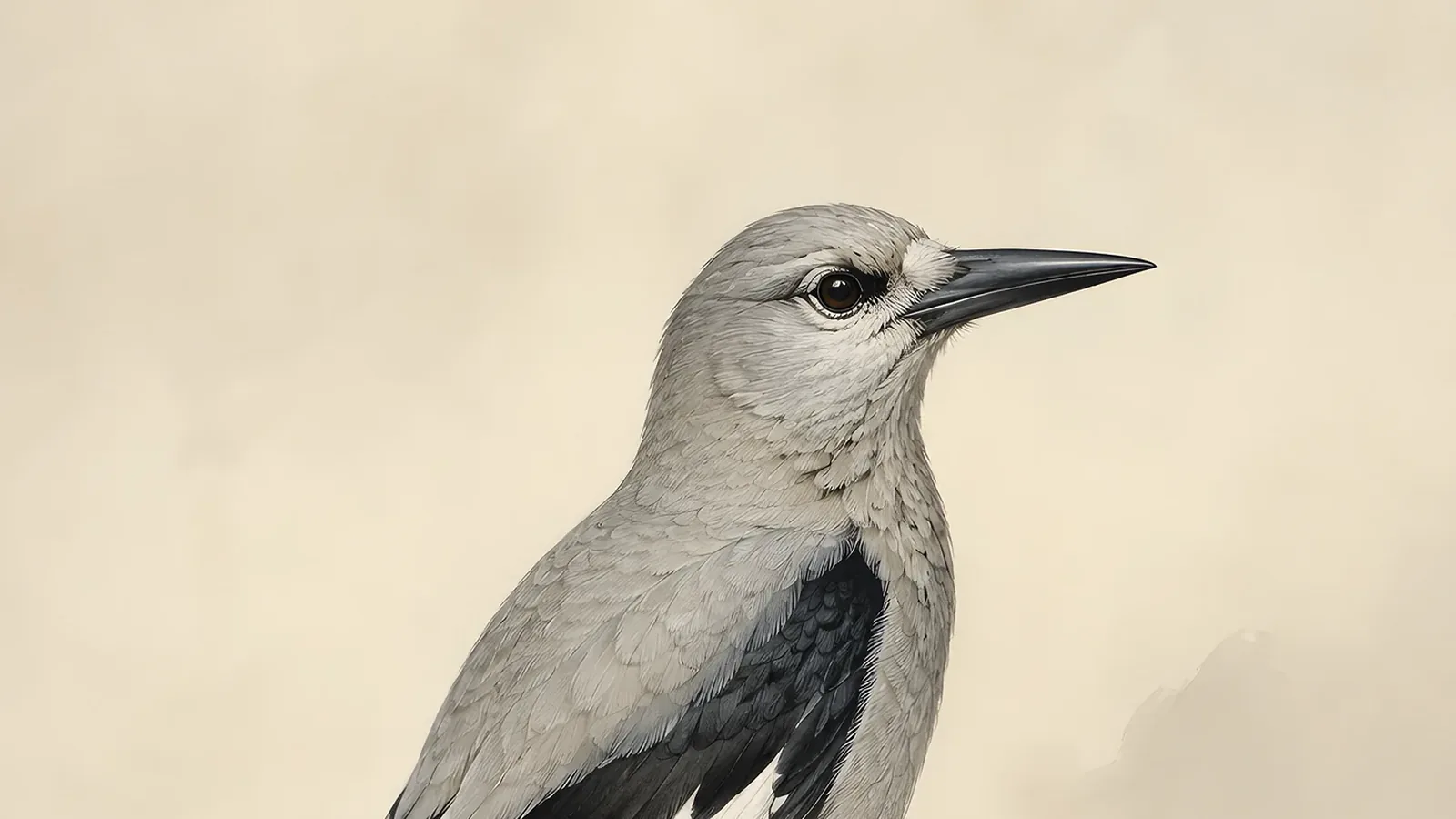
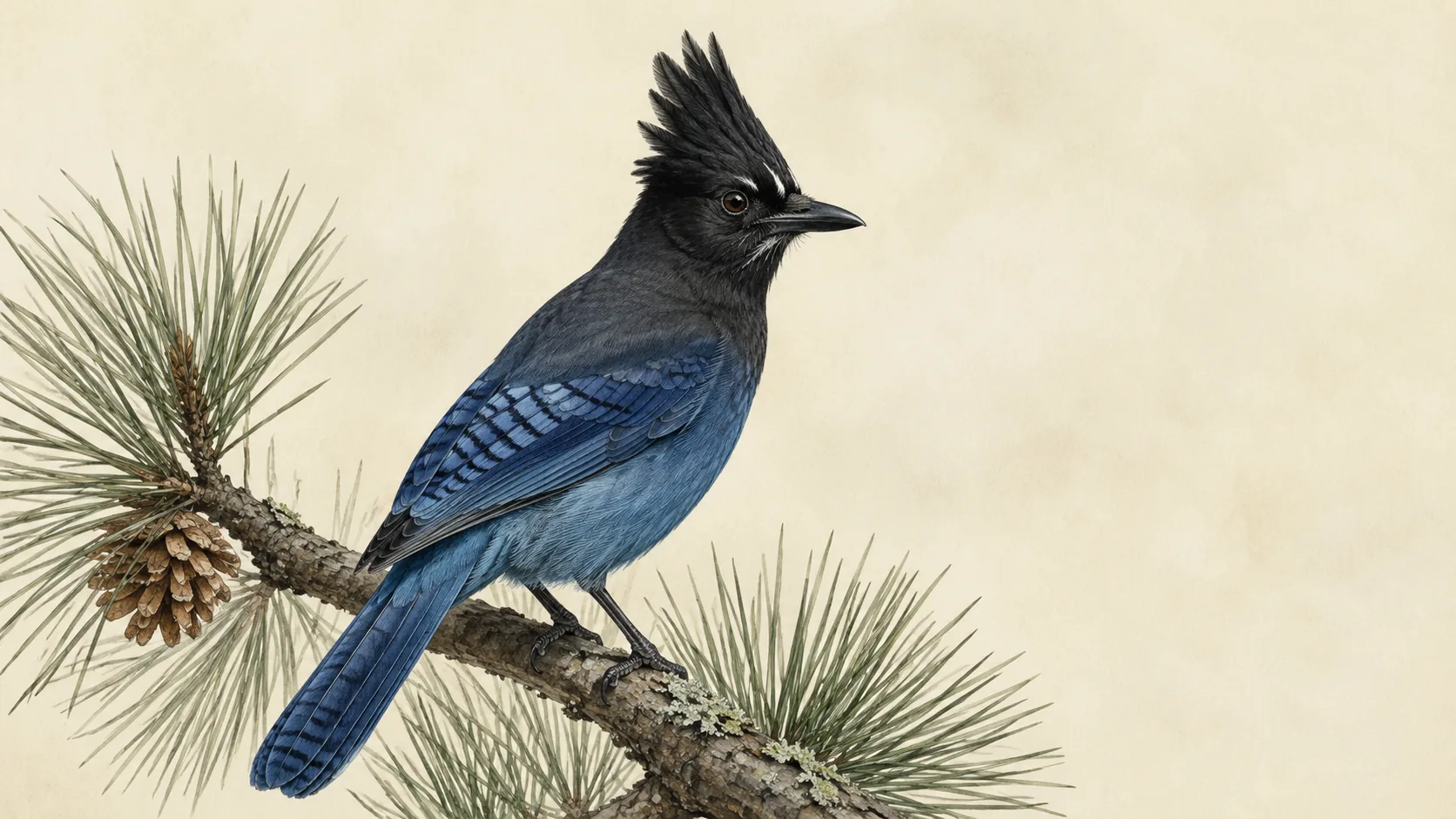
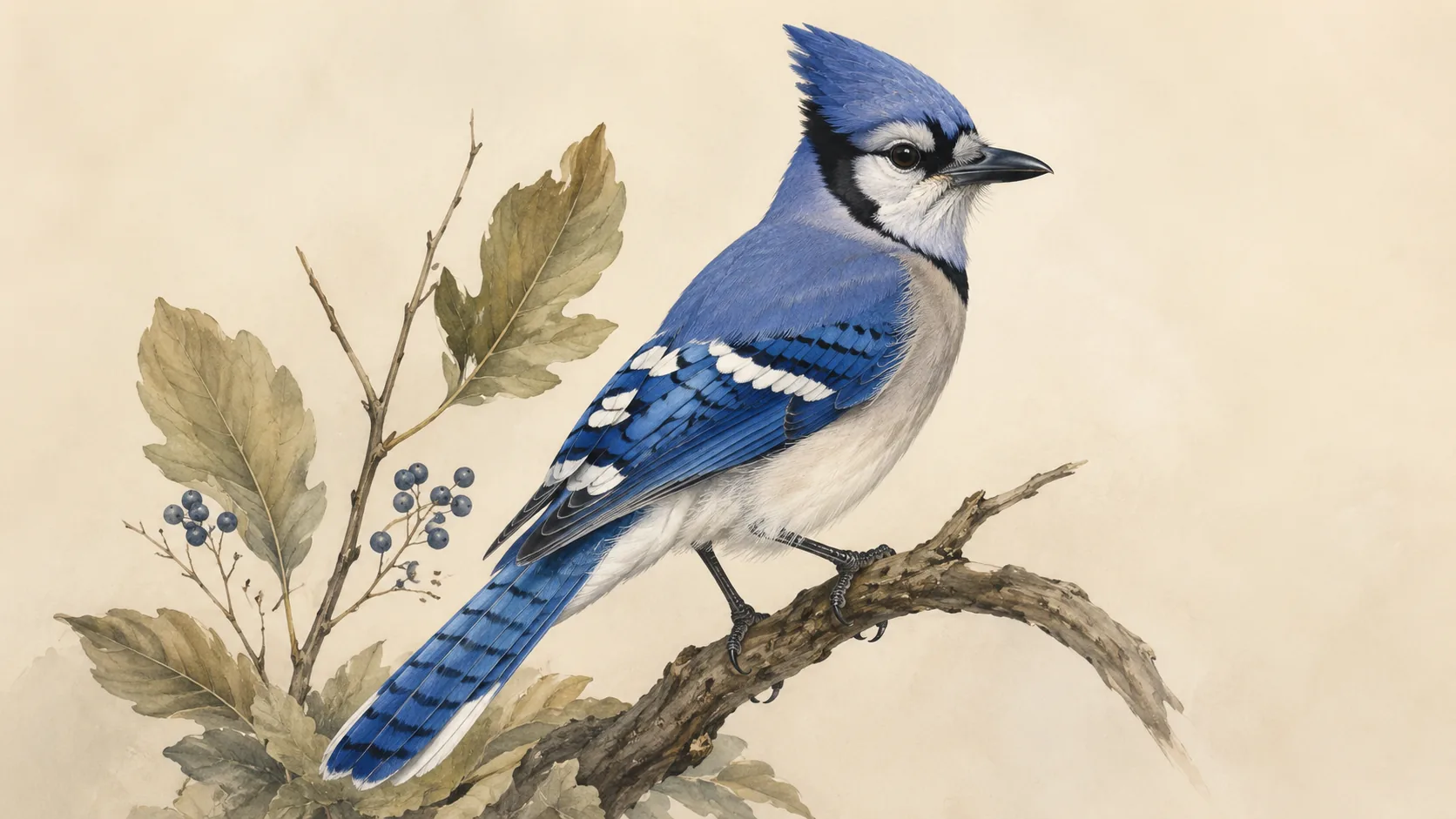
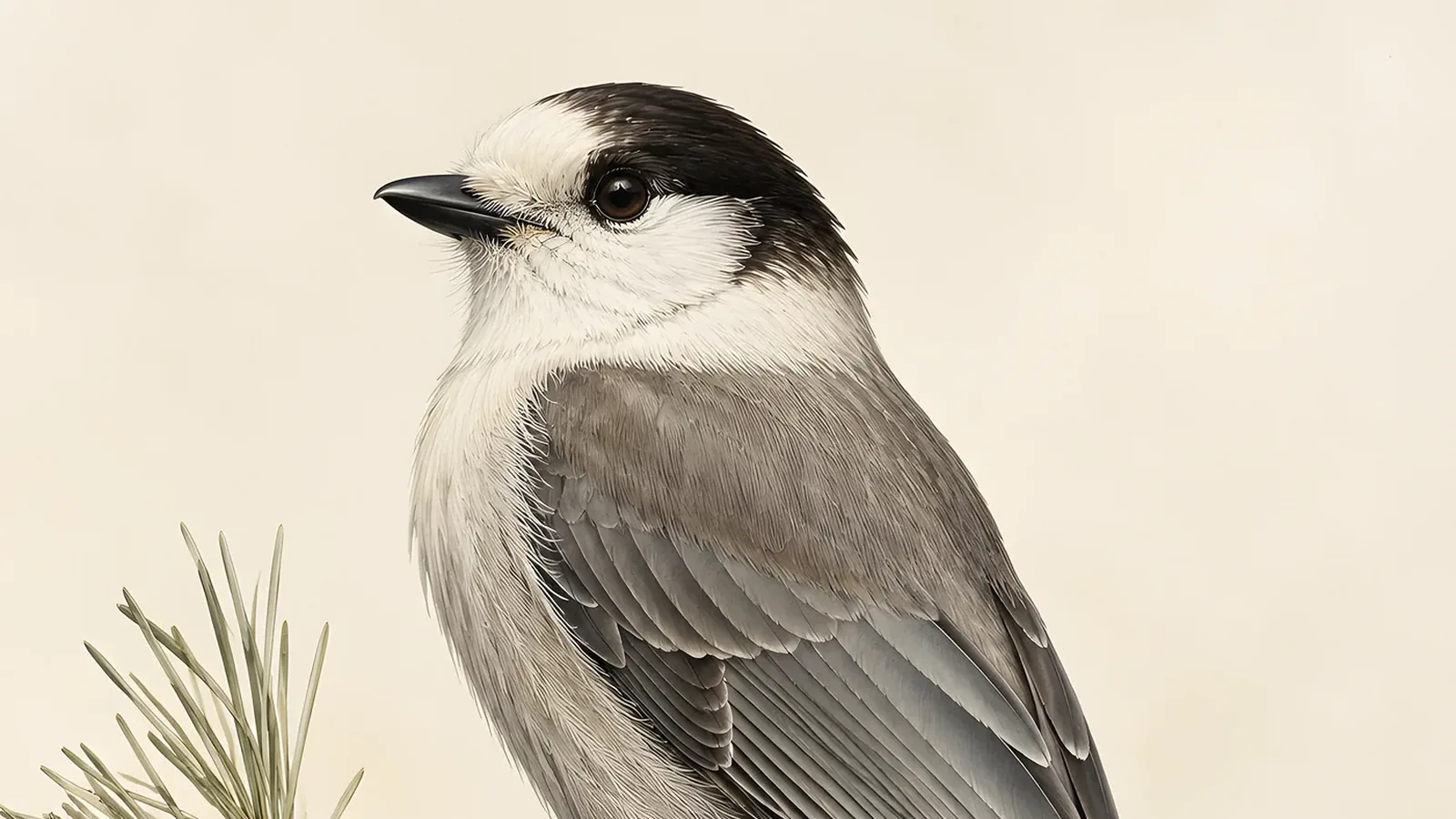
A medium-sized corvid, smaller and softer-looking than a Blue Jay or a Steller’s Jay. The plumage is grey above and paler grey to whitish below. The head pattern is distinctive: a dark grey or blackish cap on the back half of the crown and nape, contrasting with a white face and forehead. The throat and underparts are white to pale grey. The bill is short and slightly curved, black. The tail is moderately long. No crest, no bright colors.
The overall impression is a quiet, round-headed, gentle-looking bird that is neither gentle nor quiet in behavior. Fledglings are dark sooty grey all over with just a hint of the adult head pattern forming - they look like different species and confuse first-time observers.
Flight is buoyant and slightly undulating, with wing beats that seem slow for a bird moving with this much purpose.
| Measurement | Range |
|---|---|
| Length | 25 - 33 cm |
| Weight | 65 - 100 g |
| Wingspan | 34 - 45 cm |
| Lifespan | 8 - 17 years |
“The name Whiskey Jack is an English corruption of Wisakedjak, the trickster figure of Cree and Ojibwe oral tradition - the same character who gives the bird its mythological association with mischief and intelligence.”
Voice
The Canada Jay has a vocal range that surprises people expecting corvid harshness. It produces a series of soft, mellow whistles and murmurs, and it mimics other birds. The contact call is a quiet chuck or a soft, descending whistle. Alarmed birds give a harsher, jay-like scold but even this is restrained compared to its cousins. Silent flight and quiet calls are an adaptation to the boreal winter: shouting attracts attention, and attention in the boreal is usually a predator.
Range and habitat
Boreal forest from Labrador to Alaska, south through the Rocky Mountains to New Mexico and east through the northern Appalachians. Non-migratory. The Canada Jay does not leave its territory when winter arrives. It survives the boreal winter by a food-caching strategy so precisely timed and so dependent on cold temperatures that climate warming is now measurably disrupting it.
The bird is resident in dense coniferous forest, particularly spruce-fir associations. It will not cross large open areas and is a bird of the interior forest, not the edges.
Diet
The Canada Jay is a generalist that eats almost anything: berries, insects, nestling birds, carrion, fungi, small mammals, human food scraps. The critical behavior is caching. Throughout late summer and autumn the bird stores food items in thousands of individual caches across its territory, pressing moist boluses of food under tree bark or into bark crevices using a special adhesive saliva. The cached food stays refrigerated by the cold and provides the energy to breed in late winter.
A single Canada Jay may make tens of thousands of caches in a season. It recovers them months later, apparently navigating by spatial memory. The accuracy is not perfect, but it does not need to be.
Breeding
The Canada Jay breeds in late February and March, when snow still lies a metre deep in the boreal forest. This is not an oversight. The bird times its breeding to the coldest part of winter deliberately - the logic being that nestlings are fed from cached food, and cached food is best preserved in cold. By the time the snow melts, the young are independent and the caches are no longer needed.
The nest is a deep cup of bark strips, grass and spider silk, heavily insulated with feathers and fur, placed on the south-facing side of a dense spruce for maximum passive solar warming. The female incubates two to four eggs for about seventeen days. The male feeds her throughout, and the chicks are fed by both parents from the winter caches.
The breeding pair is sometimes assisted by one or two subordinate birds - usually young from the previous year’s brood - that help provision the nest.
Warming winters and a caching crisis
A population in Algonquin Provincial Park in Ontario has been studied since the 1960s. Long-term data from that population show a clear pattern: in years when September temperatures are warmer than average, breeding success the following spring is lower. The mechanism is direct. Warmer September weather causes cached food to spoil before the deep winter cold can preserve it. Birds that enter breeding season with depleted caches produce fewer young.
This is climate change operating not through habitat loss or range shift but through the disruption of a physiological timing mechanism - the intersection of food storage, ambient temperature and reproductive timing that the bird evolved over thousands of years of stable boreal winters.
The Clark’s Nutcracker faces a related challenge: its seed-caching behavior is timed to whitebark pine cone availability, which is shifting with warming temperatures. Food-caching corvids are proving to be unexpectedly sensitive climate indicators.
The Canada Jay that landed on your sandwich and took half of it without hesitation is not impudent by accident. It is impudent because winter is the measure of everything and calories are always the question. What changes when winter is shorter and warmer is still being worked out, one cold February breeding season at a time.