Field Guide
Carolina Chickadee
A bird you hear before you see. The Carolina Chickadee announces itself, again and again, with the call that gave it its name. Then it appears. Small, round, quick. A flicker of black and white in the winter shrubs, gone before you have settled your eyes on it.
This is one of the friendliest birds in the American South. It comes to feeders without fuss. It will scold you from a low branch and then forget you entirely. Once you know it, you will find it everywhere.
How to know it
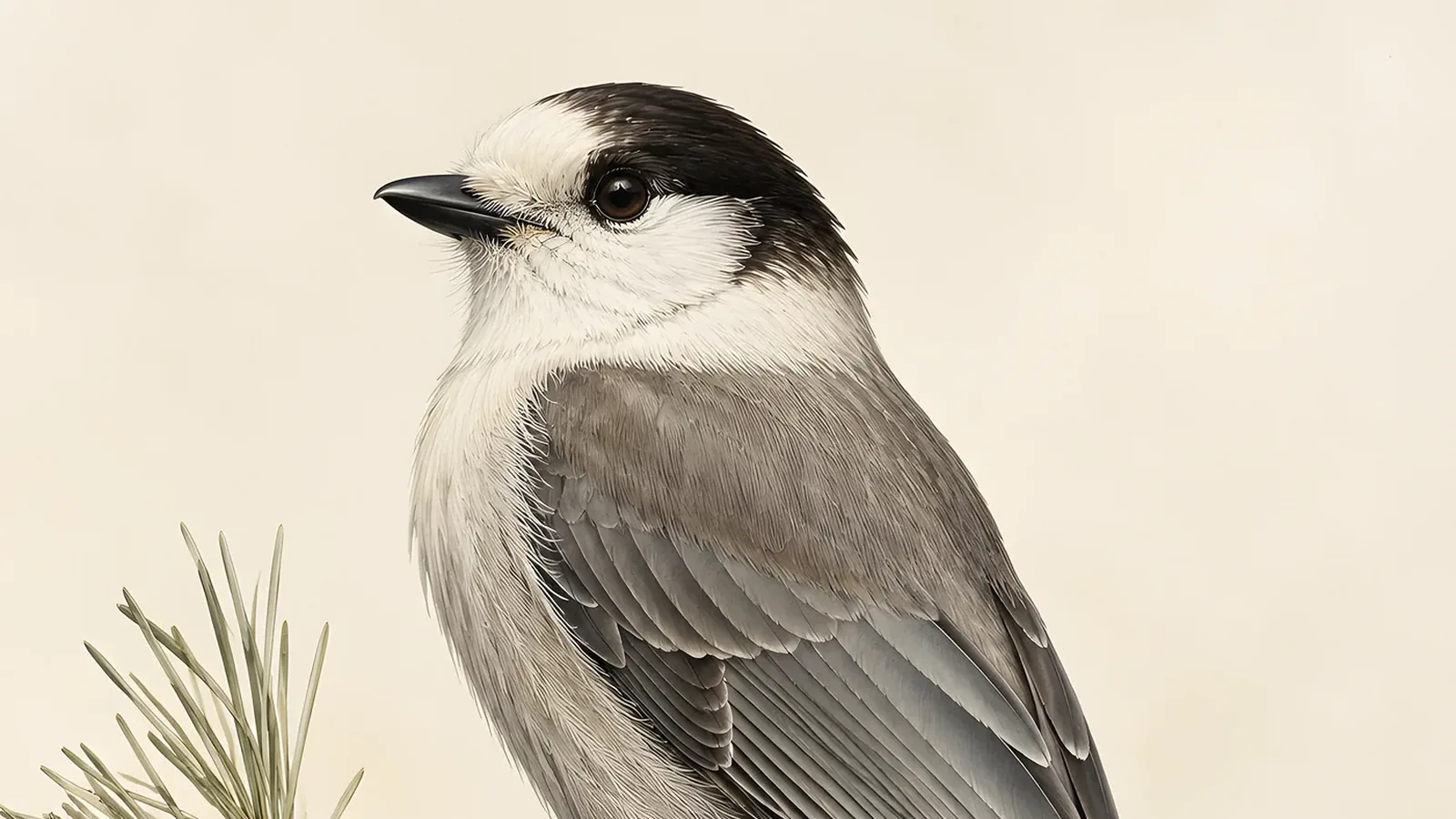
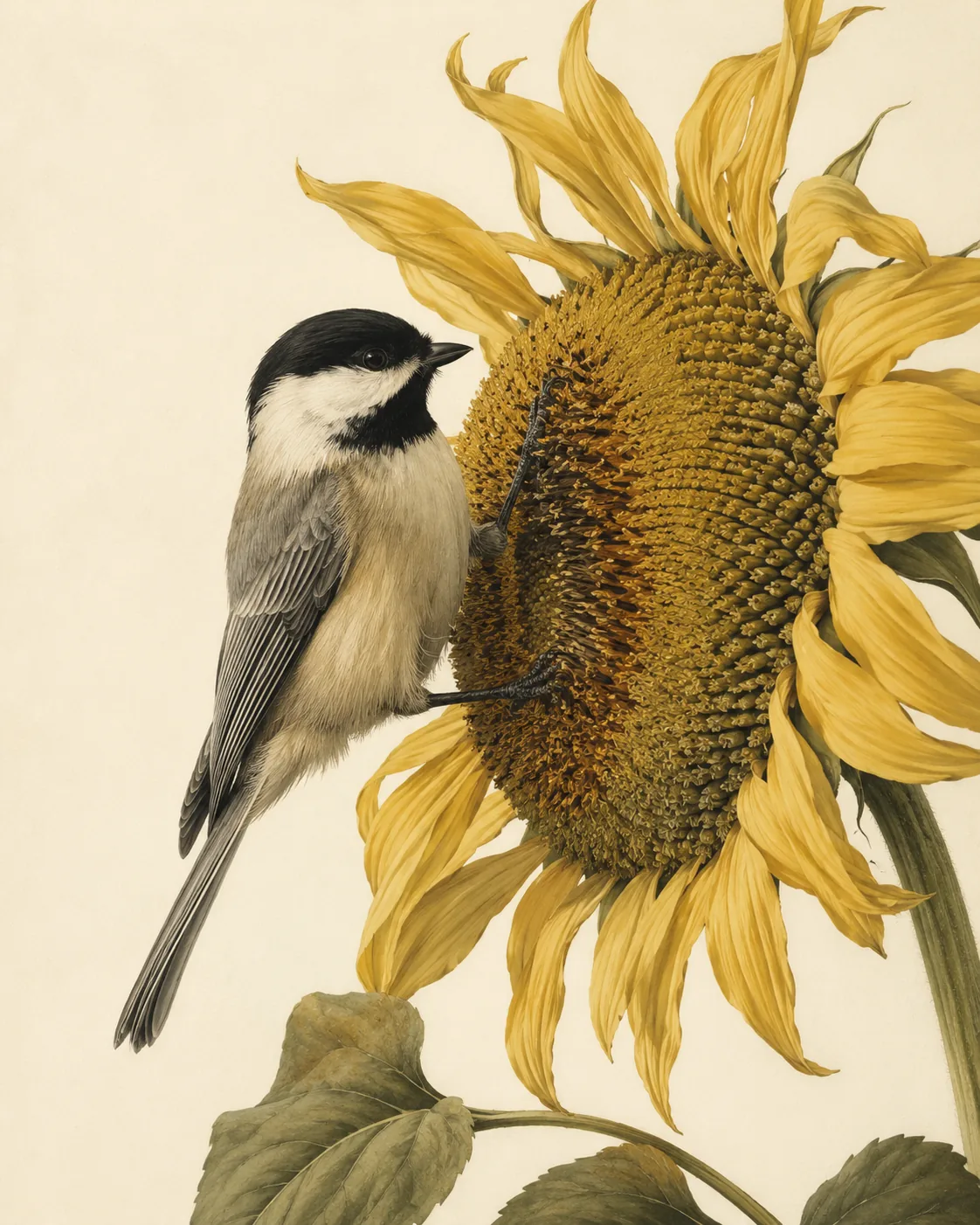
Start with the head. The cap is solid black, pulled down low like a hood. The bib is black too, a neat patch under the chin. Between them the cheeks are clean white, and that white face is the thing your eye locks onto.
The body is soft grey above and pale below, with a faint buff wash along the flanks. The bird is tiny. Just 10 to 12 centimetres long, around 8 to 12 grams. That is the weight of a few coins.
It is almost the twin of the Black-capped Chickadee, which lives further north. The Carolina is a touch smaller and neater, with less white edging on the wing. Where their ranges overlap, even keen birders go by voice.
Range and habitat
This is a bird of the Southeast. It lives across the lower United States, from the Mid-Atlantic down through the Gulf Coast and west into the southern plains. It does not migrate. The bird you see in January is the bird you saw in June.
It likes mixed and deciduous woodland, wooded swamps, and the edges of clearings. It has also made easy peace with people. Suburban gardens, parks, and tree-lined streets all suit it, especially where there are feeders and nest boxes.
Behaviour
Watch a chickadee feed and you watch a small acrobat. It hangs upside down from twigs and seed heads, working at the food, never still. At a feeder it grabs a single seed and darts off to open it elsewhere, then returns for the next.
In autumn it caches food, tucking seeds into bark and crevices to find again in lean weeks. It remembers the hiding places well.
Through the colder months chickadees gather in small loose flocks, often travelling with titmice, nuthatches, and warblers. The chickadee is usually the one keeping watch and raising the alarm.
Voice
The song is a clear, whistled four-note phrase, often written as “fee-bee-fee-bay”. Sweet and carrying.
The call is the famous one. A buzzy “chick-a-dee-dee-dee”, with more “dee” notes added when the bird is alarmed. The more notes, the bigger the worry. It is, in its small way, a language. And it is the surest way to know this bird is near.