Free shipping to the US, Canada & Europe
Pets
Toucans are permanent year-round residents of the Neotropics. They don't migrate or hibernate - and the reason why comes down to that famous bill.
July 10, 2023 5 min read
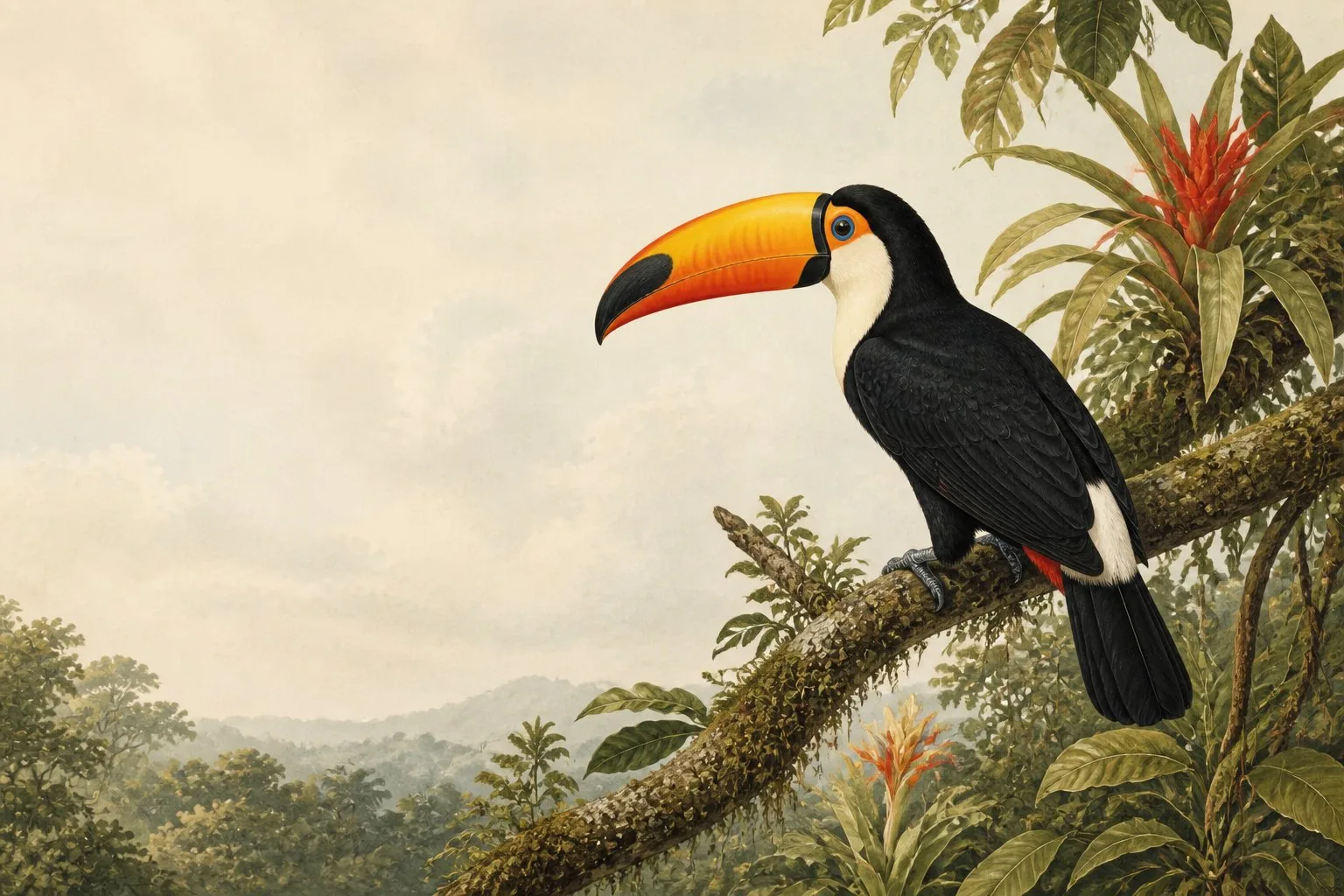
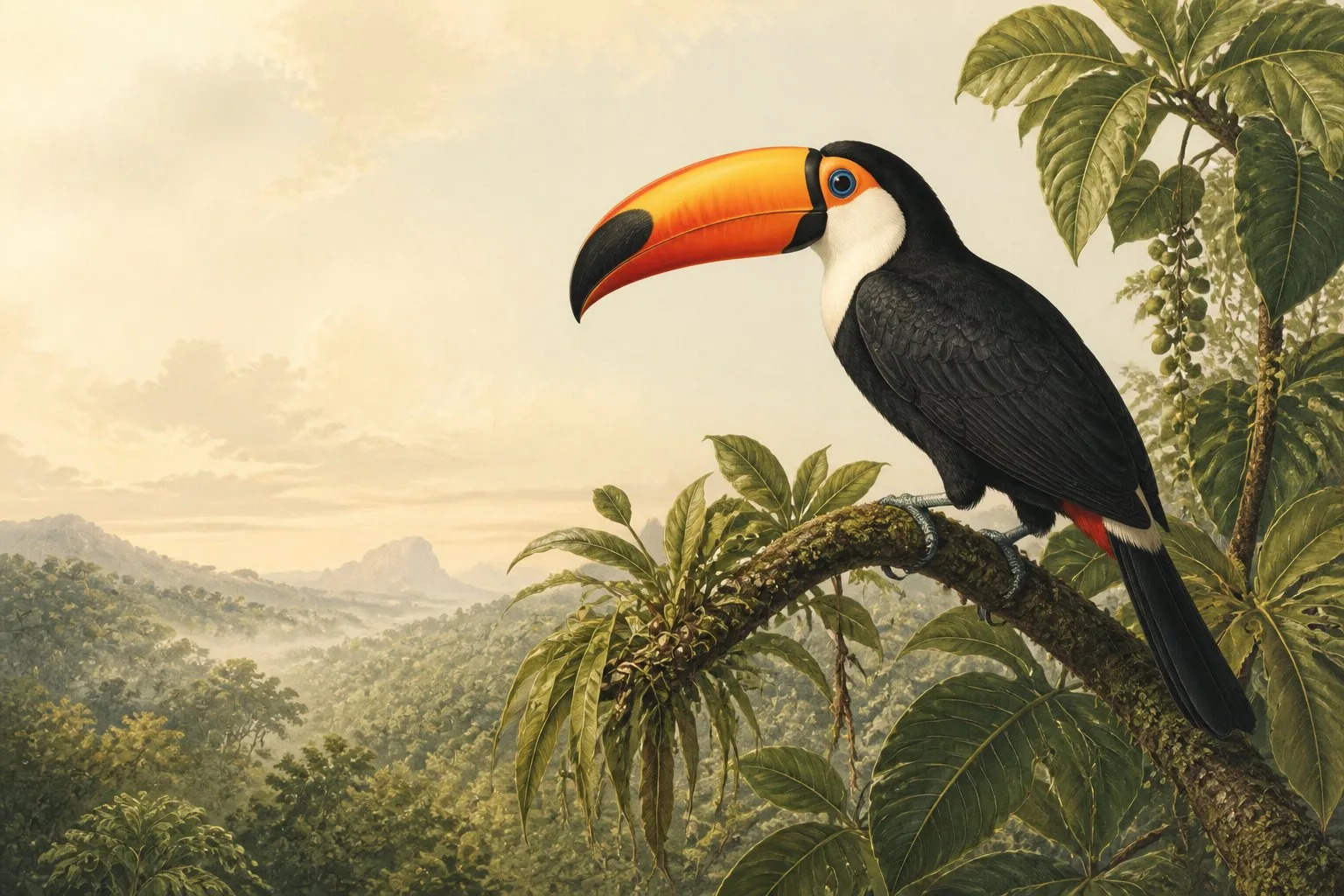
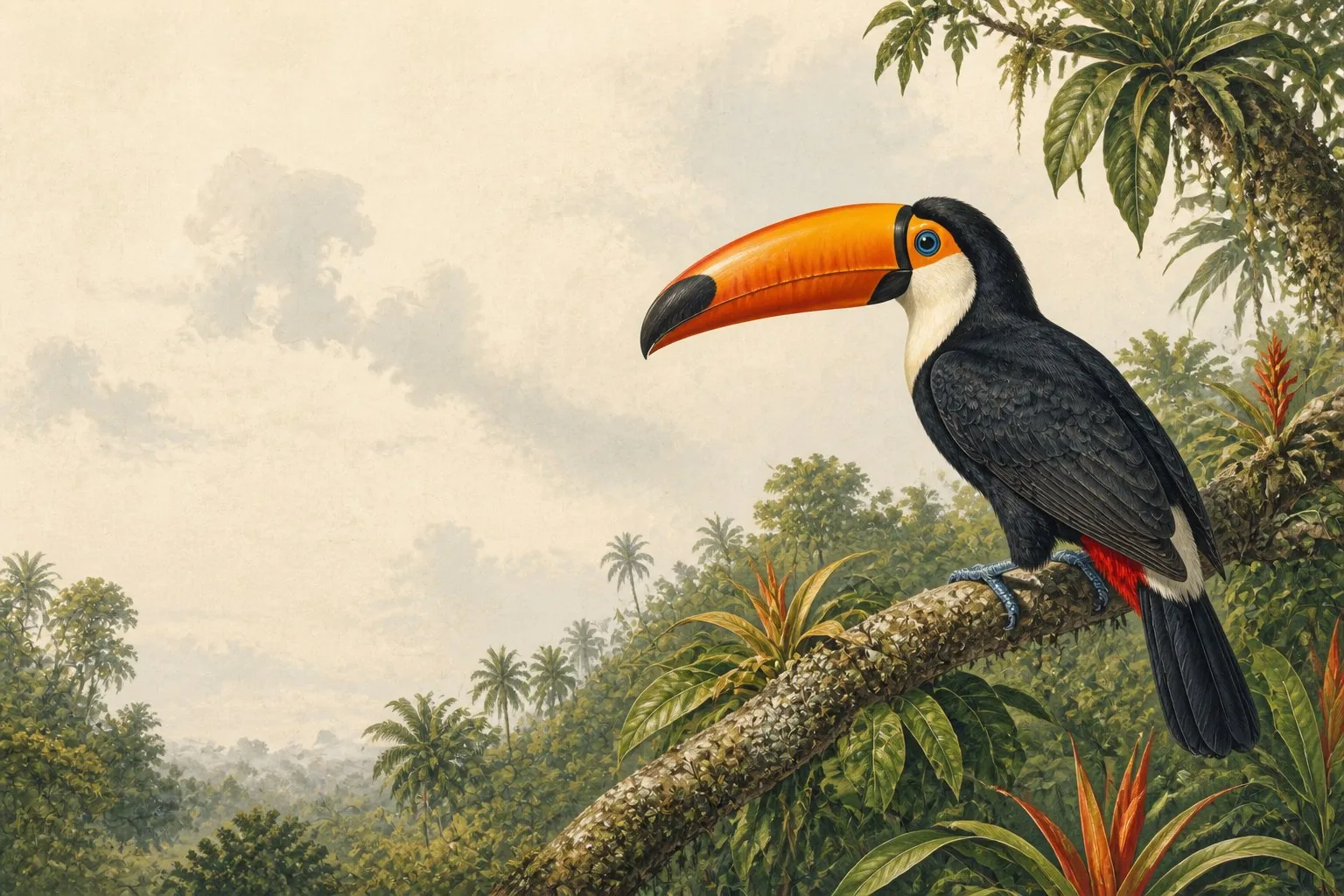
A keel-billed toucan (Ramphastos sulfuratus) at the forest edge in lowland Costa Rica does the same thing in January that it does in July. It forages the canopy in a flock of six to twelve birds, calls in its distinctive frog-like croak, and retires at night to a tree cavity where it folds its tail over its spine and rests its bill on its back - compressing itself into something close to a feathered ball. The seasons shift outside the forest. The toucan does not.
Toucans do not migrate. They do not hibernate. The question worth asking is why, and the answer is not simply that the tropics are warm.
In 2009, Glenn Tattersall, Denis Andrade, and Augusto Abe published a paper in Science establishing that the Toco toucan’s bill functions as what they called a “controllable vascular thermal radiator.” The bill has no insulating layer of fat or feathers beneath its horny surface. Instead it carries a dense network of blood vessels. When a toucan needs to shed heat, it dilates those vessels and lets body heat radiate into the air. When a night turns cold, it constricts them. Tattersall and colleagues measured that the bill can account for as much as 100% of the bird’s total heat loss or as little as 5%, depending on blood flow. By their estimate, relative to body size, the toucan’s bill rivals an elephant’s ear as one of the largest thermal windows in the animal kingdom.
This matters for the migration question because it means toucans carry their climate control with them. A migrating bird is solving the problem of a place that becomes uninhabitable. A toucan, in habitat that never becomes uninhabitable, runs its thermostat through a body part rather than through geography.
Migration is, at its core, a food problem. Temperate-zone birds that breed in northern forests in summer follow the insect bloom north and then leave when it collapses in autumn. Toucans inhabit tropical and subtropical forests where fruit production is continuous and staggered across dozens of species. When one fig crop finishes, another is coming into season. Animal Diversity Web’s account of the Toco toucan (Ramphastos toco) describes the birds as “canopy frugivores that rely heavily on the availability of seasonal fruiting plants” that move “from one habitat and region to the next” to track what is ripe. That movement is local and nomadic - a shift of a few kilometres following a fruiting tree, not a seasonally timed journey with a fixed destination. There is no equivalent to the warbler’s hormonal preparation for a 1,000-kilometre crossing.
The keel-billed toucan’s resident range runs from southern Mexico to northwestern Venezuela and Colombia. Cornell’s Birds of the World records the Toco toucan from Guyana south to Argentina and from central Brazil west to southeastern Peru - and notes it as the only toucan species that favours open, non-forest environments. Neither species has a wintering range. Cornell’s eBird database holds more than 81,000 Toco toucan observations, all from within that single year-round range.
The family Ramphastidae contains 37 species across five genera, according to Cornell’s Birds of the World. Most are fully sedentary residents. A handful of cloud-forest species in the genus Aulacorhynchus - the toucanets of the Andes and Central American highlands - do make seasonal altitudinal movements. Animal Diversity Web’s account of the emerald toucanet (Aulacorhynchus prasinus) records a vertical range from 915 metres to 3,050 metres, with movement between those elevations tracking seasonal food availability. These shifts are true altitudinal migration by the technical definition. They look nothing like intercontinental migration. The bird is following a slope, not a flyway.
So the precise answer is this: lowland toucans are fully sedentary, and a small number of highland toucanets make short seasonal descents measured in hundreds of metres rather than thousands of kilometres.
No bird species hibernates in the full mammalian sense - a sustained shutdown of metabolism lasting weeks or months in response to cold and food scarcity. The common poorwill (Phalaenoptilus nuttallii) is the closest thing birds have to a hibernator; it can enter extended torpor in rock crevices during North American winters. Hummingbirds drop their heart rate from more than 1,000 beats per minute to fewer than 50 on cold nights, but they rouse with the morning. These are short-term metabolic depressions, not hibernation in the mammalian sense.
For toucans, the question does not arise. They live in climates that do not drive the metabolic response hibernation was evolved to handle.
Toucans are built for staying. Their forest does not shut down in winter, their bodies do not overcool, and the bill that makes them recognisable from any distance is also the system that keeps them where they are. The absence of migration is not a gap in their biology. It is the bill doing its job.
The toucan calendar is organised by rainfall, not temperature. Most species breed at the start of the wet season, when insect abundance peaks and fruit production accelerates. Both parents incubate eggs. Young birds are altricial and spend roughly eight weeks inside the cavity before fledging. Pairs then rejoin their flocks as the dry season settles in and adults move through a partial moult.
The dry season is quieter but not inactive. In lowland habitats temperatures can exceed 35 degrees Celsius by midday, and a toucan perched in the open canopy is doing active thermal work through its bill - not resting but radiating. The roosting posture described above - bill along the back, tail folded forward over the spine - limits exposure of the bill’s vascular surface on cooler nights. The bird is managing heat in both directions across the same 24-hour period.
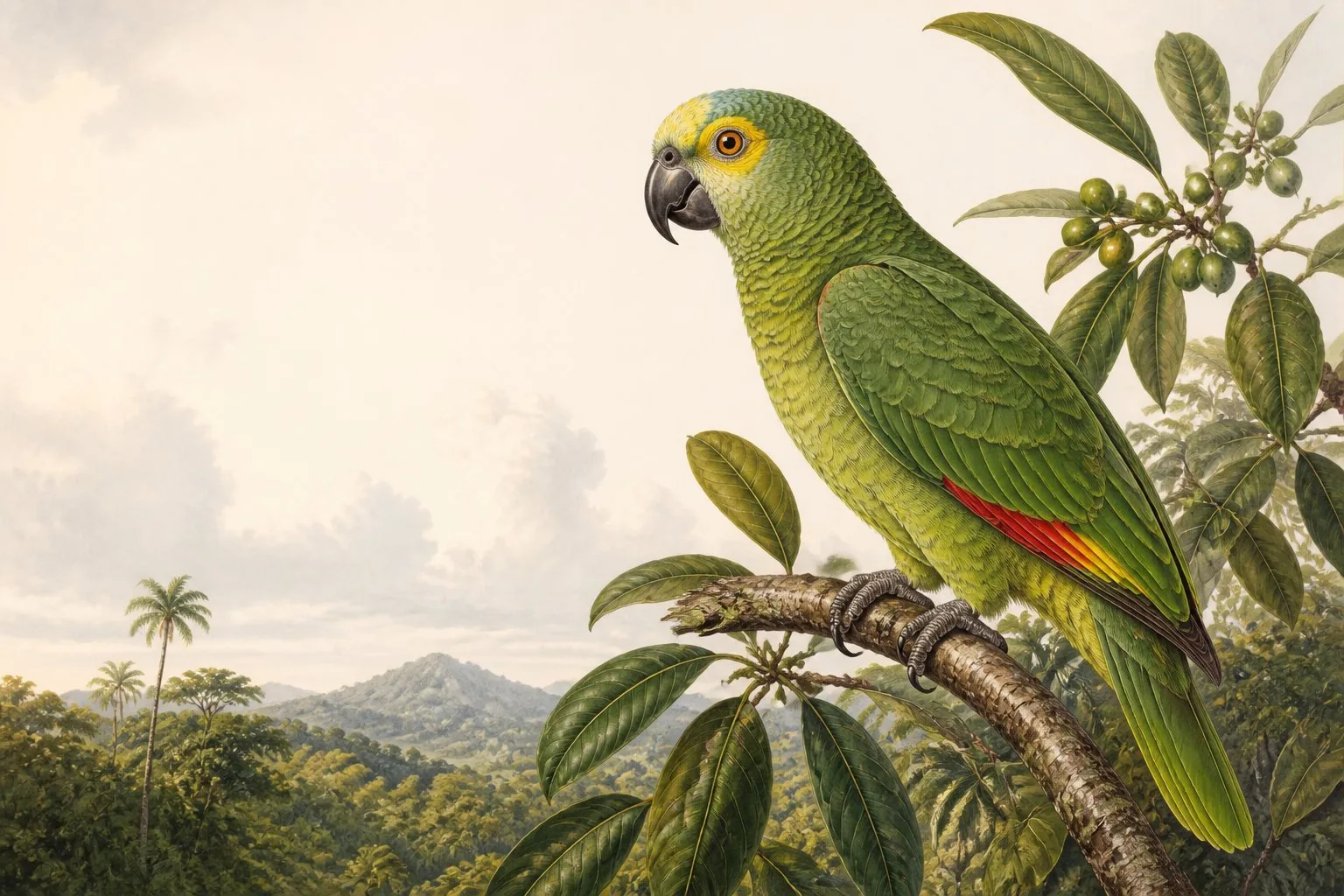
If you keep or are considering a toucan as a pet, this biology has direct practical weight. Toucans do not have migratory instincts that surface as restlessness in autumn, which distinguishes them from some parrot species. They do need stable warm temperatures year-round. Their beak mechanics require enrichment designed for their species - not hookbill toys designed for parrots, and the guide to age-appropriate bird toys covers what those differences look like. Their roosting habits and sleep needs are genuinely different from parrots; the specifics are at when and how toucans sleep. For a sense of how long-lived tropical birds compare in captive care, parrot lifespan data offers a useful baseline.
As an Amazon Associate we earn from qualifying purchases. Linked products are ones we genuinely recommend.
 July 10, 2023
 5 min read