Pets
What Do Toucans Eat
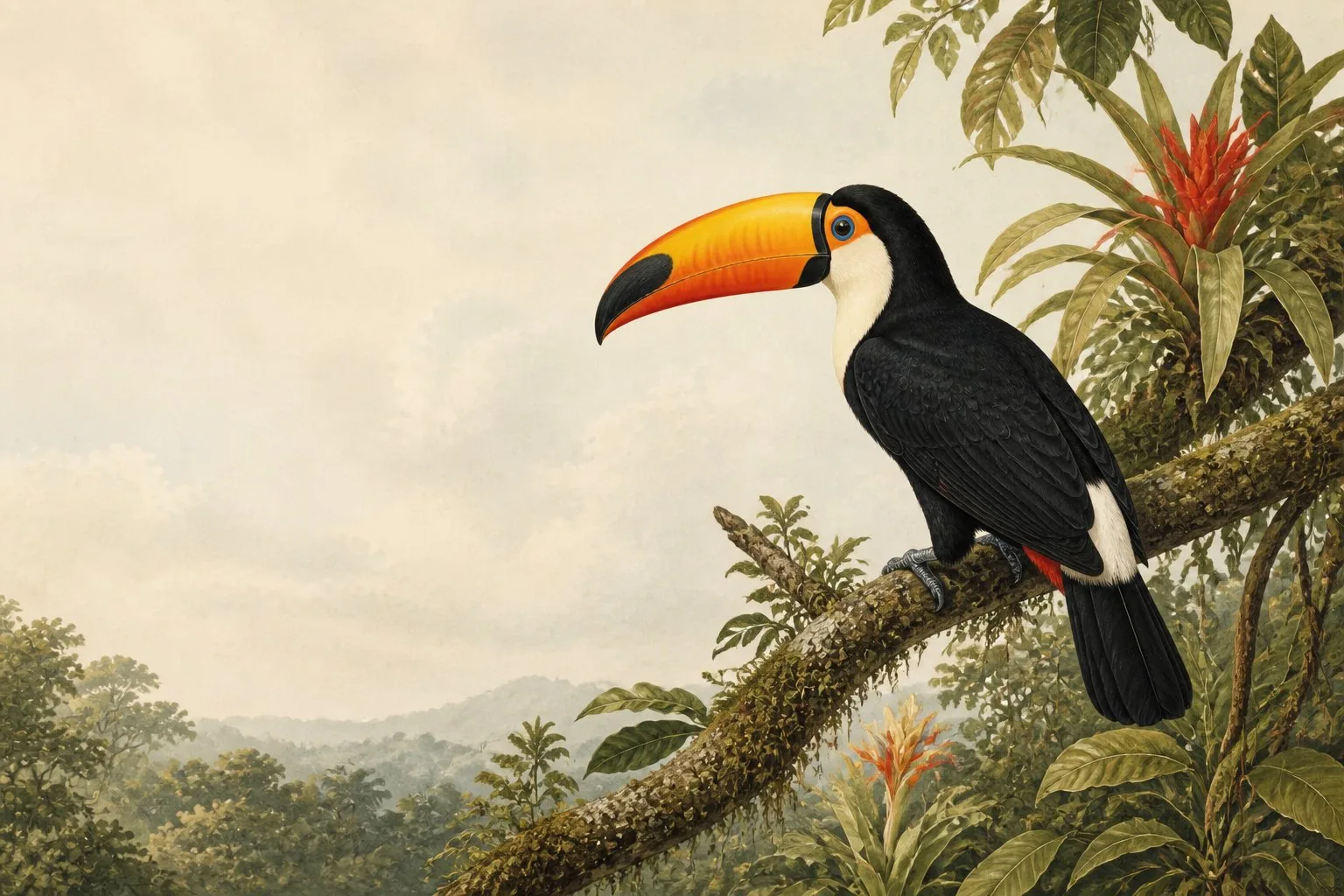
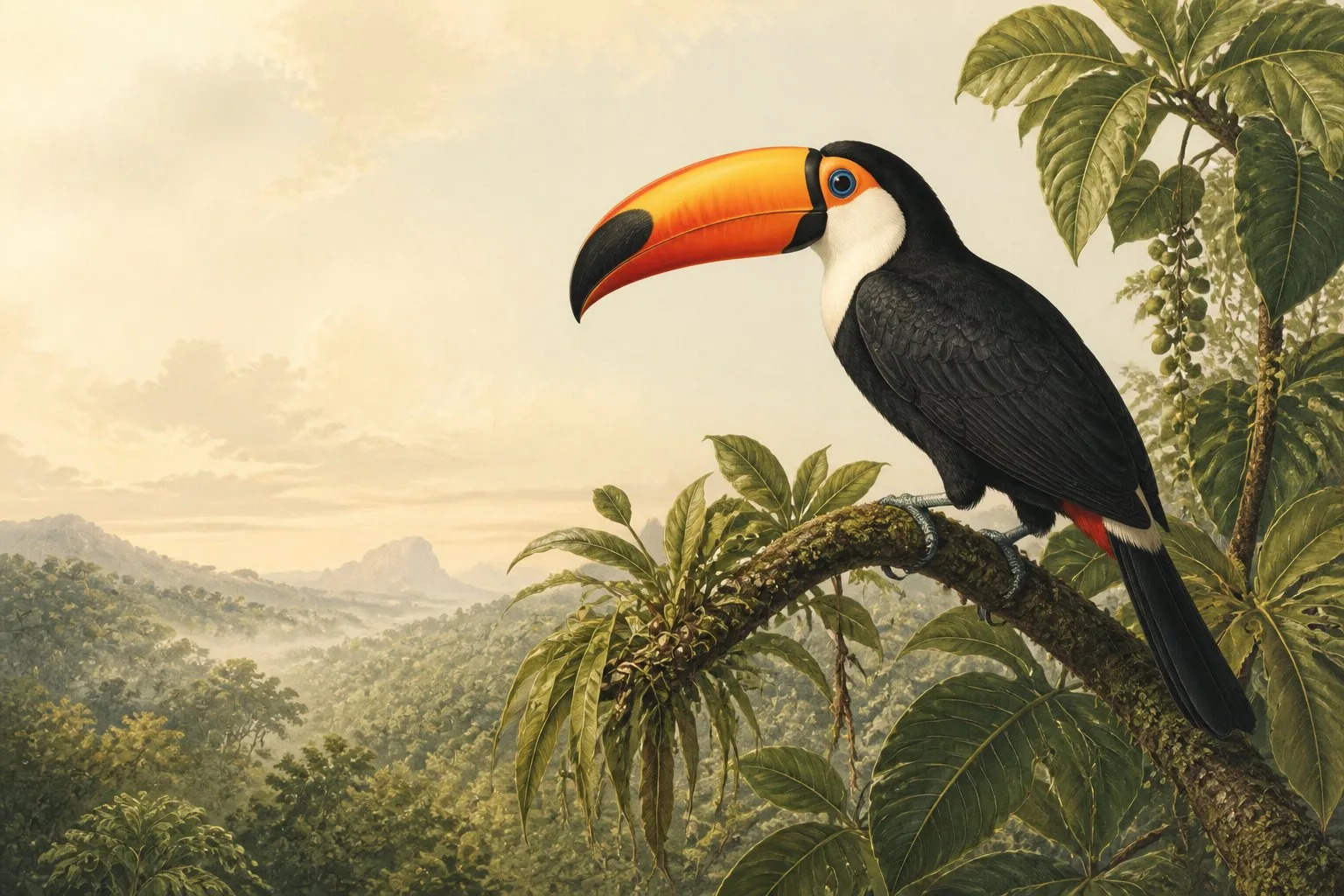
Watch a Ramphastos toucan work a fig tree for ten minutes and the bill stops looking absurd.
It is the tool, not the ornament. The toucan extends that long, serrated beak to pluck a fig from a branch too thin to support its body weight, tosses the fruit to the back of its throat, and the seed travels out the other end somewhere across the forest floor. Most of the trees the toucan eats from, the toucan eventually plants. That loop is the thesis here: the toucan’s diet is not just what it eats but what the forest pays it to eat.
What toucans eat
Fruit accounts for roughly 70 per cent of a wild toucan’s diet, varying by season and species. In a big species like the toco toucan, the most widely recognised of them, figs, wild papaya, palm fruit, guava, and berries make up the core. The rest is animal protein - insects during breeding season, opportunistic raids on smaller birds’ nests for eggs and nestlings, and occasional small lizards or tree frogs.
| Food type | Typical share | Notes |
|---|---|---|
| Fruit (figs, palm, papaya, berries) | ~70% | Rises higher in peak fruiting season |
| Insects and larvae | 15-20% | Spikes during breeding for extra protein |
| Eggs and nestlings | Occasional | Opportunistic; toucans are known nest raiders |
| Lizards, frogs | Rare | Serrated bill edge grips slippery prey |
The serrated edge is worth noting. It looks decorative. It is not. A toucan gripping a tree frog or a small lizard uses that saw edge the way a steak knife uses teeth - to hold something alive that would rather not be held. The bill is simultaneously a fruit-picker, a protein gripper, and a seed-dispersal vessel. Nothing about it is wasted.
For more on how toucans spend their non-foraging hours, see when and how toucans sleep and whether toucans migrate or hibernate.
How the bill actually works
The bill is hollow, reinforced internally with a bony lattice that keeps it light enough to use at the end of a long neck. Toucans cannot chew. They grab food at the bill tip, toss the head back sharply, and catch the food as it falls toward the throat. Seeds too large to pass are spit out. Seeds small enough to swallow pass through whole and are deposited, sometimes several kilometres from the parent tree.
Ornithologists studying Neotropical forest regeneration identify toucans as among the most ecologically significant seed dispersers in the canopy. Smaller frugivores eat small seeds. Toucans - because of the bill’s reach and the gut’s capacity - handle larger-seeded fruit that few other birds will touch. Remove toucans from a forest and certain tree species lose their primary dispersal vector. That is not a minor role.
Toucans are paid in fruit to do the work of replanting the forest. The bill that looks like a performance is a precision instrument for a job the forest depends on.
Seasonal shifts
Diet composition changes with the year. During peak fruiting season, toucans may eat almost nothing but fruit for weeks at a stretch - primarily figs and palm species. As fruit availability drops in the dry season, animal protein fills the gap. Insect consumption rises. Nest raiding becomes more frequent. Pairs feeding nestlings push protein intake hard: chicks need more than fruit to grow.
This seasonal flexibility is partly why toucans thrive across such a wide band of the Neotropics. They are fruit specialists when fruit is available, and generalists when it is not.
Feeding captive toucans
This is where diet becomes genuinely difficult, and it is the first thing anyone weighing whether toucans make good pets should understand. Toucans are susceptible to iron storage disease - a condition in which the body accumulates excess iron in the organs, particularly the liver. It is the single most common cause of premature death in captive toucans, and it is almost entirely diet-driven.
Wild toucan fruit is low in iron. Commercial fruit grown for human consumption - especially citrus, strawberries, and grapes - often is not. Standard bird pellets are not appropriate for toucans at all. The protocol used by experienced aviculturists and endorsed by avian veterinary guidelines is low-iron pellets formulated specifically for softbills, supplemented with fresh papaya, blueberries, banana, and melon.
| Category | Feed | Avoid |
|---|---|---|
| Pellet base | Low-iron softbill pellets | Standard bird pellets, seed mixes |
| Fruit | Papaya, blueberries, banana, melon | Citrus, strawberries, grapes, dried fruit |
| Protein | Occasional crickets or mealworms | Iron-rich supplements |
| Schedule | Two meals daily | Free-feeding (obesity risk) |
Captive toucans become overweight easily. Two structured meals per day, with portions regulated, is the standard recommendation from avian veterinarians who specialise in softbills. Fresh water must be available continuously - toucans dip fruit in water before swallowing it, and a dry water dish will be used and emptied quickly.
For guidance on keeping captive birds mentally engaged alongside their feeding routine, how to choose age-appropriate bird toys covers enrichment that applies to large-billed species as well as parrots. If you keep other frugivores, what can parrots eat covers a comparable set of safe and unsafe foods.
What this means for the forest
The captive-diet constraints exist because we pulled a fruit specialist out of a landscape shaped, over millions of years, to feed it exactly what it needs. Wild figs and palm fruit are low in iron not by accident but because both parties evolved together. The fig gets dispersed. The toucan gets a meal calibrated to its metabolism. The bird in a cage is eating human food and paying for it.
That gap - between what the wild diet provides and what most fruit available to pet owners contains - is the reason iron storage disease kills captive toucans that would otherwise live 20 years. The biology is not complicated. The fruit is just wrong.