Pets
Why Does My Bird Attack His Toys
Your bird grabs a hanging ring, pins it against the perch, and hammers it. He shakes it. He throws it. He may yell at it. Everything about the display reads as fury - and almost none of it is.
The short answer is that parrots and other intelligent pet birds carry behavioral wiring built for a life they are not living. A parrot in the wild spends roughly 40 to 75 percent of its active hours foraging, searching, problem-solving, and exploring - a range established across multiple field studies of wild psittacines (Westcott and Cockburn, 1988; Magrath and Lill, 1983; Renton, 2001) and cited in captive welfare research. A full dish of pellets renders all that effort unnecessary - which is precisely the problem. The cage sits quiet. The instinct does not go away. The toy takes the hit.
Foraging is the engine
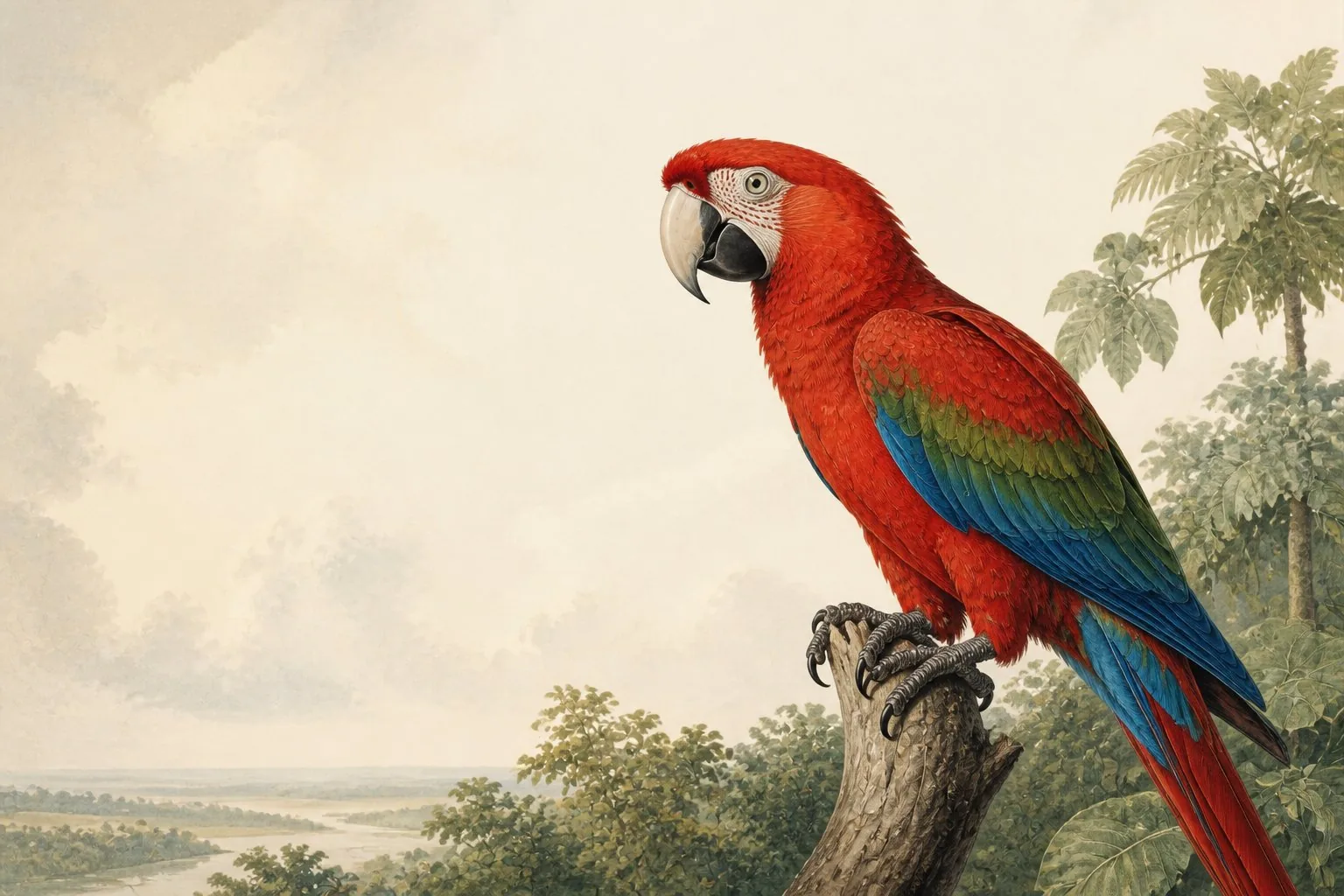
Pamela Clark, a certified parrot behavior consultant, puts it plainly: the beak is the primary organ through which a parrot explores its world. It probes, strips, and destroys as a matter of information-gathering, not malice. When a bird shreds a wooden block or dismantles a woven seagrass ball, he is doing exactly what he would do to bark or a seed pod in a forest canopy. A scarlet macaw will splinter a hardwood toy with the same force it uses to crack a palm nut in the wild.
The Arizona Exotic Animal Hospital’s enrichment resource states the same principle from the veterinary side: a bird that has things to do is less likely to develop the behaviors owners actually dread - screaming, feather plucking, pacing. Destructive toy play is not the warning sign. The absence of it is.
This matters because owners often try to stop the attacking. They remove toys that are getting shredded, or replace only durable plastic ones that cannot be damaged. Both responses cut against the bird’s welfare. Veterinary Partner’s environmental enrichment page, published through VIN, specifically lists “destroying and manipulating items” as one of the core enrichment categories companion parrots require - alongside foraging, social interaction, and exercise.
The toy your bird attacks most aggressively is almost certainly the most useful toy in the cage.
When the toy becomes a territory
A different dynamic kicks in with new objects. A parrot introduced to an unfamiliar toy may lunge at it, pin it, and display hard - wings spread, pupils pinned, posture forward. This is not play. It is territorial challenge behavior, the same response the bird would direct at an intruder in a nesting cavity.
Some links in this guide go to Amazon. They point to gear we would actually put in front of a bird, and we earn a small commission if you buy through them.
Good Bird Inc., the positive reinforcement training resource run by certified parrot behavior consultant Barbara Heidenreich, notes that parrots instinctively protect territories and resources, including perches, food, and cage space. A new toy entering the cage is, from the bird’s perspective, an uninvited object in defended space. An intelligent bird like an African Grey parrot may test it hardest of all, since it reads the cage as territory most precisely. The challenge display tests it. If the toy does not retaliate, the bird typically accepts it within a day or two. Introducing new toys outside the cage first - on a table or play gym - lets the bird investigate without triggering that territorial frame.
The hormonal season
A third and distinct driver is reproductive hormones. Paula Baker’s 2012 overview of parrot behavioral needs, published in the Veterinary Nursing Journal (Vol. 27, No. 12; DOI 10.1111/j.2045-0648.2012.00234.x) and hosted by the British Veterinary Nursing Association, notes that captive parrots cannot fly away from perceived threats the way wild birds can. That constraint means parrots quickly learn that aggression is the most effective way to remove a threat - and hormonal surges amplify that response considerably.
Good Bird Inc. states directly that territorial aggression, biting, and excessive vocalizations have all been attributed to parrots with reproductive hormones in overdrive. During breeding season - typically late winter through spring - a bird that previously played peacefully with a mirror toy may suddenly attack it. The mirror reads as a rival. A bell-ended toy near a dark corner of the cage may register as a nesting-cavity intruder. Owners sometimes interpret the shift as a new behavioral problem when it is the same bird responding normally to a seasonal hormonal state.
Two adjustments tend to help. First, remove anything the bird seems to treat as a nesting site - deep cups, covered perches, fabric huts. Second, vary the toy rotation. A bird locked onto one object for days, attacking it repeatedly with no calm intervals, is more likely grinding through a hormonal fixation than playing.
What healthy destruction actually looks like
The line between healthy play and genuine distress is body language and duration. One familiar example from the parrot-keeping world: Linus, an umbrella cockatoo featured on the Birdtricks training blog, yanks, bites, and batters his toys with everything he has - and is simply playing. The tells that distinguish play from distress hold across species: the bird transitions out of it, moves on to something else, and shows no distress vocalizations during the session.
A bird that is actually stressed shows a different pattern. The BVNA overview lists the indicators: feather plucking, pacing, open-beak breathing, and prolonged screaming. A bird shredding a softwood block while chattering quietly is not on that list. Neither is a bird who works a toy hard, drops it, preens for ten minutes, and then comes back for more.
For choosing toys that serve the foraging drive well, the guide to age-appropriate bird toys covers size, material safety, and rotation schedules in detail.
The one pattern that signals a problem
One behavioral presentation that is worth attention: a bird attacking the same toy obsessively for hours, without variation, without calm periods between bouts. Veterinary Partner’s enrichment guide identifies boredom and under-stimulation as drivers of repetitive, fixated behavior. The remedy is variety, not removal. Rotating toys weekly, hiding food inside a shreddable foraging toy, and offering the bird choices across foraging, chewing, and manipulative play are all cited approaches.
The Spectrum Care enrichment overview makes a point worth keeping: “Good enrichment is not about filling a cage with random toys. It is about giving your bird safe ways to perform natural behaviors.” A cage stacked with bells and plastic rings that cannot be dismantled does not meet a foraging bird’s needs, no matter how many there are. A single cardboard tube stuffed with a few pellets, hidden in a corner of the cage, often does more than five indestructible hanging toys.
Compulsive fixation paired with feather damage, screaming, or loss of appetite is a reason to call a vet. Toy destruction alone is not.
What this means for the owner
The most useful shift in thinking is this: the bird attacking his toys is doing exactly what you want him to do. The instinct running through that behavior is the same one that keeps wild parrots fed, mentally occupied, and behaviorally balanced. The cage is smaller than a fig tree in Ecuador, but the behavior is the same.
If your bird is feeding well on a species-appropriate diet and getting enough foraging time through his toys, the attacking is a sign of health, not stress. If the attacking has no gaps, no calm periods, and is accompanied by self-destructive behavior, that is the version worth investigating.
The bird who tears his balsa block apart and then sits quietly on his perch to preen is doing everything right. He found the bark. He opened it. There was nothing inside - but he got the work done.