Free shipping to the US, Canada & Europe
Identification
Four birds get mistaken for Cedar Waxwings. One is a genuine confusion species. Here is how to separate them by plumage, range, and flock behaviour.
March 13, 2023 5 min read
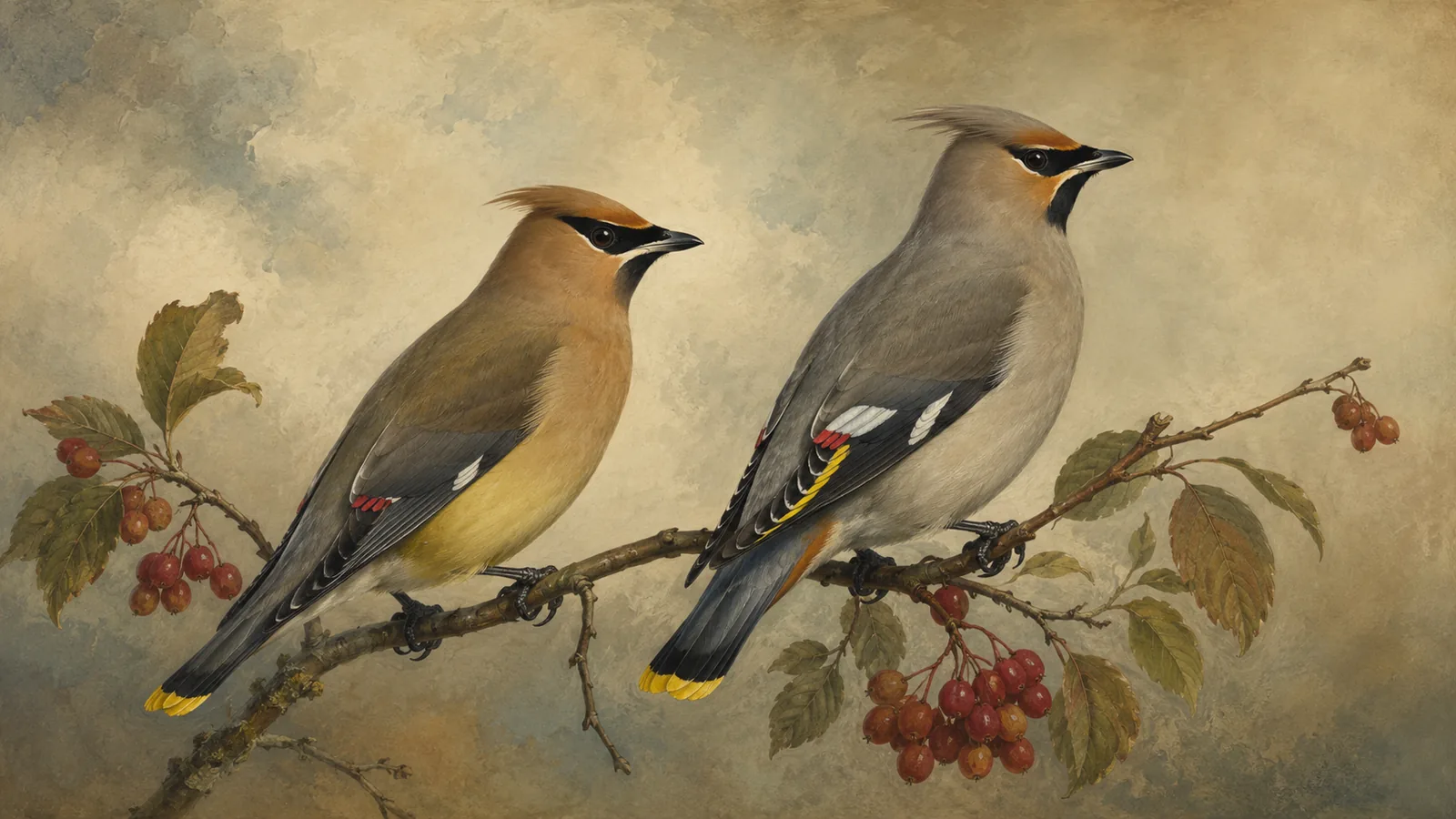
A flock drops into a crabapple tree in January and, for a moment, you are not sure what you are looking at.
The shape is right - swept crest, pale sandy-brown plumage, the smoothed-over silhouette of a Cedar Waxwing. But the birds are heavier. The bellies are grey, not yellow. The wings carry white and yellow marks the Cedar lacks. This is the one case where the confusion genuinely matters: those are Bohemian Waxwings, and they are not common.
Three other birds generate the same double-take, though less justifiably. Knowing what separates each one locks the Cedar Waxwing’s identity in place.
Bombycilla garrulus, the Bohemian Waxwing, is the only bird that shares the Cedar’s full combination of crest, black mask, and red waxy secondary feather tips. Audubon’s field guide puts the Bohemian at 7.9 to 8.7 inches with a wingspan of 13 to 15 inches - nearly an inch longer than the Cedar Waxwing and almost twice the weight at 1.9 to 2.4 ounces against the Cedar’s one ounce.
Plumage tells the rest of the story. The Cedar Waxwing’s belly fades to pale yellow and its undertail coverts are white. The Bohemian’s belly is grey and the undertail coverts are rust-coloured cinnamon - the single clearest field mark when the bird is facing away. The Bohemian also carries white rectangular patches and a yellow streak on the primary wing feathers. The Cedar’s wing is plain by comparison.
The calls are just as different. Audubon describes the Cedar’s voice as extremely high-pitched whistles and trills with an insect-like quality. The Bohemian produces what the same source calls a more guttural rattling trill, like a wet metal whistle. If the sound reaches you before the binoculars come up, you already know.
Seasonally, the split is sharp. Cedar Waxwings breed across southern Canada and the northern United States and winter as far south as Central America - present somewhere on the continent in every month. Bohemians breed in boreal forests and muskeg across Alaska and western Canada and only appear in the contiguous United States in irruption winters, primarily along the northern Rockies and Great Plains, with occasional wanderers reaching New England when berry crops fail in the north.
A waxwing seen anywhere south of the Canadian border between April and September is almost certainly a Cedar. The Bohemian is a winter species, and even in winter it is a privilege.
Phainopepla nitens, the Phainopepla, is the most structurally similar. It has a sharp crest, a slender silhouette, and a specialised relationship with berries - it follows mistletoe across the desert Southwest and California, where Audubon places its range. Males are glossy black with white wing patches visible in flight and bright red eyes. Females are grey-brown. Neither sex has a facial mask, waxy wingtips, or a yellow tail band. The Phainopepla also holds territory and forages alone, in direct contrast to the Cedar Waxwing’s tight, coordinated flocks of 20 to 100 birds.
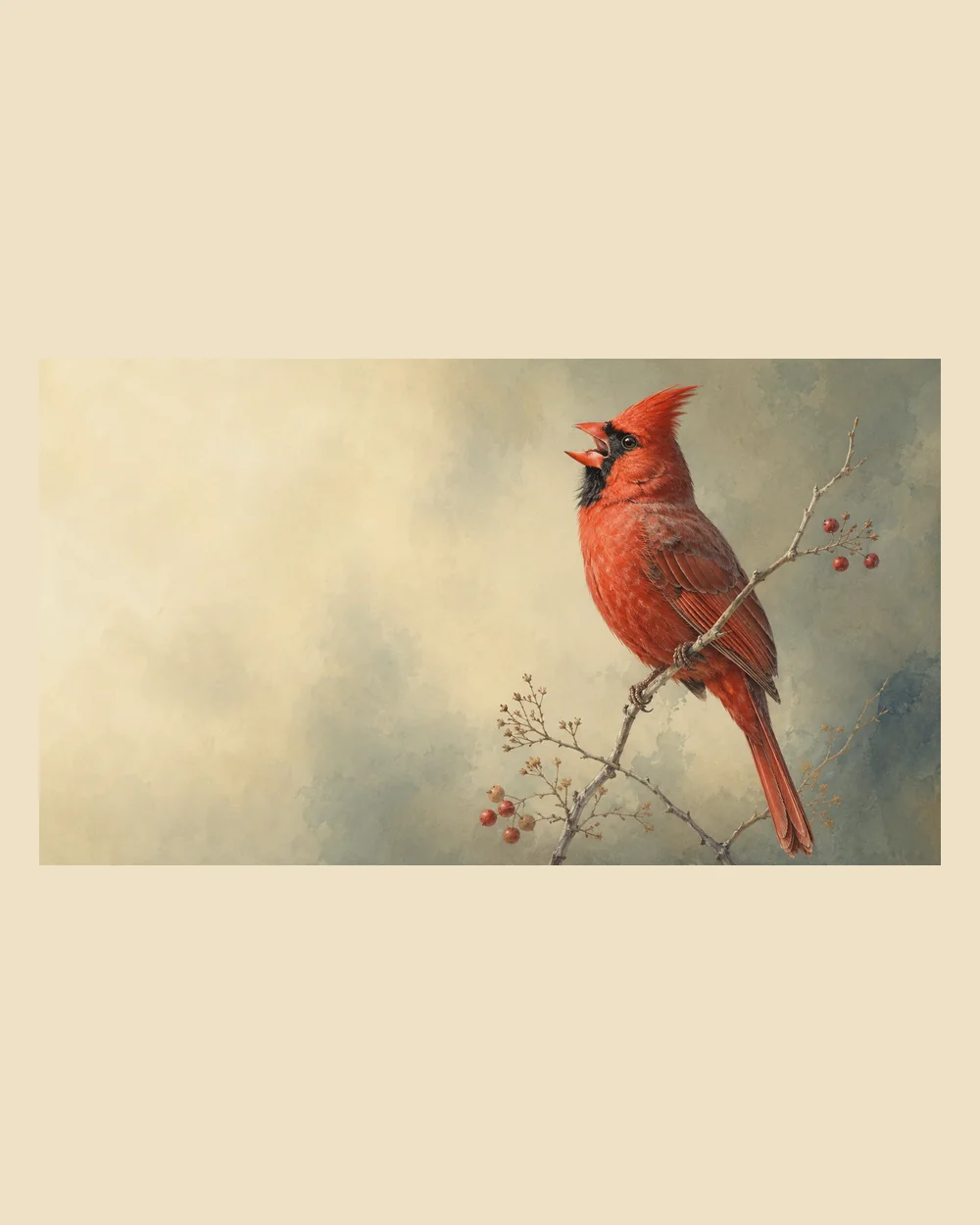
The female Northern Cardinal creates confusion because she combines a crest with warm brown plumage and reddish highlights. Her bill resolves it immediately: heavy, orange, and conical, built to crack seeds rather than pluck berries. Audubon lists her length at 8.3 to 9.1 inches against the Cedar’s 5.5 to 6.7 inches. She also travels alone or paired, not in roving fruit flocks. The patterns of cardinal molting make her appearance shift through the year, but the bill shape never changes.
The European Starling (Sturnus vulgaris) is the surprise entry. Field observers note that Cedar Waxwing flocks in flight are regularly confused with starling flocks because both are compact, short-tailed birds that wheel in tight formations. At altitude and in poor light the silhouettes are similar enough to fool a quick glance. Close up, the starling is iridescent black with white spots in fall, carrying a straight yellow bill and a flat crown - nothing like the Cedar’s sandy-brown, rounded head, and swept crest. The distinguishing feature in flight, noted by birders separating the two, is the Cedar Waxwing’s slightly undulating wingbeat: the final stroke before the glide lifts the bird fractionally upward, a rhythm the starling does not share.
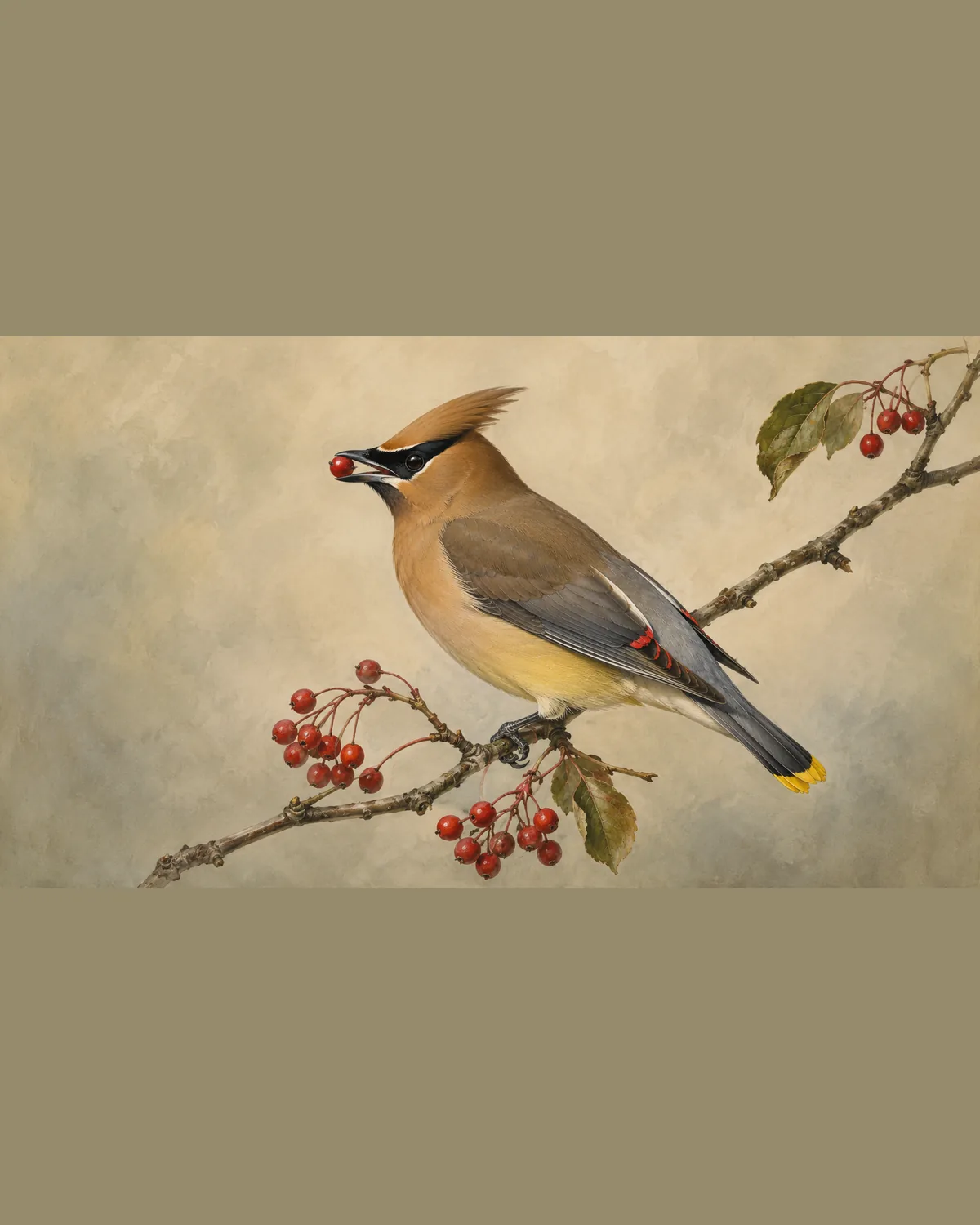
The Cedar Waxwing carries three features that no look-alike replicates together. Audubon confirms that even juveniles - which carry blurry brown streaking and a faint mask rather than the adult’s crisp pattern - retain the yellow tail band. The waxy red secondary feather tips increase in number with age: young birds carry zero to six, older birds more than nine, which is why some individuals in a flock look more finished than others. And the call is unambiguous once learned - thin, buzzy, high-pitched trills that carry above the noise of a busy berry tree.
The fourth separator is behaviour. Cedar Waxwings are almost never solitary. They form migratory flocks beginning in August and can gather by the hundreds in winter to work fruiting trees. Nothing else on this list does this - not the Phainopepla, not the bluebird look-alikes that might share a hedgerow, not the female cardinal at the seed feeder. For comparison, birds that look like hummingbirds and birds that look like blue jays both tend toward solitary or paired foraging, not the Cedar’s coordinated mass feeding.
A single Cedar Waxwing perched quietly on a wire is worth a second look. Forty Cedar Waxwings dropping from a juniper simultaneously - and then rising again as one - are unmistakable. That collective motion, the flock moving like a single organism across a winter hedgerow, is the field mark that no other crested, masked, berry-eating bird in North America can replicate.
As an Amazon Associate we earn from qualifying purchases. Linked products are ones we genuinely recommend.
 IdentificationBirds That Look Like Bats at Dusk: Swifts, Nighthawks, and Swallows
 IdentificationBirds That Look Like Blue Jays
 IdentificationBirds That Look Like Bluebirds (And How to Tell Them Apart)
 IdentificationBirds That Look Like Cardinals
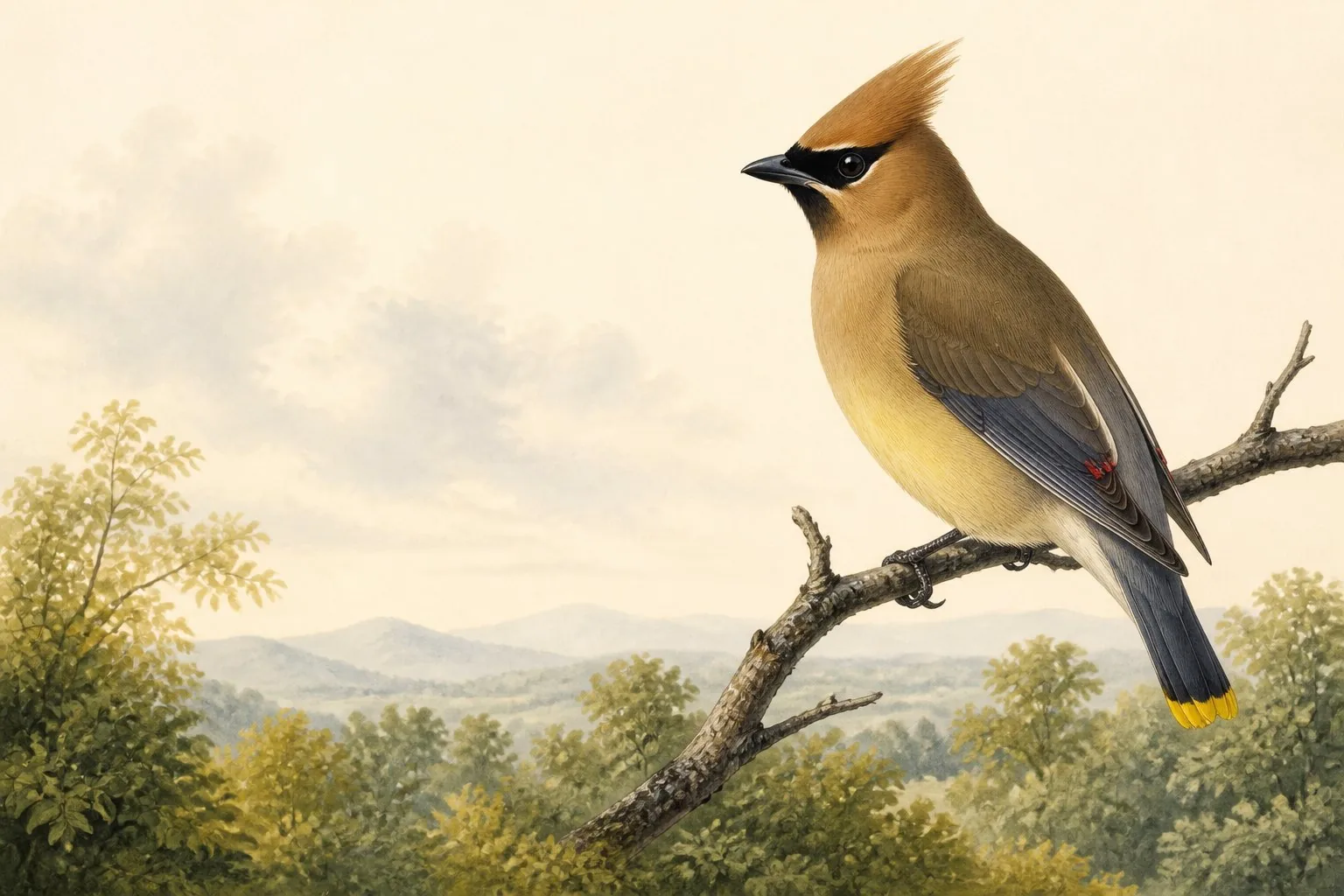 IdentificationBirds that look like Cedar Waxwings (the flock test)
 IdentificationBirds That Look Like Chickadees (And How to Tell Them Apart)
 March 13, 2023
 5 min read