Pets
What Do Toucans Drink
A toucan in the canopy rarely stops to drink. It eats, and drinking happens inside the eating.
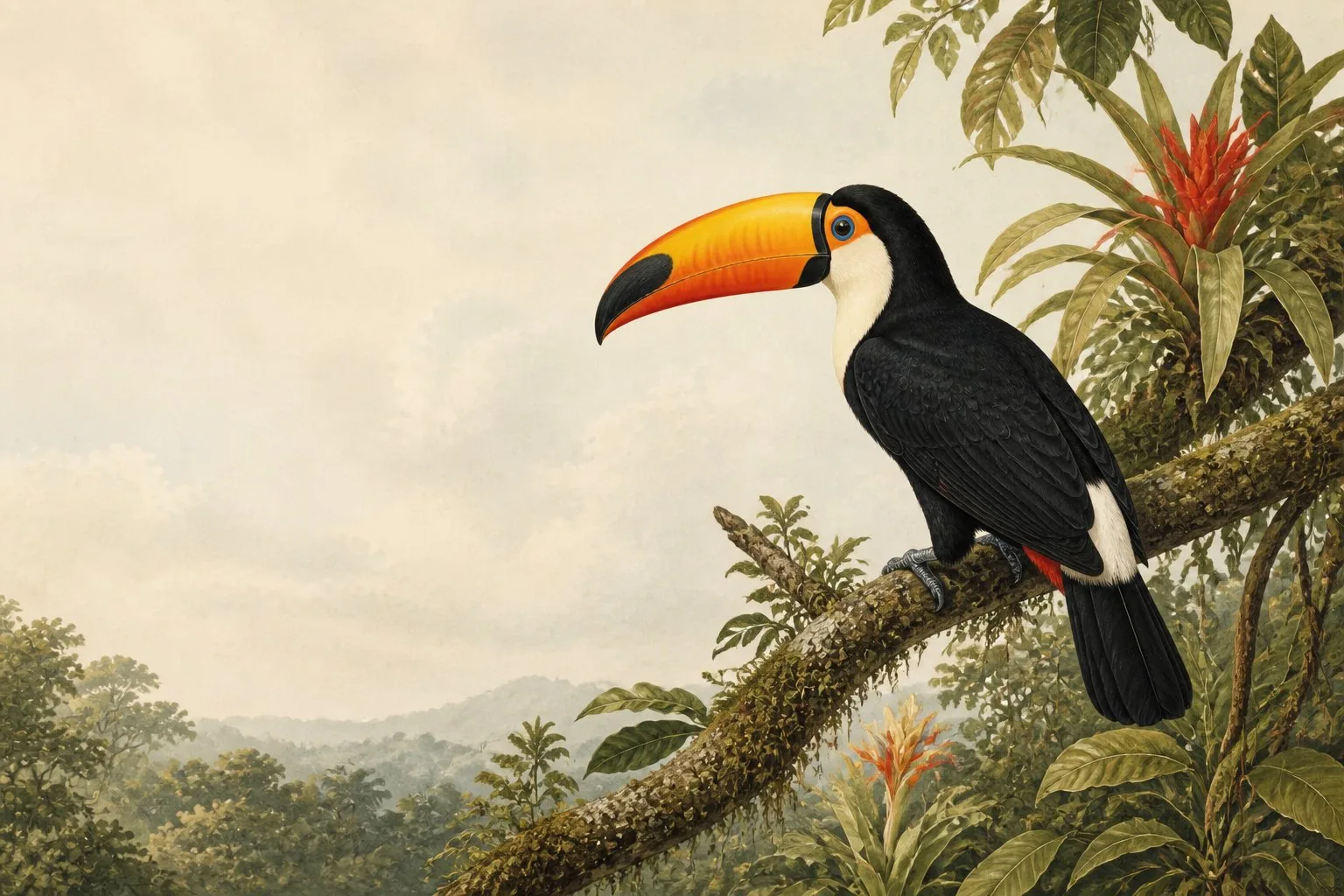
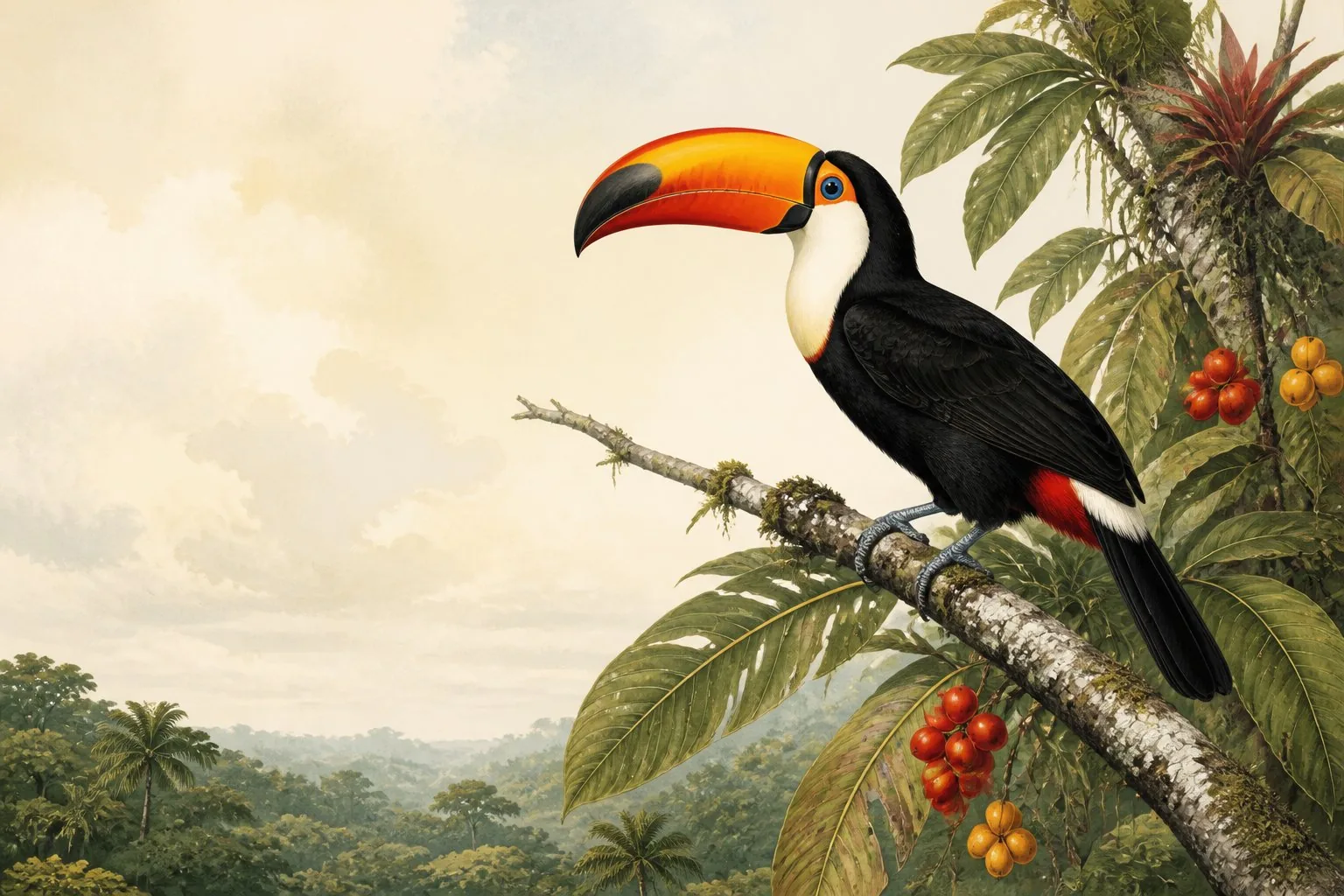
That sounds like a minor biological footnote. It is not. The Ramphastos toucans - the large-billed species that includes the Toco toucan (Ramphastos toco) - have organised nearly their entire hydration strategy around fruit moisture rather than open water. The bill that looks like a gimmick is, among other things, a tool for extracting liquid from food. A bird like a pigeon tilts its head back to swallow. A toucan squeezes. The distinction is the whole story.
Where the water actually comes from
Ripe tropical fruit runs between 85 and 90 per cent water by weight. A toucan working through a clutch of figs or palm fruits is simultaneously fuelling itself and hydrating, without ever having to locate a stream. In primary rainforest, where fruit is dense and varied throughout the day, a toucan may visit open water only once or twice before roosting.
The bill is designed for this. It is serrated along the edge, like a breadknife, which gives it grip on slippery wet pulp. The tongue is narrow, flat, and fringed along both sides, adapted for manipulating fruit pieces and drawing out juice rather than scooping or lapping standing water. Watch a captive toucan at a water bowl and the motion is awkward compared to the fluid confidence it shows at a fruit tray.
The toucan’s drinking problem is not that it cannot drink - it is that it evolved somewhere water was never scarce, and fruit was everywhere. The bill is the answer to that landscape, not to ours.
Rain also plays a role. In humid neotropical forest, water collects in tree hollows, in bromeliads, in the cups of large leaves. Toucans use these opportunistically - drinking from and bathing in accumulated rainwater without descending to ground level. In drier conditions, or in the dry season, they shift behaviour and drink more deliberately from streams and puddles. The strategy is flexible; the preference is fruit.
What this means for toucan keepers
Captive toucans need access to clean water at all times, but the fruit component of their diet is doing heavy lifting on hydration even in a cage. If you are weighing the commitment, do toucans make good pets lays out what the bird actually demands. If your bird is eating well - papaya, melon, grapes, blueberries, softened banana - it will often ignore the water bowl for hours at a time. This is normal. It is not a sign the bird is unwell.
Where keepers run into trouble is water quality and bowl size, not quantity of drinking. Toucans bathe. They need a shallow vessel large enough to step into, refreshed daily. Standing water in a small dish fouled by fruit debris is a source of bacterial infection and should be changed more than once a day in warm weather. Filtered or low-mineral tap water is preferable in most urban areas where tap water is heavily chlorinated.
| Water need | Practical rule |
|---|---|
| Drinking bowl | Fresh water daily, minimum |
| Bathing bowl | Separate, wide and shallow, deep enough to splash |
| Fruit hydration | Offer high-moisture fruit at every meal |
| Water quality | Filtered or lightly mineralised where tap is heavily treated |
| Misting | A light daily mist helps feather condition in dry indoor air |
The fruit list is short and consistent, and it overlaps closely with what do toucans eat more generally. Papaya and melon carry the most moisture. Grapes and blueberries are convenient and well-accepted. Banana is lower in water but useful for calories and palatability when birds are being introduced to a new diet. Avoid very acidic citrus in large amounts - toucans are prone to iron storage disease, and vitamin C from citrus increases iron absorption. If you keep a toucan, check what can parrots eat for a grounding in the broader logic of parrot-family and softbill nutrition, because many of the same principles apply to iron-sensitive species.
Sleep and the overnight water question
One question keepers raise: do toucans need water available through the night? Yes. Toucans roost in tree cavities in the wild and are largely inactive from dusk, but they do not seal themselves in. They may wake and drink. A water source should be available overnight rather than removed with the lights. If you want to understand the full roosting biology before adjusting the enclosure, when and how do toucans sleep covers the cavity-roosting habit in detail, including how toucans fold their bills across their backs to fit inside the hollow.
Toucans are not migratory and do not enter torpor, so their overnight water needs are consistent year-round. The hydration picture is not complicated by seasonal metabolic shifts the way it might be for species that travel. If you want the evidence for that, do toucans migrate or hibernate puts it plainly.
The bill and the water question together
The bill of a Toco toucan is roughly a third of its total body length. Ornithologists argued for decades about its function - heat regulation, intraspecies display, fruit-reaching, predator deterrence - and the answer is probably all of these at once. But the one function most often underplayed in popular accounts is the mechanical one: getting moisture out of food.
The bird’s anatomy says what its environment required. Not a cupped bill for scooping water. Not a narrow bill for probing. A wide, serrated, precision-gripping tool for working ripe fruit. The size is not vanity. It is applied hydraulics.
For keepers, the practical take is simple: keep the fruit tray stocked and the water bowl clean. The bird will handle the rest, roughly as it would in the canopy - mostly through eating, occasionally through drinking, and with strong opinions about the quality of both.