Symbolism
The Golden Eagle Was Carved Into Hittite Seals 3,000 Years Before the Bald Eagle Existed as a Symbol
The bald eagle is not the most symbolically significant eagle.
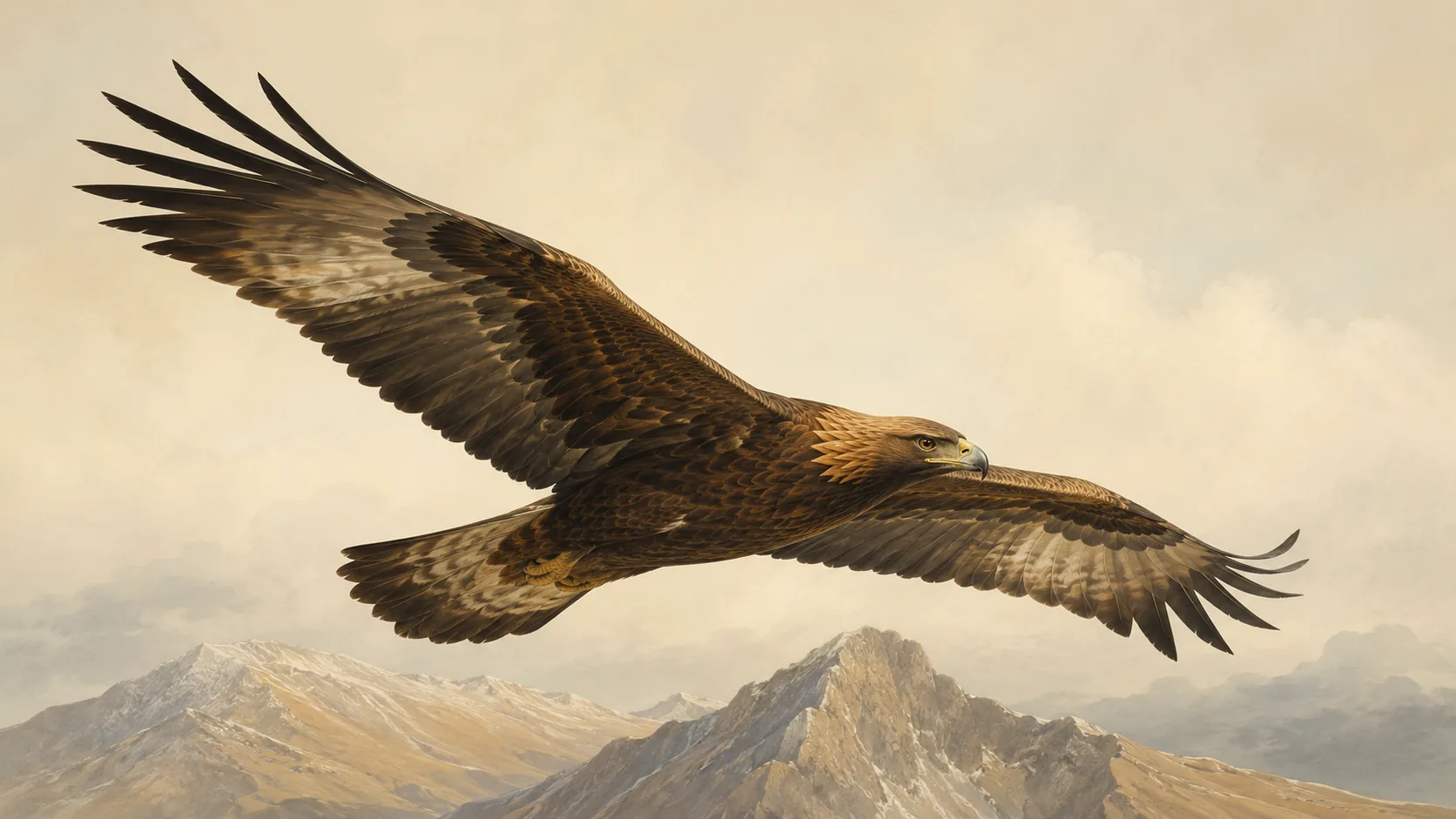
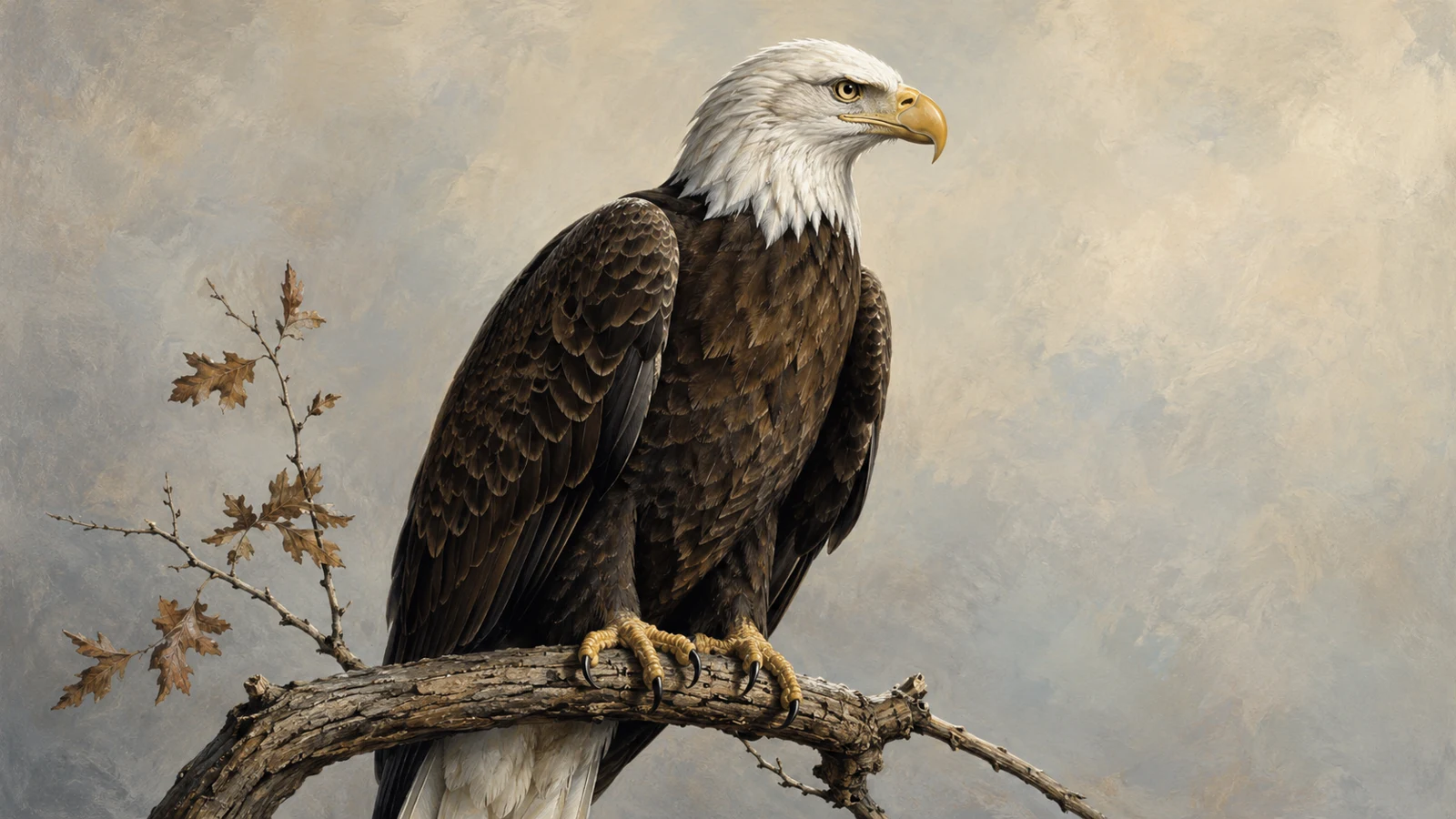
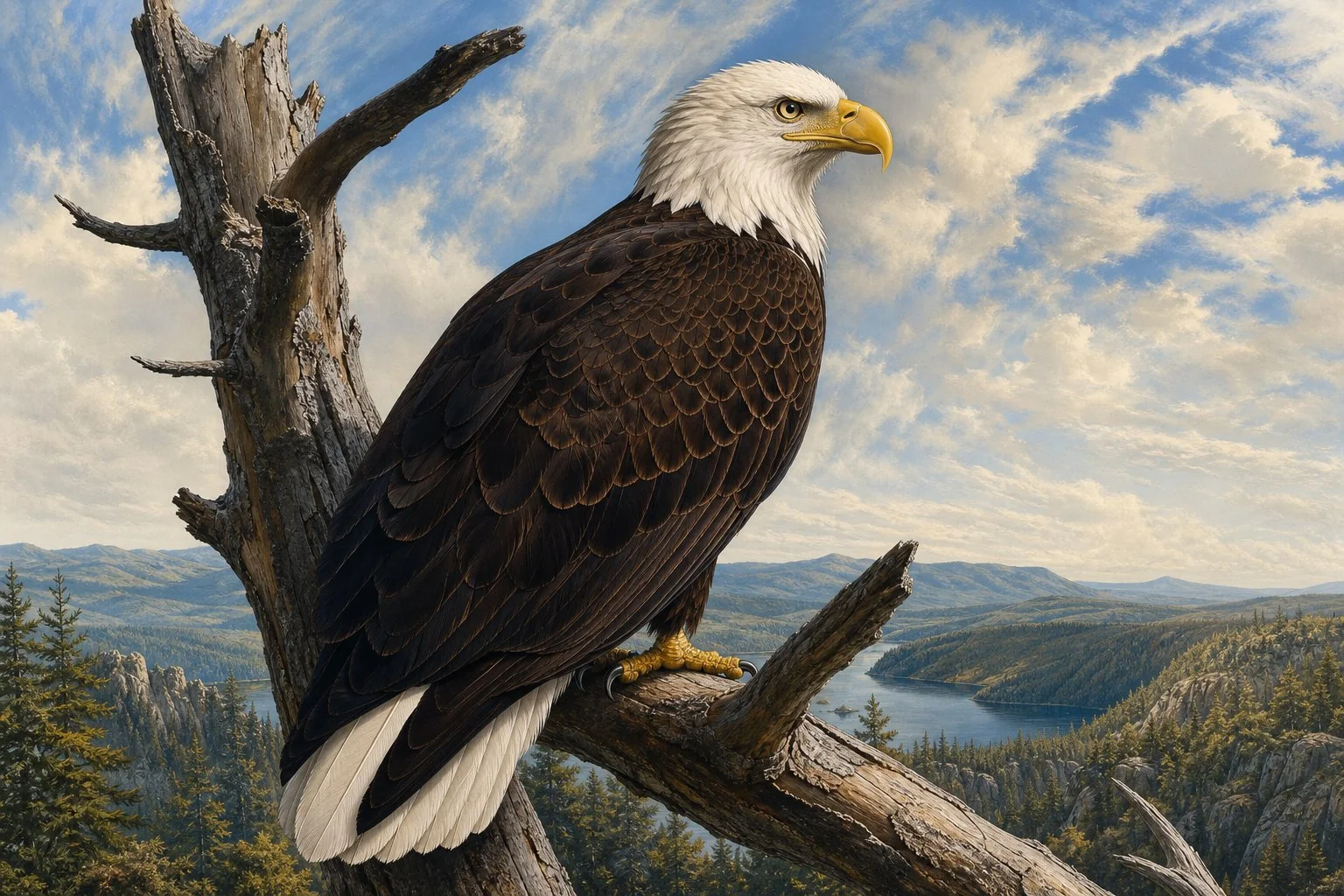
This is not a matter of opinion. By any measure of depth, age, or geographic reach, the golden eagle runs further back into human culture than any other bird alive. The Hittites carved it into royal seals in the second millennium BC. The Romans made it the sacred object of an entire imperial theology. The Kazakhs built a 2,000-year hunting tradition around it. The Norse hung the cosmos from its wings. The bald eagle became the American national symbol in 1782.
Three thousand years separate those two facts.
The golden eagle, Aquila chrysaetos, is the most widely distributed eagle on earth. It ranges across North America, Europe, Asia, and North Africa. Every major culture that shared land with it developed a framework for what it meant. Those frameworks are not interchangeable. They do not reduce to “power.” And several of the most repeated stories about them are wrong.
The Roman Aquila: a piece of metal and a god
In 104 BC, the general Gaius Marius standardised the Roman legionary standard. Before his reform, each legion marched behind a wolf, a minotaur, a horse, a boar, and an eagle. After it, only the eagle remained. This was not aesthetics. It was ideology. The aquila - a silver or gilded bronze eagle on a staff, wings spread - was the living presence of Jupiter, king of the gods, whose bird the eagle was. Each legion kept its aquila in the sacellum, the shrine at the centre of its permanent fortress, alongside the garrison’s sacred objects. The soldier who carried it, the aquilifer, was among the most trusted men in the cohort.
Losing the aquila was not losing a flag. It was surrendering divine protection to the enemy.
The consequences were total. When Publius Quinctilius Varus led Legions XVII, XVIII, and XIX into the Germanic forests near what is now Osnabrück in 9 AD, he was guided by Arminius - a Romanised German chieftain who had served in the Roman army and knew every tactical vulnerability it had. Over three days in the Teutoburg Forest, Arminius’s ambush killed between 15,000 and 20,000 Roman soldiers. The survivors were enslaved or sacrificed to Germanic gods. All three aquilae were captured.
Emperor Augustus reportedly beat his head against the walls of his palace and cried “Quintili Vare, legiones redde!” - “Varus, give me back my legions!” Suetonius records this. The Romans retired the numbers XVII, XVIII, and XIX permanently. They did not reuse those numerals. They did not simply assign them to new legions. The numbers were mourned. This is remarkable: institutional grief expressed through arithmetic.
The recovery of the eagles took decades. In 15 AD, Germanicus Caesar led campaigns into Germania and found the eagle of Legio XIX among the Bructeri tribe along the Upper Ems. A second eagle was recovered in 41 AD under Claudius. The third was never confirmed found. It may have been destroyed. It may have sat in a Germanic temple for centuries. The Romans spent a generation on what was, in military terms, already a lost cause - because the eagles were not military objects. They were gods. Getting them back was an act of religious restitution.
The aquila was simultaneously a piece of crafted metal and the living presence of divine favor. Both things were true. The Germanic tribes who displayed captured aquilae in their temples for decades understood this, which is why they kept them. The Roman soldiers who spent decades recovering them understood it too.
The Norse Cosmology: the eagle who generates the wind
At the crown of Yggdrasil, the World Tree that connects all nine Norse worlds, sits an unnamed eagle of immense wisdom. Between the eagle’s eyes perches a hawk called Vedrfolnir - “storm pale” or “wind-withered,” a hawk roosting inside a permanent storm. The eagle flaps its wings continuously. Those wingbeats generate the winds that move through all nine worlds.
At the roots of the tree, in Niflheim, the serpent Nidhogg - “Malice Striker” - gnaws ceaselessly at the roots, trying to destroy the tree and end existence. A squirrel named Ratatosk, roughly “Gnaw-tooth,” runs up and down the trunk all day carrying insults between the eagle and Nidhogg, making them hate each other more than they otherwise would.
The structure of this image is worth sitting with. The eagle generates life - breath, wind, movement, the animation of the world. The serpent erodes it from below. Their conflict is not resolved. Neither wins. Their mutual enmity, inflamed by a gossiping squirrel, is the engine of time itself. The Norse cosmos runs on antagonism that cannot be settled.
Odin’s relationship with the eagle is more personal, and stranger. The Mead of Poetry - the source of all creative eloquence, brewed from the blood of the perfectly wise being Kvasir mixed with honey - was locked inside a mountain by the giant Suttungr. Odin worked a full summer of labor to get close to it, drilled into the mountain, slipped inside as a snake, spent three nights with Suttungr’s daughter Gunnlod, and drank all three vats of the mead dry. Then he transformed into an eagle and flew for Asgard. Suttungr pursued, also in eagle form.
Odin made it back barely in time. He vomited the mead into containers the Aesir had prepared. But some of it - in his urgency and undignified haste - was excreted from the other end, falling to earth below. The Norse explanation for why some poetry is terrible is that it is Odin’s emergency excretion from a panicked flight.
The highest artistic inspiration and the crudest accident share the same origin story. Poetry’s source is the sky-god as predator, and it arrives partly through his backside. The Norse were not sentimental about their myths.
Celtic Traditions: the solar god in the oak, and five thousand years of memory
The Fourth Branch of the Mabinogi - the medieval Welsh manuscript collection encoding much older oral traditions - contains one of the most psychologically strange eagle transformations in European mythology.
Lleu Llaw Gyffes, “Lleu of the Skilful Hand,” is a solar deity - cognate with the Irish Lugh, the pan-Celtic figure of light. His mother Arianrhod places three curses on him: no name, no weapons, no human wife unless she provides them. His uncle Gwydion tricks her into granting each one. The wife made of flowers, Blodeuwedd, takes a lover. Together they discover the very specific conditions for killing Lleu - standing with one foot on a goat and one on a bathtub, at a threshold - and his lover’s lover strikes him with a specially prepared spear.
At the moment of impact, Lleu transforms into an eagle and flies screaming into an oak tree. Gwydion finds him there later: wasted, rotting, half eagle and half man, dropping putrefying flesh from the branches. The solar god in exile is decaying. Gwydion coaxes him down with three englynion - formal Welsh verses - one of which reads: “An oak grows between two lakes / Darkly shadowing sky and glen / Unless I speak falsely / From Lleu’s flowers these buds have grown.”
Poetry restores the solar god. The eagle state was not death but liminal suspension - the god retreating into sacred predator form, roosting on the world-axis (the oak), wasting without human embodiment. The combination of oak and eagle appears across Indo-European traditions: the thunder god’s tree and the sky god’s bird. It is very old.
In Irish tradition, the most significant eagle appears through Fintan mac Bochra, the great shape-shifter who survived the flood that drowned the world and lived for approximately 5,500 years in various animal forms - one-eyed salmon, eagle, hawk - before returning to human form to advise kings and accumulate history. At the end of his extraordinary life he encountered the Hawk of Achill, which had lived exactly as long as he had. The two ancient creatures compared what they knew.
The Irish tradition is specific about what the eagle represents: not power, primarily, but extreme age and accumulated wisdom. The salmon is the iconic figure of wisdom in the depths. The eagle is wisdom at the heights. Together they map the full vertical range of the world.
Scottish Gaelic: the bird of the high corrie
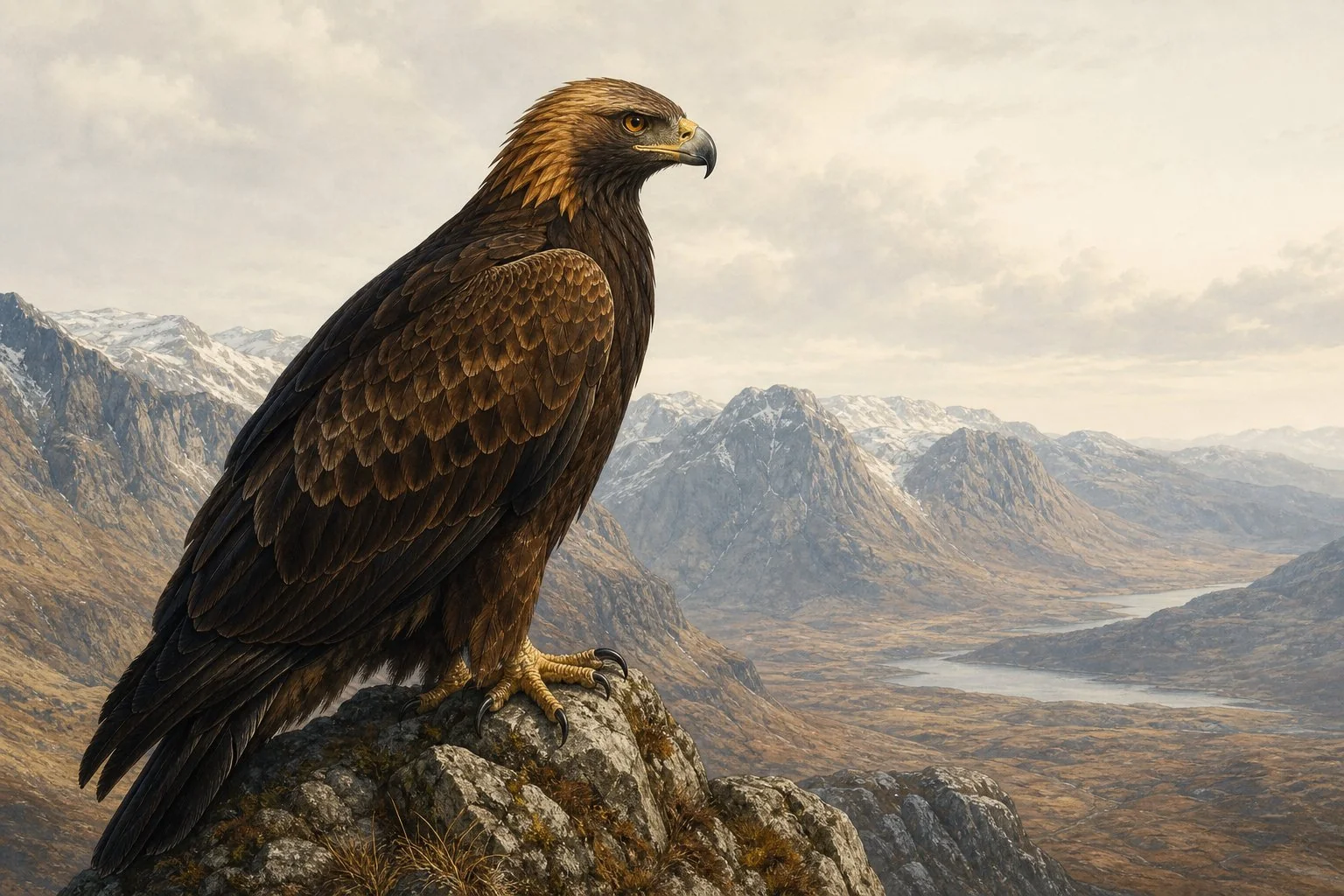
The Scottish Gaelic word for eagle is iolaire, pronounced roughly “EEL-uh-ruh.” It is embedded across the Highland landscape as a place-name element: Beinn na h-Iolaire (Hill of the Eagle), Eilean na h-Iolaire (Island of the Eagle), dozens of smaller features across the mountains and islands. The white-tailed eagle has its own specific name: iolaire suile na greine, “eagle with the sunlit eye.”
Eagle feathers mark rank in Highland culture with exact precision. A clan chief wears three golden eagle feathers in his bonnet. A chieftain wears two. A gentleman wears one. This is not decorative. It is a formal rank system that persists to the present day. Clan Donald, the Lords of the Isles, carries a rising eagle in its heraldry.
Neolithic tombs in Orkney contain the remains of white-tailed eagles. The bird’s symbolic weight in Scotland predates Gaelic culture entirely.
In Scottish Gaelic poetry, the eagle functions as an emblem of the Highland landscape itself - the bird of the high corrie, associated with solitude, endurance, and the unbroken wildness of the mountains. When an eagle appears over a ridge in the Highlands it is almost certainly the same pair that has used that territory for years. Golden eagle pairs maintain territories of up to 200 square kilometres. Communities that lived with golden eagles over generations knew individual birds by the mountain systems they owned.
This intimacy with specific birds is the material basis for the mythological associations. The eagle is wise because it is always there, long after you expected it to die. A ringed golden eagle recovered in Sutherland in 2018 was confirmed at 25 years old.
The Iolaire
On the night of 31 December 1918, HMY Iolaire - His Majesty’s Yacht Iolaire, a Royal Navy requisitioned vessel - was carrying 280 Royal Naval Reserve men home to the Isle of Lewis and Harris. The war had just ended. These were Lewis men going home for the first New Year of peace.
At 1:55 AM on New Year’s Day, the Iolaire struck a reef called the Beasts of Holm, less than a mile from the entrance to Stornoway harbour. The men could see the lights of home. 201 of the 280 drowned.
Lewis at the time had a population of approximately 20,000. The island had already suffered devastating losses in the war - the Seaforth Highlanders and the Royal Naval Reserve drew heavily from every district. The Scotsman reported: “The villages of Lewis are like places of the dead. The homes of the island are full of lamentation - grief that cannot be comforted.”
The community did not discuss the disaster publicly for decades. It was simply too much. A community that thought in Gaelic, that used the eagle as its emblem of power and survival, had named the ship that killed 201 of its men Iolaire. The bird of swiftness and vigilance. The bird of the Highland chiefs. The survivors could see the lights of Stornoway harbour.
Centenary commemorations in 2019 brought the disaster into wider public consciousness after nearly a century of deliberate silence. A monument stands at the Beasts of Holm.
The Eagle in Plains Ceremony: specificity matters
The phrase “Native American eagle symbolism” is not a tradition. It is the name of a category error.
Hundreds of distinct nations with distinct languages and distinct ceremonial systems share the continent. What follows is what specific nations documented by their own testimony and by ethnographers have said.
On the Great Plains, golden eagles were called the war eagle. Golden eagle tail feathers - specifically juvenile tail feathers, which have distinctive white and brown banding - were the war honors worn in headdresses. Each feather in a Plains warrior’s headdress represented a specific documented act of bravery: counting coup, rescuing a comrade, leading a charge. A full war bonnet of golden eagle tail feathers was a biographical document. The feathers were not decorative. They were verified.
The distinction between golden and bald eagle feathers is real, tribally specific, and not interchangeable. The U.S. Fish and Wildlife Service’s National Eagle Repository, established in the early 1970s, distributes feathers from both species to enrolled tribal members for ceremonial use - maintaining the distinction because the tribes insist on it. The waiting list is often years long. The eagle that the American government made its national symbol is held in government storage as a sacred material the government controls access to.
Among the Comanche, the eagle is described in documented testimony as “holy beyond words” - a connector between earthbound creatures and the divine. Some traditional medicine requires the energy of a living eagle.
The Hopi of Arizona raised eaglets in the village, then sacrificed them in ceremony as emissaries to the spirit world. The eagle, able to fly highest, was the most effective messenger to supernatural powers. After the ceremony, its feathers went into kachina dolls and prayer sticks.
The Zuni of New Mexico associate the eagle with rainfall and agricultural fertility. The eagle is “the Hunter God of the Upper Regions” - flying closest to the heavens, interceding for moisture to reach a desert farming community. Eagle dances are performed to bring rain.
Three adjacent nations. Three different frameworks. The Plains associations are martial and honorific. The Puebloan associations are cosmological and agricultural. The bird is the same bird. The traditions are not the same tradition.
The Kazakh Burkitshi: releasing the symbol of mastery
For at minimum 2,000 years - some evidence suggests 4,000 - Kazakh hunters have worked with trained female golden eagles to hunt across the Altai mountain landscape in winter. The tradition is called berkutchi or burkitshi, from “burkit,” the Kazakh word for golden eagle.
Female eagles are used because females are substantially larger than males - up to 40% heavier. A trained hunting eagle weighs up to 7 kg. She sits on a heavily gloved arm. The hunter rides on horseback across ridges in temperatures reaching -40C. When prey is spotted and the eagle released, she flies low using the terrain, then hits with talons that can exert up to 790 PSI - enough to break a fox’s spine on contact.
The hunters describe the bond as that of a family member, “akin to a wife or a child.” The eagle is taken as a nestling and trained over months and years. The hunters do not give their birds names.
After approximately ten years of partnership, the hunter releases the eagle to wild life. The bird has imprinted to some degree on its hunter. Separation is ritualised: the hunter takes the bird far away and must sometimes hide or wait for darkness to stop the eagle from following him home. He then leaves. The eagle is free to find a wild mate and breed.
The most prestigious relationship a Kazakh nomad can have with a non-human creature ends with deliberate abandonment. The symbol of mastery cannot be kept. It must be returned to wildness or the relationship destroys what made it meaningful.
UNESCO recognised Kazakh falconry on its Representative List of Intangible Cultural Heritage, with explicit inclusion of the Mongolian Kazakh eagle hunting tradition formalised in 2016. When recognition was sought, fewer than fifty families still practiced burkitshi actively. The annual Golden Eagle Festival in Bayan-Ulgii, held since 1999, emerged specifically to prevent the tradition from disappearing.
The Double-Headed Eagle: not Byzantine
The most persistent myth in eagle heraldry is that the double-headed eagle is a Byzantine invention.
It is not. Mesopotamian cylinder seals from the third and fourth millennia BC show the motif, possibly derived from the divine bird Anzu, a lion-headed bird-god. The Hittites of central Anatolia formalised it in the second millennium BC, appearing on royal seals and sculptures. The motif predates Byzantine codification by roughly 2,000 years.
Byzantium inherited and codified it. Emperor Isaac I Komnenos, who reigned from 1057, is among the earliest documented users, with ties to northern Anatolia - itself a region with deep Hittite heritage. The Byzantine double-headed eagle carried a specific meaning: the left head looked toward Rome in the West, the right toward Constantinople in the East. This was theological statement, not heraldic decoration. It expressed dual sovereignty over East and West and the unity of civil and religious authority.
When Constantinople fell in 1453, the Russian Tsardom adopted the double-headed eagle as direct inheritors of Byzantine legitimacy - Moscow as the “Third Rome.” Ivan III married Sophia Palaiologina, niece of the last Byzantine emperor, and adopted the symbol around 1472. The Habsburg Holy Roman Emperors used it from roughly the same period, claiming Roman lineage through Charlemagne.
Mexico’s eagle - the golden eagle devouring a snake on a cactus on every flag since 1821 - is an entirely different lineage. It is the Aztec founding myth of Tenochtitlan. The god Huitzilopochtli told the wandering Mexica to settle where they found an eagle on a cactus eating a snake. They found the omen on an island in Lake Texcoco and built their capital there. This is pre-Columbian religious mythology. It arrived at the Mexican flag with no Roman detour.
Biology is the foundation
The symbolism did not come from nowhere. It came from what the bird actually does.
A golden eagle’s wingspan reaches 2.3 metres. It weighs up to 6.5 kg. In a power dive, it reaches 150 to 200 mph. Seen soaring from below against a pale sky, it is enormous and completely silent. Its approach to prey is typically from behind terrain - appearing suddenly over a ridge or around a cliff face. The last thing most prey sees is the shadow arriving before the bird.
Its eyesight has 4 to 8 times the resolution of human vision. It can detect prey at over two miles. The retina contains a higher concentration of light-detecting cells and a larger fovea than human eyes. This is the direct biological basis for the near-universal association with vision, foresight, prophecy, and divine oversight. Every culture that looked up at a circling golden eagle and thought “that thing can see everything” was biologically correct.
In the Scottish Highlands, confirmed kills include red deer calves up to 20 kg. In Central Asia, documented kills include young mountain goats driven off cliff faces - the eagle grabs and unbalances prey over a drop. Across its global range, the golden eagle hunts over 400 documented prey species. The diversity is unusual for any raptor.
It lives up to 30 years in the wild, confirmed by ringed birds. Up to 50 years in captivity. A pair of golden eagles in the Highlands effectively owns an entire mountain system for decades. The bird that appears over the ridge every year is the same bird. Communities that lived with golden eagles across generations knew specific birds and watched them outlive human children who grew into adults who grew old.
The longevity is the biological foundation for the Celtic association with wisdom. The eyesight is the foundation for the divine oversight associations. The silence and sudden appearance from behind terrain is the foundation for the association with divine messenger - arriving without warning, from above, from nowhere.
The bird is not interested in what humans make it mean. It is interested in the fox moving across the snow-covered hillside two miles away. But the meaning accumulated anyway, from watching something that genuinely sees further than you do, genuinely lives longer than you expect, and genuinely arrives without warning from the direction of the sky.
That is more than enough to build a mythology on. Cultures across four continents and four thousand years independently decided it was.